LC vs MTP Connectors: Differences for Enterprise Networks
LC vs. MTP connectors explained. Learn when to use single-fiber LC versus high-density MTP connectors for your enterprise network.


When building or managing an enterprise network, selecting the right fiber optic connector is a foundational decision. Two of the most common options you'll encounter are the Lucent Connector (LC) and the Multi-fiber Termination Push-on (MTP) connector.
Although both are vital for high-speed connectivity, they are designed for different applications and have unique physical attributes. This guide breaks down their key differences to help you determine the best fit for your network's needs.
What is an LC Connector?
The LC connector is a small form-factor (SFF) fiber optic connector developed by Lucent Technologies. Its compact size makes it a popular choice for high-density network environments where space is at a premium, such as in data centers and telecom rooms. It features a simple push-pull latching mechanism that provides a secure and reliable connection.
- Ferrule Size: It uses a 1.25mm ceramic ferrule, which is half the size of older connectors like the SC connector.
- Connector Type: Available in simplex (single fiber) and duplex (dual fiber) configurations.
- Applications: Ideal for high-density patch panels, network switches, and other telecommunications equipment.
- Fiber Compatibility: Supports both single-mode and multimode fiber optic cables.
What is an MTP Connector?
The MTP connector, short for Multi-fiber Termination Push-on, is a high-performance version of the MPO (Multi-fiber Push On) connector. It is engineered to bundle multiple fibers—typically 8, 12, or 24—into a single interface. This design is crucial for high-density cabling systems found in modern data centers.
By consolidating multiple fibers, MTP connectors facilitate the rapid deployment of high-speed parallel optics links, such as 40G and 100G Ethernet, which simplifies cable management.
- Ferrule Size: Contains multiple fibers within a single rectangular ferrule.
- Connector Type: A multi-fiber connector available in configurations holding up to 72 fibers, with 12 and 24 being the most common.
- Applications: Primarily used for backbone cabling, high-density data center interconnects, and parallel optics applications.
- Fiber Compatibility: Supports both single-mode and multimode fiber.
Key Differences Between LC and MTP Connectors
While both connectors move data via fiber, their core design leads to significant differences in density, scale, and deployment.
Fiber Count and Density
The most fundamental distinction is the number of fibers each connector can hold. An LC connector is designed for one or two fibers, making it perfect for standard, individual equipment connections.
An MTP connector, however, bundles multiple fibers—typically 8, 12, or 24—into a single interface. This allows for much higher connection density, saving valuable rack space.
Application and Scalability
This difference in fiber count dictates their ideal use cases. LC connectors are the go-to for patching single devices to the network, such as connecting a server or switch.
MTP connectors are built for the network backbone. They establish high-capacity trunk lines between racks or data halls, simplifying the deployment of 40G, 100G, and faster Ethernet speeds.
Installation and Deployment
Their physical forms also change the installation experience. LC connectors are typically terminated individually, offering flexibility for one-off connections and patch panel setups.
MTP systems rely on pre-terminated trunk cables that are ready to plug in. This approach significantly reduces installation time and labor costs for large-scale, high-fiber-count deployments.
Advantages of Using LC Connectors
While MTP connectors excel at high-density trunking, LC connectors bring their own set of advantages to the table, especially for device-level connections and network flexibility.
- High Reliability: The secure push-pull latching design minimizes accidental disconnections and ensures a stable, low-loss signal. This is crucial for maintaining network performance and uptime.
- Granular Network Management: Since LC connectors handle individual or duplex fiber links, they provide excellent flexibility. Technicians can manage, test, and troubleshoot connections one at a time without impacting other circuits.
- Broad Compatibility: As an industry standard, LC connectors are supported by a wide array of network hardware, including switches, routers, and SFP modules. This simplifies equipment procurement and guarantees interoperability.
- Cost-Effective for Standard Connections: For connecting individual devices or in lower-density setups, LC components are often more budget-friendly than their multi-fiber counterparts, offering a practical solution for everyday networking needs.
Advantages of Using MTP Connectors
On the other hand, MTP connectors are the workhorses for modern, high-density networks, offering distinct benefits for large-scale infrastructure.
- Future-Ready Scalability: MTP connectors are designed for growth. By bundling multiple fibers, they provide a clear upgrade path to next-generation speeds like 400G and 800G without needing to pull new trunk cables, protecting your initial investment.
- Superior Density and Airflow: Consolidating up to 24 fibers in one connector significantly reduces cable bulk in pathways and racks. This not only saves valuable space but also improves airflow, which is critical for cooling high-performance equipment.
- Simplified Cable Management: Managing a single MTP trunk is far simpler than handling dozens of individual fiber patch cords. This reduces complexity and minimizes the potential for errors during network maintenance or upgrades.
Choosing the Right Connector for Your Network
Making the right choice comes down to evaluating your specific network environment and long-term goals. Consider these key factors before making a purchasing decision.
1. Assess Your Immediate Application
If your primary need is to connect individual devices like servers, switches, or firewalls to a patch panel, LC connectors are the standard, reliable solution.
They are perfectly suited for lower-density environments and give technicians the granular control needed for managing or troubleshooting single circuits without disrupting others.
2. Plan for Future Growth
Think about where your network is headed in the next three to five years. If you anticipate a significant increase in bandwidth or are planning for 40G, 100G, or faster speeds, MTP connectors are the more strategic investment.
They build a high-density foundation that supports future upgrades, protecting your initial infrastructure investment.
3. Factor in Installation and Management
Consider your team's resources and project timelines. Pre-terminated MTP trunk cables greatly speed up large-scale installations and reduce on-site labor, which is ideal for data center build-outs.
Conversely, if your projects involve more custom runs or your operations team prefers the flexibility of terminating and testing individual connections, LC components offer a more traditional and adaptable approach.
Final Thoughts on LC vs MTP Connectors
Ultimately, the choice between LC and MTP connectors isn't about picking a winner. It's about matching the right tool to the right job within your network architecture.
LC connectors provide the reliability and granular control needed for individual equipment links. In contrast, MTP connectors deliver the high density required for scalable, high-speed backbone cabling.
By understanding their distinct roles, you can build a robust and efficient network that meets both current needs and supports future growth.
Need Help Managing Your Network? Lightyear Can Help
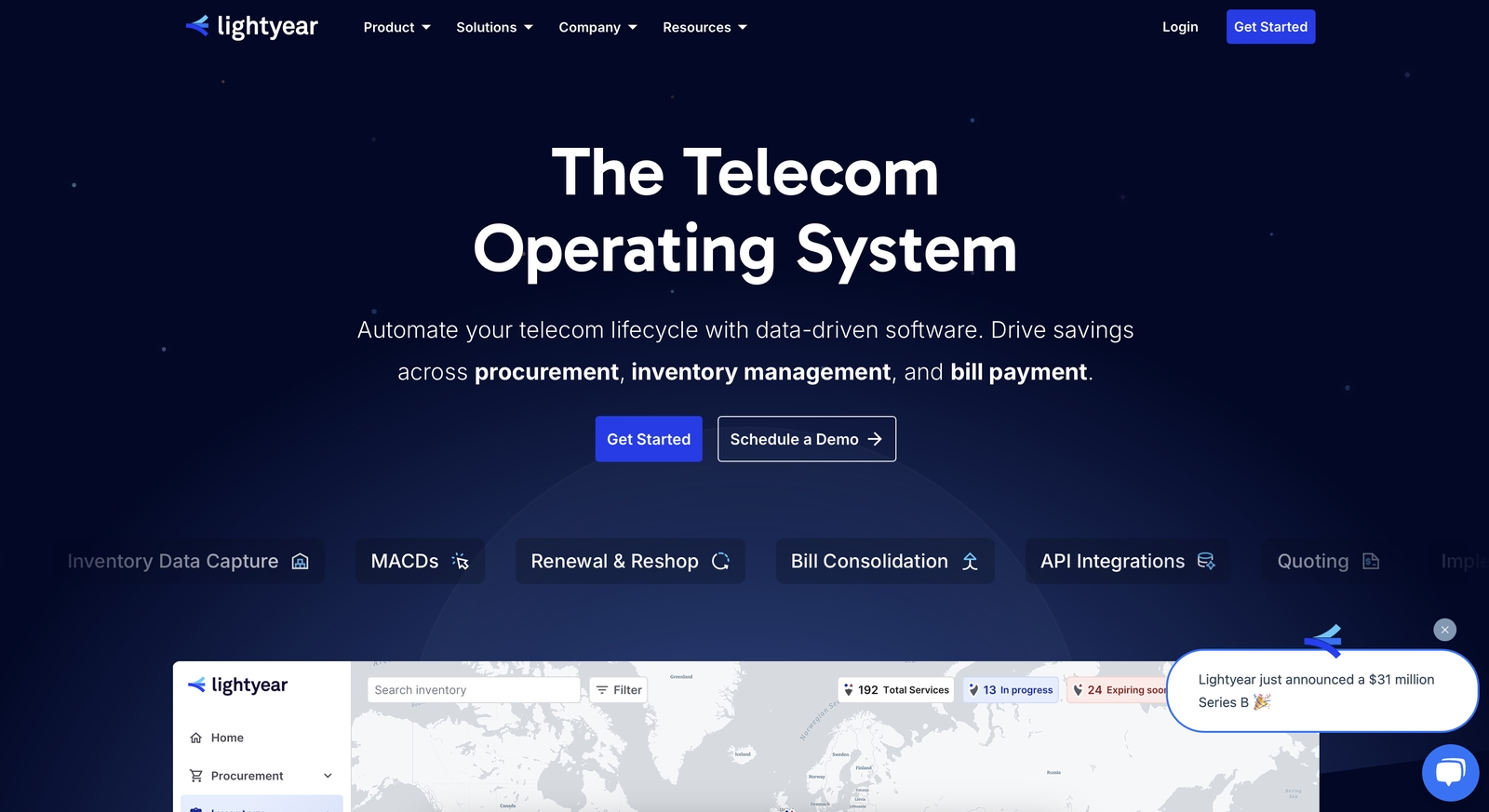
Choosing the right connectors is a critical step, but managing the entire network infrastructure is the bigger challenge. Lightyear's platform helps you track every circuit and asset by automating procurement and inventory management.
By handling network services and consolidating billing, we help enterprises save over 70% in time and 20% in costs. Schedule a demo or get started with our questionnaire today.
Frequently Asked Questions about Lc Connector vs MTP Connector
Can I connect an MTP cable directly to an LC port?
Not directly, as they have different physical interfaces. However, you can use a breakout cable or a cassette that transitions the multiple fibers from the MTP connector into individual LC connections. This is common for connecting high-density trunk cables to network equipment.
Are MTP and MPO connectors the same thing?
They are interoperable, but not identical. MTP is a brand name for a high-performance MPO connector with better mechanical and optical performance. You can plug an MTP connector into a standard MPO port, making them compatible for most applications.
Is one connector more difficult to clean and maintain?
MTP connectors require more specialized tools and care, as you are cleaning multiple fiber end-faces at once. Any debris can affect multiple channels. LC connectors are simpler to clean with standard, single-fiber cleaning tools that are widely available and familiar to most technicians.
Let us show you the product and discuss specifics on how it might be helpful.
Schedule a Demo





Revolutionize Your Telecom Experience
Learn how you can get one step closer to optimal business efficiency for all your telecom services.