Load Balancing vs Channel Bonding Explained
Load balancing distributes traffic; channel bonding combines connections. Understand the key differences to optimize your enterprise network performance.

For any business, a fast and reliable internet connection is non-negotiable. When a single connection isn't enough to handle the load or provide sufficient backup, IT teams often turn to solutions that combine multiple internet circuits.
Load balancing and channel bonding are two popular methods for this, but they are not interchangeable. Understanding the key differences between how they distribute traffic and increase bandwidth is essential for making the right infrastructure decision.
What is Load Balancing?
Load balancing is a technique that distributes network traffic across multiple internet connections. Think of it as a traffic manager for your data, directing requests down different paths to prevent any single route from becoming overwhelmed and to ensure reliability.
This method doesn't merge the connections into one single, faster lane. Instead, it intelligently allocates traffic based on set rules. Here’s a breakdown of how it works:
- It assigns different user sessions or data flows to different internet circuits. For example, your email might go through Circuit A, while a colleague's video call uses Circuit B.
- It provides redundancy for uptime. If one internet connection fails, the load balancer automatically redirects all traffic to the remaining active connections, which helps minimize downtime.
- The speed of any single task, like a file download, is limited to the bandwidth of the specific circuit it's using. It does not combine the speeds of all connections for one transfer.
What is Channel Bonding?
Unlike load balancing, channel bonding (also known as link aggregation) combines multiple internet connections into a single, more powerful data pipe. This technique operates at a deeper network level, breaking down individual data packets and distributing them across all available connections simultaneously. The packets are then reassembled at their destination, creating one unified, high-speed link.
Here’s how channel bonding functions:
- It merges the bandwidth of all connections. If you have two 100 Mbps circuits, you get a single 200 Mbps connection for any task.
- A single data transfer, like a large file download or a video stream, can use the combined speed of all bonded links for significantly faster performance.
- It requires compatible hardware or software on both ends of the connection to manage the splitting and reassembling of data packets.
- Like load balancing, it also offers failover. If one link goes down, traffic continues to flow over the remaining active connections, though at a reduced total speed.
Load Balancing vs Channel Bonding: Key Differences
While both methods improve network performance and reliability, they achieve these goals in fundamentally different ways. The primary distinctions lie in how they handle bandwidth, traffic, and their underlying technical requirements.
1. Bandwidth Aggregation vs. Distribution
The most significant difference is how bandwidth is used. Channel bonding truly aggregates the speed of multiple connections into one. If you bond two 100 Mbps circuits, you get a single 200 Mbps pipe for any activity.
Load balancing, on the other hand, distributes traffic but does not combine speeds for a single task. A large file download will still be limited to the speed of whichever single connection the load balancer assigns it to.
2. Traffic Handling Method
This difference is at the core of how they operate. Channel bonding works at the packet level. It breaks down data from a single source (like a video stream) into smaller packets, sends them across all available connections, and reassembles them at the destination.
Load balancing operates at the session or flow level. It directs entire sessions, like a user’s web browsing activity or an email sync, to a specific connection. It doesn't split a single session across multiple links.
3. IP Address Presentation
With channel bonding, all your traffic appears to come from a single, unified IP address. This provides consistency for applications that are sensitive to IP changes.
With load balancing, traffic is sent out over the different connections, each with its own IP address. This can sometimes cause issues with secure sites or services that track sessions by IP.
Benefits of Load Balancing for Enterprises
For enterprises, load balancing offers practical advantages that go beyond its technical function. It’s a strategic approach to building a resilient and efficient network.
- Cost-Effectiveness: It allows businesses to use multiple commodity internet connections (like broadband or fiber) to achieve the reliability of a more expensive dedicated circuit. This strategy can significantly reduce monthly telecom spend.
- Flexible Scalability: Scaling your network capacity is simple. As your business needs grow, you can add new circuits to the load-balancing pool without significant downtime or complex network reconfigurations.
- Improved User Experience: By intelligently distributing requests, load balancing prevents network congestion. This ensures that critical business applications remain fast and responsive for all employees, even during peak hours.
Advantages of Channel Bonding in Networking
While load balancing distributes traffic, channel bonding offers its own unique set of benefits by creating a single, high-performance connection.
- Maximum Performance for High-Bandwidth Activities: Channel bonding is ideal for single tasks that demand significant speed. Activities like transferring large data sets, running cloud backups, or streaming high-quality video can use the full combined bandwidth, resulting in much faster completion times.
- Greater Application Reliability: Because all traffic originates from a single IP address, channel bonding prevents issues with sensitive applications. Services like VPNs, VoIP, and secure financial platforms that can fail when an IP address changes mid-session run more smoothly and without interruption.
- Simplified Link Management: Once configured, a bonded connection acts as one logical link. This can simplify network administration, as IT teams manage a single, larger pipe rather than multiple individual circuits and complex routing rules for each one.
Choosing Between Load Balancing and Channel Bonding
Deciding between load balancing and channel bonding comes down to your primary network goals. Are you looking to improve overall reliability for many users, or do you need maximum speed for specific, demanding tasks? Answering that question will point you to the right solution.
When to Choose Load Balancing
Load balancing is the practical choice if your main objective is high availability and efficiently managing traffic for a large number of users. It excels in environments where many different sessions are happening at once.
Consider it your go-to solution for general office connectivity, where you need to ensure everyone has a smooth experience with email, web browsing, and standard business apps without one connection becoming a bottleneck.
When to Choose Channel Bonding
Channel bonding is the superior option when your business relies on raw speed for single, data-intensive activities. It's built for performance-critical operations.
Choose this method if you frequently transfer large files, conduct high-definition video conferences, or use applications like VoIP and VPNs that are sensitive to IP address changes and require a single, stable connection.
Final Thoughts on Load Balancing and Channel Bonding
Ultimately, both load balancing and channel bonding are powerful tools for improving network performance, but they are not interchangeable. The right choice depends entirely on your specific business goals.
Load balancing is ideal for ensuring high availability and distributing traffic efficiently across many users and general applications. It focuses on reliability and preventing any single connection from becoming a bottleneck.
In contrast, channel bonding is built for raw speed. It excels when you need maximum performance for single, data-heavy tasks like large file transfers or high-resolution video streaming.
By identifying whether your priority is widespread stability or focused speed, you can confidently select the solution that best fits your operational needs.
Need Help Managing Your Network? Lightyear Can Help
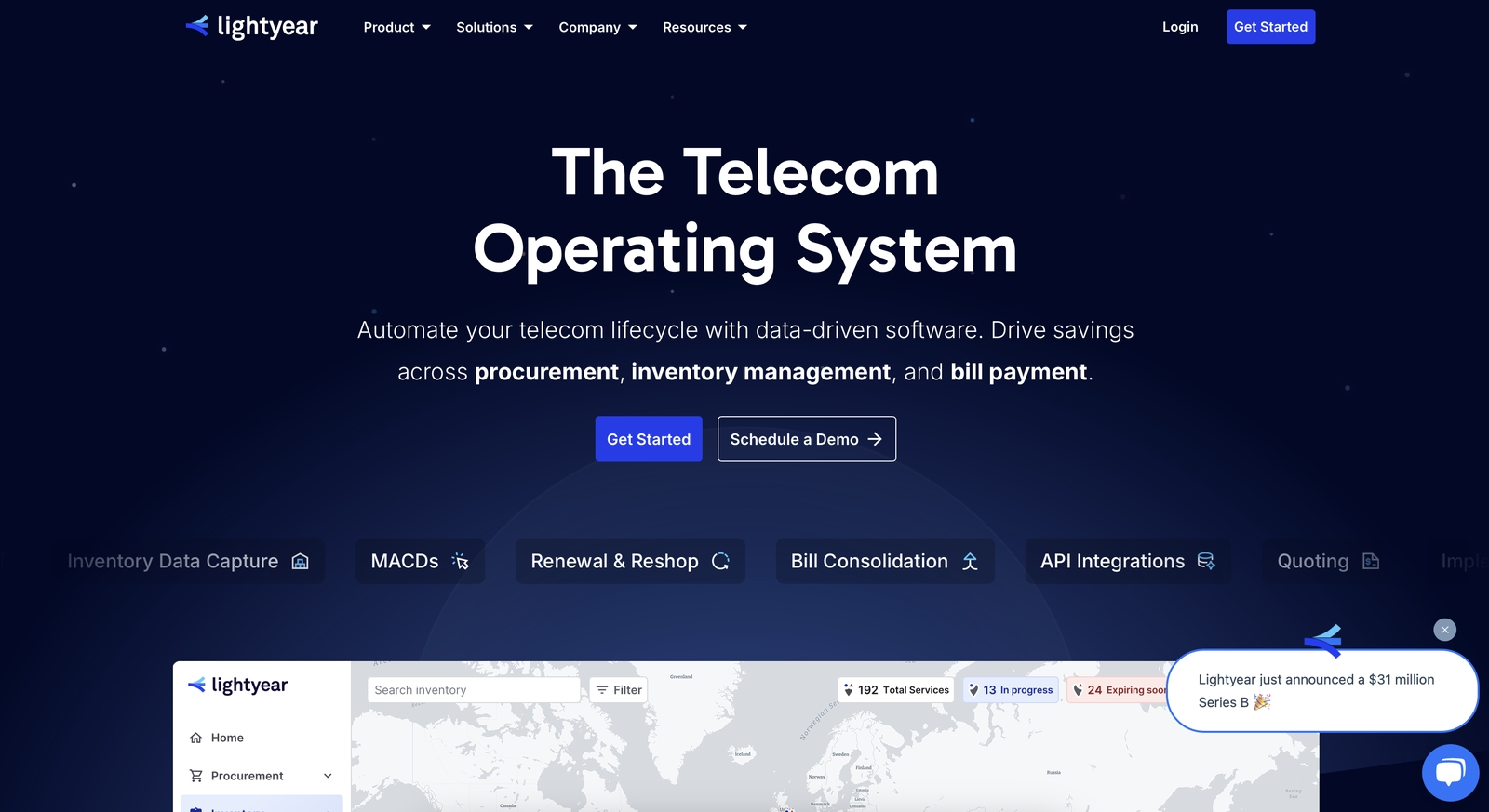
Whether you choose load balancing or channel bonding, managing the underlying network services is key. Lightyear automates the procurement and management of those circuits, helping you find the right connectivity from over 1,200 global carriers.
By automating network service procurement, inventory management, and bill consolidation, Lightyear takes the pain out of telecom infrastructure management. The hundreds of enterprises who trust Lightyear achieve 70%+ time savings and 20%+ cost savings on their network services.
Schedule a demo or get started with our questionnaire today.
Frequently Asked Questions about Load Balancing vs Channel Bonding
Can you use load balancing and channel bonding together?
Yes, in more complex network setups. For example, you could use channel bonding to create a single, high-speed link at a primary site, and then use a load balancer to failover traffic to a secondary site if needed.
What are the hardware requirements for each?
Load balancing can often be handled by a standard multi-WAN router. Channel bonding is more demanding, typically requiring specialized hardware or a specific SD-WAN service on both ends of the connection to manage packet splitting and reassembly.
Is one more expensive to implement?
Generally, channel bonding has a higher implementation cost due to its need for specialized hardware or subscription-based services. Load balancing can be achieved with more common and affordable routers, making it a more budget-friendly option for many businesses.
Let us show you the product and discuss specifics on how it might be helpful.
Schedule a Demo





Revolutionize Your Telecom Experience
Learn how you can get one step closer to optimal business efficiency for all your telecom services.