Long Range Router vs Mesh: Enterprise Network Solutions
Long range router vs. mesh? Learn the pros and cons of each system to find the right connectivity solution for your enterprise's unique layout.

Selecting the right networking solution is a critical decision for maintaining productivity and connectivity across your business. For IT leaders, the choice often comes down to providing consistent, high-speed Wi-Fi over a large or complex area.
Two prominent options are long-range routers and mesh network systems. While both aim to solve coverage issues, they use different methods and are suited for distinct enterprise environments.
This article will compare both technologies directly, helping you determine which is the better fit for your organization's specific infrastructure needs.
What is a Long Range Router?
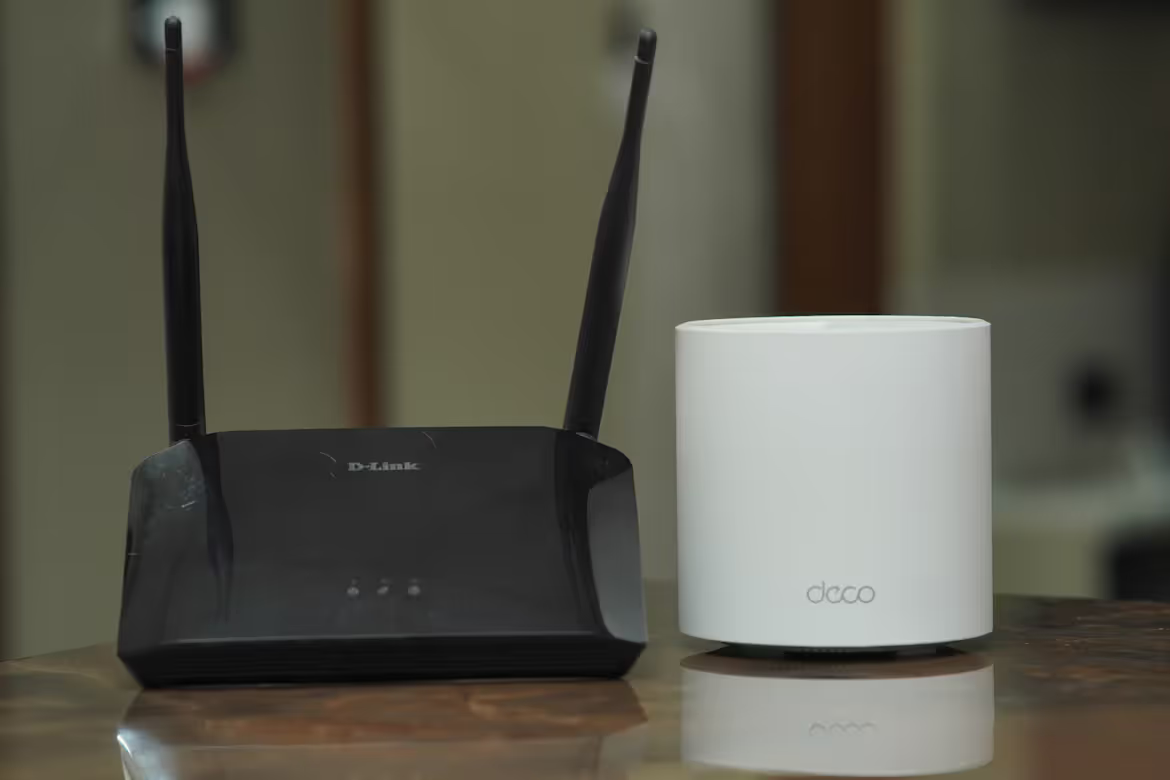
A long-range router is a single, high-powered wireless access point engineered to broadcast a Wi-Fi signal over a much larger area than a standard router. It functions as a central hub, pushing its signal out from one location using powerful hardware to maximize its reach and overcome physical obstructions.
- Centralized Hardware: The entire network is managed and broadcast from one device.
- High-Gain Antennas: It uses advanced, powerful antennas to transmit the Wi-Fi signal across greater distances.
- Strong Amplifiers: Internal amplifiers boost signal strength, helping it better penetrate obstacles like walls and floors.
- Signal Attenuation: Despite its power, the signal still weakens with distance and as it passes through physical barriers.
What is a Mesh Network?
A mesh network uses multiple interconnected access points, or "nodes," to create a single, unified Wi--Fi network. These nodes work together as a team to blanket an area with consistent coverage, rather than relying on a single device. If one node goes down, the others can reroute traffic to keep the network online, improving overall resilience.
- Decentralized System: A mesh system consists of a main router connected to the modem and several satellite nodes placed strategically throughout your space.
- Intelligent Routing: The nodes communicate with each other to automatically find the fastest and most reliable path for data, ensuring stable performance.
- Single Network Name (SSID): The entire system operates under one network name, allowing devices to seamlessly switch between nodes without dropping the connection.
- Scalable Coverage: You can easily expand the network’s reach by adding more nodes to cover new areas or eliminate dead zones.
Long Range Router vs Mesh Network: Key Differences
While both technologies aim to extend Wi-Fi, their methods for achieving it create important distinctions in performance, reliability, and administration.
1. Coverage and Consistency
A long-range router pushes its signal out from one central point. This can create inconsistent performance, with strong signal near the router and potential dead zones farther away or behind obstructions.
A mesh network, in contrast, blankets an area with multiple access points. This provides more uniform and consistent coverage, as devices can connect to the nearest node instead of a distant, single router.
2. Performance and Speed
With a long-range router, connection speed degrades significantly with distance. Devices at the edge of the network will experience much slower speeds and higher latency than those nearby.
Mesh systems maintain more stable performance across the entire coverage area. By routing traffic through the closest node, they deliver more consistent throughput for all connected devices.
3. Scalability
A long-range router is a static solution. If your coverage needs grow, you typically have to replace the unit or add a network extender, which can create management headaches.
Mesh networks are inherently scalable. You can easily add more nodes to the system to expand coverage into new areas or strengthen the signal in specific zones without replacing the entire setup.
4. Reliability
Because everything runs through one device, a long-range router is a single point of failure. If it malfunctions, your entire network goes down.
Mesh systems offer better resilience. If one node fails or loses connection, the system automatically reroutes traffic through other active nodes, keeping the network online.
Benefits of Using a Long Range Router
Despite the rise of mesh systems, a long-range router remains a strong contender in specific situations, offering clear advantages in cost and simplicity. For certain enterprise environments, its centralized approach is more practical and efficient.
- Cost-Effectiveness: A single, high-powered router is generally less expensive upfront than a multi-node mesh kit. This makes it an attractive option for businesses looking to maximize coverage on a tighter budget.
- Simplified Setup and Management: Managing one device is inherently simpler than overseeing an entire system of nodes. Configuration, firmware updates, and troubleshooting are all handled from a single administrative point.
- Direct, High-Speed Connection: For devices located within its optimal range, a long-range router can provide a very fast and low-latency connection since data travels directly to the access point without any hops between nodes.
- Ideal for Specific Layouts: In large, open-plan spaces like warehouses or single-floor offices with minimal interior walls, a centrally located long-range router can deliver excellent performance across the entire area.
Advantages of Mesh Networks
For businesses with complex layouts or a need for uninterrupted connectivity, mesh networks offer a powerful and adaptable solution. Their distributed nature addresses many of the limitations found in single-router setups.
- Consistent Coverage Everywhere: Mesh systems excel at delivering a strong, stable signal across challenging environments, including multi-story offices or buildings with dense walls. By placing nodes strategically, you can eliminate dead zones entirely.
- Seamless Roaming: The entire network operates under a single name. This allows employees to move freely throughout the workplace without their connection dropping, which is critical for maintaining VoIP calls or active data transfers.
- Self-Healing Capabilities: The network is inherently resilient. If one node goes offline, traffic is automatically rerouted through the nearest active node. This self-healing function improves uptime and reduces the need for immediate IT support.
- Flexible and Simple Expansion: Growing your network is straightforward. When you need to cover a new area or accommodate more users, you can simply add another node to the existing system without complex reconfiguration.
Choosing the Right Solution for Your Enterprise
Making the right choice depends on a clear assessment of your organization's unique environment and operational needs.
When to Choose a Long-Range Router
A long-range router is often the most practical choice for businesses with straightforward layouts and predictable coverage demands. Consider this option if your workspace is a large, open-plan area like a warehouse, a retail floor, or a single-story office with minimal interior walls.
In these environments, a powerful, centrally located router can provide sufficient coverage without the complexity of multiple nodes. It is also a strong candidate if budget is a primary driver and your IT team prefers the simplicity of managing a single device. For static environments where network expansion is not an immediate concern, its straightforward administration and lower upfront cost are significant advantages.
When to Choose a Mesh Network
A mesh network is the superior solution for enterprises with complex physical spaces or a high demand for uninterrupted connectivity. Opt for a mesh system if your office spans multiple floors or has dense construction materials like concrete and brick that block Wi-Fi signals.
The distributed nodes work together to ensure that coverage remains strong and even throughout the entire space, eliminating dead zones. This system is also ideal for environments where employees are highly mobile and rely on stable connections for tasks like VoIP calls or video conferences. The ability to easily add more nodes also makes it the right choice for growing businesses that anticipate future expansion.
Final Thoughts on Long Range Routers and Mesh Networks
The decision between a long-range router and a mesh network comes down to a fundamental trade-off: centralized power versus distributed coverage. Neither is inherently superior; the right choice depends entirely on your specific business environment and connectivity goals.
A long-range router offers a straightforward and cost-effective solution for large, open spaces where a single, powerful access point can provide adequate coverage. It excels in simplicity for both setup and ongoing management.
In contrast, a mesh network is built for complexity. It provides consistent, reliable Wi-Fi across multi-story buildings or layouts with signal-blocking obstructions, maintaining stable connections for mobile users.
Ultimately, evaluating your physical infrastructure, user demands, and future growth plans will point you to the most effective solution. A clear understanding of these factors is the first step toward building a dependable wireless network for your organization.
Need Help Managing Your Network? Lightyear Can Help
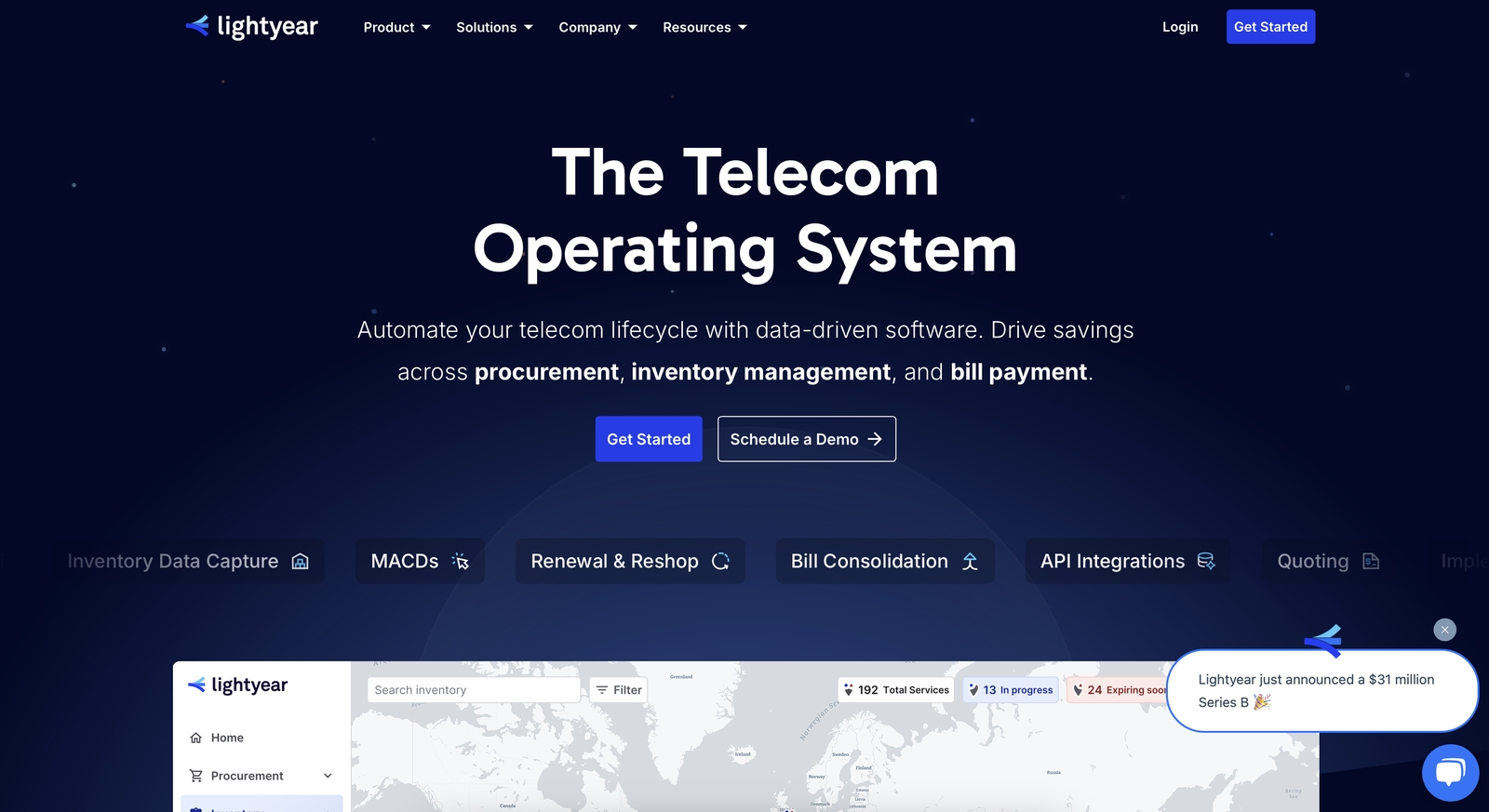
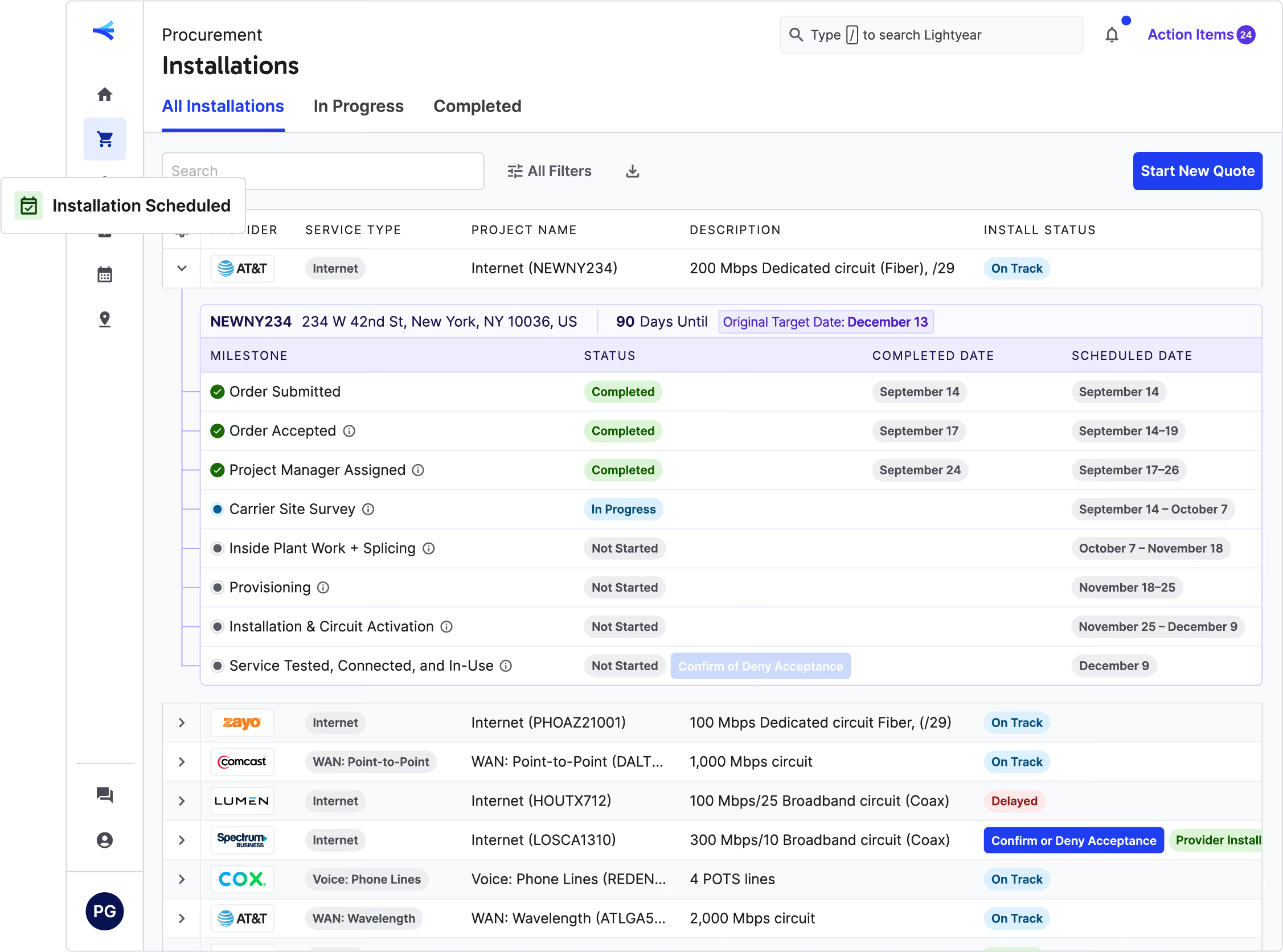
Choosing the right hardware is just the first step. Lightyear helps manage the underlying network services by automating procurement, inventory, and bill consolidation, taking the pain out of telecom infrastructure management.
The hundreds of enterprises who trust Lightyear achieve 70%+ time savings and 20%+ cost savings on their network services. Schedule a demo or get started with our questionare today.
Frequently Asked Questions about Long Range Router vs Mesh
Can I use my existing long-range router with a new mesh system?
While some routers can be integrated, it often creates management complexities and undermines the seamless roaming benefits of a true mesh network. For best performance and simplicity, it's recommended to use the dedicated router that comes with the mesh system.
Do mesh networks slow down internet speed?
Each connection, or "hop," between nodes can cause a slight speed reduction. However, this is usually minimal and far better than the significant speed loss you'd experience from a weak signal at the edge of a single router's range.
Which system is more secure?
Security is less about the system type and more about the manufacturer's support and your configuration. Both can be highly secure with features like WPA3 encryption. Always keep firmware updated and use strong passwords, regardless of your choice.
How many mesh nodes does a typical business need?
A good starting point is one node per 1,500-2,000 square feet, but this can change based on wall density and layout. It's often best to start with a two or three-node kit and add more only if you find dead zones.
Let us show you the product and discuss specifics on how it might be helpful.
Schedule a Demo





Revolutionize Your Telecom Experience
Learn how you can get one step closer to optimal business efficiency for all your telecom services.