Long Range Router vs WiFi Extender Comparison
Long range router vs. WiFi extender: which is right for your business? Learn the key differences in coverage, speed, and cost to make a smart choice.

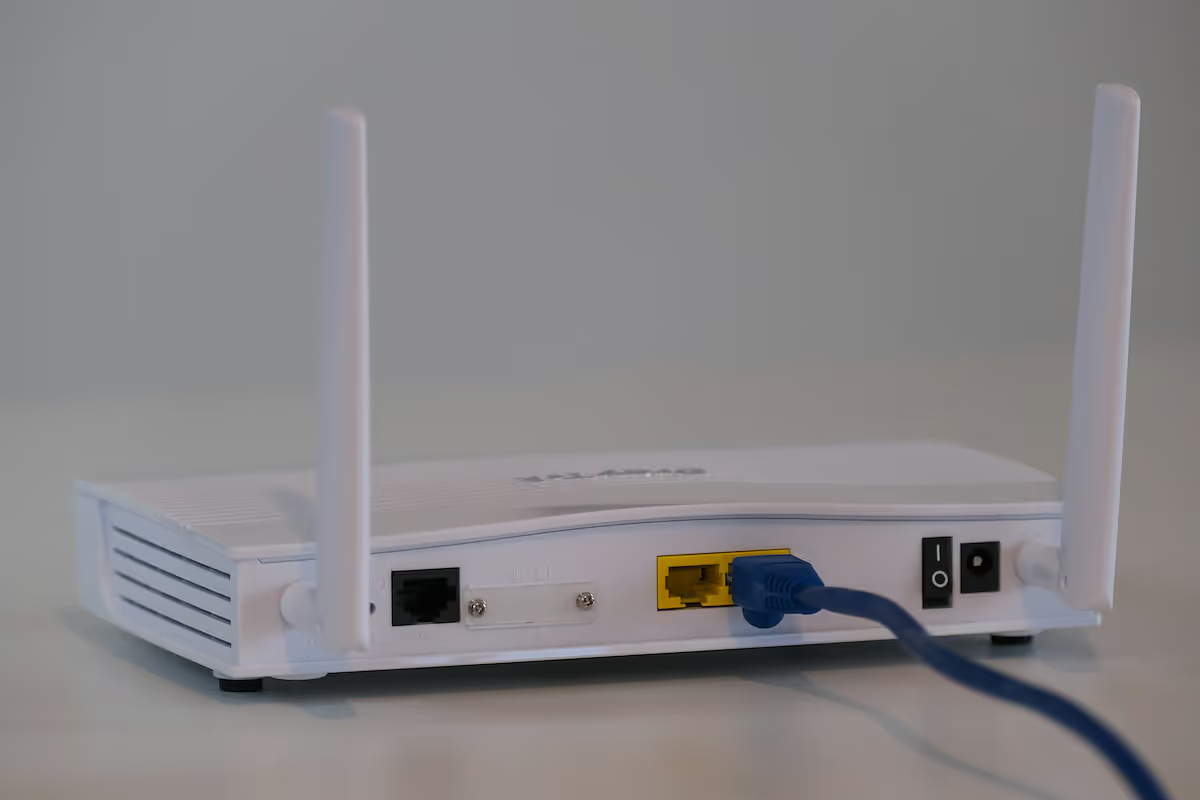
A weak or unreliable WiFi signal can bring business operations to a halt. When faced with poor connectivity, many IT teams consider either a long-range router or a WiFi extender to solve the problem.
While both devices aim to improve wireless coverage, they work in fundamentally different ways and are suited for different scenarios. This guide breaks down the key differences to help you decide which solution is the right fit for your organization's network.
What is a Long Range Router?
Think of a long-range router as a high-performance version of a standard router. It’s specifically engineered to broadcast a stronger, more stable WiFi signal over a much larger physical area, making it ideal for warehouses, large office floors, or outdoor commercial spaces.
This extended reach is achieved through a combination of superior hardware and software features:
- Powerful Antennas: They are typically equipped with multiple, high-gain antennas that push the signal further and with more precision than standard equipment.
- Stronger Amplifiers: Internal power amplifiers boost the signal strength, helping it penetrate walls, floors, and other physical obstructions more effectively.
- Beamforming Technology: Many models use beamforming to focus the WiFi signal directly toward connected devices rather than broadcasting it equally in all directions. This creates a more efficient and reliable connection for each user.
- Advanced Processors: They often contain more powerful processors to manage a higher number of connected devices and handle heavy network traffic without slowing down.
What is a WiFi Extender?
A WiFi extender, also known as a WiFi repeater, is a simpler device designed to expand the coverage of an existing wireless network. It works by capturing the signal from your primary router and rebroadcasting it to areas where connectivity is poor, such as a distant conference room or a separate floor.
Unlike a router that generates its own network, an extender acts as a relay point. Here’s how it functions:
- Signal Capture and Rebroadcast: The extender wirelessly connects to your main router, picks up the existing signal, and then retransmits it, creating a secondary network bubble.
- A New Network Name: This process usually creates a separate network SSID (e.g., "YourNetwork_EXT"), and devices must switch to this new network to benefit from the extended signal.
- Bandwidth Reduction: A critical point is that most extenders communicate with the router and devices on the same frequency band. This back-and-forth can cut the available bandwidth by up to 50% for devices connected to the extender.
- Strategic Placement: For the device to be effective, it must be placed in a location that still receives a solid signal from the primary router.
Long Range Router vs WiFi Extender: Key Differences
When you're weighing these two options, the decision often comes down to a few core trade-offs in performance, simplicity, and how the signal is handled.
Performance and Bandwidth
A long-range router is engineered to deliver maximum performance across its entire coverage area. Because it creates a single, powerful network, devices maintain access to the full bandwidth provided by your internet service.
Conversely, a WiFi extender must both receive and transmit data, which cuts the available bandwidth by up to 50% for any device connected to it. This can create a significant bottleneck for data-heavy business applications.
Network Management and Simplicity
With a long-range router, you manage one unified network with a single name (SSID) and password. This allows for seamless connectivity as users move throughout the space, with devices automatically staying on the strongest signal from one source.
An extender creates a separate network that requires manual switching. This can disrupt tasks like VoIP calls or file transfers and adds a layer of complexity for both users and IT management.
Signal Integrity and Reliability
The signal from a long-range router is a direct, robust connection from the source to your devices. This provides a more stable and reliable link for business-critical operations.
An extender’s signal is a rebroadcast. Its quality is entirely dependent on the signal it receives from the primary router, which can introduce latency and instability if not placed perfectly.
Benefits of Using a Long Range Router
Opting for a long-range router provides more than just extended reach; it builds a more stable and manageable network. For businesses, this translates into several key operational advantages.
Simplified Infrastructure
By covering a large area from one device, you reduce network complexity. This simplifies installation and maintenance, as there's only one piece of hardware to configure and troubleshoot. Fewer components also mean fewer potential points of failure, contributing to better overall network uptime.
Centralized Security Management
Securing your network is more straightforward with a single router. All security policies, access controls, and firmware updates are handled from one administrative point. This approach minimizes the risk of security gaps that can occur when managing multiple network devices.
Consistent High Performance
A long-range router ensures that all connected devices receive consistent, high-speed connectivity. This is vital for supporting demanding business applications like VoIP, video conferencing, and cloud-based software without the performance degradation that can occur with rebroadcasted signals.
Advantages of WiFi Extenders
While they come with performance trade-offs, WiFi extenders shine in specific scenarios, particularly when budget and simplicity are top priorities. Their main advantage is cost-effectiveness. An extender is a far less expensive investment than a new high-performance router, making it an accessible fix for isolated dead zones.
Setup is also typically simple. Most are plug-and-play devices that connect to your existing network in minutes, requiring minimal technical intervention. This makes them a practical tool for targeted fixes, such as bringing a signal to a single conference room or a remote corner of an office without a complete network overhaul.
Choosing the Right Solution for Your Enterprise Network
Making the right choice depends on your specific needs, budget, and the scale of the problem you're trying to solve. Here’s a straightforward guide to help you decide:
- Choose a long-range router when designing a network from the ground up or performing a major upgrade. It is the superior option for covering large, contiguous spaces like an entire office floor or warehouse where consistent speed and simple management are priorities. If your operations depend on stable connections for VoIP, video calls, or cloud applications, the router provides the necessary reliability and performance.
- Choose a WiFi extender to address small, isolated dead zones within an otherwise functional network. If you have a single room or a corner that struggles with connectivity and the activities there are not bandwidth-intensive, an extender offers a quick and low-cost fix. It's ideal for adding coverage without overhauling your existing infrastructure, as long as a drop in speed in that specific area is acceptable.
Final Thoughts on Network Expansion
Ultimately, the decision between a long-range router and a WiFi extender comes down to your core objective. Are you building a robust network foundation or simply patching a hole in your existing coverage?
A long-range router is an investment in performance and simplicity, creating a single, powerful network that supports demanding business activities without compromise. It is the right choice for foundational strength and reliability across large areas.
An extender, on the other hand, is a practical, low-cost tool for resolving isolated connectivity issues. It serves its purpose well when a drop in speed is an acceptable trade-off for bringing a signal to a specific dead zone.
By carefully evaluating your coverage gaps, bandwidth needs, and long-term goals, you can select the right tool to keep your operations running smoothly.
Need Help Managing Your Network? Lightyear Can Help
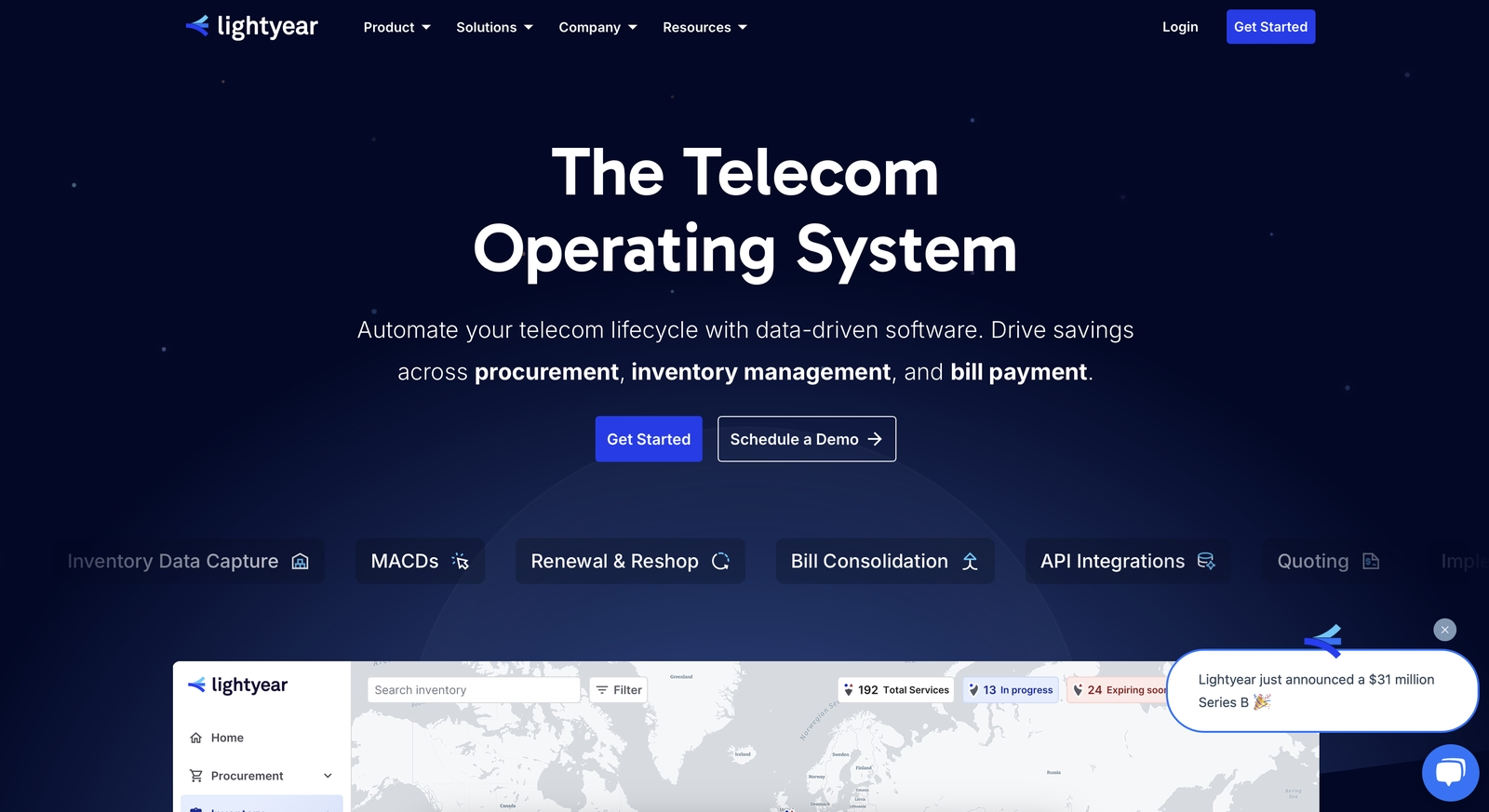
Choosing the right hardware is just one piece of the puzzle. Lightyear helps you manage the entire telecom lifecycle, from procuring the right internet circuits to tracking your network inventory and consolidating billing.
By automating these processes, our platform helps enterprises save over 70% in time and reduce costs by 20%, giving you the data to make smarter infrastructure decisions.
Schedule a demo or get started with our questionnaire today.
Frequently Asked Questions about Long Range Router vs WiFi Extender
Can I use a WiFi extender with a long-range router?
Yes, you can, but it's often not an ideal setup. A long-range router is designed for broad, consistent coverage on its own. Adding an extender can reintroduce the bandwidth and management issues you were trying to avoid in the first place.
How do mesh networks compare to these options?
Mesh networks use multiple nodes to create one seamless network with a single SSID. They offer better performance than extenders and are great for complex, multi-floor layouts, but are typically more expensive than a single long-range router or extender.
Will a WiFi extender work with any brand of router?
Generally, yes. Most modern WiFi extenders are universally compatible with any standard router. For best performance, just ensure both devices support the same WiFi standards, such as Wi-Fi 5 or Wi-Fi 6, to ensure they can communicate effectively.
Does a long-range router increase my internet speed?
No, a router cannot increase the speed from your internet provider. It improves your local network by delivering a stronger signal to your devices. This can make your connection feel faster by reducing lag and buffering, but it doesn't change your internet plan's speed.
Let us show you the product and discuss specifics on how it might be helpful.
Schedule a Demo





Revolutionize Your Telecom Experience
Learn how you can get one step closer to optimal business efficiency for all your telecom services.