Managed Firewall Providers: How to Choose With Lightyear
Learn how to choose the right managed firewall service provider, the benefits of MSSPs, and how Lightyear streamlines provider comparison and contracts.


Managed firewall service providers and broader managed security services play a quiet but critical role in defending against daily cyber threats. We’ve seen plenty of teams try to run firewalls on their own, only to discover how much time patching, monitoring, and responding to alerts can consume.
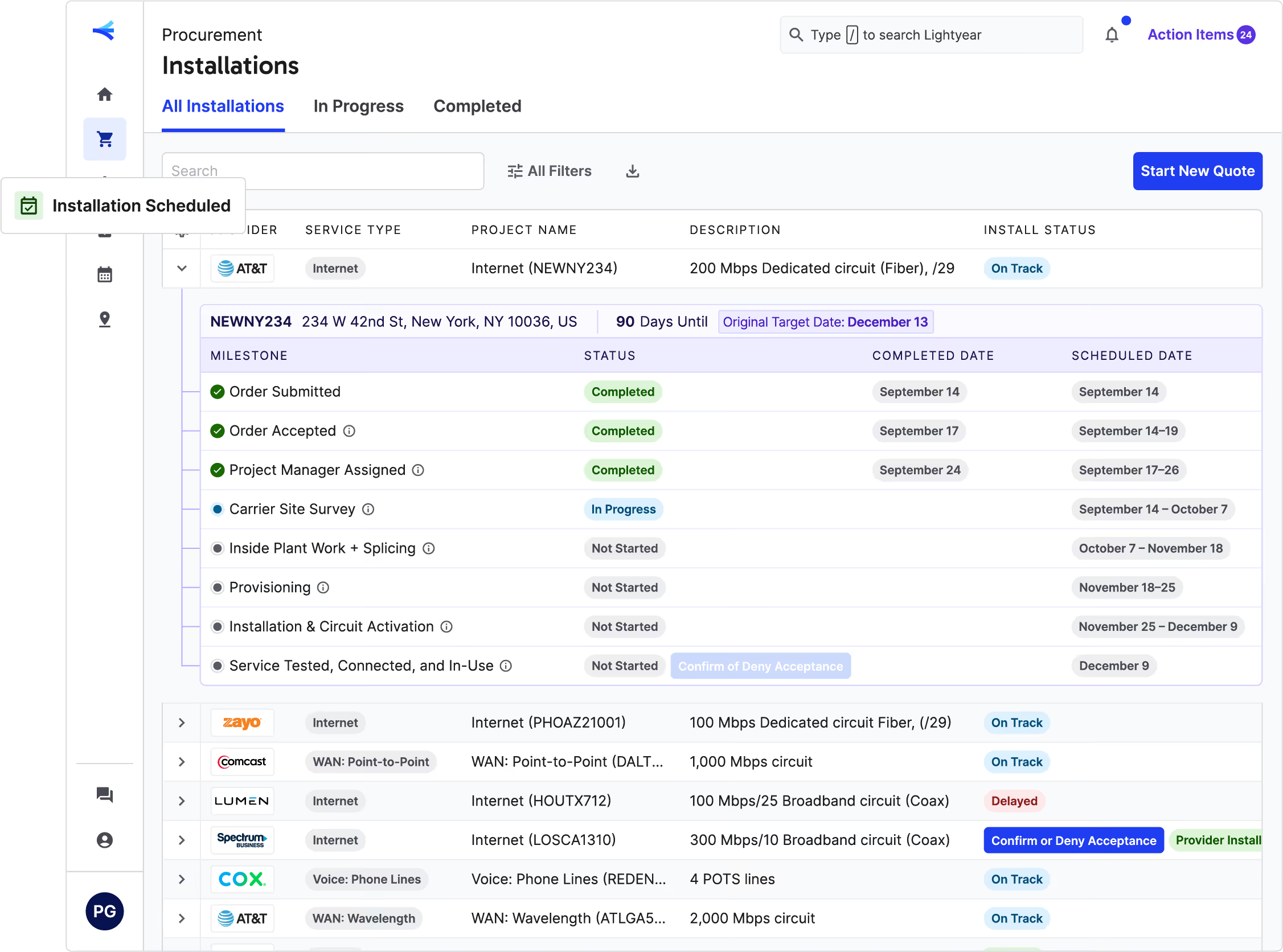
That’s where outsourcing makes sense — and where Lightyear fits in. We’re not a firewall vendor ourselves, but we give IT and finance teams the tools to compare providers, understand pricing, and keep contracts organized.
In this blog, we’ll cover what a managed firewall provider does, why companies choose MSSPs, how to evaluate options through the lens of firewall management, SASE/SD-WAN fit, and the practical steps Lightyear uses to help teams pick the right partner.
What is a Managed Firewall Service Provider?
A managed firewall service provider takes on the responsibility for all aspects of your firewall's operation and security. This means they handle everything from initial setup and configuration to ongoing monitoring, maintenance, and incident response.
Essentially, you outsource the expertise and labor required to keep your network perimeter secure, allowing your internal teams to focus on core business objectives.
Consider a managed firewall provider as your dedicated security team, constantly vigilant and highly specialized in firewall technologies. They deploy, manage, and tune firewalls across data centers, branch sites, web application edges, and multi-cloud workloads, reducing gaps that attackers try to exploit and giving your internal team confidence that perimeter defenses are always up to date.
Why Businesses Choose Managed Firewall Services
Why do businesses increasingly turn to managed firewall services? The reasons are compelling and directly address common pain points in modern IT environments.
- You gain access to specialized expertise. Security threats are sophisticated and always changing. Internal IT teams often lack the deep, specialized knowledge required to configure and maintain advanced firewalls effectively. A managed provider offers a team of certified security professionals.
- You enhance your security posture. Providers ensure your firewall rules are always optimized, patches are applied promptly, and configurations align with best practices, significantly reducing your attack surface.
- You achieve 24/7 monitoring and rapid response, often backed by SOC teams that specialize in threat prevention and escalation. Some providers extend this into zero trust and SASE architectures (see our explainer) so firewalls integrate with secure access and network connectivity.
- You reduce operational burden and free up internal resources. Managing a firewall is time-consuming. Offloading this responsibility allows your IT staff to concentrate on strategic initiatives rather than day-to-day security maintenance.
- You benefit from cost predictability and efficiency. Investing in and maintaining in-house security infrastructure and personnel can be expensive. Managed services often operate on a predictable subscription model, turning a variable capital expense into a more manageable operational one.
- You ensure compliance with industry regulations. Many industries have strict data security requirements. Providers help configure and maintain firewalls in a way that supports your compliance efforts, providing necessary logs and reports.
- You scale your security with ease. As your business expands or contracts, your security needs change. Managed services offer the flexibility to scale your firewall capabilities up or down without significant capital expenditure or re-architecting.
Core Capabilities of Managed Firewall Providers
Not every provider brings the same level of service. Some cover the basics — patching, VPN management, and traffic filtering — while others bundle in advanced monitoring, threat intelligence, and compliance reporting.
When we talk to IT leaders about evaluating managed firewall service providers, these are the areas that tend to matter most:
1. Comprehensive Security Features
A leading provider offers more than just basic packet filtering. Expect sophisticated security functionalities that create a multi-layered defense.
- Next-Generation Firewall (NGFW) capabilities: This includes application control, intrusion prevention systems (IPS), and advanced threat protection (ATP).
- Unified Threat Management (UTM): Look for integrated features like antivirus, anti-spam, web content filtering, and VPN capabilities.
- Advanced Malware Protection: The ability to detect and block sophisticated malware, ransomware, and zero-day exploits.
- Granular Access Control: The power to define precise rules for who can access what, from where, and at what time.
- Intrusion Detection/Prevention Systems (IDS/IPS): Systems that actively monitor network traffic for malicious activity and automatically take action to block threats.
2. Scalability and Flexibility
Adding branch sites or rolling out to the cloud shouldn’t require ripping and replacing security tools. Your managed service should grow and shrink with your business needs without disruption.
Providers that support both hardware appliances and cloud security deployments — especially those that tie into SD-WAN — make it easier to keep a secure network consistent everywhere.
Along with that, providers should offer:
- Support for various environments: Whether you operate on-premises, in the cloud, or a hybrid model, the provider should support your infrastructure.
- Bandwidth scalability: The ability to handle increasing traffic volumes without performance degradation.
- Geographic distribution: If your business has multiple locations, ensure the provider can secure your entire distributed network.
3. Proactive Monitoring and Alerting
Vigilance is key to cybersecurity. 24/7 monitoring is the main reason companies bring in an MSSP.
Having a SOC with real security experts watching your environment beats hoping your team spots something at 2 a.m. Just make sure to ask about escalation paths and customer support responsiveness.
A good provider gives you visibility through dashboards and reports, but also tells you what matters in plain terms. Core capabilities here are:
- 24/7/365 monitoring: Constant surveillance of your firewall and network traffic for anomalies and potential threats.
- Real-time alerting: Immediate notifications when suspicious activities or security incidents are detected.
- Customizable alerts: The ability to define what events trigger alerts and to whom they are sent.
- Detailed log analysis: Continuous analysis of firewall logs to identify patterns, potential vulnerabilities, and indicators of compromise.
4. Incident Response and Management
When incidents happen, speed counts. Some providers advertise response times in minutes, while others focus on structured remediation processes.
In practice, you want both: someone who can block the traffic quickly and still hand you a clear incident report.
- Defined incident response protocols: Clear procedures for how incidents are handled, from detection to containment and recovery.
- Dedicated security operations center (SOC): A team of experts ready to respond to threats at any time.
5. Regulatory Compliance and Auditing
Compliance requirements can’t be an afterthought. Providers in regulated industries usually offer monthly or quarterly reporting aligned with HIPAA, PCI DSS, or SOC 2.
Increasingly, those reports live in centralized management portals rather than scattered across emails — a welcome shift if you’ve ever tried to track audits manually.
- Expertise in industry-specific compliance standards: Understanding of GDPR, HIPAA, PCI DSS, SOX, and other relevant regulations.
- Compliance reporting: Providing documentation and reports necessary for audits.
- Audit trail maintenance: Maintaining detailed logs and records for compliance verification.
- Assistance with audits: Supporting your team during compliance audits, answering questions, and providing necessary evidence.
6. Expertise and Certifications
The quality of a managed service is directly tied to the competence of its people.
And that expertise shows up in different ways. Some MSSPs lean on deep expertise with specific vendors like Palo Alto or Cisco; others emphasize their team’s CISSP or CISM certifications. Either way, you want confidence that the people handling your firewall security know what they’re doing.
- Industry certifications: Look for certifications like CISSP, CompTIA Security+, CCNA Security, and vendor-specific firewall certifications (e.g., Palo Alto Networks, Fortinet, Cisco).
- Experience with diverse firewall vendors: A provider capable of managing various firewall technologies offers greater flexibility.
- Continuous training and development: The security landscape evolves rapidly; ensure the provider's team stays current.
- Proven track record: Evidence of successful deployments and long-term client relationships.
7. Transparent Reporting and Communication
You need to understand what's happening with your security. Fundamentally, that means establishing clear communication channels, such easy access to your account managers and security engineers.
- Regular performance reports: Clear, concise reports on firewall activity, security incidents, and threat landscape.
- Security posture assessments: Periodic evaluations of your overall security health and recommendations for improvement.
- Service level agreements (SLAs): Clearly defined expectations for response times, uptime, and service availability.
8. Cost-Effectiveness and Value
And of course, there’s pricing. Some charge per device, others per user or per site. Without automation, comparing them is nearly impossible.
- Predictable pricing models: Transparent pricing without hidden fees.
- Return on investment (ROI): Understand how the service reduces your security risk, frees up resources, and potentially lowers overall security costs.
- Value-added services: Does the provider offer additional services that enhance the overall value, such as security awareness training or vulnerability assessments?
- Long-term partnership potential: Can this provider grow with you and be a strategic security partner for years to come?
That’s one of the reasons we built Lightyear — to automate procurement and cut through the noise. (If you’re curious how pricing compares in other services, we’ve published breakdowns like Spectrum Enterprise vs. Lumen Technologies and Comcast Business vs. Spectrum Enterprise.)
How to Select the Right Managed Firewall Provider
Choosing the right provider is a strategic decision. It involves more than just comparing price lists; you are entrusting your network's perimeter security to an external entity.
- Define Your Needs: Begin by clearly outlining your specific security requirements, current infrastructure, compliance obligations, and budget. What problems are you trying to solve?
- Research Potential Providers: Look for providers with a strong reputation, extensive experience, and relevant certifications. Industry recognition and client testimonials are good indicators.
- Assess Their Core Capabilities: . Do they only manage firewalls, or do they also cover managed detection and response (MDR), XDR, and endpoint security? Broader scope often reduces vendor sprawl?
- Evaluate Their Security Posture: Ask about their own security practices. How do they secure their infrastructure and data?
- Review SLAs: Carefully examine the proposed Service Level Agreements. Do they guarantee the response times and availability you need?
- Understand Their Onboarding Process: How quickly and smoothly can they integrate their services with your existing environment?
- Consider Their Support Model: What kind of support will you receive? Is it 24/7? What are the escalation procedures?
- Request References: Speak to current clients to get a real-world perspective on their experience with the provider.
12 Questions to Ask Providers
When you engage with potential providers, be prepared with incisive questions. These will help you uncover critical details beyond the sales pitch.
- "What is your typical client profile, and do you have experience with businesses of our size and industry?"
- "What specific firewall technologies do you support, and what is your expertise level with each?"
- "Describe your 24/7 monitoring capabilities. What tools and processes do you use for threat detection and alerting?"
- "Can you walk us through your incident response plan for a typical security breach?"
- "How do you ensure our firewall configurations remain compliant with relevant regulations (e.g., HIPAA, PCI DSS)?"
- "What reporting do you provide, and how frequently? Can we customize these reports?"
- "What are your typical response times for critical incidents as per your SLA?"
- "How do you handle software updates, patches, and firmware upgrades for our firewalls?"
- "What is your approach to vulnerability management and penetration testing for the managed firewalls?"
- "Can you provide examples of how you have helped a client improve their security posture or respond to a significant threat?"
- "What is your pricing model, and what exactly is included/excluded from your service?"
- "What happens during an offboarding scenario? How do we regain full control and access to our firewall configurations?"
Implementing and Managing a Managed Firewall Service
Selecting a provider is only step one. The bigger challenge is making sure the implementation goes smoothly and that ongoing firewall management fits into your broader security solutions.
This is also where a platform like Lightyear can help — by keeping your provider contracts, configs, and renewal terms in one place.
What to Expect After You Choose
- Discovery and Planning: The provider will conduct a thorough assessment of your current network, security policies, and business objectives to tailor their solution.
- Configuration and Deployment: They will configure the firewall devices or services according to best practices and your specific requirements, integrating them seamlessly into your network.
- Testing and Validation: Rigorous testing ensures the firewall is functioning as intended, blocking malicious traffic while allowing legitimate business operations.
- Ongoing Monitoring and Management: This is where the continuous value lies. The provider will actively monitor your firewall, analyze logs, apply updates, and respond to any emerging threats.
- Regular Reviews: Expect periodic meetings to review performance reports, discuss security posture, and address any evolving needs or concerns.
Your role in this process involves providing necessary access and information, reviewing reports, and maintaining open communication with your managed service team.
How Lightyear Simplifies Managed Firewall Procurement
Finding the right managed firewall provider doesn’t have to mean months of RFPs and back-and-forth emails. Lightyear is not itself a firewall vendor; we’re the platform that makes procurement and management faster, clearer, and more cost-effective.
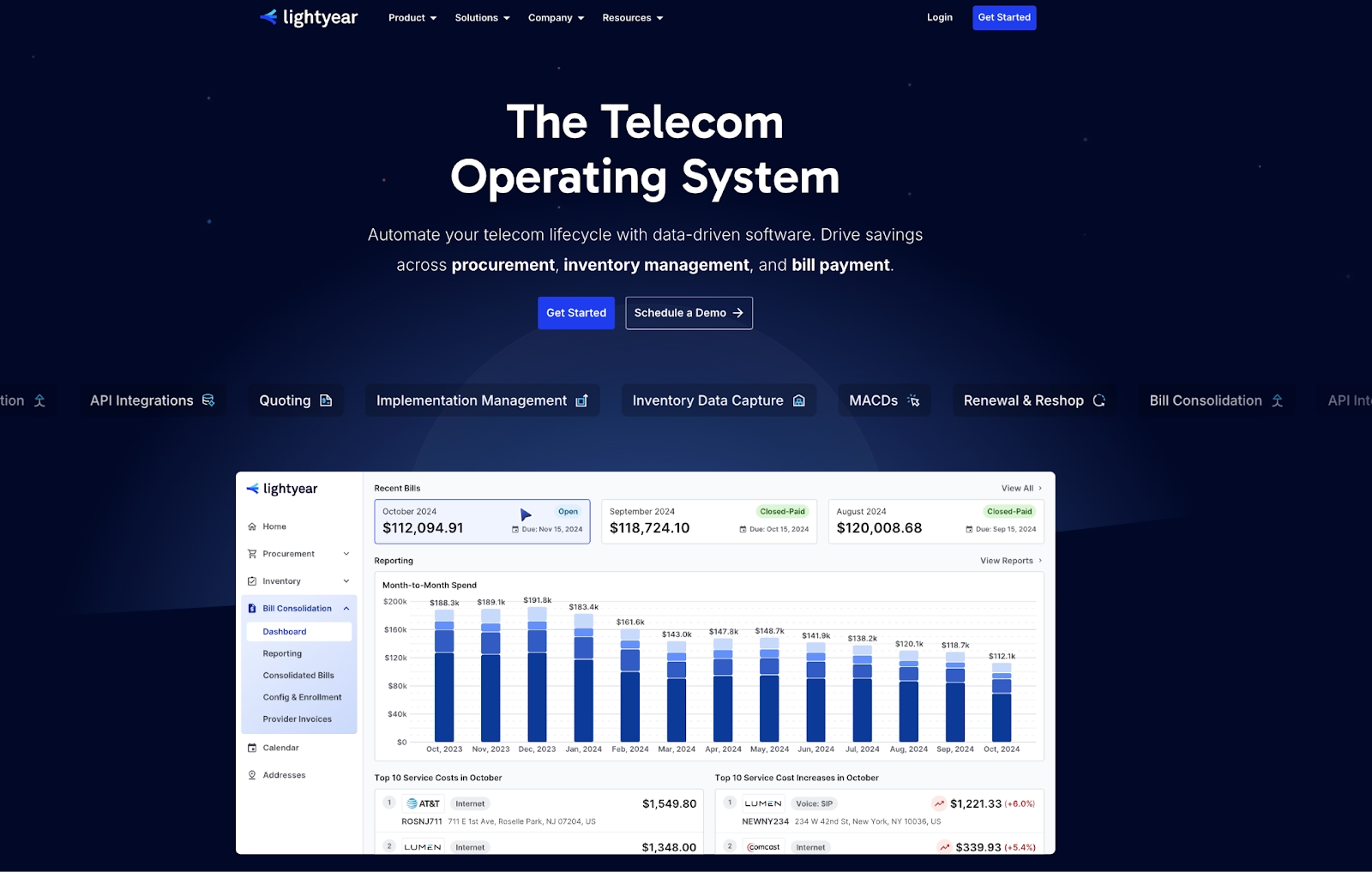
Here’s how Lightyear supports enterprises evaluating managed security service providers:
- Procurement Automation
- Digital RFP creation and vendor comparison in one place.
- Instant visibility into SLA terms, pricing, and contract language.
- Cuts weeks off the traditional procurement cycle.
- Network Inventory Manager
- Tracks firewall configs, static IPs, and renewals across sites.
- Works with WAN, SD-WAN, SASE, and cloud security deployments.
- Reduces risk of missed updates or hidden costs.
- Bill Consolidation
- One invoice across multiple MSSPs and telecom vendors.
- Easier budget forecasting for IT and finance.
- Highlights optimization opportunities.
Start Your Managed Firewall Provider Search With Lightyear
The right provider strengthens security while reducing overhead. Lightyear gives you the tools to compare options, manage contracts, and control costs.
Start your managed firewall provider search with Lightyear today. Compare providers with our questionnaire, or request a free demo to get started.
Let us show you the product and discuss specifics on how it might be helpful.
Schedule a Demo





Revolutionize Your Telecom Experience
Learn how you can get one step closer to optimal business efficiency for all your telecom services.