Massive MIMO vs MIMO: Enterprise Network Differences
MIMO vs. Massive MIMO—what's the difference? Learn how antenna count affects your enterprise network's speed, capacity, and performance.


Multiple-Input, Multiple-Output (MIMO) technology is a foundational element of modern wireless communication, used in everything from Wi-Fi to 5G networks. It functions by using multiple antennas at both the transmitter and receiver to improve signal quality and increase data speeds.
As network demands have grown, a more powerful version has emerged: Massive MIMO. For enterprise IT and network buyers, understanding the practical differences between standard MIMO and Massive MIMO is crucial for making informed infrastructure and connectivity decisions.
What is MIMO?
At its core, MIMO leverages multiple antennas to transmit and receive more data at once, which significantly boosts wireless performance. Think of it as upgrading from a single-lane road to a multi-lane highway for your data. Here’s how it works:
- Spatial Multiplexing: MIMO sends multiple, unique data streams simultaneously over the same radio channel. This technique directly increases data throughput and network capacity without needing more spectrum.
- Beamforming: The technology intelligently focuses a wireless signal in a specific direction, steering it directly toward the receiving device. This results in a stronger, more stable connection and minimizes interference for other users.
- Diversity Gain: To improve reliability, MIMO can send redundant data streams across different antenna paths. If one path experiences interference or signal degradation, the others can still deliver the data successfully.
What is Massive MIMO?
Massive MIMO is an advanced form of MIMO that dramatically increases the number of antennas at the base station. Instead of using a few antennas, Massive MIMO systems deploy arrays with dozens or even hundreds of antennas to serve multiple users at once with greater efficiency.
This large-scale antenna configuration allows for significant performance gains:
- Large-Scale Antenna Arrays: Base stations are equipped with a high number of antennas (e.g., 32, 64, or 128), far exceeding the two to eight antennas typical in standard MIMO setups.
- 3D Beamforming: The system creates highly focused, three-dimensional beams of energy that can be steered both horizontally and vertically. This precision targeting delivers stronger signals to users and reduces interference.
- Multi-User MIMO (MU-MIMO): It excels at serving many devices simultaneously within the same frequency band. Each user gets their own dedicated spatial stream, which greatly boosts the cell's total capacity and throughput.
Key Differences Between MIMO and Massive MIMO
While both technologies are built on the same principles, their differences in scale and capability are significant. Here’s a breakdown of where they diverge.
1. Antenna Scale and Complexity
The most obvious difference is the number of antennas involved. Standard MIMO typically uses a small array, often between two and eight antennas.
Massive MIMO, as its name suggests, scales this up dramatically, deploying arrays with dozens or even hundreds of antennas at the base station. This larger scale is fundamental to its performance gains.
2. Beamforming Precision
Standard MIMO uses beamforming to direct signals toward a user, improving signal strength. However, its precision is limited.
Massive MIMO enables highly precise 3D beamforming. It creates narrow, targeted energy beams that can be steered both horizontally and vertically, delivering a stronger connection while significantly reducing interference for nearby users.
3. User Capacity and Interference
Traditional MIMO primarily enhances the connection for a single user at a time. While effective, it doesn’t scale well for many simultaneous users in the same area.
Massive MIMO excels at Multi-User MIMO (MU-MIMO), serving many devices at once with dedicated spatial streams. This approach drastically increases the overall capacity of the cell and minimizes the signal degradation that occurs in crowded networks.
Benefits of MIMO for Enterprises
Even without the massive scale, standard MIMO offers significant advantages for business networks by improving both speed and stability. For many enterprise environments, these foundational benefits are more than enough to support daily operations.
- Higher Data Speeds: By sending multiple data streams at once, MIMO increases the overall throughput of your wireless network. This means faster downloads, smoother video conferencing, and better performance for cloud-based applications.
- Greater Reliability: The use of multiple antennas creates redundant data paths, which minimizes the impact of interference and signal fading. This leads to more stable connections and fewer frustrating drop-offs for users.
- Enhanced Coverage: Beamforming helps focus the wireless signal directly toward connected devices. This targeted approach extends the effective range of your Wi-Fi and helps eliminate dead zones within an office or warehouse.
Advantages of Massive MIMO in Modern Networks
While standard MIMO improves network performance, Massive MIMO provides advantages on a much larger scale, making it critical for next-generation connectivity. For businesses in high-demand settings, these benefits directly address modern network challenges.
- Superior Capacity in Dense Areas: It excels in environments like large offices, event venues, or public hubs. The system can handle many concurrent users without performance degradation, providing a reliable connection for everyone.
- Increased Energy Efficiency: The technology's precise signal targeting means less power is wasted. This can lead to lower operational costs and supports sustainability goals for the organization.
- Better Spectrum Efficiency: Massive MIMO gets more out of the available radio spectrum. It transmits more data over the same frequencies, maximizing the value of this finite resource for private and public networks.
Challenges and Considerations for Implementing Massive MIMO
While the benefits are compelling, adopting Massive MIMO isn't without its hurdles. Here are a few key considerations for any organization evaluating this technology.
1. Higher Initial Costs
The most significant barrier is the upfront investment. Massive MIMO requires a large number of antennas and powerful signal processing hardware, making it considerably more expensive to deploy than standard MIMO systems.
2. Increased Signal Processing Demands
Managing hundreds of antenna signals in real-time is computationally intensive. This requires sophisticated algorithms and robust back-end hardware to handle the complex calculations needed for precise 3D beamforming.
3. Physical Installation Constraints
The large antenna arrays also present practical challenges. They require more physical space and structural support than smaller MIMO setups, which can complicate installation on existing towers or buildings, especially in dense urban environments.
Making the Right Choice for Your Network Needs
Choosing between standard MIMO and Massive MIMO comes down to your specific operational needs and environment. Both technologies improve wireless performance, but they solve different problems at different scales.
- Standard MIMO is ideal for: Most enterprise environments like offices, warehouses, and retail stores. It provides a cost-effective boost to speed, reliability, and coverage for everyday business applications. If your primary goal is to eliminate dead zones and ensure stable connectivity for your team, standard MIMO is a practical and sufficient choice.
- Massive MIMO is necessary for: High-density locations or future-proofing for next-generation demands. Think large public venues, transportation hubs, or smart factories where hundreds or thousands of devices need simultaneous, high-speed connections. It's a strategic investment for scenarios where network capacity and efficiency are paramount.
Need Help Managing Your Network? Lightyear Can Help
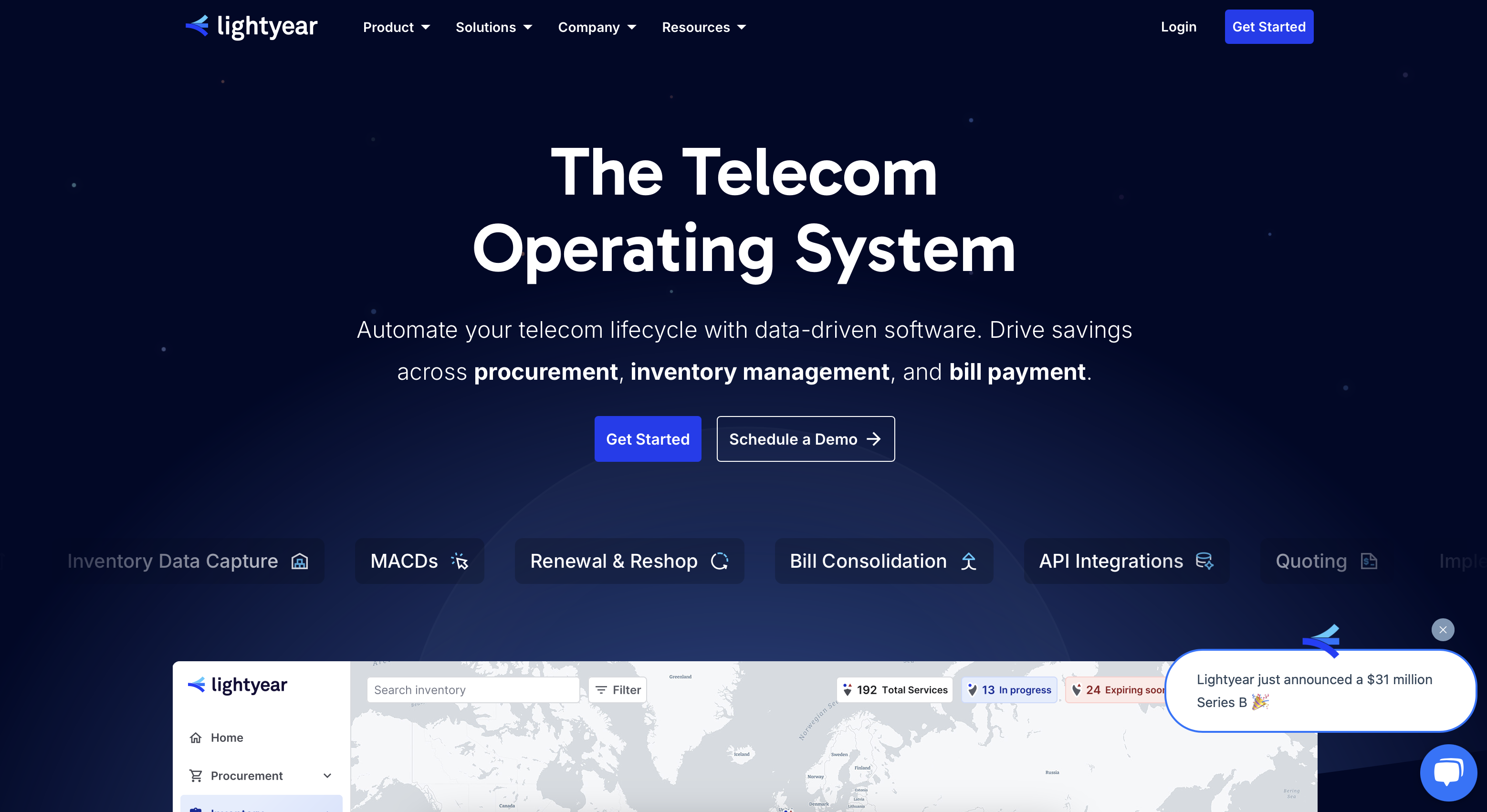
Whether your enterprise network relies on standard MIMO or you're planning for Massive MIMO, managing the procurement and inventory for these services is a major task. Lightyear's platform automates this process, giving you a clear view of your entire telecom infrastructure.
By automating network service procurement and bill consolidation, we help enterprises achieve over 20% in cost savings and 70% in time savings, freeing up your team to focus on strategic decisions.
Schedule a demo or get started with our questionnaire today.
Frequently Asked Questions about Massive MIMO vs MIMO
Is Massive MIMO only for 5G networks?
While it is a core component of 5G, its principles can apply to other standards like advanced Wi-Fi. However, its most impactful implementation is within 5G infrastructure, where it addresses high user density and massive data demands.
Do we need special devices to connect to a Massive MIMO network?
No, existing devices that support the network's frequency band can benefit. The advanced processing happens at the base station, not on your device, improving performance for all compatible hardware without requiring special equipment for users.
How does Massive MIMO impact network latency?
Massive MIMO generally reduces latency. By creating dedicated, interference-free signal paths for each user, it minimizes delays caused by network congestion and data re-transmissions. This leads to a more responsive connection for real-time applications.
Let us show you the product and discuss specifics on how it might be helpful.
Schedule a Demo





Revolutionize Your Telecom Experience
Learn how you can get one step closer to optimal business efficiency for all your telecom services.