Mesh Router vs Repeater: Enterprise Network Solutions
Mesh router vs. repeater for your enterprise network? Learn the key differences in performance, cost, and scalability to make the right choice.

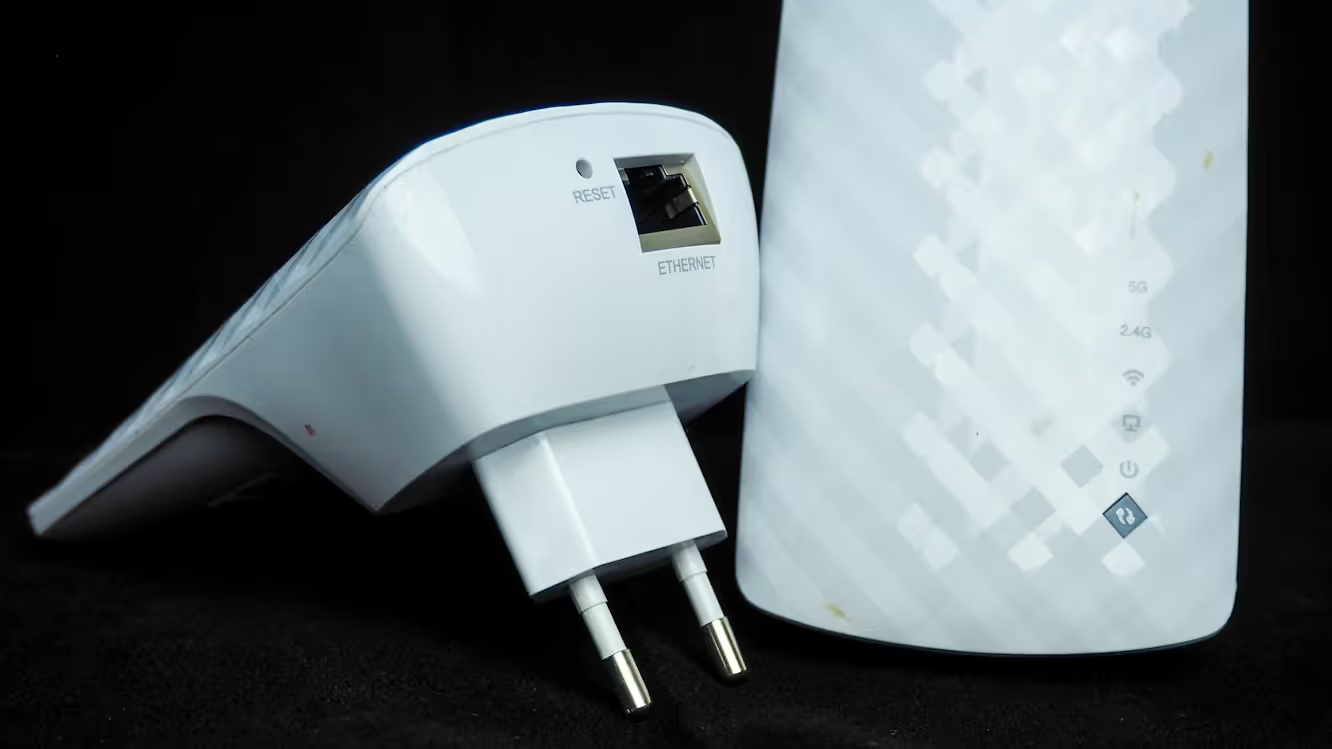
If your business is struggling with Wi-Fi dead zones or unreliable connections, you've likely come across two potential fixes: mesh routers and Wi-Fi repeaters.
While both are designed to extend your wireless network's reach, they accomplish this goal in fundamentally different ways, with significant implications for performance and management.
This article will compare mesh routers and repeaters, helping you decide which solution is the right fit for your enterprise network needs.
What is a Mesh Router?
A mesh router system uses multiple access points, or "nodes," to create a single, unified wireless network. Think of it as a team of routers working together to provide consistent coverage across a large area. One node connects directly to your modem and acts as the primary router, while the other satellite nodes are placed throughout your space.
These nodes communicate with each other to form a single, robust network. Here’s how it works:
- Unified Network: All nodes broadcast under a single network name (SSID). Your devices automatically connect to the node with the strongest signal, allowing for seamless roaming as you move around.
- Intelligent Data Routing: The nodes are smart and dynamically find the most efficient path for data to travel back to the main router. If one node goes down or becomes congested, traffic is automatically rerouted through another node.
- Easy Expansion: Coverage can be easily expanded by simply adding more nodes to the existing system, making it a scalable solution for growing businesses.
What is a Repeater?
A Wi-Fi repeater, also known as a Wi-Fi extender, is a simpler device that works by capturing the existing signal from your main router and rebroadcasting it to extend its range. It essentially acts as a middleman, boosting the signal to reach farther.
- Signal Rebroadcasting: A repeater typically creates a separate network from your main one. This means that as you move through your space, your devices won't automatically switch between the router and the repeater; you may need to do so manually to get the best connection.
- Performance Impact: Because a repeater has to receive and then retransmit data using the same radio, it effectively cuts the available bandwidth in half for any devices connected to it. This can lead to a significant drop in speed.
- Placement is Critical: The repeater must be placed in a location where it can still receive a strong, stable signal from the main router. If the signal it receives is weak, the signal it rebroadcasts will also be weak, limiting its effectiveness.
Mesh Router vs Repeater: Key Differences
While both aim to expand your Wi-Fi, their approach leads to significant differences in performance, management, and cost for an enterprise environment.
1. Performance and Speed
Mesh systems are designed to maintain high speeds across your entire coverage area. The nodes communicate with each other, often using a dedicated wireless channel (a backhaul), so data traffic doesn't get congested and slow down.
In contrast, a repeater uses the same radio to both receive and retransmit the Wi-Fi signal. This process inherently reduces the available bandwidth by up to 50% for any device connected through the repeater, leading to slower speeds.
2. Network Management and Roaming
A mesh system creates a single, unified network with one name (SSID). Your devices automatically connect to the node with the strongest signal as you move, providing a smooth and uninterrupted connection without manual switching.
A repeater usually creates a separate network with its own name. This forces users to manually switch between the main router's network and the repeater's network to find the best signal, which can be disruptive for tasks like video calls.
3. Scalability and Coverage
Mesh networks are built to scale easily. You can add more nodes to cover larger or more complex office layouts, and each new node intelligently integrates into the network to improve overall coverage and performance.
Adding multiple repeaters is not an effective scaling strategy. Each additional repeater in a chain further degrades the signal, resulting in a slow and unreliable connection for users at the far end.
4. Cost
Wi-Fi repeaters are a lower-cost solution for extending a network. A single device is significantly less expensive than a complete mesh system, making it a budget-friendly choice for simple needs.
Mesh router systems require a larger upfront investment. This cost covers their more advanced technology, better performance, and simplified management, which is often a necessary trade-off for business-critical operations.
Benefits of Using a Mesh Router
Beyond the core advantages in performance and coverage, mesh systems offer several practical benefits that are particularly valuable for business environments.
- Centralized Network Management: Most mesh systems are managed through a single, intuitive interface, often a mobile app or web dashboard. This allows IT teams to easily monitor network health, manage connected devices, and configure settings across all nodes from one place, simplifying administration.
- Built-in Redundancy: The interconnected nature of mesh nodes creates a self-healing network. If one node fails or loses connection, data traffic is automatically rerouted through the nearest operational node. This design minimizes downtime and maintains a stable connection for all users.
- Advanced Security Features: Many mesh platforms come equipped with integrated security tools. These can include automatic firmware updates to patch vulnerabilities, secure guest network options to isolate visitor traffic, and sometimes built-in threat protection, adding a crucial layer of security for your business data.
Advantages of Using a Repeater
While mesh systems provide a comprehensive network overhaul, repeaters hold their own advantages, particularly for targeted and budget-conscious applications.
- Cost-Effective for Specific Problems: If you only need to extend Wi-Fi to a single, isolated dead zone—like a conference room or a back office—a repeater is a very inexpensive way to solve that one problem without investing in a whole new system.
- Simple Installation: Repeaters are known for their straightforward setup. Most are plug-and-play devices that require minimal configuration, offering a quick and easy fix for an immediate connectivity gap.
- Compatibility with Existing Hardware: A repeater can be added to nearly any standard wireless network. This means you don't have to replace your existing router, which is a significant benefit if you want to augment your current infrastructure rather than overhaul it.
Choosing the Right Solution for Your Enterprise Network
Deciding between a mesh system and a repeater comes down to your specific business needs, budget, and the scale of your connectivity problems.
1. Choose a Mesh Router for a Comprehensive Network Upgrade
A mesh system is the right choice when you need reliable, high-performance coverage across your entire business premises. It's ideal for large or complex office layouts with multiple floors or signal-blocking materials.
If your operations depend on stable connectivity for tasks like video conferencing, VoIP calls, or cloud-based applications, the investment in a mesh network provides the necessary consistency and speed. It is the strategic choice for a new office setup or a complete overhaul of an aging, unreliable network.
2. Choose a Repeater for a Targeted, Low-Cost Fix
A Wi-Fi repeater is a practical solution when you have a limited, well-defined problem. If you only need to extend your network to a single dead zone, such as a conference room or a remote corner of a warehouse, a repeater offers a simple and affordable fix.
This option makes sense when your existing router is performing well otherwise and you can tolerate a potential drop in bandwidth in that extended area. It's a tactical tool for solving an immediate, isolated connectivity issue without a large capital expense.
Final Thoughts on Mesh Routers and Repeaters
Choosing between a mesh router and a repeater ultimately comes down to the problem your business needs to solve. A mesh system creates an entirely new, unified network designed for consistent performance and seamless roaming across a large area.
In contrast, a repeater is a simpler tool that extends your current network's signal to a specific dead zone, though this usually comes with a reduction in speed for connected devices.
If your goal is a complete network overhaul for an office that depends on stable, high-speed connectivity, a mesh system is the more strategic investment. For a quick and low-cost fix for a single problem area where top speed isn't critical, a repeater is a practical choice.
By evaluating your coverage gaps, performance demands, and budget, you can select the right technology to support your team's productivity.
Need Help Managing Your Network? Lightyear Can Help
Choosing the right hardware is just the first step. Lightyear helps you manage the entire telecom lifecycle that runs on it, from procuring new services to managing inventory and paying the bills.
By automating network service procurement, inventory management, and bill consolidation, Lightyear removes the complexity of telecom infrastructure management. The hundreds of enterprises who trust Lightyear achieve over 70% time savings and 20% cost savings on their network services.
Schedule a demo or get started with our questionnaire today.
Frequently Asked Questions about Mesh Router vs Repeater
Can I use an Ethernet cable to connect mesh nodes?
Yes, most business-focused mesh systems support a wired “Ethernet backhaul.” Connecting nodes via Ethernet cable frees up wireless bandwidth for your devices, resulting in faster speeds and a more stable connection. This is the best practice for maximizing performance.
Can I mix mesh nodes from different brands?
No, mesh systems are proprietary. Nodes from different brands cannot communicate with each other. You must use nodes from the same manufacturer to ensure they work together as a single, unified network under one management interface.
Can a repeater be used to extend a mesh network?
While technically possible, it is highly discouraged. Adding a repeater to a mesh network creates a separate, slower network segment and negates the seamless roaming benefit. This approach undermines the core advantages of investing in a mesh system.
Let us show you the product and discuss specifics on how it might be helpful.
Schedule a Demo





Revolutionize Your Telecom Experience
Learn how you can get one step closer to optimal business efficiency for all your telecom services.
