Microsegmentation vs Network Segmentation: Key Differences
Confused by microsegmentation vs. network segmentation? This guide explains the key differences to help you choose the best fit for your network.

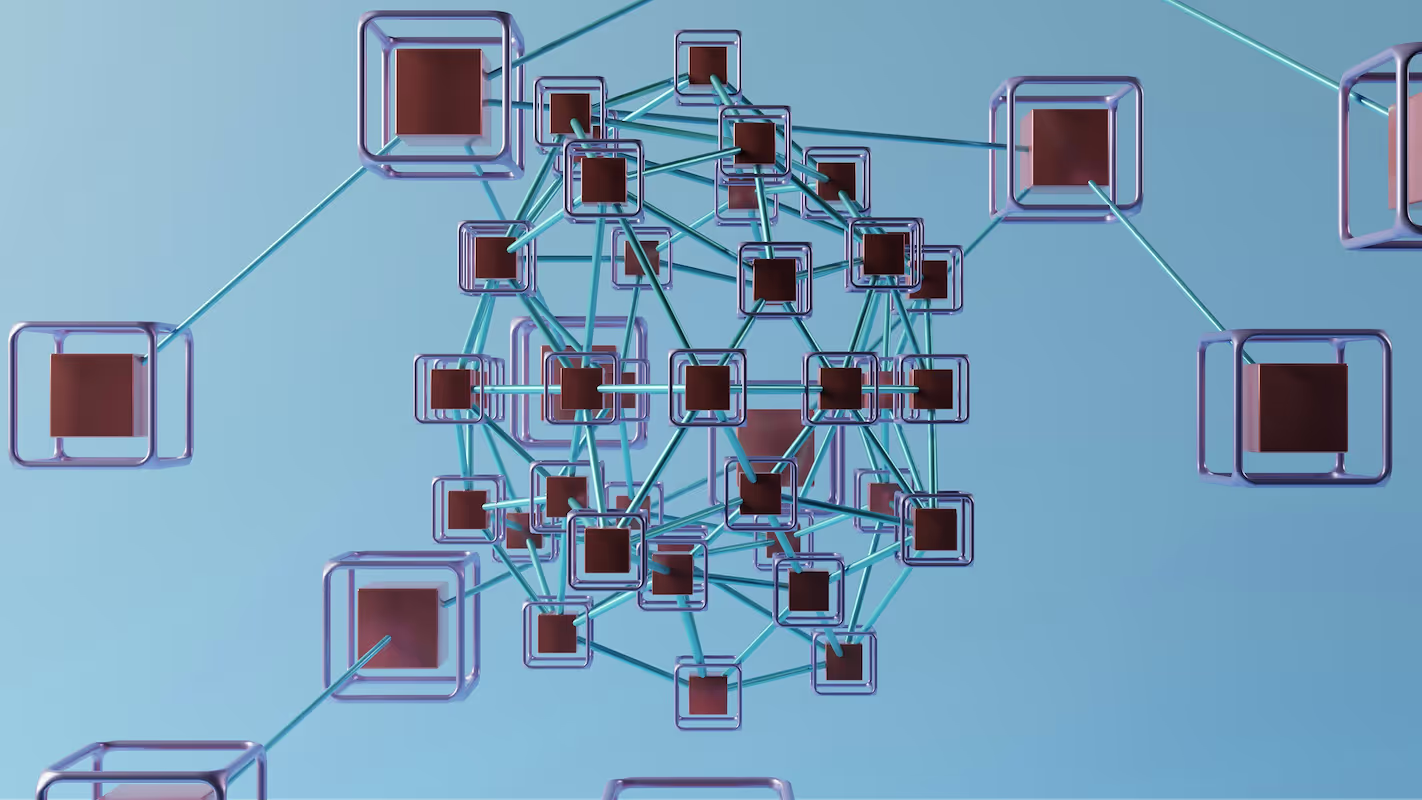
Protecting a company's network is a top priority for any IT team. Two common strategies for this are network segmentation and microsegmentation.
While they sound similar, they operate on different principles and offer distinct levels of security. This article will explain their key differences to help you decide which approach is right for your organization.
What is Microsegmentation?
Microsegmentation is a security method that creates secure zones around individual workloads or applications, effectively isolating them from one another. It operates on a "zero-trust" security principle, which assumes no entity is trusted by default. Instead, access must be explicitly and granularly defined through security policies, essentially giving each application its own dedicated firewall.
This approach provides a much more detailed level of control compared to broader network-wide strategies. Here are its core components:
- Workload-Centric Security: Policies are applied directly to workloads, not network segments. This means security is tied to the application itself, regardless of where it runs—on-premises or in the cloud.
- Controls East-West Traffic: It is particularly effective at managing traffic that moves laterally between servers inside a data center (east-west traffic). This helps contain security breaches by preventing them from spreading across the network.
- Dynamic and Agile: Because security rules are attached to the workload, they move with it. If an application is migrated to a new environment, its security policies follow automatically, ensuring consistent protection.
What is Network Segmentation?
Network segmentation is a foundational security practice that divides a larger corporate network into smaller, isolated subnetworks. Think of it as creating digital partitions within your IT environment.
Each subnetwork, or segment, functions as its own distinct network. Traffic moving between these segments is inspected and controlled, typically by firewalls, to ensure only authorized communication is allowed. This method is effective at creating broad security zones based on factors like department, device type, or compliance requirements.
- Network-Centric Security: Policies are applied at the network level using constructs like VLANs, subnets, and access control lists (ACLs). Security is tied to the network's architecture, not the individual application.
- Controls North-South Traffic: It excels at managing traffic that enters and leaves the data center (north-south traffic). This creates a strong perimeter to defend against external threats.
- Static and Perimeter-Based: Security rules are defined by the network's structure. While stable, this approach is less adaptable when workloads move, as reconfiguring network segments can be a significant undertaking.
Microsegmentation vs Network Segmentation: Key Differences
While both strategies aim to secure your network, they do so in fundamentally different ways. Here’s a closer look at the main distinctions between them.
1. Security Focus: Workload vs. Network
Network segmentation applies security controls to broad network segments, like VLANs or subnets. It essentially builds high walls around large areas of your network.
Microsegmentation, on the other hand, applies security directly to individual workloads or applications. This creates a protected bubble around each specific asset, regardless of its location on the network.
2. Policy Granularity
The rules in network segmentation are typically broad and based on network information like IP addresses. For example, a rule might block all traffic between the finance and marketing departments.
In contrast, microsegmentation allows for extremely detailed policies. You can define rules based on application identity or other specific attributes, giving you much finer control over communications.
3. Attack Surface Reduction
Both methods reduce the attack surface, but at different scales. Network segmentation contains threats within a larger segment, preventing them from easily jumping to another part of the network.
Microsegmentation shrinks the attack surface down to a single workload. If one application is compromised, the breach is immediately contained, as it cannot communicate with other workloads unless explicitly permitted.
4. Agility in Dynamic Environments
Network segmentation is often tied to physical network architecture, making it more static. Changes, like moving an application, can require manual reconfiguration of firewalls and network rules.
Microsegmentation is typically software-defined, so security policies are not tied to the network topology. Policies automatically follow their assigned workload, making it a better fit for agile and cloud-based environments where resources are constantly shifting.
Benefits of Microsegmentation
Adopting a microsegmentation strategy offers several distinct advantages for securing modern IT environments. Beyond the granular control it provides, it helps organizations strengthen their security posture in a few key ways:
- Improved Regulatory Compliance: By isolating systems that handle sensitive information, such as credit card or health data, microsegmentation makes it easier to meet strict compliance requirements like PCI DSS and HIPAA. You can precisely control and audit access to regulated workloads.
- Greater Network Visibility: Defining policies at the application level gives you a detailed map of all communication flows. This enhanced visibility helps you spot unusual traffic patterns and simplifies troubleshooting.
- Consistent Security Across Environments: Policies are tied to workloads, not physical infrastructure. This means you get uniform protection whether your applications are running on-premises, in a private cloud, or in a public cloud.
Benefits of Network Segmentation
While it's a more traditional approach, network segmentation still offers significant advantages, particularly for establishing a strong security foundation. It provides broad, effective protection that can be a practical starting point for many organizations.
- Improved Network Performance: By dividing traffic into separate segments, you reduce overall network congestion. This means less competition for bandwidth and a faster, more reliable experience for users in each segment.
- Effective Breach Containment: It excels at containing security incidents. If one part of the network is compromised—like a guest Wi-Fi network—the breach is isolated, preventing it from easily spreading to critical systems in other segments.
- Simplified Management: When network issues arise, IT teams can isolate the problem to a specific segment instead of searching the entire network. This simplifies troubleshooting and leads to faster resolutions.
Challenges and Considerations
While both approaches offer strong security benefits, they also come with their own set of challenges. It's important to consider these potential hurdles before committing to a strategy.
1. Challenges of Network Segmentation
Network segmentation is closely tied to physical or virtual network architecture, which can make it rigid. In dynamic environments where applications move frequently, reconfiguring VLANs, firewalls, and access control lists can become a significant operational burden.
Additionally, its focus on north-south traffic means it has limited visibility into communications within a segment. If a threat breaches the perimeter, it can often move laterally (east-west) undetected until it reaches another segment boundary.
2. Challenges of Microsegmentation
The primary challenge with microsegmentation is its implementation complexity. It requires a deep and accurate map of all application dependencies to create effective policies, which can be a major undertaking upfront.
This granularity can also increase management overhead. Without proper automation and tooling, defining and maintaining rules for hundreds or thousands of individual workloads can become overwhelming for IT teams.
Making the Right Choice for Your Enterprise
Choosing between network segmentation and microsegmentation depends on your organization's specific security goals, infrastructure, and budget. The best approach often involves using them together, as they are not mutually exclusive. Here’s a quick guide to help you decide:
- Choose network segmentation if: You need a strong, foundational security perimeter, want to improve network performance by reducing congestion, and have a relatively static IT environment. It's an effective way to isolate critical systems from general user networks.
- Choose microsegmentation if: Your organization operates in a dynamic cloud or hybrid environment, requires granular control over east-west traffic, and must meet strict compliance mandates. It is essential for implementing a zero-trust security model.
- Consider a hybrid approach: Many organizations benefit from using both. Network segmentation can create broad security zones, while microsegmentation adds a layer of detailed, workload-specific protection within those zones for comprehensive security.
Need Help Managing Your Network? Lightyear Can Help
Regardless of how you structure your network, maintaining a clear inventory is crucial for effective segmentation. By automating network service procurement, inventory management, and bill consolidation, Lightyear takes the pain out of telecom infrastructure management.
The hundreds of enterprises who trust Lightyear achieve 70%+ time savings and 20%+ cost savings on their network services. Schedule a demo or get started with our questionare today.
Frequently Asked Questions about Microsegmentation vs Network Segmentation
Can microsegmentation completely replace network segmentation?
Not necessarily. Many organizations use both together. Network segmentation creates broad security zones, while microsegmentation provides granular, workload-specific protection within those zones. This hybrid approach offers layered, comprehensive security.
Which approach is more difficult to implement?
Microsegmentation typically has a higher initial complexity. It requires a detailed understanding of application dependencies to create effective policies. Network segmentation is often more straightforward to set up but can be rigid to manage and change later on.
Does microsegmentation impact network performance?
When implemented correctly, microsegmentation has minimal impact on performance. Since policies are enforced at the workload level, it avoids the network bottlenecks that can sometimes occur with traditional, centralized firewalls used for network segmentation.
Let us show you the product and discuss specifics on how it might be helpful.
Schedule a Demo





Revolutionize Your Telecom Experience
Learn how you can get one step closer to optimal business efficiency for all your telecom services.