MPLS vs ATM: Comparing Network Technologies
MPLS vs. ATM: A clear comparison for IT buyers. Learn the key differences in performance, cost, and scalability to make an informed decision.


When it comes to building a reliable wide area network (WAN) for your business, you'll encounter various technologies designed to transmit data efficiently between sites. Two names that often come up in these discussions are Multiprotocol Label Switching (MPLS) and Asynchronous Transfer Mode (ATM).
While both were developed to improve upon traditional IP routing, they operate on fundamentally different principles. Understanding their key differences is essential for making informed decisions about your company's network infrastructure.
What is MPLS?
Multiprotocol Label Switching, or MPLS, is a data-forwarding technology that directs traffic from one network node to the next based on short path labels rather than long network addresses. It was developed to create a more predictable and efficient way to move data across service provider networks.
Instead of performing a complex IP lookup at every router, MPLS assigns a label to each data packet at the network's entry point. This label determines the entire predetermined path the packet will take, creating a high-performance route.
- It operates at Layer 2.5 of the OSI model, sitting between the Data Link Layer (Layer 2) and the Network Layer (Layer 3).
- It is commonly used to build virtual private networks (VPNs) that securely connect multiple office locations over a shared infrastructure.
- MPLS is known for its reliability and ability to prioritize different types of traffic (like voice and video) to ensure Quality of Service (QoS).
What is ATM?
Asynchronous Transfer Mode (ATM) is a networking standard designed for high-speed digital transmission of voice, video, and data. Unlike technologies that use variable-sized packets, ATM breaks all information down into small, fixed-size cells, which allows for predictable and consistent transmission.
- Each cell is 53 bytes long, a uniform size that helps minimize latency and jitter, making it suitable for real-time traffic.
- It is a connection-oriented technology, meaning a dedicated virtual circuit is established between two endpoints before data transfer begins.
- ATM operates at the Data Link Layer (Layer 2) of the OSI model and was influential in the development of later technologies, though it is less common in modern enterprise WANs today.
MPLS vs ATM: Key Differences
While both technologies aim to improve data transmission, their underlying architecture leads to significant differences in performance and application.
1. Data Handling and Overhead
MPLS works with variable-length packets, adding a small label to direct traffic. This approach is efficient and keeps overhead relatively low.
In contrast, ATM breaks all data into fixed 53-byte cells. While this ensures predictability, the 5-byte header on every cell creates significant overhead, consuming a notable portion of your bandwidth.
2. Network Flexibility and Integration
MPLS is designed to be protocol-agnostic, easily working with existing IP infrastructure. This makes it highly flexible for connecting modern, diverse networks.
ATM is more rigid. Its connection-oriented nature and specific cell structure make it less adaptable to the dynamic needs of today's IP-based enterprise traffic.
3. Quality of Service (QoS) Approach
Both technologies support QoS, but their methods differ. MPLS uses traffic engineering and Class of Service (CoS) values in its labels to prioritize critical data.
ATM achieves QoS through its virtual circuits and uniform cell size, which naturally minimizes jitter and delay. However, the MPLS approach is generally more versatile for managing a wide variety of application traffic.
Benefits of MPLS for Enterprises
For modern businesses, MPLS offers several practical advantages that go beyond its technical architecture, making it a reliable choice for connecting multiple sites.
- Scalability: MPLS networks are highly scalable. It's straightforward to add new locations or increase bandwidth as your company grows, often without requiring a major network overhaul.
- Enhanced Security: By creating private pathways for traffic, MPLS inherently offers more security than the public internet. Your data is isolated from other customers on the provider's network, reducing exposure to external threats.
- Reliable Application Performance: The technology's built-in Quality of Service (QoS) is a major plus. It allows you to prioritize real-time applications like VoIP and video conferencing, ensuring they perform consistently without lag or jitter.
- Simplified Network Management: Because it operates over a single provider's infrastructure, MPLS can simplify network administration, giving IT teams a clearer view of traffic flow and performance across all locations.
Advantages of ATM in Networking
While it's an older technology, ATM brought several key innovations to networking that gave it distinct advantages in certain contexts.
- Predictable Performance: The use of small, fixed-size cells means data transmission is extremely consistent. This design minimizes latency and jitter, making it ideal for real-time applications like voice and video that are sensitive to delays.
- Guaranteed Bandwidth: As a connection-oriented technology, ATM establishes a dedicated virtual path before sending data. This reserves bandwidth for the connection, providing a level of guaranteed throughput that isn't always possible on shared, packet-switched networks.
- Robust Quality of Service (QoS): ATM was designed from the ground up with QoS in mind. It could classify traffic into different service categories, effectively managing bandwidth for voice, video, and data simultaneously on the same network.
- Legacy System Compatibility: For industries that adopted it early on, such as broadcasting and telecommunications, ATM provides stable and reliable integration with existing legacy infrastructure built for its architecture.
Choosing Between MPLS and ATM: Factors to Consider
When you're weighing your options, the choice often comes down to your specific business context and long-term goals. Here are the key factors to evaluate.
1. Current Infrastructure and Future Growth
A primary consideration is what your current infrastructure looks like. If your organization relies heavily on older, ATM-based systems, maintaining compatibility might be a factor.
However, for most businesses with modern IP-based networks, MPLS integrates far more easily and provides a clear path for adding new sites as you expand.
2. Service Availability and Cost
Today, MPLS is a widely available service offered by nearly all major telecom carriers, making procurement competitive and straightforward.
In contrast, finding a provider for a new ATM circuit can be difficult and costly. It is now considered a legacy service and is not typically offered for new installations.
3. Long-Term Strategy
Think about your company's direction. MPLS provides a reliable foundation that can support growth and adapt to new applications over time.
ATM, while stable for its original purpose, lacks the flexibility for future network evolution. It is generally not a practical choice for new deployments unless required for a very specific legacy integration.
Final Thoughts on MPLS and ATM
While both MPLS and ATM were significant advancements in networking, their roles in today's enterprise environment are very different. For most modern businesses, MPLS is the clear choice for building a reliable and scalable wide area network, thanks to its flexibility with IP-based systems and broad carrier support.
ATM, on the other hand, is now a legacy technology. Though foundational, its rigid structure and declining availability mean it is generally not a viable option for new network deployments unless specific legacy compatibility is required.
Need Help Managing Your Network? Lightyear Can Help
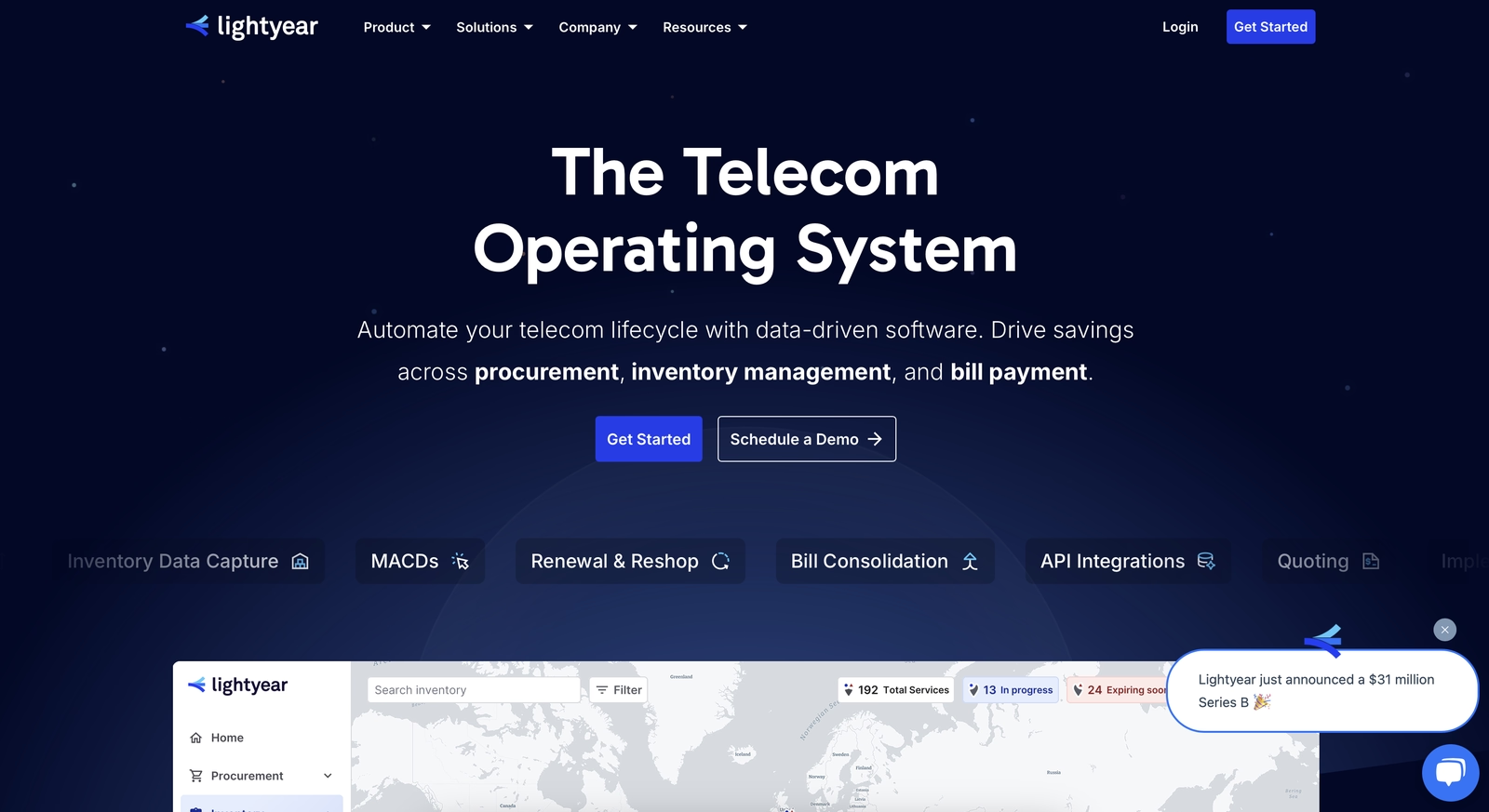
Whether you're procuring new MPLS circuits or managing your existing WAN, the process can be complex. By automating network service procurement, inventory management, and bill consolidation, Lightyear takes the pain out of telecom infrastructure management.
The hundreds of enterprises who trust Lightyear achieve 70%+ time savings and 20%+ cost savings on their network services.
Schedule a demo or get started with our questionnaire today.
Frequently Asked Questions about MPLS vs ATM
Can MPLS and ATM be used together in the same network?
Yes, they can coexist. MPLS was designed to run over various Layer 2 technologies, including ATM. In this setup, ATM provides the underlying transport circuit while MPLS manages IP traffic routing over it, though this configuration is rare in modern networks.
Is ATM completely obsolete today?
While largely replaced by IP-based technologies for enterprise WANs, ATM is not entirely obsolete. It still exists in some legacy telecommunication carrier backbones and specific industries that have not yet migrated their older, specialized infrastructure.
Which technology offers better security?
Both offer more security than the public internet. MPLS provides security by isolating traffic into VPNs on a shared provider network, while ATM uses connection-oriented virtual circuits. For most businesses today, the security model of MPLS is more practical and relevant.
What has replaced ATM for most use cases?
For enterprise WANs, MPLS and more recently SD-WAN have largely replaced ATM. Carrier Ethernet has also become a dominant Layer 2 technology for connecting sites, offering greater flexibility and cost-effectiveness for modern, IP-centric traffic patterns.
Let us show you the product and discuss specifics on how it might be helpful.
Schedule a Demo





Revolutionize Your Telecom Experience
Learn how you can get one step closer to optimal business efficiency for all your telecom services.