MPLS vs Dark Fiber: Enterprise Network Solutions
MPLS vs. Dark Fiber: Which is right for your enterprise network? Learn the key differences in cost, control, and performance to make a smart choice.


Selecting the right network infrastructure is a major decision for any enterprise, directly influencing performance, security, and scalability.
Two prominent, yet very different, solutions in this space are Multiprotocol Label Switching (MPLS) and Dark Fiber. While both provide high-performance connectivity, they operate on fundamentally different principles of service and management.
This guide will compare them directly, breaking down how each one works, their respective pros and cons, and the types of businesses they are best suited for. The goal is to provide a clear comparison to help you make a more informed decision for your network.
What is MPLS?
Multiprotocol Label Switching (MPLS) is a networking technology that directs data from one node to the next based on short path labels rather than long network addresses. This technique avoids complex lookups in a routing table, speeding up traffic flow. It's a fully managed service offered by telecom carriers, meaning they handle the network's setup, maintenance, and management.
It operates between Layer 2 (Data Link) and Layer 3 (Network) of the OSI model, offering a reliable way to connect multiple office locations on a private network.
Key characteristics of an MPLS service include:
- Label-Based Forwarding: Packets are assigned a label upon entering the network. Routers then forward traffic based on these simple labels, which is faster than traditional IP routing.
- Pre-determined Paths: MPLS establishes specific routes, known as Label Switched Paths (LSPs), for data to travel. This creates predictable performance and latency.
- Quality of Service (QoS): It allows for the prioritization of network traffic. This means critical applications like VoIP or video conferencing can be given higher priority to ensure smooth performance.
- Managed Service: The carrier is responsible for the end-to-end network, including troubleshooting and ensuring uptime, which simplifies network management for your IT team.
What is Dark Fiber?
Dark Fiber refers to unused or "unlit" fiber-optic cable infrastructure. When a telecom provider lays fiber-optic cables, they often install more capacity than they immediately need. Businesses can lease or purchase these spare, inactive strands for their exclusive use.
Unlike a managed service, with dark fiber, you are only getting the physical cabling. Your organization is responsible for providing the equipment to "light" the fiber and transmit data over it. This approach gives you direct control over your network.
Key characteristics of a Dark Fiber network include:
- Raw Infrastructure: You are leasing a physical, passive asset. All network management, equipment, and maintenance are your responsibility.
- Total Control: You decide what protocols to run and what hardware to use. This allows for complete customization of your network architecture.
- Nearly Unlimited Bandwidth: The capacity of the network is limited only by the transmission equipment you connect to the ends of the fiber.
- Dedicated and Private: Since you are the sole user of the fiber strand, it creates a highly secure and private point-to-point connection.
MPLS vs Dark Fiber: Key Differences
The core differences between MPLS and Dark Fiber come down to service versus infrastructure, and who holds the operational reins.
Management and Control
With an MPLS circuit, you are buying a complete, managed service. The provider handles all network configuration, monitoring, and maintenance, which is reflected in the service level agreement (SLA).
In contrast, leasing dark fiber means you are only getting the physical cabling. Your team is responsible for lighting the fiber and managing all the network equipment and protocols from end to end.
Performance and Bandwidth
MPLS offers highly reliable and predictable performance, with guaranteed uptime and Quality of Service (QoS) to prioritize traffic. However, your bandwidth is fixed based on your contract.
Dark fiber provides a dedicated, private line with latency limited only by the speed of light. Bandwidth is determined by the equipment you deploy, offering nearly limitless capacity for data transfer.
Network Architecture and Expertise
MPLS creates a private network connecting multiple sites, but it operates on the carrier's shared infrastructure. It requires less specialized knowledge from your IT staff to operate day-to-day.
A dark fiber network is typically a point-to-point connection that you own operationally. It demands deep in-house technical expertise to design, build, and run the network effectively.
Cost Considerations for MPLS and Dark Fiber
The financial models for MPLS and dark fiber are quite different, reflecting the service-versus-infrastructure dynamic. Understanding these cost structures is key to making a sound financial decision.
- MPLS Costs: With MPLS, you pay a predictable monthly recurring charge (MRC). This fee bundles the circuit, management, and provider support into one bill. The primary cost driver is bandwidth, and there are minimal upfront capital expenses since the carrier provides the necessary hardware.
- Dark Fiber Costs: Dark fiber involves a high initial capital expenditure (CapEx) for the networking equipment needed to light and operate the fiber. In addition to the monthly lease for the physical cable, you must also account for ongoing operational expenses (OpEx), including skilled IT staff, maintenance, and hardware lifecycle management.
Security Features of MPLS and Dark Fiber
When it comes to security, both MPLS and dark fiber offer robust protection, but their approaches are fundamentally different, reflecting the contrast between a managed service and raw infrastructure.
- MPLS Security: An MPLS network is inherently secure because it is private and isolated from the public internet. Your data travels within the carrier's closed network, which significantly reduces exposure to common external threats. Security is part of the managed service, meaning you rely on the provider's protocols and infrastructure for protection.
- Dark Fiber Security: Security in a dark fiber network comes from its physical dedication. You have exclusive use of the fiber optic strand, creating a truly private connection. However, all security measures, including data encryption, firewalls, and monitoring, are your responsibility to implement and manage.
Scalability and Flexibility in Network Solutions
When your business grows, your network needs to grow with it. Here’s how MPLS and dark fiber handle scalability and flexibility.
MPLS: Structured and Predictable Scaling
Scaling an MPLS network is a structured process managed by your provider. If you need more bandwidth, you must submit a service request to your carrier, which can take weeks or months to fulfill.
This process often involves contract renegotiations and new pricing. Flexibility is also limited; you are bound by the service options and protocols the carrier supports, making it difficult to adapt quickly to new technological requirements.
Dark Fiber: On-Demand Capacity and Control
Dark fiber offers a much more dynamic approach to growth. Since you control the equipment, you can increase bandwidth simply by upgrading the hardware at each end of the fiber, often as quickly as your team can install it.
This gives you the flexibility to scale capacity on your own timeline, from 10 Gbps to 100 Gbps or more. You also have complete freedom to choose the network protocols and technologies you run, adapting the connection to your specific needs without vendor constraints.
Making the Right Choice for Your Business
Choosing between MPLS and dark fiber depends entirely on your organization's resources, technical expertise, and long-term goals. The decision comes down to whether you want to buy a networking service or operate your own network infrastructure.
- Choose MPLS if: You need a reliable, managed network with predictable performance and costs. It's ideal for businesses that prefer to outsource network management and require built-in Quality of Service for critical applications across multiple locations.
- Choose Dark Fiber if: You have the in-house technical expertise and require maximum control, security, and nearly unlimited bandwidth. This option is best for organizations with high data transfer needs that can manage the upfront investment and ongoing operational responsibilities.
Need Help Managing Your Network? Lightyear Can Help
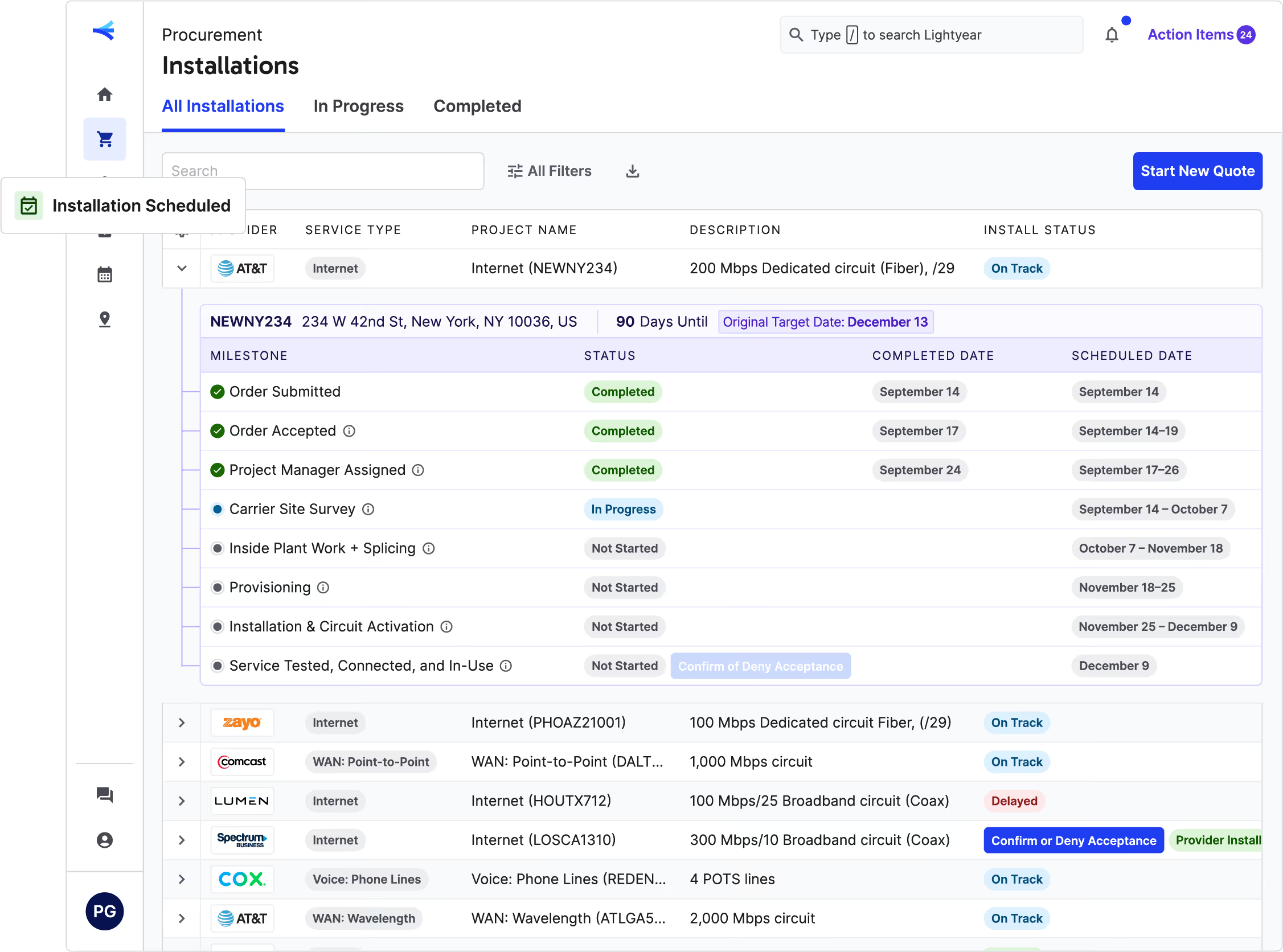
Whether you choose MPLS or dark fiber, procuring and managing the service is the next big step. By automating network service procurement, inventory management, and bill consolidation, Lightyear takes the pain out of telecom infrastructure management.
The hundreds of enterprises who trust Lightyear achieve 70%+ time savings and 20%+ cost savings on their network services. Schedule a demo or get started with our questionnaire today.
Frequently Asked Questions about MPLS vs Dark Fiber
Can I use both MPLS and dark fiber in my network?
Yes, a hybrid approach is common. Many organizations use dark fiber for high-capacity links between data centers and MPLS to connect their branch offices, combining direct control with the convenience of a managed service.
Which option typically has lower latency?
Dark fiber generally offers lower latency as it provides a direct, dedicated physical path. While MPLS latency is highly predictable, it can be slightly higher because traffic travels through the provider's shared network core.
How does geographic availability differ between MPLS and dark fiber?
MPLS services are widely available from most major carriers, offering extensive reach to business locations. Dark fiber is less common and is typically concentrated in dense metropolitan areas or along major data transit corridors.
Let us show you the product and discuss specifics on how it might be helpful.
Schedule a Demo





Revolutionize Your Telecom Experience
Learn how you can get one step closer to optimal business efficiency for all your telecom services.