MPLS vs DWDM: Comparing Network Technologies
MPLS vs. DWDM: Learn the key differences between these network technologies and find out which is the right choice for your enterprise infrastructure.


When building or upgrading a wide area network (WAN), businesses often encounter two key technologies: Multiprotocol Label Switching (MPLS) and Dense Wavelength Division Multiplexing (DWDM). While both play a role in moving large amounts of data, they operate at different layers of the network and solve different problems.
Understanding the distinction is important for making informed decisions about your company's network infrastructure. This article will compare MPLS and DWDM, explaining what each technology is, how it works, and when you might choose one over the other.
What is MPLS?
Multiprotocol Label Switching (MPLS) is a routing technique for high-performance networks that directs data using short path labels instead of long network addresses. This method avoids complex lookups in a routing table, making data forwarding highly efficient. It essentially creates a more predictable and managed lane for your data traffic.
MPLS operates between Layer 2 (Data Link) and Layer 3 (Network) of the OSI model, often called a "Layer 2.5" technology. It establishes predetermined routes called Label Switched Paths (LSPs) for data packets to follow. Key characteristics include:
- Predictable Performance: By creating dedicated virtual circuits, it provides reliable delivery and quality of service (QoS) for critical applications like VoIP or video conferencing.
- Protocol Agnostic: It supports various network protocols, including IP, Ethernet, and ATM, making it a versatile choice for diverse network environments.
- Scalability: It is well-suited for building secure, private networks that connect multiple enterprise locations.
What is DWDM?
Dense Wavelength Division Multiplexing (DWDM) is an optical technology that dramatically increases the capacity of a single fiber optic cable. It works by combining and transmitting multiple signals simultaneously at different light wavelengths, or colors, over the same fiber. This effectively creates multiple virtual fibers within one physical strand.
DWDM operates at Layer 1 (the Physical Layer) of the OSI model, meaning it is concerned only with the raw transmission of bits, not the data packets themselves. Key characteristics include:
- High Capacity: It offers enormous bandwidth, making it suitable for transmitting huge volumes of data, often measured in terabits per second (Tbps).
- Protocol Independent: Because it works at the physical level, it can carry any type of data traffic, including Ethernet, SONET/SDH, and even MPLS-tagged packets.
- Long-Distance Connectivity: It is a foundational technology for long-haul networks that connect data centers, cities, and submarine cable systems.
Key Differences Between MPLS and DWDM
While both technologies move data, their roles and methods are fundamentally distinct. Here’s a breakdown of the primary differences an IT buyer should consider.
1. OSI Layer and Core Function
The most significant difference lies in where they operate. DWDM is a Layer 1 technology focused on the physical transport of data, multiplying the capacity of fiber optic cables. In contrast, MPLS is a Layer 2.5 service that adds intelligence to the network, making routing and data forwarding decisions.
2. Network Application
MPLS is designed to create private, managed networks that connect multiple business sites, making it ideal for enterprise WANs. DWDM is typically used for very high-capacity, point-to-point connections, such as linking two data centers or forming the backbone of a carrier's network.
3. Traffic Management
MPLS provides sophisticated traffic management through Quality of Service (QoS) capabilities. This allows network administrators to prioritize critical application traffic, like voice or video, over less sensitive data. DWDM does not inspect or manage traffic; it simply provides a raw, high-bandwidth transport pipe.
4. How They Work Together
It's important to understand that these technologies are not mutually exclusive and often work together. A service provider might use a DWDM system to create a high-capacity optical link between two cities. Over that link, they can then offer MPLS services to enterprise customers, using the intelligence of MPLS to manage traffic across the DWDM backbone.
Benefits of Using MPLS
For businesses managing multi-site operations, MPLS offers several distinct advantages that contribute to a more stable and efficient network environment. It provides a reliable foundation for connecting geographically dispersed teams and data centers.
- Enhanced Security: MPLS networks are private and isolated from the public internet, creating a more secure path for sensitive corporate data. Because traffic doesn't traverse the open internet, it is less exposed to common external threats.
- Improved Application Performance: By prioritizing traffic with Quality of Service (QoS), MPLS ensures that critical applications like voice and video receive the necessary bandwidth. This results in a consistent user experience with less jitter and latency.
- Simplified WAN Architecture: MPLS makes it easier to connect multiple locations. It allows for any-to-any connectivity without requiring complex site-to-site VPN tunnels, making the network simpler for IT teams to manage and scale.
Advantages of DWDM Technology
While MPLS excels at managing traffic, DWDM's strengths lie in its raw transmission power and efficiency. For organizations with massive data transport needs, it provides some compelling benefits.
- Exceptional Scalability: DWDM allows you to increase network capacity simply by adding new wavelengths to existing fiber. This makes it easier to accommodate future data growth without the significant expense of laying new cables.
- Cost Efficiency at Scale: By multiplying the capacity of a single fiber strand, DWDM significantly lowers the cost-per-bit for data transmission, especially over long-haul routes connecting major sites or data centers.
- Low Latency: Since it operates at the physical layer, DWDM introduces minimal delay to the data it carries. This makes it ideal for latency-sensitive applications like storage area networking and real-time data replication.
Choosing Between MPLS and DWDM for Your Business
Making the right choice depends entirely on the specific problem you're trying to solve. Here’s how to think through the decision for your business network.
1. Evaluate Your Primary Need
If your goal is to build a secure, private network that connects multiple offices with reliable performance for various applications, MPLS is the appropriate service. It's designed for creating a cohesive enterprise WAN.
If your main objective is to establish an extremely high-capacity connection between two specific points, such as linking data centers, then DWDM is the technology to consider. It's built for massive, point-to-point data transport.
2. Consider Your Traffic Requirements
Think about the type of data you're moving. If you need to guarantee performance for sensitive applications like VoIP or video conferencing, you need the traffic-shaping intelligence that MPLS provides through Quality of Service (QoS).
If you simply need a large, raw-bandwidth pipe and don't require the network to manage or prioritize individual traffic types, a DWDM-based circuit offers a straightforward, high-speed solution.
3. Understand How You'll Procure the Service
MPLS is almost always purchased as a managed service from a telecom provider. You are buying a complete networking solution, not just a connection.
DWDM, on the other hand, is often procured as a high-capacity wavelength service or "wave" for point-to-point needs. It's also the underlying technology that carriers use to build the backbone for the MPLS services they sell to you.
Final Thoughts on MPLS vs DWDM
Ultimately, the choice between MPLS and DWDM isn't about which technology is superior, but which one fits your specific business need. They are distinct tools for different jobs.
MPLS is a networking service designed to create intelligent, private networks connecting multiple locations with reliable performance. In contrast, DWDM is a physical layer technology that provides enormous bandwidth for point-to-point connections, like those between data centers.
Often, these technologies work in concert. A carrier might use a DWDM backbone to deliver MPLS services to its customers. Your decision comes down to your primary goal: managed connectivity or raw capacity.
Need Help Managing Your Network? Lightyear Can Help
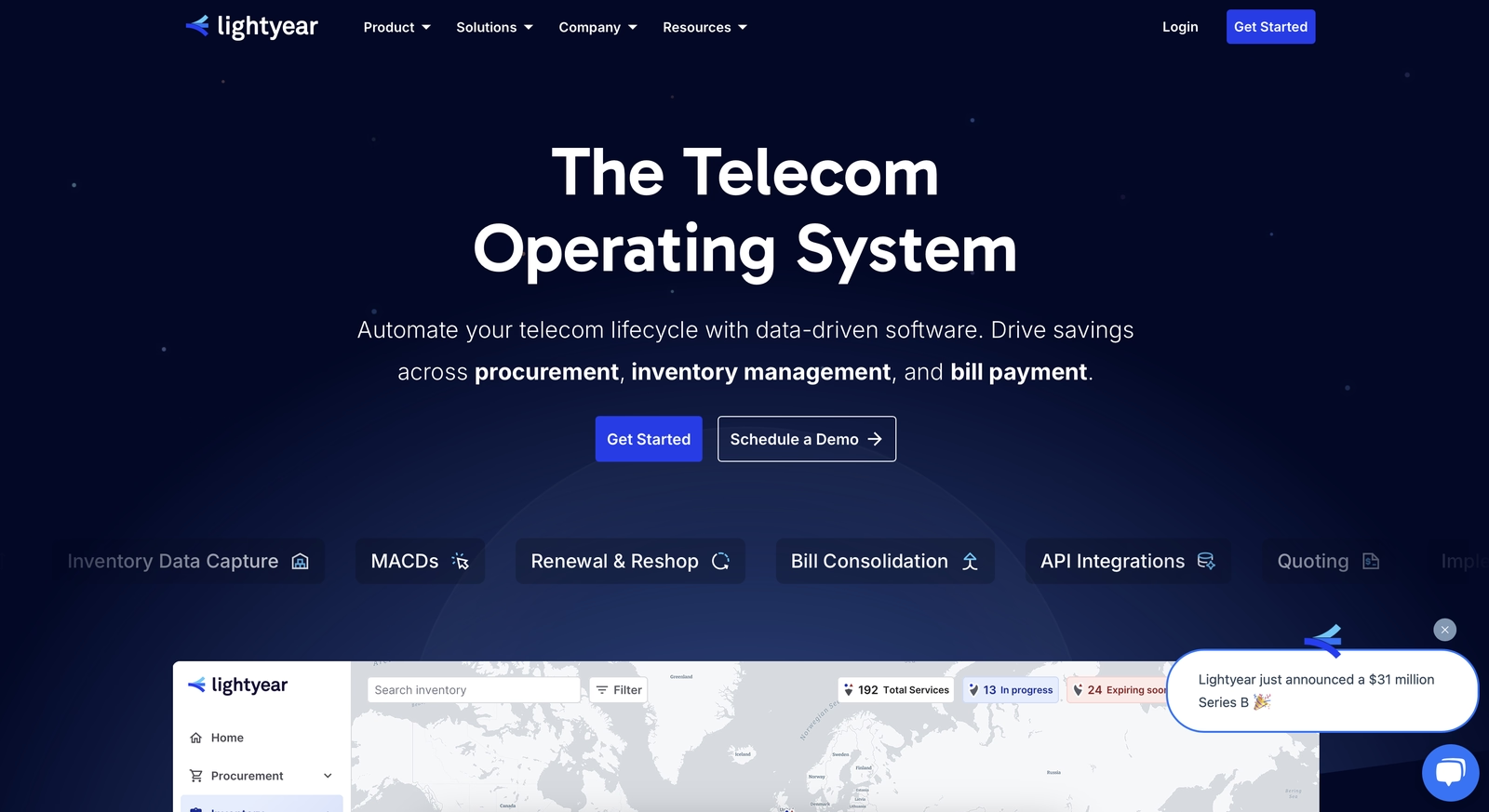
Whether you need MPLS, a DWDM-based wave service, or a different solution, navigating the procurement process can be a major challenge. By automating network service procurement, inventory management, and bill consolidation, Lightyear removes the complexity from telecom infrastructure management.
The hundreds of enterprises that trust Lightyear achieve over 70% in time savings and 20% in cost savings on their network services. Schedule a demo or get started with our questionnaire today.
Frequently Asked Questions about MPLS vs DWDM
Is MPLS more expensive than DWDM?
It's not a direct comparison. MPLS is a managed service with features and support, while DWDM is raw bandwidth. At very high capacities, DWDM's cost-per-bit is lower, but you are responsible for managing the traffic that runs over it.
Can SD-WAN replace MPLS?
SD-WAN is often used as a flexible alternative or supplement. It can lower costs by using public internet, but may not offer the same performance guarantees as MPLS. Many businesses use a hybrid model, combining both for optimal cost and reliability.
Do I still need to encrypt data on an MPLS network?
Yes, for maximum security. While MPLS creates a private network separate from the public internet, the traffic itself is not automatically encrypted. It is a best practice to apply your own encryption for sensitive data traveling over any network, including MPLS.
Let us show you the product and discuss specifics on how it might be helpful.
Schedule a Demo





Revolutionize Your Telecom Experience
Learn how you can get one step closer to optimal business efficiency for all your telecom services.