MPLS vs Ethernet VPN: Enterprise Network Solutions
MPLS vs. Ethernet VPN: Which is right for your enterprise network? Learn the key differences in performance, cost, and scalability to make your choice.


Connecting multiple business locations securely and efficiently is a fundamental need for any modern enterprise. Two popular technologies that address this are Multiprotocol Label Switching (MPLS) and Ethernet Virtual Private Networks (VPNs).
While both create private networks over a shared infrastructure, they operate differently and offer distinct advantages. This article will compare MPLS and Ethernet VPNs to help you determine which solution is the right fit for your organization's network requirements.
What is MPLS?
Multiprotocol Label Switching (MPLS) is a routing technique used by telecommunications service providers to create high-performance networks. It acts as a traffic management system for data, assigning a simple label to each data packet at the network's entry point instead of relying on complex address lookups at every stop.
This label-based approach allows routers to forward packets quickly along a predetermined path. Here are its core characteristics:
- Protocol-Agnostic: It works with various network protocols, including IP, Ethernet, and ATM. This flexibility is where the "Multiprotocol" part of its name comes from.
- Private and Secure: MPLS operates on a private network, isolated from the public internet, which provides inherent security for data in transit.
- Quality of Service (QoS): It can prioritize different types of traffic, ensuring critical applications like VoIP or video conferencing receive the bandwidth needed for consistent performance.
- Predictable Performance: Because data travels along a pre-engineered path, MPLS offers reliable latency and packet delivery, making it a dependable choice for business-critical operations.
What is Ethernet VPN?
An Ethernet Virtual Private Network (E-VPN) is a service that connects multiple business locations using a shared carrier network, making them function as if they are on the same local Ethernet network. It essentially extends your Layer 2 network across a wide area, allowing geographically separate sites to communicate directly with one another.
This approach offers a different set of features compared to MPLS:
- Layer 2 Extension: An Ethernet VPN operates at the data link layer (Layer 2), making all connected sites appear as part of a single, unified LAN. This differs from MPLS, which is a Layer 3 routing technology.
- Familiar Technology: It is built on standard Ethernet protocols, which are well-understood by most IT teams. This can simplify network configuration and day-to-day management.
- Flexible Bandwidth: Ethernet services typically provide scalable bandwidth, allowing you to easily adjust your capacity from a few megabits to over 100 Gbps as your needs change.
- Transparent Operations: Because it extends the LAN, it is transparent to higher-level protocols like IP. This means you maintain full control over your own IP routing and addressing scheme across all sites.
MPLS vs Ethernet VPN: Key Differences
While both connect your sites, the way they operate leads to some important distinctions in performance, management, and cost.
1. Network Layer and Routing
An Ethernet VPN operates at Layer 2, making all your locations appear as if they are on a single local area network (LAN).
This means your IT team retains full control over the IP routing (Layer 3) across your sites. In contrast, MPLS is a Layer 3 service where the provider manages the routing for you.
2. Scalability and Cost
Ethernet VPNs are generally more cost-effective, especially for higher bandwidth needs.
They also offer greater flexibility, making it simpler to scale your connection capacity up or down. MPLS circuits are typically more expensive and come in more rigid bandwidth tiers.
3. Performance Guarantees
MPLS has built-in Quality of Service (QoS) capabilities, allowing the provider to prioritize traffic and offer strong service level agreements (SLAs) for applications like VoIP.
While Ethernet VPNs deliver reliable performance, achieving similar QoS guarantees often depends on the specific carrier's service offering.
4. Management and Control
Because it’s based on familiar technology, an Ethernet VPN can be easier for an in-house team to manage.
With MPLS, you hand over routing management to the provider. This can reduce your team's workload but also offers less direct control over network traffic paths.
Benefits of MPLS for Enterprises
For enterprises that depend on real-time applications, MPLS provides exceptional reliability. Its built-in Quality of Service (QoS) capabilities prioritize traffic, ensuring that critical tools like VoIP and video conferencing run smoothly without interruption, which is vital for daily business operations.
Furthermore, the service is managed by the provider, which handles all the complex network routing. This offloads a significant burden from your internal IT team, allowing them to focus on other strategic projects.
This private network structure also offers robust security, isolating your company's data from the public internet and minimizing exposure to external threats.
Advantages of Ethernet VPN for Businesses
Ethernet VPNs offer a compelling set of benefits centered on flexibility and cost-efficiency. They are often a more budget-friendly option, especially for organizations that need high bandwidth.
The service also provides highly scalable capacity, making it simple to adjust your connection speed as business demands change. Because it is built on standard Ethernet technology, your IT team can manage the network using familiar tools and protocols.
This gives you direct control over your own routing and network configuration without needing to rely on a provider for every change.
Choosing Between MPLS and Ethernet VPN
Deciding between MPLS and an Ethernet VPN comes down to your specific business priorities. The right choice depends on what you value most in your network: performance guarantees, cost-effectiveness, or direct control. To make the right call, consider how your organization answers the following questions.
- How sensitive are your applications? If your daily operations rely on flawless performance for real-time tools like VoIP and video conferencing, the built-in Quality of Service (QoS) of MPLS makes it a strong contender. It ensures your most critical traffic is always prioritized by the provider.
- What level of control does your IT team need? If you prefer a hands-off approach where the service provider manages all network routing, MPLS is a fitting solution. However, if your team wants full autonomy over IP addressing and routing policies, an Ethernet VPN provides that direct control.
- What are your budget and bandwidth needs? For organizations seeking high bandwidth at a more accessible price point, Ethernet VPNs are generally the more economical choice. They also offer greater flexibility for scaling your connection capacity up or down as business needs change.
Final Thoughts on MPLS and Ethernet VPN
Both MPLS and Ethernet VPN are effective technologies for building a wide area network. Neither is inherently superior; the right choice depends entirely on your business requirements.
MPLS is the go-to for guaranteed application performance and a hands-off, provider-managed approach. It excels where reliability for tools like VoIP is non-negotiable.
In contrast, an Ethernet VPN offers significant cost savings and scalability, giving your IT team direct control over the network. It's a great fit for organizations that need high bandwidth and prefer to manage their own routing.
Ultimately, your decision rests on balancing performance needs against budget and control preferences.
Need Help Managing Your Network? Lightyear Can Help
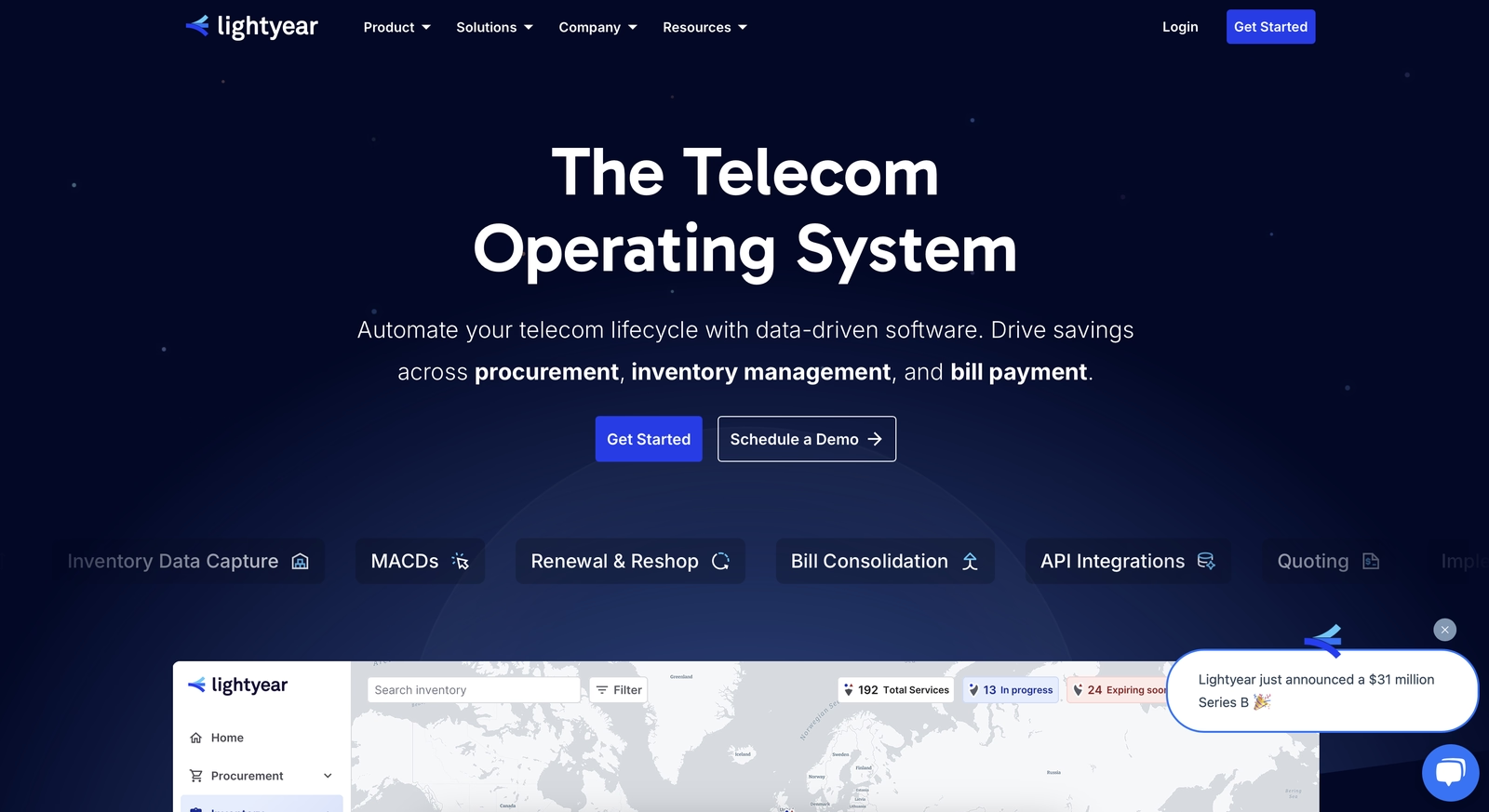
Whether you decide on MPLS or an Ethernet VPN, the next step is procuring and managing your network services. Lightyear’s platform automates the entire telecom lifecycle, from sourcing competitive quotes to managing inventory and consolidating bills.
By automating network service procurement, inventory management, and bill consolidation, Lightyear takes the pain out of telecom infrastructure management. The hundreds of enterprises who trust Lightyear achieve 70%+ time savings and 20%+ cost savings on their network services.
Schedule a demo or get started with our questionnaire today.
Frequently Asked Questions about MPLS vs Ethernet VPN
Can I use both MPLS and Ethernet VPN in my network?
Yes, many businesses use a hybrid approach. You can use MPLS for sites requiring guaranteed performance for critical applications, while using more cost-effective Ethernet VPNs for locations with higher bandwidth needs and less sensitive traffic. This helps balance cost and performance effectively.
Which is better for connecting to the cloud?
Both can connect to the cloud, but Ethernet VPNs often provide more direct and flexible high-bandwidth connections. Many cloud providers offer direct Ethernet interconnects, which can simplify integration and be more cost-effective than routing cloud traffic over a traditional MPLS network.
Is one technology inherently more secure than the other?
Both are private network services and are more secure than the public internet because they isolate your traffic. The actual security level depends more on the provider's implementation and your own configuration rather than an inherent advantage of one technology over the other.
How does SD-WAN relate to this comparison?
SD-WAN is an overlay technology that works on top of underlay connections like MPLS or Ethernet VPN. It adds intelligent, application-aware routing and centralized control, allowing you to combine different circuit types to optimize performance, cost, and network resilience across all your locations.
Let us show you the product and discuss specifics on how it might be helpful.
Schedule a Demo





Revolutionize Your Telecom Experience
Learn how you can get one step closer to optimal business efficiency for all your telecom services.