MPLS vs Frame Relay: Network Solutions Compared
Choosing between MPLS and Frame Relay? Our guide compares the two on speed, reliability, and cost to help you make an informed network decision.

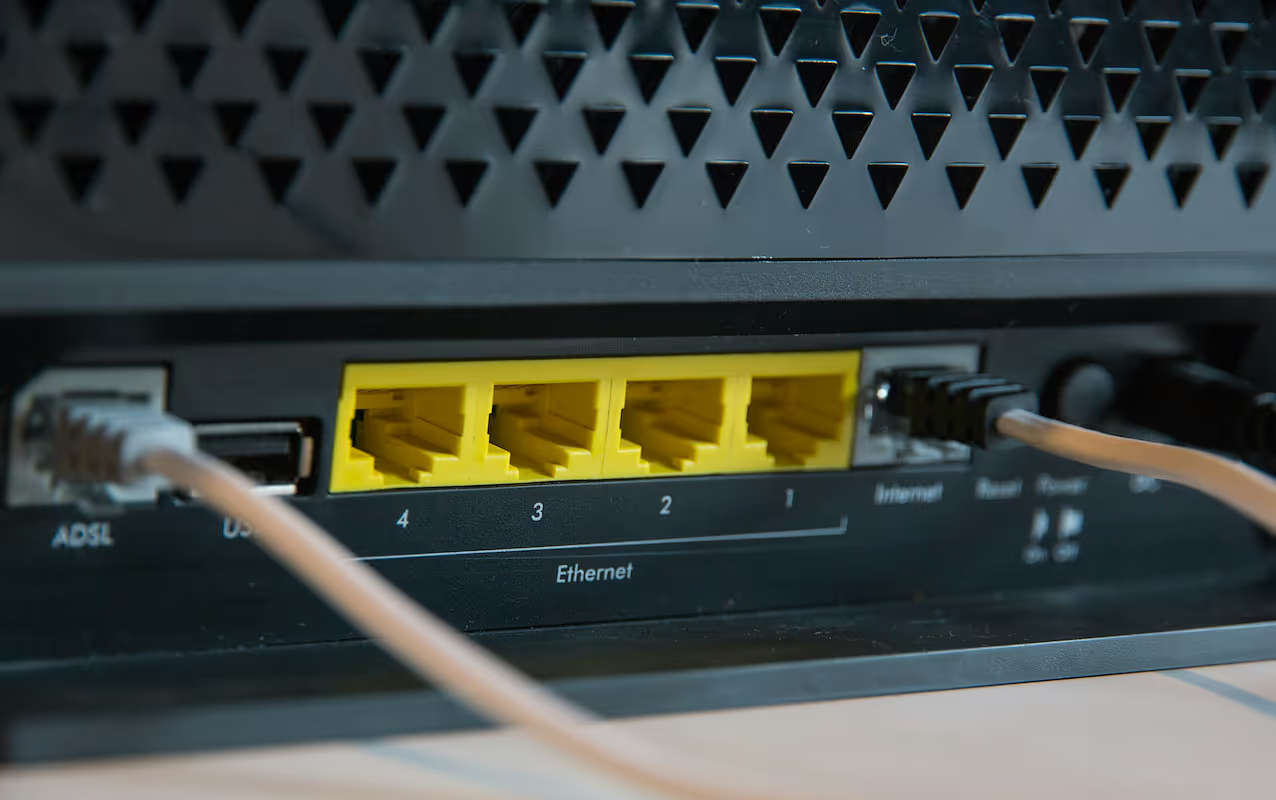
If you're managing a wide area network (WAN) for your business, you've likely come across terms like MPLS and Frame Relay. Both are technologies designed to connect geographically dispersed office locations into a single private network.
While Frame Relay was a foundational technology for many years, MPLS appeared as a more modern and flexible successor. Understanding their core differences is key to making informed decisions about your company's network infrastructure.
What is MPLS?
Multiprotocol Label Switching (MPLS) is a routing technique designed to direct network traffic using the most efficient path available. It operates by assigning short labels to data packets, which allows routers to make forwarding decisions quickly without needing to perform complex lookups in a routing table.
At its core, MPLS is all about improving traffic flow and network performance. Here’s a breakdown of its key characteristics:
- Label-Based Forwarding: Instead of using long network addresses, MPLS assigns a simple label to data packets. Routers use this label to forward traffic along a predetermined path, which speeds up the process significantly.
- Protocol Agnostic: The "Multiprotocol" in its name means it can carry many different kinds of network traffic, including IP packets, Ethernet, and ATM.
- Quality of Service (QoS): MPLS allows you to prioritize certain types of traffic. This ensures that critical applications, like VoIP or video conferencing, receive the bandwidth they need to perform reliably.
- Virtual Private Networks (VPNs): The technology is commonly used to create secure, private network connections over a shared infrastructure, effectively isolating one customer's traffic from another.
What is Frame Relay?
Frame Relay is an older packet-switching technology used for connecting local area networks (LANs) over a wide area network (WAN). It was a popular choice for businesses before newer technologies like MPLS became widespread. It works by sending data in variable-length packets, called frames, through shared network connections.
- Virtual Circuits: It establishes connections using permanent virtual circuits (PVCs), which are fixed paths between two points. This creates a pre-defined route for your data to travel across the network.
- Layer 2 Operation: Frame Relay operates at the data link layer (Layer 2) of the OSI model. It focuses on transmitting frames from one node to the next without performing complex routing.
- Shared Bandwidth: Unlike a dedicated leased line, Frame Relay allows multiple customers to share the same network infrastructure, which historically made it a cost-effective option for many businesses.
- Limited QoS: It lacks the sophisticated Quality of Service (QoS) mechanisms found in MPLS, making it less suitable for prioritizing real-time traffic like voice or video.
Key Differences Between MPLS and Frame Relay
While both technologies connect multiple locations, they do so in fundamentally different ways. Here’s how they stack up against each other on the most important points.
Performance and Routing
MPLS directs traffic using labels to find the most efficient route, making it highly adaptable to changing network conditions. This allows for faster and more intelligent data forwarding.
Frame Relay uses pre-defined routes called permanent virtual circuits (PVCs). These paths are fixed, offering less flexibility and no ability to dynamically reroute traffic around network congestion.
Quality of Service (QoS)
One of the biggest distinctions is in traffic prioritization. MPLS has robust QoS features that let you prioritize critical, delay-sensitive applications like voice and video calls.
Frame Relay offers very limited QoS support. This makes it a poor fit for networks that need to guarantee performance for real-time applications.
Network Flexibility
Because MPLS is protocol-agnostic, it can handle many types of traffic (IP, Ethernet, etc.) on a single network. This makes it a versatile foundation for modern business applications.
Frame Relay is far more rigid in its architecture, limiting its ability to support the diverse traffic types common in today's enterprise environments.
Benefits of MPLS for Enterprises
For modern businesses, the technical features of MPLS translate into tangible operational advantages. It provides a reliable and high-performing foundation for connecting multiple sites and supporting critical applications.
- Enhanced Security: By creating a private network, MPLS inherently isolates your company's traffic from other customers on the provider's network. This separation offers a secure pathway for transmitting sensitive corporate data between locations.
- Improved Reliability: The technology's ability to prioritize traffic and route it around network congestion means your most important applications get the resources they need. This results in a more stable and consistent user experience for tools like VoIP and video conferencing.
- Simplified Scalability: Adding a new office or location to an MPLS network is a relatively straightforward process. This allows your network infrastructure to grow with your business without requiring a complex and costly redesign.
- Unified Network Infrastructure: MPLS can handle voice, video, and data traffic over a single connection. This simplifies network management by consolidating different services onto one platform, reducing complexity for your IT team.
Advantages of Frame Relay in Networking
While largely superseded by MPLS, Frame Relay was a dominant technology for years because it offered a few key benefits, particularly in the context of its time. Its design prioritized simplicity and efficiency for the networking challenges of its era.
- Simple Configuration: The use of permanent virtual circuits (PVCs) created fixed, straightforward paths between two locations. This made network setup less complex compared to routing-intensive technologies.
- Mature and Stable: As a long-standing industry standard, Frame Relay was a well-understood and widely supported technology. Its performance was predictable, as data traveled along a pre-defined path without dynamic rerouting.
- Low Network Overhead: Because it operates at Layer 2 and doesn't perform complex routing for every packet, Frame Relay imposed less of a processing burden on network hardware, which was a significant advantage with older equipment.
Cost Considerations: MPLS vs Frame Relay
When comparing these two, the price tag isn't just about the monthly bill; it's about what you get for your money in terms of performance and overall value.
Pricing Structure and Bandwidth
Frame Relay was traditionally priced based on a Committed Information Rate (CIR), which guaranteed a certain amount of bandwidth. This made costs predictable but less flexible, as you paid for a fixed capacity regardless of actual use.
MPLS pricing is more dynamic and often more expensive. Costs are tied to bandwidth tiers, the number of sites, and the specific Quality of Service (QoS) levels you require, meaning you pay a premium for its performance and reliability features.
Total Cost of Ownership
While Frame Relay circuits may have been cheaper, they often required older, more specialized hardware to connect to the network. The simplicity of its fixed paths, however, meant management was straightforward.
MPLS can run over standard Ethernet connections, which can simplify hardware requirements. Although the circuit cost is higher, its ability to carry voice, data, and video on a single network can lower the total cost by eliminating the need for separate, dedicated lines for different services.
Making the Right Choice for Your Business
Choosing between MPLS and Frame Relay today is less about picking between two equal competitors and more about understanding the evolution of network technology. For almost any modern business, the decision is clear.
- If your business relies on real-time applications like VoIP, video conferencing, or cloud services, MPLS is the necessary choice. Its Quality of Service (QoS) features ensure these critical tools get the priority they need to perform reliably.
- If you need a flexible network that can grow with your company and handle voice, video, and data over a single connection, MPLS provides the required scalability and unified infrastructure.
- Frame Relay is a legacy technology. While it was a cost-effective solution in its time, it lacks the performance and features to support the demands of today's enterprise applications and is not a practical choice for new deployments.
Need Help Managing Your Network? Lightyear Can Help
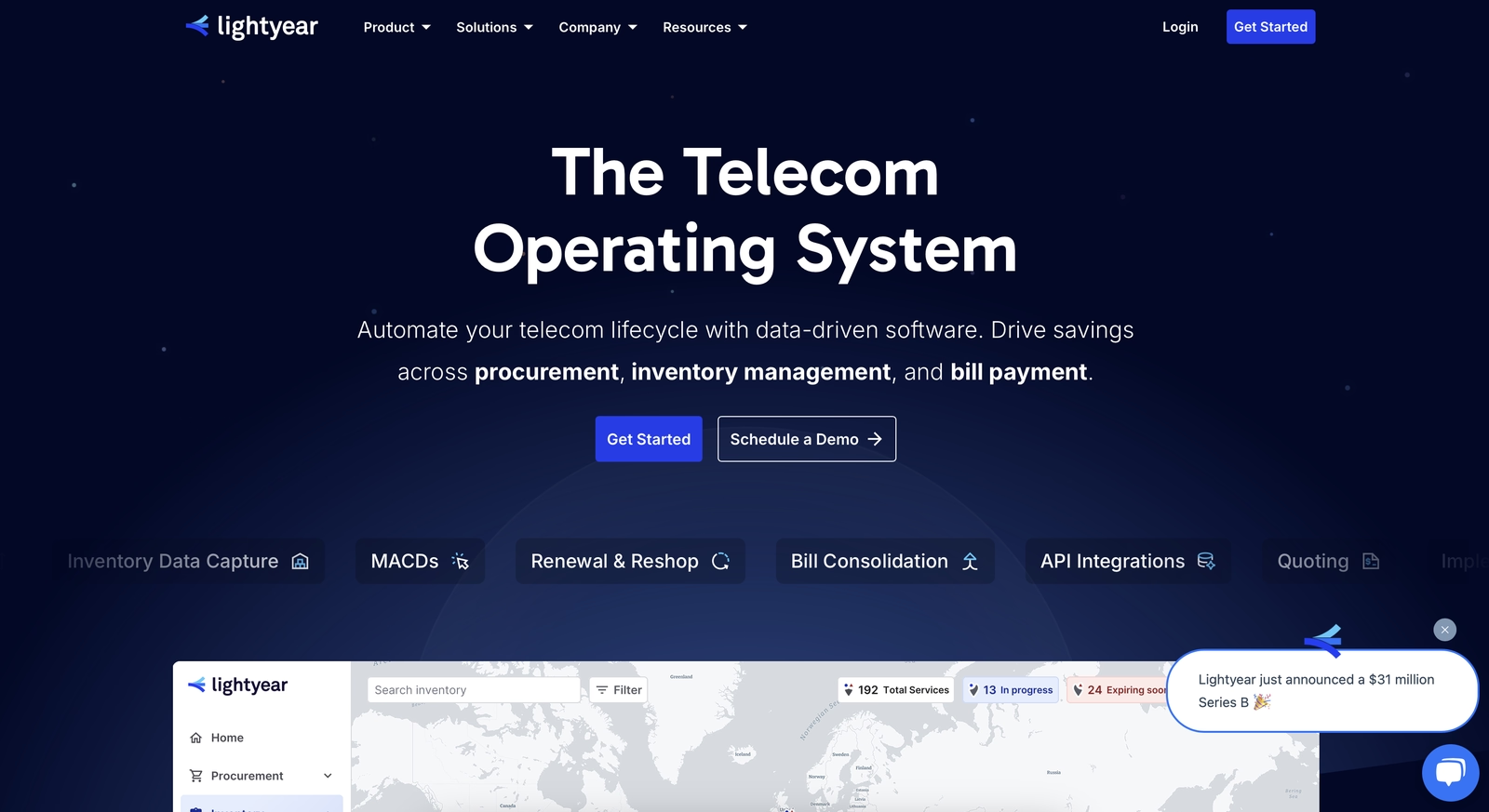
Whether you're managing an existing MPLS network or procuring new circuits, the administrative side can be a major headache. Lightyear automates the entire telecom lifecycle, from procurement and inventory management to bill consolidation, taking the pain out of managing your infrastructure.
Enterprises that use Lightyear report over 70% in time savings and up to 20% in cost savings on their network services. Schedule a demo or get started with our questionnaire today.
Frequently Asked Questions about MPLS vs Frame Relay
Is Frame Relay still used today?
While very rare for new installations, some organizations may still have legacy Frame Relay circuits in operation. However, the technology is considered obsolete and is actively being replaced by more capable solutions like MPLS and SD-WAN due to its performance and feature limitations.
How does SD-WAN relate to MPLS?
SD-WAN is a modern overlay technology that can manage traffic across various connections, including MPLS, broadband, and LTE. It provides centralized control and can be used to supplement or even replace MPLS, offering greater flexibility and potential cost savings.
What hardware is needed for each technology?
Frame Relay required specialized DSU/CSU devices and specific router interfaces. MPLS is more modern, typically terminating on a standard router using a simple Ethernet connection, which simplifies equipment needs and integrates easily with existing local area networks.
Let us show you the product and discuss specifics on how it might be helpful.
Schedule a Demo





Revolutionize Your Telecom Experience
Learn how you can get one step closer to optimal business efficiency for all your telecom services.