MPLS vs Internet Leased Line: Enterprise Guide
Confused about MPLS vs. Internet Leased Line? This guide breaks down the key differences in performance, security, and cost for your enterprise.


When connecting multiple business locations, IT leaders often face a choice between two reliable connectivity types: Multiprotocol Label Switching (MPLS) and an Internet Leased Line. Both offer dedicated bandwidth and are a significant step up from standard business broadband.
However, they operate differently and have distinct advantages in areas like security, performance, and cost. Understanding these differences is crucial for making the right investment for your company's network infrastructure.
What is MPLS?
Multiprotocol Label Switching, or MPLS, is a networking technology that routes traffic across a private network using short path labels instead of complex network addresses. It functions like a dedicated highway system for your business data, connecting multiple sites without using the public internet. A single telecom provider manages this entire network, which allows for a high degree of control and reliability.
- Private Network: MPLS creates a private, secure connection between your locations. Data is isolated from public internet traffic, reducing exposure to external threats.
- Traffic Engineering: It allows for Quality of Service (QoS) by prioritizing critical data. This means voice and video traffic can be given precedence over less time-sensitive applications to ensure smooth performance.
- Guaranteed Performance: Providers offer Service Level Agreements (SLAs) for MPLS circuits, guaranteeing specific levels of uptime, latency, and packet delivery.
- Any-to-Any Connectivity: It naturally supports a mesh topology, allowing any site on the network to communicate directly with any other site efficiently.
What is an Internet Leased Line?
An Internet Leased Line is a dedicated circuit that provides a business with a fixed-bandwidth, symmetric connection directly to the internet. Unlike shared broadband connections where speeds can fluctuate based on local network traffic, a leased line guarantees that the purchased bandwidth is exclusively for your company's use. This creates a reliable, high-performance link to the public internet from a single site.
- Dedicated Bandwidth: The connection is not shared with other subscribers, providing consistent and uncontended internet access.
- Symmetric Speeds: It offers identical upload and download speeds, which is vital for cloud applications, VoIP, and large data transfers.
- Direct Internet Access: The line provides a direct gateway to the public internet, with the business responsible for implementing its own security measures like firewalls.
- Service Level Agreements (SLAs): Like MPLS, leased lines come with SLAs that guarantee uptime and performance, ensuring business continuity.
MPLS vs Internet Leased Line: Key Differences
While both offer dedicated connections, their core functions and how they handle your data are fundamentally different. Let's break down the main distinctions that matter for IT decision-makers.
1. Network Scope and Purpose
MPLS is designed to create a wide area network (WAN), connecting multiple business locations in a private, cohesive web. Its primary function is to facilitate secure and reliable communication between your company's sites.
In contrast, an internet leased line provides a high-speed, dedicated link from a single location directly to the public internet. Its purpose is internet access, not inter-office connectivity.
2. Security Model
Because MPLS traffic travels over a private network, it has inherent security. Your data is isolated from the public internet, which significantly reduces the external attack surface without requiring additional configuration.
A leased line connects you directly to the public internet. While the connection itself is dedicated, your business is responsible for implementing all security measures, such as firewalls and intrusion prevention systems.
3. Performance Management
MPLS networks excel at managing performance through Quality of Service (QoS). This allows you to prioritize critical applications like VoIP or video conferencing over less sensitive data across your private network.
An internet leased line gives you a large, dedicated pipe of bandwidth to the internet, but it does not inherently prioritize traffic. Any traffic shaping or prioritization must be handled by your own on-premise network equipment.
4. Cost Structure
Generally, MPLS circuits are more expensive. The cost reflects the management of a private, high-performance network with complex routing, built-in redundancy, and performance guarantees between all connected sites.
Internet leased lines tend to be more cost-effective, as they provide a more straightforward service: raw, dedicated internet bandwidth from a single point to the internet.
Benefits of MPLS for Enterprises
For enterprises managing multiple locations, the advantages of an MPLS network extend beyond its technical specifications. The primary benefits center on reliability, operational efficiency, and predictable performance, which are critical for business operations.
- Superior Reliability: MPLS networks are engineered for high availability. Providers build in redundancy and offer robust SLAs that cover not just uptime but also latency and packet loss. This translates to a stable network that minimizes the risk of costly outages for business-critical operations.
- Simplified WAN Management: Because the service provider manages the end-to-end network, your internal IT team is freed from complex route management and troubleshooting between sites. This reduces operational overhead and allows your team to focus on other strategic initiatives.
- Consistent Application Performance: The ability to prioritize traffic ensures that real-time services like VoIP, video conferencing, and cloud-based enterprise resource planning (ERP) systems perform smoothly. This leads to better productivity and user satisfaction across all locations.
- Scalable Growth: Adding new office locations to an MPLS network is a streamlined process managed by the provider. This makes it a highly scalable solution that can grow alongside your business without requiring a major network overhaul.
Advantages of Internet Leased Lines
While MPLS excels at private networking, an internet leased line offers its own set of compelling advantages, particularly for businesses prioritizing direct internet access and cost control.
- Greater Cost-Efficiency: Internet leased lines are significantly more budget-friendly than MPLS circuits. They deliver raw, dedicated bandwidth without the added expense of a managed private network, making them an economical choice for providing high-speed internet to specific locations.
- Full Network Control: This model gives your IT team complete autonomy over network security and traffic management. You can implement your preferred firewalls, security protocols, and routing policies, allowing for a customized setup that aligns perfectly with your internal standards.
- Direct Cloud Connectivity: A leased line acts as a powerful and direct gateway to the public internet. This is ideal for organizations that rely heavily on public cloud platforms like AWS or Azure and various SaaS applications, providing low-latency access for all users at that site.
- Foundation for Modern Networking: They provide a flexible foundation for modern network architectures. Many companies use internet leased lines as the underlying transport for SD-WAN deployments, allowing them to build a secure, intelligent, and cost-effective WAN using public internet connections.
Choosing Between MPLS and Internet Leased Lines
The right choice depends entirely on your specific business requirements, budget, and long-term IT strategy. To make a clear decision, evaluate your needs against the core strengths of each service.
1. Evaluate Your Primary Traffic Patterns
Consider what your network will primarily be used for. If your main goal is to connect multiple offices for internal collaboration and to run real-time applications like VoIP between sites, MPLS is the superior choice due to its private nature and QoS capabilities.
If your locations operate more independently and their main requirement is high-speed access to the public internet and cloud applications, an internet leased line is more direct and suitable.
2. Assess Your Security and Management Resources
Your decision also hinges on your IT team's capacity and security posture. MPLS provides a secure-by-default private network managed by the provider, reducing your team's operational burden.
An internet leased line gives you full control but also full responsibility for security. Choose this if you have the in-house expertise and equipment to manage your own firewalls and security policies effectively.
3. Consider a Hybrid Approach
It's important to remember that this isn't always an either-or decision. Many enterprises use a hybrid model. You might use an MPLS network to connect your headquarters and critical data centers, while providing internet leased lines to smaller branch offices for cost-effective cloud access.
Final Thoughts on MPLS and Internet Leased Lines
Choosing between MPLS and an internet leased line comes down to your primary business objective. There is no single “best” option; the right choice depends entirely on what you need your network to accomplish.
If your priority is secure, reliable connectivity between multiple office locations for internal applications, MPLS is built for that purpose. It offers managed performance and inherent security for inter-office traffic.
Conversely, if your main goal is to provide a single site with high-speed, dedicated access to the public internet and cloud services, an internet leased line is the more direct and cost-effective solution. Many businesses even use both, creating a hybrid network that uses the strengths of each technology. Ultimately, a clear evaluation of your traffic patterns, security posture, and budget will point you to the correct solution for your infrastructure.
Need Help Managing Your Network? Lightyear Can Help
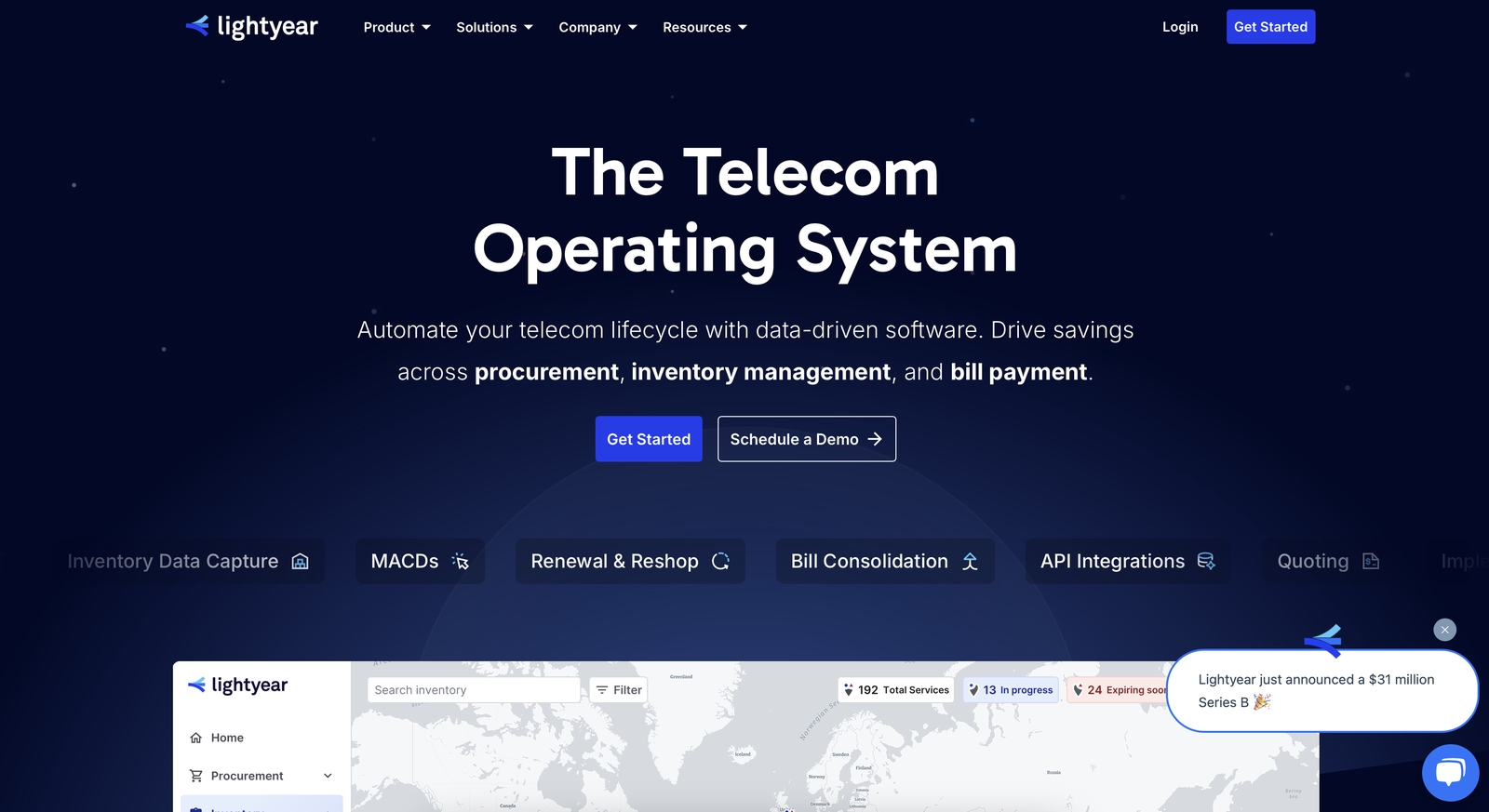
Deciding between MPLS and an internet leased line is just the first step. Lightyear helps with what comes next by automating network service procurement, inventory management, and bill consolidation for your chosen circuits.
By taking the manual work out of telecom, enterprises that use Lightyear see over 70% in time savings and reduce costs by 20% or more. Schedule a demo or get started with our questionnaire today.
Frequently Asked Questions about MPLS vs Internet Leased Line
Can I use internet leased lines to connect multiple offices instead of MPLS?
Yes, but it requires creating a virtual private network (VPN) over the public internet. While cost-effective, this approach lacks the built-in Quality of Service (QoS) and the performance guarantees for site-to-site traffic that an MPLS network provides.
Is MPLS obsolete now that SD-WAN exists?
Not at all. Many SD-WAN deployments actually run over MPLS circuits to guarantee performance for critical traffic, a strategy known as a hybrid WAN. MPLS remains a top choice for reliability, while SD-WAN adds flexibility and intelligence on top.
Which is better for accessing cloud applications like AWS or Salesforce?
An internet leased line is generally better for this purpose. It provides a direct, high-speed connection to the public internet where these cloud services reside. MPLS is designed for private traffic between your own sites, not for accessing public cloud platforms.
Let us show you the product and discuss specifics on how it might be helpful.
Schedule a Demo





Revolutionize Your Telecom Experience
Learn how you can get one step closer to optimal business efficiency for all your telecom services.