MPLS vs IPVPN: Comparing Network Solutions
Choosing between MPLS and IPVPN? This comparison breaks down the differences in cost, security, and performance to help you find the best fit.


When building a private wide area network (WAN) for your business, two common solutions you'll encounter are Multiprotocol Label Switching (MPLS) and IP Virtual Private Network (IPVPN). While both are used to securely connect multiple sites, they are often discussed interchangeably, which can cause confusion.
This guide provides a direct comparison of the two, breaking down their core differences in architecture, performance, and cost. The goal is to give you the information needed to determine the most suitable option for your organization's network infrastructure.
What is MPLS?
Multiprotocol Label Switching (MPLS) is a networking technique for creating private, high-performance wide area networks (WANs). At its core, MPLS directs data using short path labels instead of longer network addresses. This approach avoids complex routing table lookups, making traffic flow highly efficient and predictable across a provider's network.
- Private and Secure: MPLS circuits are isolated from the public internet, creating an inherently secure private network over a single provider's infrastructure.
- Performance-Driven: It operates at Layer 2.5 of the OSI model, enabling predictable performance, low latency, and guaranteed quality of service (QoS) for critical applications.
- Traffic Engineering: Carriers can pre-determine the path traffic takes across their network, ensuring reliability for applications like voice and video.
- Single-Carrier Dependent: An MPLS network is delivered and managed end-to-end by a single telecommunications provider.
What is IPVPN?
An IP Virtual Private Network (IPVPN) is a type of WAN that connects multiple sites into a single, secure network using Internet Protocol (IP). While the term is sometimes used broadly, in the context of carrier services, an IPVPN is almost always delivered over an MPLS backbone. Think of it as the commercial name for the managed network service, with MPLS being the core technology that makes it work.
- Layer 3 Service: Unlike MPLS which functions at Layer 2.5, IPVPN is a Layer 3 service. This means it routes traffic based on IP addresses, which is familiar to most network teams.
- Managed Solution: IPVPN is a fully managed service where the provider handles all routing, configuration, and network maintenance.
- Private and Secure: Traffic runs over the provider's private IP backbone, completely separate from the public internet, ensuring a high level of security.
- Supports QoS: Because it uses MPLS for transport, an IPVPN can prioritize traffic and offer Quality of Service (QoS) guarantees for important applications.
MPLS vs IPVPN: Key Differences
While the two are closely related, their differences primarily come down to the layer of operation, who manages the routing, and how the service is packaged.
1. Technology vs. Service Offering
The most fundamental distinction is that MPLS is a core networking technology, while IPVPN is the name of the managed service that uses it. Carriers build their private network backbones using MPLS technology. They then sell access to this network as a complete, managed solution called an IPVPN.
2. Layer of Operation and Routing Control
IPVPN is a Layer 3 service. This means the provider manages all IP routing between your sites as part of the package. You simply connect your equipment, and the carrier handles the rest. In contrast, MPLS is a Layer 2.5 transport mechanism. It provides the private pathways, but your IT team is typically responsible for managing the Layer 3 IP routing on top of it, offering more granular control.
3. Management Responsibility
This leads to a clear split in management duties. An IPVPN is a fully managed, turnkey solution where the provider handles network configuration, maintenance, and troubleshooting. An MPLS circuit requires more hands-on management from your in-house team, as you control the routing policies and network configuration yourself.
Benefits of MPLS
Opting for MPLS provides several distinct advantages, especially for organizations that require a high degree of network oversight and guaranteed performance.
- Greater Network Control: Since you manage the Layer 3 routing, your IT team has direct control over traffic paths and policies. This is ideal for custom network configurations or specific security requirements.
- High Reliability with SLAs: MPLS circuits are backed by robust Service Level Agreements (SLAs) from the carrier, guaranteeing uptime and performance metrics like latency and packet delivery.
- Superior Application Performance: With built-in Quality of Service (QoS), MPLS can prioritize critical, real-time traffic. This ensures that voice calls and video conferences remain clear and stable, unaffected by other data transfers.
- Scalable Architecture: The underlying infrastructure is designed for growth. Adding new locations to your private WAN is a structured process, making it a reliable foundation for expanding businesses.
Benefits of IPVPN
An IPVPN provides a different set of advantages, focusing on simplicity and offloading network management to the provider. This makes it an attractive option for businesses that want a hands-off approach to their WAN.
- Simplified Operations: As a fully managed service, the provider handles all routing, configuration, and maintenance. This frees your IT team from complex network tasks, allowing them to focus on other strategic initiatives.
- Faster Deployment: Adding new locations is simpler because the carrier manages the Layer 3 IP addressing and routing. This can significantly speed up the process of bringing new sites online.
- Cost Predictability: The service is typically offered at a fixed monthly cost that includes management and support, making budgeting more straightforward and reducing unexpected operational expenses.
- Guaranteed Performance without the Hassle: You receive the same high reliability and QoS capabilities of an MPLS network, but packaged as a turnkey solution without requiring your team to manage the underlying routing.
Choosing Between MPLS and IPVPN
The right choice depends less on the technology itself and more on your organization's specific needs, resources, and priorities. Here’s how to frame your decision.
1. In-House Expertise vs. Managed Service
Your decision should start with an honest assessment of your IT team's capacity. If you have skilled network engineers who can handle Layer 3 routing and want direct control over traffic policies, MPLS is a strong contender.
If you prefer to offload network management and free up your team for other business-critical projects, the fully managed nature of an IPVPN is the more practical option.
2. Need for Customization
Consider how much control your applications or security posture requires. MPLS provides the granular control needed for complex or unique network setups where your team must define the routing logic.
An IPVPN is ideal for businesses that need reliable, high-performance connectivity but do not have special routing demands. It offers a standardized, yet powerful, solution.
3. Speed of Deployment
Think about your company's growth trajectory. An IPVPN can often be deployed more quickly at new locations because the provider manages all the routing configurations.
For a more deliberate, hands-on expansion where your team manages the integration of each new site, MPLS provides the necessary framework.
Final Thoughts on MPLS and IPVPN
Ultimately, the distinction between MPLS and IPVPN is about technology versus a managed service. While an IPVPN service is built on an MPLS backbone, the key difference lies in who manages the network's routing.
If your organization has the in-house expertise and requires direct control over network policies, an MPLS circuit is the appropriate choice. For businesses seeking a reliable, hands-off WAN solution with provider management, an IPVPN delivers the performance of MPLS without the operational overhead. Your decision comes down to your team's resources and desired level of control.
Need Help Managing Your Network? Lightyear Can Help
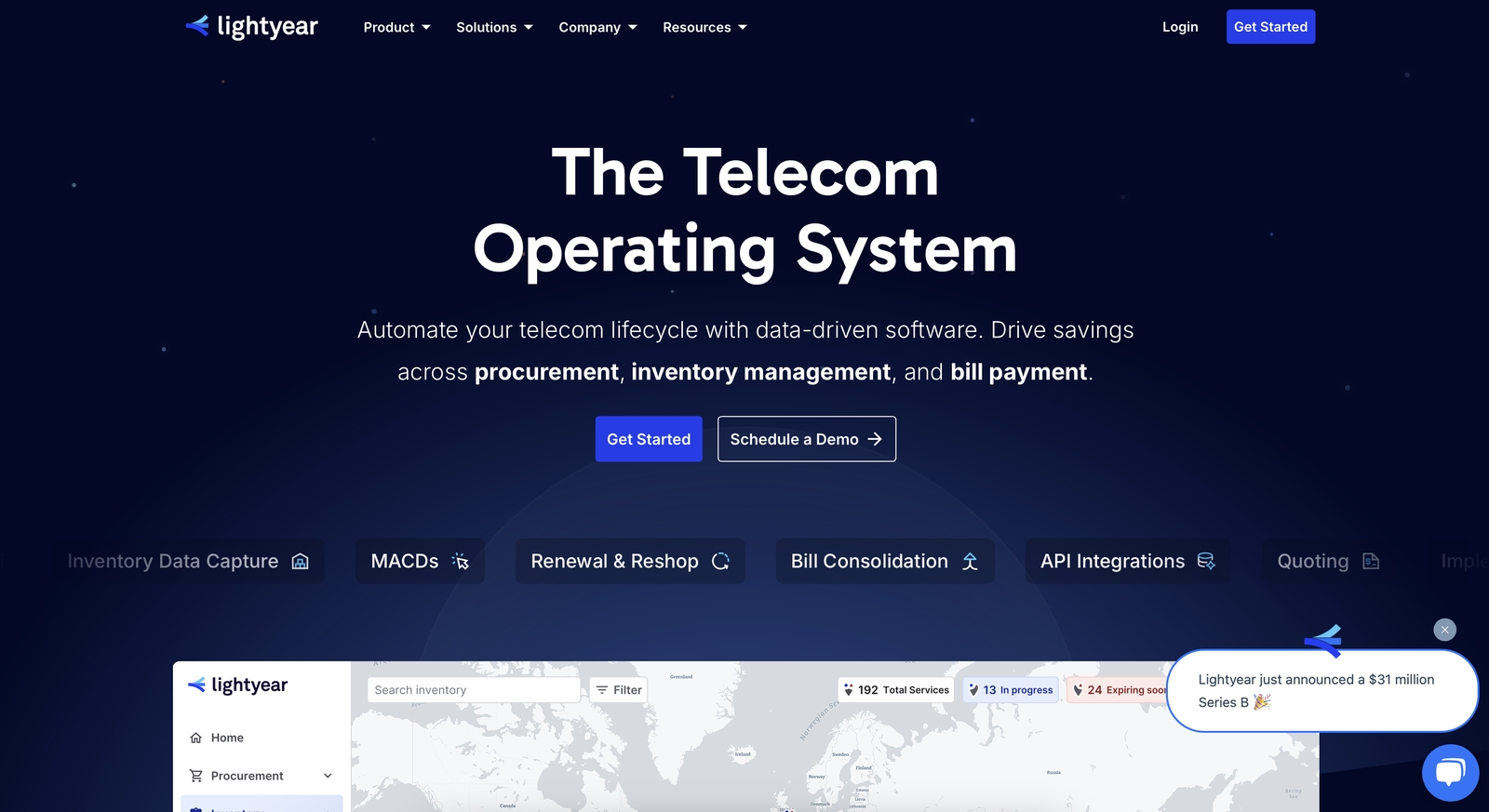
Deciding between MPLS and IPVPN is just the first step. Lightyear’s platform automates the entire telecom lifecycle, from procurement and inventory management to bill consolidation, taking the pain out of managing your network.
By automating these processes, the hundreds of enterprises who trust Lightyear achieve over 70% in time savings and more than 20% in cost savings on their network services.
Schedule a demo or get started with our questionnaire today.
Frequently Asked Questions about MPLS vs IPVPN
Is one more expensive than the other?
An IPVPN's cost is often more predictable as it includes management. A raw MPLS circuit might have a lower sticker price, but you must factor in the operational cost of your team managing it. Total cost of ownership can be very similar depending on your internal resources.
Which is better for connecting to the cloud?
Both can connect to cloud services, typically via a direct connect. An IPVPN simplifies this, as the provider manages the routing. With MPLS, your team configures the connection, offering more control. The choice depends on your preferred management model and technical requirements.
Do I lose security if I choose IPVPN over MPLS?
No, security is comparable. Since IPVPN services run on a private MPLS backbone, they offer the same inherent security by isolating your traffic from the public internet. The primary difference is in network management, not the security of the transport itself.
Let us show you the product and discuss specifics on how it might be helpful.
Schedule a Demo





Revolutionize Your Telecom Experience
Learn how you can get one step closer to optimal business efficiency for all your telecom services.