MPLS vs Point to Point: Network Comparison
MPLS vs. Point to Point: A clear comparison for IT leaders. Learn the key differences in network architecture, cost, and performance to choose wisely.


Choosing the right network infrastructure is a critical decision for any enterprise, directly impacting performance, security, and scalability across all business locations.
Two common options for connecting multiple sites are Multiprotocol Label Switching (MPLS) and Point-to-Point (P2P) circuits.
While both provide reliable private connectivity, they function differently and are suited for different business needs. This article will break down the key differences between them to help you determine which is the right fit for your organization.
What is MPLS?
Multiprotocol Label Switching (MPLS) is a data-forwarding technology that directs traffic from one network node to the next using short path labels instead of long network addresses. This technique avoids complex lookups in a routing table, making it an efficient way to build private wide area networks (WANs).
It operates at a layer between the traditional Layer 2 (Data Link) and Layer 3 (Network), often called "Layer 2.5." Here are its core characteristics:
- Any-to-Any Connectivity: An MPLS network allows any site to communicate directly with any other site, creating a fully meshed network topology. This differs from models where traffic must pass through a central point.
- Traffic Prioritization: It uses Quality of Service (QoS) to prioritize critical application traffic, such as voice and video, ensuring they receive the necessary bandwidth for reliable performance.
- Private and Secure: As a private network, MPLS isolates your traffic from the public internet, providing an inherent layer of security for data in transit between your locations.
What is Point to Point?
A Point-to-Point (P2P) connection is a private data circuit that directly links two locations. Think of it as a dedicated digital line exclusively for your organization, connecting a specific "Point A" to a "Point B," such as your main office to a critical branch or data center. This creates a simple, secure, and direct path for data transmission.
Its primary characteristics include:
- One-to-One Link: A P2P circuit is designed to connect only two endpoints. To connect a third site, an entirely separate circuit would be required.
- Dedicated Bandwidth: The connection provides a fixed amount of bandwidth that is not shared with other customers or traffic, ensuring consistent performance for the applications using it.
- Layer 2 Connectivity: P2P circuits typically operate at Layer 2 of the OSI model, acting like a long-distance Ethernet cable that transparently passes traffic between the two connected sites.
MPLS vs Point to Point: Key Differences
While both offer private connections, their underlying architecture creates significant differences in how they operate, scale, and manage data traffic.
1. Network Topology and Scalability
MPLS creates a fully meshed network, allowing any location to communicate with another directly. This makes adding new sites to your WAN relatively simple.
In contrast, a P2P connection establishes a rigid link between only two points. Connecting a third site requires adding entirely new circuits, making it less scalable for organizations with many locations.
2. Traffic Management
An MPLS network inherently supports Quality of Service (QoS), which allows you to prioritize critical application traffic like voice and video over less sensitive data.
A P2P circuit provides raw, dedicated bandwidth but does not natively manage the traffic within it. All data is treated equally unless you configure and manage QoS policies on your own network equipment.
3. Cost Structure
The cost of P2P is straightforward, typically based on the bandwidth and distance of each individual circuit. This model can become expensive as you connect more sites.
MPLS pricing is generally based on the bandwidth needed at each site and the required service levels. For enterprises with numerous locations, this can be more cost-effective than building a complex web of P2P links.
Benefits of MPLS for Enterprises
For businesses managing multiple locations, MPLS offers several distinct operational advantages that support growth and ensure consistent performance.
- Reliable Application Performance: Because MPLS networks include Quality of Service (QoS), they can guarantee performance for sensitive applications. This ensures that voice calls, video conferences, and other real-time services run smoothly without interruption, as the network prioritizes this traffic.
- Simplified Network Growth: Adding a new office or data center is straightforward. With its any-to-any topology, a new site can immediately communicate with all other locations without requiring complex, point-by-point circuit configurations.
- Vendor-Managed Service: MPLS is typically a carrier-managed service backed by a Service Level Agreement (SLA). This offloads the burden of network monitoring and management from your IT team to the provider, guaranteeing uptime and performance levels.
Advantages of Point to Point Connections
While less scalable for multi-site networks, P2P connections are highly valued for their directness and reliability. They excel in scenarios where a dedicated, high-performance link between two critical locations is the top priority.
- Maximum Security: Because a P2P circuit is a private, dedicated line between two points, it offers an extremely secure method for data transmission. Your traffic is completely isolated, minimizing exposure to external threats.
- Consistent Performance and Low Latency: With dedicated, uncontended bandwidth, performance is highly predictable. This direct path also results in very low latency, which is essential for applications like real-time data replication between data centers or connecting to a private cloud environment.
- Simplicity and Control: P2P links are straightforward to manage. Your IT team has direct control over the network equipment at both ends, allowing for custom configurations without being tied to a provider’s managed service rules.
Choosing the Right Solution for Your Business
Deciding between MPLS and P2P comes down to your specific network architecture, number of locations, and application priorities. The right choice depends entirely on the problem you are trying to solve.
When MPLS is the Right Fit
MPLS is ideal for organizations with three or more locations that require reliable, any-to-any connectivity. If your business depends on consistent performance for applications like VoIP and video conferencing across all sites, the built-in Quality of Service (QoS) makes MPLS a strong choice. It is designed for businesses that are scaling and need to add new sites to the network efficiently.
When a Point-to-Point Connection Makes Sense
A P2P circuit is the go-to solution for connecting two critical locations with maximum security and dedicated bandwidth. Common use cases include linking a corporate headquarters to a primary data center or establishing a direct connection for disaster recovery. Choose P2P when the absolute priority is a simple, high-performance, low-latency link between two specific points.
Considering a Hybrid Approach
It is also important to note that these solutions are not mutually exclusive. Many enterprises use a hybrid model, employing an MPLS network for general branch connectivity while using P2P circuits for high-priority data center links.
Final Thoughts on MPLS and Point to Point
Ultimately, the choice between MPLS and Point-to-Point isn't about which technology is superior, but which one aligns with your specific business requirements.
MPLS offers a scalable, managed solution for connecting multiple sites with built-in traffic prioritization. In contrast, P2P provides a simple, highly secure, and dedicated link between two critical locations.
By evaluating your network topology, application needs, and security priorities, you can make an informed decision that supports your operational goals. Many organizations even find success by using both in a hybrid model.
Need Help Managing Your Network? Lightyear Can Help
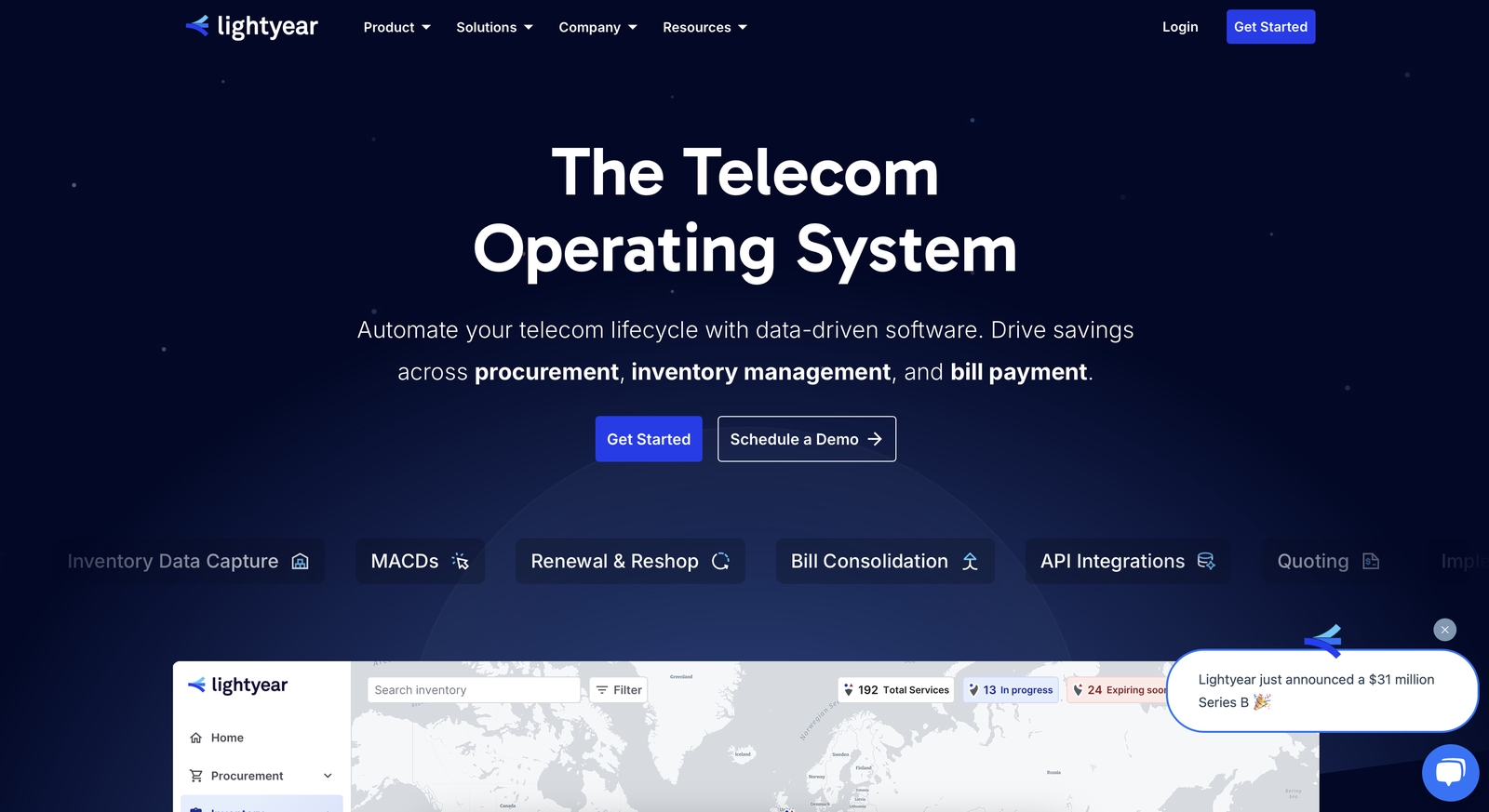
Whether you choose MPLS, P2P, or a hybrid approach, the next step is navigating the procurement process. Lightyear automates this entire lifecycle, from data-driven quoting to managing implementation for your chosen network services.
By automating procurement, inventory management, and bill consolidation, Lightyear takes the pain out of managing telecom infrastructure. The hundreds of enterprises who trust Lightyear achieve over 70% time savings and 20%+ cost savings on their network services.
Schedule a demo or get started with our questionnaire today.
Frequently Asked Questions about MPLS vs Point to Point
Which is better for connecting to the cloud?
It depends on your needs. A Point-to-Point circuit provides a direct, high-performance link to a specific cloud provider. MPLS can offer managed connectivity to multiple cloud services, but the path may be less direct than a dedicated P2P link.
Is one technology replacing the other?
Not necessarily. While newer solutions like SD-WAN are popular, both MPLS and P2P remain essential for specific use cases. Many enterprises use a hybrid approach, combining different technologies to meet the unique needs of each location.
Can I get internet access over these circuits?
Typically, no. Both MPLS and P2P are private networking services designed to connect your business locations to each other, not to the public internet. You would need a separate Dedicated Internet Access (DIA) circuit for internet connectivity.
Let us show you the product and discuss specifics on how it might be helpful.
Schedule a Demo





Revolutionize Your Telecom Experience
Learn how you can get one step closer to optimal business efficiency for all your telecom services.