MPLS vs VPN: Enterprise Network Solutions Comparison
MPLS vs. VPN: Which is right for your enterprise network? Learn the key differences in performance, security, and cost to make an informed decision.


Connecting multiple business locations is a fundamental challenge for any growing enterprise. Two of the most common solutions for building a private wide area network (WAN) are Multiprotocol Label Switching (MPLS) and Virtual Private Networks (VPNs).
While both technologies can connect your sites, they offer different approaches to performance, security, and cost. This guide compares MPLS and VPNs to help you decide which is the right fit for your company's network needs.
What is MPLS?
Multiprotocol Label Switching, or MPLS, is a networking technology that directs data from one node to the next based on short path labels rather than long network addresses. It operates on a private network, offering a more controlled and reliable way to connect multiple business sites compared to using the public internet.
Think of it as a private highway system for your company's data. An MPLS provider establishes a dedicated path for your traffic, which means data packets don't have to compete with other traffic. This direct routing makes data transfer highly efficient and predictable.
Key characteristics of an MPLS network include:
- Private and Secure: Traffic is isolated from the public internet, providing a secure connection between your locations.
- High Performance: By pre-determining the path for data, MPLS minimizes delays and packet loss, making it ideal for real-time applications like VoIP and video conferencing.
- Provider-Managed: The network is managed by a single telecom carrier, which typically offers Service Level Agreements (SLAs) for uptime and performance.
- Quality of Service (QoS): It allows you to prioritize critical application traffic, ensuring it gets the necessary bandwidth.
What is VPN?
A Virtual Private Network, or VPN, establishes a secure and encrypted connection over a less secure network—most often, the public internet. Instead of using a dedicated private line, a VPN creates an encrypted "tunnel" for your data to travel through. This process scrambles your data, making it unreadable to anyone who might intercept it as it moves between your business sites or remote workers.
The core features of a VPN include:
- Internet-Dependent: It operates over your existing public internet connections, offering broad accessibility wherever there is internet service.
- Encrypted Tunneling: Data is secured by encrypting it before it enters the public network and decrypting it only at its destination.
- Lower Cost: VPNs are generally more affordable than MPLS because they use shared public infrastructure rather than dedicated private circuits.
- Remote Accessibility: It is well-suited for connecting individual remote employees and mobile users to the corporate network, not just linking physical office locations.
MPLS vs VPN: Key Differences
While both technologies connect your sites, their underlying mechanics lead to significant differences in how they operate. Understanding these distinctions is crucial for making the right choice for your network infrastructure.
1. Performance and Reliability
MPLS operates on a private network, which gives it a major performance advantage. Because the carrier controls the entire path, it can offer guaranteed bandwidth and Quality of Service (QoS) to prioritize critical traffic like voice or video.
This results in highly predictable, low-latency connections backed by Service Level Agreements (SLAs). In contrast, a VPN's performance is dependent on the public internet, which can be unpredictable and congested. While functional, it lacks the performance guarantees of an MPLS circuit.
2. Security Model
An MPLS network is inherently secure because it is completely isolated from the public internet. Your data travels on a private infrastructure, making it inaccessible to outside threats without needing additional encryption.
A VPN secures data by creating an encrypted tunnel over the public internet. While strong encryption makes the data unreadable to outsiders, the traffic itself still traverses public networks, which introduces a different set of security considerations.
3. Cost Structure
Cost is one of the most significant differentiators. MPLS is the more expensive option due to the dedicated, private infrastructure and management provided by the carrier.
VPNs are considerably more cost-effective. They work over standard business internet connections, avoiding the high price of private circuits. The primary costs are the internet service itself and the VPN hardware or software licenses.
Benefits of Using MPLS
While the technical specifications are important, the real value of MPLS lies in the operational advantages it brings to a business managing multiple sites. It provides a stable foundation for your company's connectivity needs.
- Consistent Application Performance: Because MPLS prioritizes traffic, it provides a reliable experience for critical applications like VoIP, video calls, and SaaS platforms. This means fewer dropped calls and less application lag for your team.
- Reduced Management Burden: The network is managed end-to-end by the provider, complete with service level agreements (SLAs). This frees up your IT staff from day-to-day network monitoring and troubleshooting.
- Future-Proof Scalability: Adding new business locations to the network is a straightforward process managed by the carrier, making it easier to scale your infrastructure as your company grows.
Advantages of VPNs
VPNs offer compelling benefits, particularly for businesses that prioritize flexibility, remote access, and cost management. Their ability to operate over the public internet makes them a versatile tool for modern network needs.
- Significant Cost Savings: By using existing public internet connections, VPNs avoid the high costs associated with private, dedicated circuits. This makes enterprise-grade connectivity more affordable and accessible.
- Unmatched Flexibility and Reach: A VPN can connect any site or individual user with an internet connection, regardless of geographic location. This is ideal for supporting remote employees and offices in areas not covered by specific MPLS providers.
- Rapid Deployment: Since they run over existing infrastructure, VPNs can be set up quickly. This avoids the long lead times that carriers often require to provision new MPLS circuits, allowing your business to get new sites online faster.
Choosing Between MPLS and VPN for Your Business
The right choice depends on balancing your specific business priorities for performance, security, and cost. To make an informed decision, evaluate your needs against the core strengths of each technology.
1. Your Application and Performance Needs
If your daily operations rely heavily on real-time applications like VoIP, video conferencing, or critical cloud services, MPLS is the stronger choice. Its Quality of Service (QoS) capabilities ensure these applications receive priority, providing a stable and predictable user experience.
If your primary needs are email, file sharing, and general web browsing, a VPN over a high-quality business internet connection will likely provide sufficient performance.
2. Your Security and Compliance Requirements
For organizations in highly regulated industries like finance or healthcare, the inherent security of an MPLS network is a significant advantage. Since traffic is isolated from the public internet, it offers a simpler path to compliance.
A VPN provides strong security through encryption and is suitable for most businesses. However, it requires careful configuration and management, as the traffic still travels over public networks.
3. Your Budget and Scalability Plans
Budget is often the deciding factor. VPNs are significantly more affordable, making them ideal for small businesses, startups, or companies looking to connect many sites without a large capital investment.
MPLS is a premium service with higher costs but offers managed scalability. If your business has a stable growth plan and requires guaranteed uptime and performance at new locations, the investment may be justified.
Final Thoughts on MPLS and VPN
Ultimately, the decision between MPLS and VPN comes down to a trade-off between guaranteed performance and cost-effective flexibility. There is no single "best" answer; the right solution depends entirely on your organization's specific operational needs and budget.
MPLS remains the standard for businesses that require unwavering reliability for critical, real-time applications. If consistent performance and uptime are non-negotiable, the investment in a private network is often justified.
Conversely, VPNs offer a practical and highly accessible way to connect sites and remote users securely over the public internet. Their lower cost and rapid deployment make them an excellent choice for less performance-sensitive traffic.
It's also worth noting that many companies use a hybrid model, deploying MPLS for headquarters and data centers while using VPNs for branch offices. Evaluating your application portfolio and security requirements will point you to the most suitable architecture for your network.
Need Help Managing Your Network? Lightyear Can Help
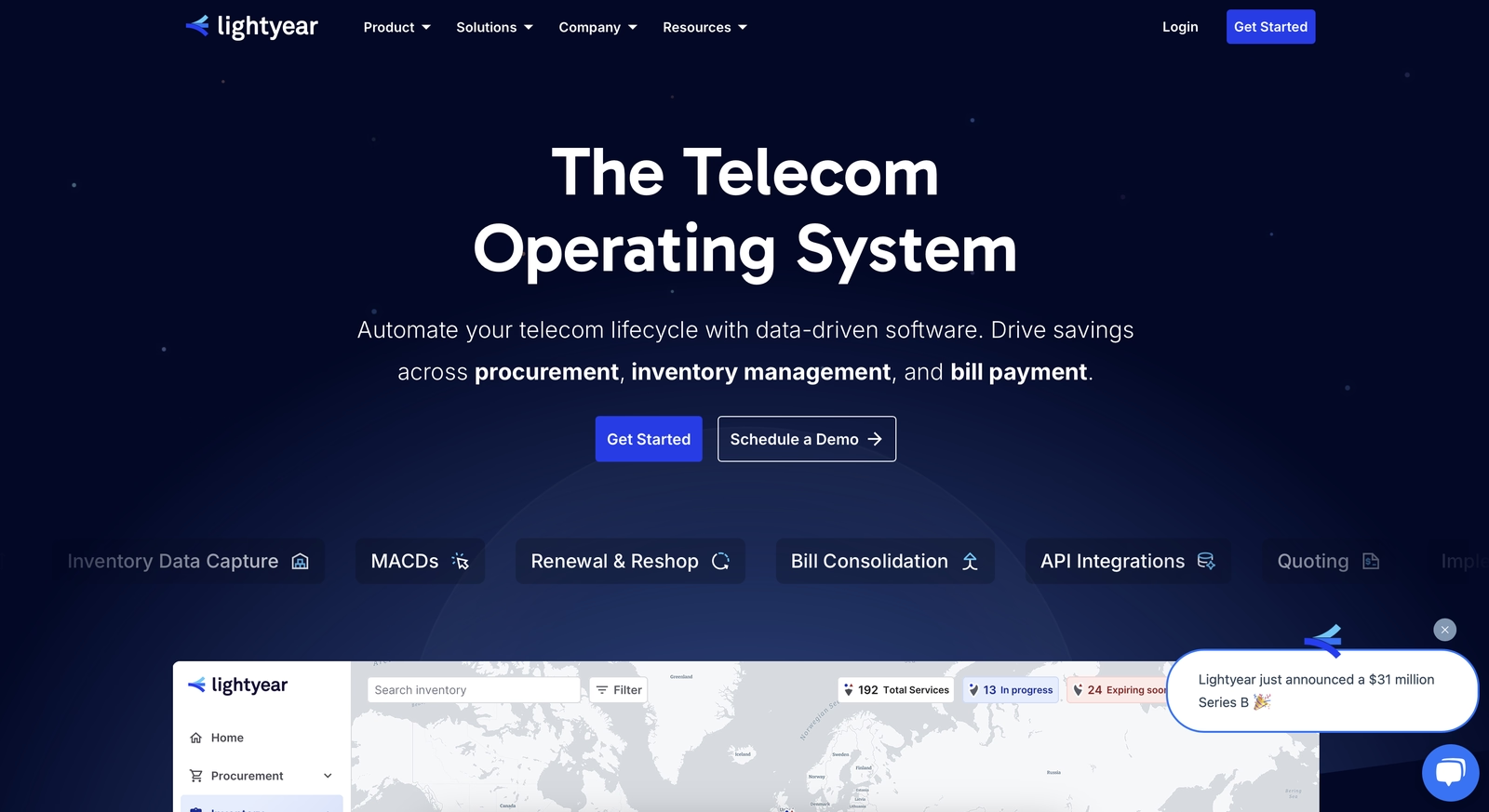
Whether you choose MPLS, VPN, or a hybrid approach, Lightyear helps you procure and manage it. By automating network service procurement, inventory management, and bill consolidation, our platform takes the pain out of telecom infrastructure management.
The hundreds of enterprises who trust Lightyear achieve 70%+ time savings and 20%+ cost savings on their network services.
Schedule a demo or get started with our questionnaire today.
Frequently Asked Questions about MPLS vs VPN Comparison
Can I use both MPLS and VPN together?
Yes, this is known as a hybrid WAN. Many businesses use MPLS for core sites needing guaranteed performance, like a headquarters or data center, while using cost-effective VPNs for smaller branch offices or as a backup connection.
How does SD-WAN fit into the MPLS vs. VPN discussion?
SD-WAN is a technology that intelligently manages traffic over multiple connection types, including both MPLS and internet VPNs. It adds a control layer to automatically route applications over the best path based on performance needs and cost.
Is MPLS becoming obsolete?
Not at all. While modern alternatives are popular, MPLS remains the gold standard for applications that demand extreme reliability and guaranteed uptime. Its private, controlled environment is still unmatched for many critical business operations.
Which is better for connecting to cloud services?
It depends on your needs. For direct, high-performance access to a cloud provider, an MPLS circuit with a direct connect is often superior. For general cloud access from multiple locations, a secure VPN or SD-WAN can be more flexible and cost-effective.
Let us show you the product and discuss specifics on how it might be helpful.
Schedule a Demo





Revolutionize Your Telecom Experience
Learn how you can get one step closer to optimal business efficiency for all your telecom services.