N Router vs AC Router: Enterprise Differences
N vs. AC routers: which is right for your business? Learn the key differences in speed, range, and performance to make an informed network decision.


Choosing the right Wi-Fi technology is critical for keeping a business running smoothly. When looking at enterprise-grade routers, you'll often encounter terms like 'N Router' and 'AC Router'.
These labels refer to specific Wi-Fi standards: 802.11n (also known as Wi-Fi 4) and 802.11ac (Wi-Fi 5), respectively. Understanding the key differences in their speed, range, and capacity is essential for selecting the right hardware for your company's needs.
What is an N Router?
An N Router is a wireless router that supports the 802.11n standard, also known as Wi-Fi 4. When it was introduced, it represented a significant upgrade over previous Wi-Fi technologies, offering much-needed improvements in speed and reliability for business environments.
Its main features include:
- Speed: N Routers offer theoretical maximum speeds of up to 600 Mbps, a substantial increase from the 54 Mbps of the preceding 802.11g standard.
- Frequency Bands: They were the first to operate on both the 2.4 GHz and 5 GHz radio bands. This dual-band capability allows for more flexibility and helps reduce network congestion.
- MIMO Technology: This standard introduced Multiple-Input Multiple-Output (MIMO), a technology that uses multiple antennas to send and receive data at the same time, improving both data throughput and signal range.
What is an AC Router?
An AC Router is a device that operates on the 802.11ac standard, commonly known as Wi-Fi 5. It was developed to address the growing demand for higher bandwidth needed for video streaming and supporting numerous connected devices, making it a popular choice for modern business environments.
Its main advancements include:
- Speed: AC Routers offer much faster data rates, with theoretical maximum speeds reaching 1.3 Gbps (1300 Mbps) and beyond.
- Frequency Band: The standard operates exclusively on the cleaner, less congested 5 GHz band, which helps minimize signal interference.
- Beamforming: This feature allows the router to focus the Wi-Fi signal directly toward a connected device, creating a stronger and more stable connection.
- MU-MIMO: An evolution of MIMO, Multi-User MIMO enables the router to transmit data to multiple devices simultaneously, which dramatically improves network performance in busy offices.
Key Differences Between N and AC Routers
While the raw speed numbers are a major differentiator, the underlying technologies are what truly set these two standards apart. Here’s a closer look at the functional differences that matter for a business network.
Frequency Bands and Range
N Routers operate on both the 2.4 GHz and 5 GHz bands. The 2.4 GHz frequency offers better range and penetration through walls but is often congested with interference from other electronics.
AC Routers work exclusively on the cleaner 5 GHz band. This provides a more stable, high-speed connection but with a shorter effective range, a key trade-off in network design.
Channel Width and Data Rate
AC Routers achieve higher throughput by using much wider data channels—up to 160 MHz, compared to the 40 MHz maximum for N Routers. A wider channel allows more data to pass through at once.
They also use a more efficient data encoding method (256-QAM vs. 64-QAM), which packs more data into every transmission, further boosting speed.
Device Communication
The way these routers manage traffic is a critical distinction. N Routers with standard MIMO technology serve connected devices sequentially—one after the other, very quickly.
AC Routers with MU-MIMO can transmit data to multiple devices simultaneously. For a busy office with many users, this reduces network lag and improves overall efficiency.
Performance and Speed Comparison
When you look past the technical specifications, the real-world performance differences become clear, especially in a busy office. The upgrade from an N Router to an AC Router directly impacts network speed and stability under load.
- Real-World Speed: An AC Router delivers significantly faster throughput for each connected device. This is crucial for bandwidth-intensive activities like high-definition video calls, accessing cloud-based software, and transferring large files. An N Router can handle basic tasks but may struggle to keep up with these demands.
- High-Density Performance: In environments with many users and devices, an AC Router maintains performance far better. Its ability to communicate with multiple devices simultaneously (MU-MIMO) prevents the network lag that can occur with N Routers, which serve devices sequentially.
- Connection Stability: By operating exclusively on the less-crowded 5 GHz frequency band, AC Routers provide a more stable and reliable connection. They avoid the signal interference common on the 2.4 GHz band, leading to fewer dropped connections and more consistent performance.
Security Features of N vs AC Routers
When it comes to securing your network, the differences between N and AC routers are less about the Wi-Fi standard itself and more about the age of the hardware. This is a critical point for any business managing sensitive data.
- WPA2 Support: Both N and AC routers are capable of using the WPA2 security protocol, which has long been the standard for network encryption. For basic security, both can get the job done.
- WPA3 Advantage: The key security differentiator is support for WPA3. This newer protocol offers significantly improved protection against modern cyber threats. WPA3 is generally only available on modern AC routers and newer hardware.
- Firmware Updates: Manufacturers prioritize security updates for their current products. This means AC routers receive ongoing firmware patches to protect against new vulnerabilities, while many N routers are no longer supported and can remain exposed.
Cost Considerations for Enterprises
When evaluating costs, the initial purchase price is the most obvious difference. N Routers are significantly cheaper, making them a tempting option for businesses on a strict budget or with very light network traffic.
However, it's important to consider the total cost of ownership. While AC Routers have a higher upfront cost, they often deliver greater long-term value for a business environment.
Their superior performance prevents network slowdowns that can hinder employee productivity, a hidden cost that quickly adds up. An AC Router's ability to handle more devices and data-intensive tasks means it won't need to be replaced as quickly as your business grows, making it a more durable investment.
Making the Right Choice for Your Network
Choosing between an N and AC router comes down to your specific business requirements and growth plans.
An N Router might suffice for a very small office with minimal internet usage and few connected devices. However, its older technology can create bottlenecks as your needs evolve.
For most businesses today, an AC Router is the practical choice. It provides the speed and stability required for modern operations, from video conferencing to cloud-based applications.
Its ability to handle multiple devices simultaneously and its superior security features make it a more reliable and future-proof investment for your company's network infrastructure.
Need Help Managing Your Network? Lightyear Can Help
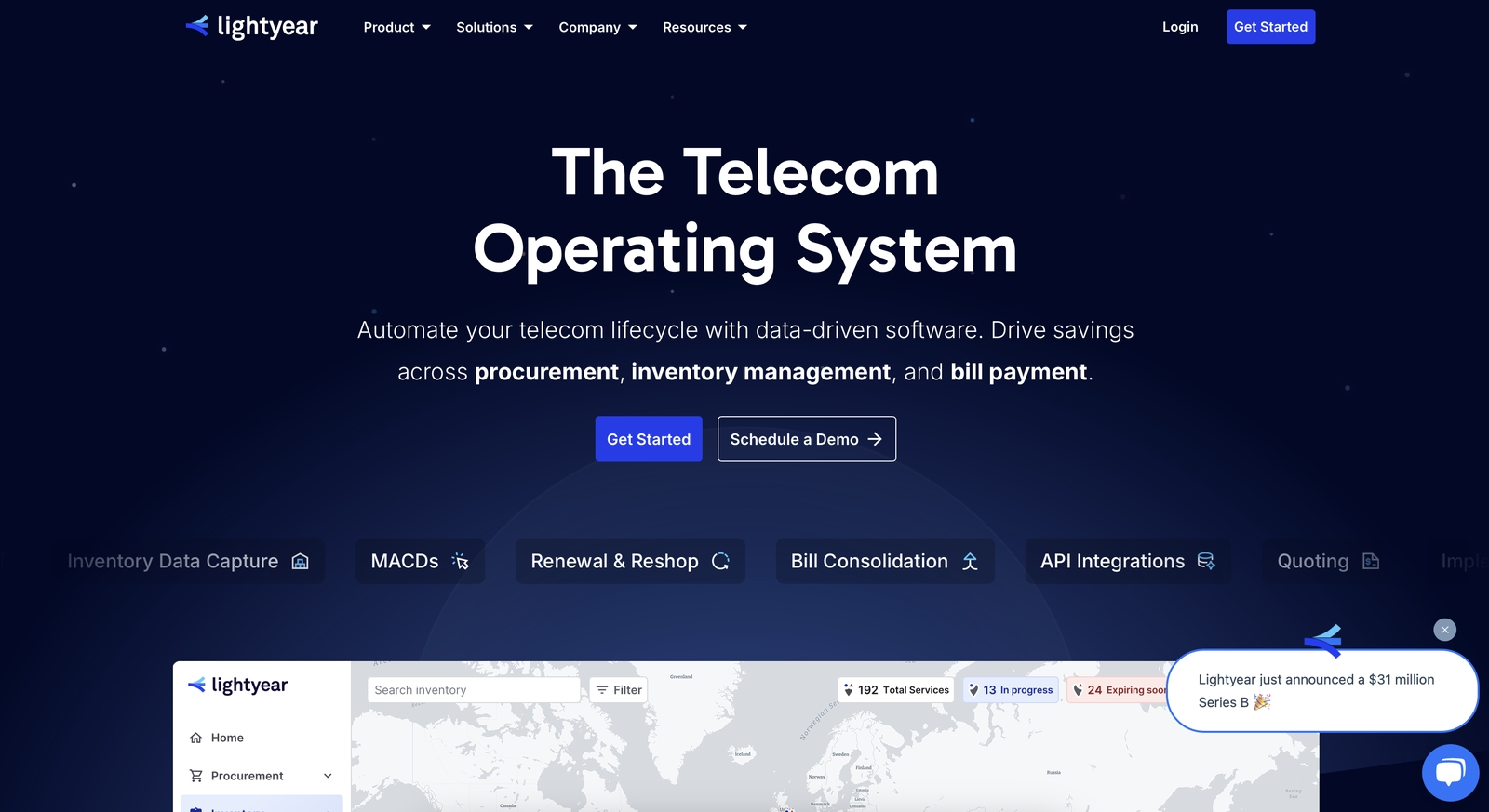
Choosing the right router is a key step, but managing your entire network infrastructure is the bigger challenge. By automating network service procurement, inventory management, and bill consolidation, Lightyear takes the pain out of telecom management.
The hundreds of enterprises who trust Lightyear achieve 70%+ time savings and 20%+ cost savings on their network services.
Schedule a demo or get started with our questionnaire today.
Frequently Asked Questions about N Router vs AC Router
Can my older devices connect to an AC router?
Absolutely. AC routers are backward-compatible, so your Wi-Fi N devices will connect without issue. Just remember, those older devices will still operate at their original, slower speeds and won't get the full performance boost of the AC standard.
Is it worth upgrading if my internet speed is slow?
Yes, it can be. An AC router improves your internal network (LAN) speed, which is ideal for transferring large files between computers or reducing lag when many devices are active. It ensures your router isn't the bottleneck in your office.
What about the newer Wi-Fi 6 (AX) standard?
Wi-Fi 6 is the successor to AC (Wi-Fi 5) and is built for high-density environments with many connected devices. If you are planning a major network overhaul or need to support a large number of users, looking into Wi-Fi 6 is a smart move.
How can I solve the shorter range of an AC router?
The best way to extend coverage in a business setting is by deploying multiple access points (APs) throughout the space. This creates a robust network with strong, consistent signal, overcoming the natural range limitations of the 5 GHz band.
Let us show you the product and discuss specifics on how it might be helpful.
Schedule a Demo





Revolutionize Your Telecom Experience
Learn how you can get one step closer to optimal business efficiency for all your telecom services.