Network Inventory vs Wireshark: Tool Comparison Guide
Looking for Ethernet Private Line providers in Carmel, IN? Compare top options and find the best connectivity solution for your business.


For any IT team, having a clear view of your network infrastructure is fundamental to keeping operations running smoothly. While many tools offer network visibility, two that are often discussed are network inventory systems and Wireshark—though they solve very different problems.
Network inventory software focuses on cataloging your assets: what hardware and services you have, where they are, and how they're configured. In contrast, Wireshark is a packet analyzer that lets you inspect network traffic in real-time to diagnose connectivity or performance issues.
Understanding the distinction is key to building an effective network management toolkit.
What is Network Inventory?
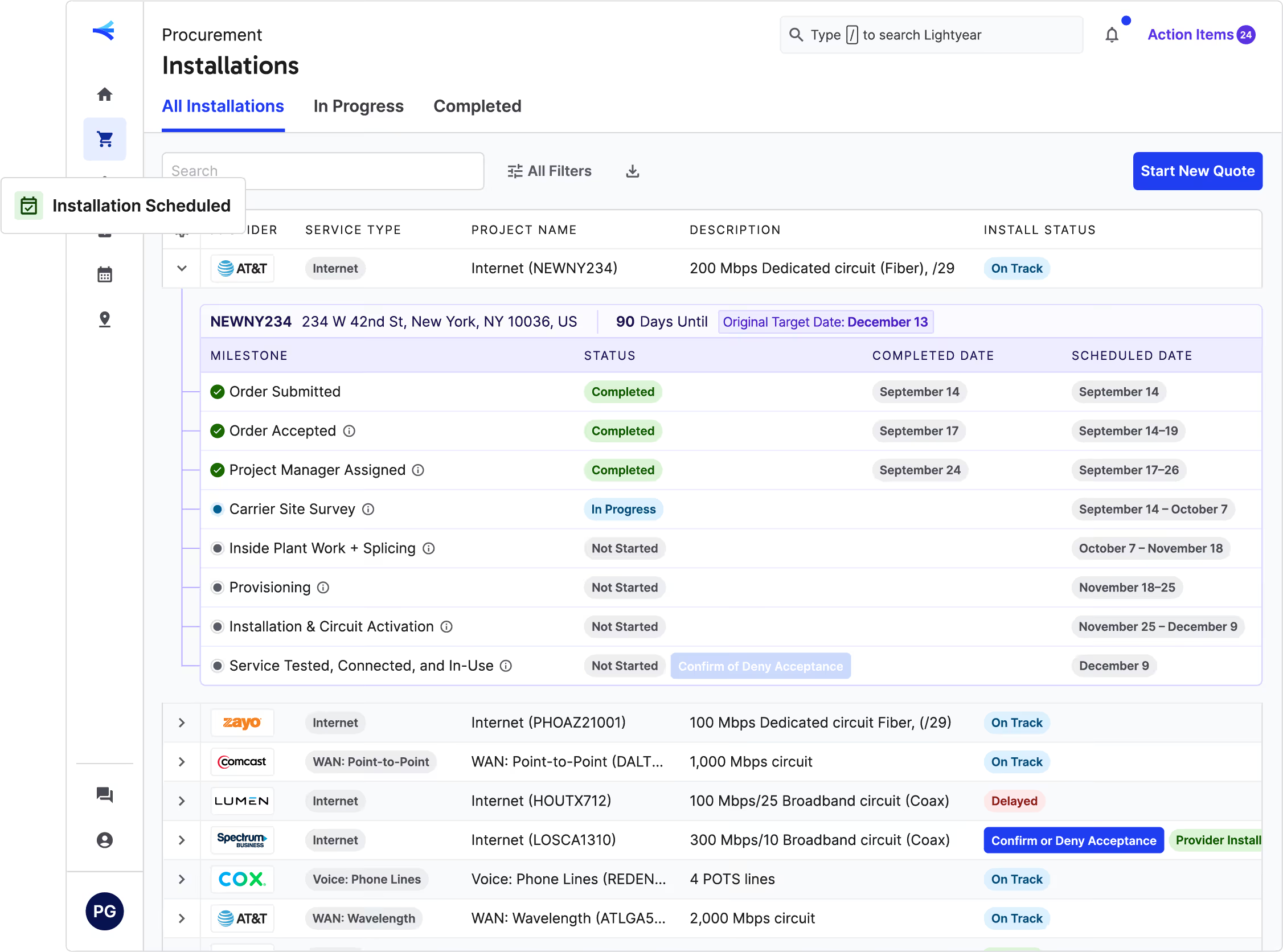
Think of a network inventory as a comprehensive database of your entire telecom and IT infrastructure. It's a centralized system of record that documents every component—both physical and virtual—that makes up your network. The goal is to give you a complete and accurate picture of all your assets at any given time. A detailed inventory typically tracks:
- Hardware: All physical devices like routers, switches, firewalls, servers, and phones across every location.
- Services: A full list of your connectivity services, including internet circuits, WAN links, voice lines, and colocation arrangements.
- Configuration Data: Critical details such as IP addresses, circuit IDs, contract renewal dates, account numbers, and support contacts.
- Relationships: How different components are connected, helping you map dependencies within your infrastructure.
What is Wireshark?
Where a network inventory gives you a static map of your assets, Wireshark provides a live view of the traffic moving across that map. It's a powerful network protocol analyzer that captures data packets in real time and presents them in a human-readable format. This allows IT professionals to see exactly what is happening on their network at a microscopic level. Essentially, it acts like a measuring device for your network, letting you:
- Troubleshoot Problems: Pinpoint the source of slow speeds, connectivity failures, or application issues by examining individual data packets.
- Analyze Security: Detect suspicious network activity, identify potential security threats, and investigate security incidents.
- Debug Protocols: Verify that network applications and devices are communicating according to protocol standards.
Key Differences Between Network Inventory and Wireshark
While both tools are vital for network management, they serve fundamentally different purposes and operate on opposite ends of the spectrum. Here’s a breakdown of their core distinctions.
1. Core Function: Strategic Planning vs. Real-Time Troubleshooting
A network inventory’s primary function is strategic. It’s used for asset management, budget planning, and maintaining a system of record for all your hardware and services. It answers the question, “What do we own and where is it?”
In contrast, Wireshark’s function is tactical and immediate. It’s a diagnostic tool used to solve active problems by inspecting live network traffic. It answers the question, “What is happening on our network right now?”
2. Scope of View: Macro vs. Micro
Think of network inventory as providing a macro, bird's-eye view of your entire infrastructure. It shows you the complete landscape of your assets, from routers in different offices to contract renewal dates for your internet circuits.
Wireshark offers a micro, granular view. It zooms in on the smallest components of network communication—individual data packets—to analyze how data is flowing between specific points.
3. Data Type: Static vs. Dynamic
A network inventory deals with data that is mostly static or changes infrequently. This includes information like device serial numbers, IP addresses, circuit IDs, and vendor contact details.
Wireshark, on the other hand, captures and analyzes highly dynamic, real-time data. The information it presents is a momentary snapshot of network traffic that is constantly changing from one second to the next.
Benefits of Using Network Inventory
Maintaining a detailed network inventory offers more than just a tidy list of assets. It provides tangible business advantages that impact your budget, efficiency, and long-term strategy.
- Better Cost Control: A complete inventory gives you full visibility into your telecom spend. You can easily spot redundant services, consolidate contracts, and track renewal dates to avoid costly auto-renewals.
- Increased Operational Efficiency: It acts as a single source of truth for your IT and finance teams. This eliminates time spent searching for circuit details or vendor information, which speeds up everything from troubleshooting to managing site changes.
- Informed Strategic Planning: With a clear view of all assets and their lifecycles, you can make smarter decisions about network upgrades and capacity planning. It provides the data needed to align your infrastructure with long-term business goals.
- Reduced Risk: An accurate inventory helps you manage contract end dates to prevent unexpected service disruptions. It also creates a clear record for compliance and auditing, ensuring you know exactly what is running on your network.
Advantages of Wireshark for Network Analysis
While a network inventory provides a high-level map, Wireshark offers distinct advantages for hands-on network analysis:
- Detailed Troubleshooting: When an application is slow, Wireshark lets you see the exact conversation between servers and clients. This detail helps you quickly find the root cause—be it a firewall rule, DNS issue, or faulty hardware—saving hours of guesswork.
- Security Analysis and Forensics: Wireshark is essential for investigating security incidents. It allows you to capture suspicious traffic, analyze malware behavior, and see what data may have been compromised. This information is critical for incident response and strengthening network defenses.
- Verifying Network Performance: By capturing traffic, you can identify which applications consume the most bandwidth and spot inefficient protocols. This provides hard data to support network upgrades or configuration changes, helping to optimize performance.
- Protocol Debugging: For teams with complex systems, Wireshark helps debug communication problems. It shows the raw packet data, confirming if devices are communicating correctly and helping resolve disputes between different system vendors.
Choosing the Right Tool for Your Enterprise
The decision isn't about picking one tool over the other; it's about understanding which one addresses your immediate and long-term needs. The reality is that most enterprises need both to manage their network effectively.
1. For Strategic Asset Management and Planning
If your primary challenges involve budget oversight, contract management, or long-term capacity planning, a network inventory system is the correct starting point. It provides the foundational data needed for strategic decisions.
This tool is essential when you need to answer questions about what you own, what you're paying for, and when contracts are up for renewal.
2. For Tactical Problem-Solving and Analysis
When your team faces immediate performance issues like slow applications, connectivity drops, or a potential security breach, Wireshark is the tool to use. It is designed for active, hands-on diagnostics.
Use it to investigate problems as they happen and get granular data on network traffic to find the root cause quickly.
3. Combining Tools for Comprehensive Management
The most effective approach uses both tools in tandem. Your network inventory acts as the map, and Wireshark is the magnifying glass you use to inspect specific points on that map.
For example, you can use your inventory to quickly find the details of a specific firewall, then use Wireshark to analyze the traffic passing through it. This combination gives you both high-level control and deep visibility.
Final Thoughts on Network Inventory vs Wireshark
Ultimately, the comparison between network inventory and Wireshark isn't about choosing a winner. Both tools play distinct and critical roles in modern network management.
A network inventory provides the foundational, big-picture view of your assets, contracts, and configurations. It’s your system of record for strategic planning and cost control.
Wireshark, in contrast, is your go-to for granular, real-time diagnostics. It helps you solve immediate performance and security issues by analyzing live traffic.
The most effective IT teams use them together. Your inventory tells you what a device is and where it is, while Wireshark shows you what it's doing. This combined approach gives you complete control over your network, from high-level strategy to on-the-ground troubleshooting.
Need Help Managing Your Network? Lightyear Can Help

While Wireshark is essential for real-time analysis, a robust network inventory is the foundation of strategic telecom management. Lightyear provides a modern platform to build that foundation, giving you a single source of truth for all your circuits and services.
By automating network inventory, procurement, and bill consolidation, Lightyear helps enterprises save over 70% in time and 20% in costs, taking the manual work out of infrastructure management.
Schedule a demo or get started with our questionnaire today.
Frequently Asked Questions about Network Inventory vs Wireshark
Can a network inventory system perform packet analysis like Wireshark?
Generally, no. Network inventory systems focus on cataloging assets and their static data like contracts and configurations. They are not designed for real-time traffic analysis, which is Wireshark's specific function. The two tools serve different purposes.
Is Wireshark free to use?
Yes, Wireshark is open-source and free to download and use for both commercial and non-profit purposes. Network inventory platforms, on the other hand, are typically commercial software products that come with licensing or subscription fees.
Which tool is more important for a small business?
It depends on your primary need. If you struggle with tracking assets and managing service contracts, start with a network inventory. If your main issues are network slowdowns or connectivity problems, Wireshark will be more immediately useful for troubleshooting.
How often should a network inventory be updated?
Your network inventory should be a living document. It's best to update it whenever a change occurs—like adding a new device, changing a circuit, or renewing a contract. This ensures the data remains accurate and reliable for decision-making.
Let us show you the product and discuss specifics on how it might be helpful.
Schedule a Demo





Revolutionize Your Telecom Experience
Learn how you can get one step closer to optimal business efficiency for all your telecom services.