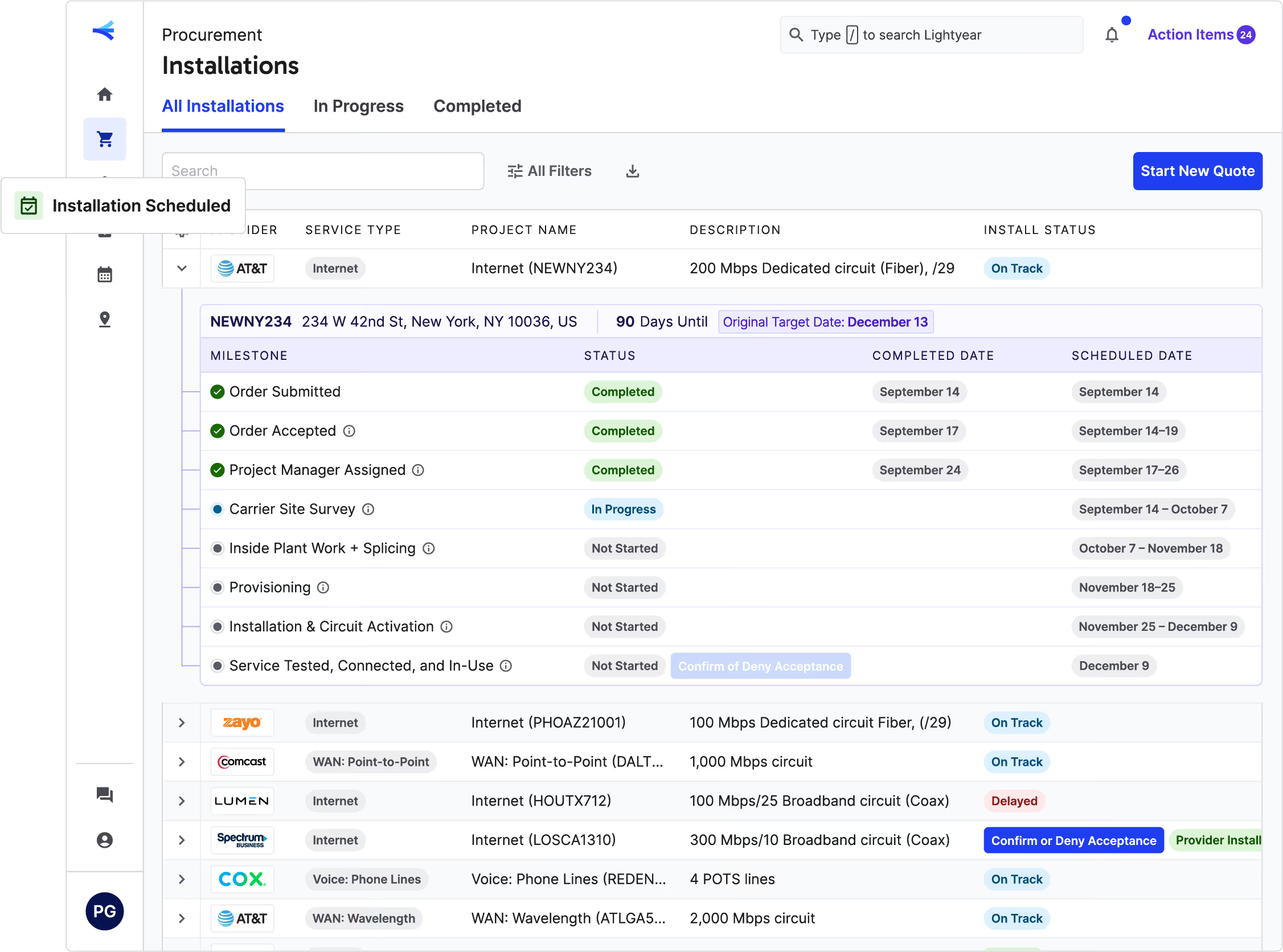
Network Slicing vs MPLS: Enterprise Connectivity Solutions
Network Slicing vs. MPLS: Which is right for your enterprise? Learn the key differences in performance, cost, and security for your network needs.


For years, enterprises have relied on Multiprotocol Label Switching (MPLS) to build secure and reliable wide-area networks (WANs).
Now, with the expansion of 5G, a new approach called Network Slicing is gaining attention for its flexibility in supporting diverse applications on a shared infrastructure.
Understanding the differences between these two is crucial for making the right connectivity decision. This article compares both technologies to help you determine which is the better fit for your organization's needs.
What is Network Slicing?
Network Slicing is a form of virtual network architecture, most commonly associated with 5G technology. It allows a network operator to divide a single physical network into multiple distinct virtual networks.
Each of these virtual networks, or "slices," is an isolated, end-to-end network designed to meet the specific requirements of a particular application or customer. This means a single physical infrastructure can support many different services at once, without them interfering with each other.
- Dedicated Resources: Every slice is allocated its own set of network resources, including bandwidth and processing power. This isolation prevents traffic congestion on one slice from impacting the performance of another.
- Customized Performance: Slices can be individually configured for specific service level agreements (SLAs). For example, one slice might be optimized for ultra-low latency for autonomous vehicles, while another is set up for high bandwidth to support video streaming.
- Flexible and Scalable: Network slices can be created, modified, and removed on-demand without affecting other slices on the same physical network, offering a high degree of operational flexibility.
What is MPLS?
Multiprotocol Label Switching (MPLS) is a routing technique that directs data through a network using short path labels instead of long network addresses. This method creates a private, high-performance network that is independent of the public internet.
Unlike traditional IP routing, which looks up the destination address at every router, MPLS determines the entire path for a packet at the very first router it enters. This pre-determined path, known as a Label Switched Path (LSP), makes data transfer highly efficient and predictable.
- Label-Based Forwarding: Packets are assigned a label upon entering the MPLS network. Routers then forward traffic based on these simple labels, which speeds up the process significantly compared to complex IP address lookups.
- Traffic Engineering: MPLS allows network administrators to control the path that data takes through the network. This helps manage bandwidth and avoid congestion, ensuring reliable performance.
- Quality of Service (QoS): It can prioritize different types of traffic. For instance, real-time applications like VoIP or video conferencing can be given higher priority to guarantee low latency and a smooth user experience.
Key Differences Between Network Slicing and MPLS
While both technologies aim to deliver reliable, high-performance connectivity, they achieve this in fundamentally different ways across their architecture, flexibility, and management.
1. Underlying Infrastructure
The most significant difference lies in the networks they operate on. MPLS is a service for wired, terrestrial networks, creating private connections between fixed locations like offices and data centers.
In contrast, Network Slicing is a feature of 5G wireless networks. It virtualizes the mobile network to serve a wide range of devices, from stationary IoT sensors to moving vehicles.
2. Operational Flexibility
MPLS networks are typically provisioned by a carrier and are relatively static. Making changes to the network topology or bandwidth often requires a formal process with the provider and can take time.
Network Slicing, however, is designed for agility. Slices can be created, adjusted, and removed on-demand through software, allowing businesses to adapt their network resources in near real-time.
3. Performance Management
MPLS manages performance using Quality of Service (QoS) policies. This prioritizes certain types of traffic over others within the same network path, ensuring critical applications get the bandwidth they need.
Network Slicing takes a different approach by creating distinct end-to-end virtual networks. Each slice is given its own dedicated resources and performance characteristics, such as guaranteed bandwidth and latency, providing true isolation from other traffic.
Benefits of Network Slicing
Because Network Slicing carves out dedicated virtual lanes on a 5G network, it offers several distinct advantages for businesses needing reliable, application-specific connectivity.
- Greater Security: The isolation of each slice means that a security threat or breach in one virtual network does not impact the others. This containment is critical for protecting sensitive data and operations.
- Cost Efficiency: By using a shared physical infrastructure, businesses can achieve the performance of a private network without the high cost of dedicated hardware, paying only for the resources they consume.
- Guaranteed Performance: Unlike best-effort networks, each slice comes with a specific service level agreement (SLA). This provides end-to-end guarantees on metrics like latency and bandwidth for critical applications.
- Faster Time-to-Market: New services and applications can be deployed quickly, as network slices can be provisioned and configured through software in a fraction of the time it takes to set up traditional network services.
Advantages of MPLS
While newer technologies are emerging, MPLS remains a trusted choice for many enterprises due to its proven track record and distinct benefits.
- Proven Reliability: As a mature technology, MPLS offers highly predictable performance. Since it operates separately from the public internet, traffic is not subject to public network congestion, ensuring consistent uptime and speed.
- Inherent Security: The private nature of an MPLS network provides a strong layer of security. By keeping corporate data off the public internet, it reduces the attack surface and protects against many common external threats.
- Global Availability: MPLS is a globally established service offered by nearly all major telecom carriers. This makes it a readily available and practical option for connecting geographically dispersed sites.
- Strong Service Level Agreements (SLAs): Carriers back their MPLS services with robust SLAs that guarantee performance metrics like latency, jitter, and packet delivery. This provides businesses with contractual assurance of network quality.
Use Cases for Network Slicing and MPLS
The right choice often comes down to the specific application. Let's look at where each technology typically shines.
Network Slicing Use Cases
Network Slicing is best suited for dynamic applications that depend on the mobility and flexibility of 5G. For example, a slice can be configured for massive IoT deployments, managing thousands of smart city sensors on a dedicated virtual network.
Another slice could be optimized for ultra-low latency to support autonomous vehicle communication or remote-controlled factory robotics. It also supports high-bandwidth mobile needs, such as AR-assisted field service or broadcasting live events in high definition.
MPLS Use Cases
MPLS remains the standard for stable, high-performance connectivity between fixed corporate sites. Its most common use case is building a private WAN to securely link branch offices, headquarters, and data centers.
Within that network, it provides reliable transport for real-time internal applications like VoIP and video conferencing, where quality is key. Many businesses also use MPLS to establish a dedicated, private connection to public cloud environments, bypassing the public internet for better security and performance.
Making the Right Choice for Your Business
Choosing between Network Slicing and MPLS isn't about which technology is universally better, but which is the right fit for the job. Your decision will depend on your specific applications, infrastructure, and business goals.
- Go with Network Slicing if you need to support mobile or dynamic applications over a 5G network. It’s ideal for creating flexible, on-demand virtual networks for services like massive IoT, connected vehicles, or augmented reality.
- Stick with MPLS if your primary need is stable, secure, and high-performance connectivity between fixed corporate sites. It remains a proven solution for building a private WAN to connect offices and data centers reliably.
- A hybrid model may be best. It’s not always an either/or choice. Many organizations use MPLS for their core WAN backbone while adopting Network Slicing for new mobile and edge computing projects.
Need Help Managing Your Network? Lightyear Can Help
Whether you decide on MPLS, Network Slicing, or a hybrid approach, Lightyear simplifies the procurement and management process. By automating everything from sourcing to billing, we help enterprises save over 70% in time and 20% in costs on their network services.
Schedule a demo or get started with our questionare today.
Frequently Asked Questions about Network Slicing vs MPLS
Can Network Slicing replace MPLS entirely?
Not necessarily. They serve different primary purposes. MPLS is for fixed, wired connections between sites, while Network Slicing is for dynamic, wireless 5G applications. Many businesses will likely use both in a hybrid model to cover all their connectivity needs.
Is Network Slicing as widely available as MPLS?
Not yet. MPLS is a mature technology with global availability from most carriers. Network Slicing availability is growing but is dependent on the rollout and capabilities of regional 5G networks, so coverage can vary significantly by location.
How does the security of Network Slicing compare to MPLS?
Both are secure, but in different ways. MPLS security comes from being a private network, isolated from the public internet. Network Slicing security stems from the cryptographic isolation of each slice on the shared 5G network.
Do I need special equipment for Network Slicing?
Yes, you will need 5G-compatible devices and modems that support Network Slicing capabilities. The network operator manages the core infrastructure, but your endpoint hardware must be able to connect to and utilize the specific network slices.
Let us show you the product and discuss specifics on how it might be helpful.
Schedule a Demo





Revolutionize Your Telecom Experience
Learn how you can get one step closer to optimal business efficiency for all your telecom services.