Optical Network Terminal vs Modem Explained
ONT vs. Modem: Confused? Learn the key differences and see which device your business needs for fiber, cable, or DSL internet service.

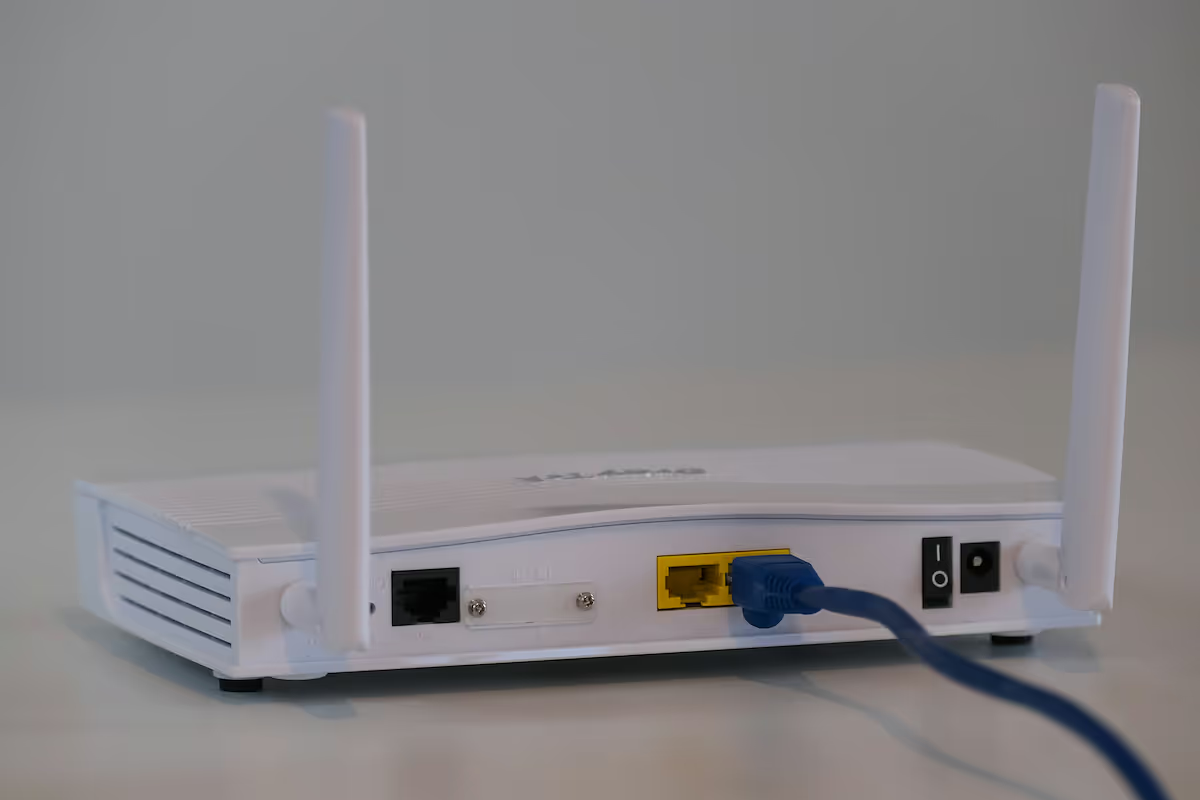
Getting your business connected to the internet requires specific hardware from your service provider. Two common devices you'll encounter are the Optical Network Terminal (ONT) and the modem. While they both serve a similar function—translating signals for your network—they are designed for different types of internet infrastructure and are not interchangeable.
This article explains the key differences between an ONT and a modem, helping you understand which device your business needs based on your internet service. We'll cover how each one works and their specific use cases so you can make informed procurement decisions.
What is an Optical Network Terminal (ONT)?
An Optical Network Terminal (ONT) is a piece of hardware that acts as the endpoint for a fiber-optic internet connection at your business. It's the bridge between your provider's fiber network and your own internal network, specifically for fiber-to-the-premises (FTTP) services.
- It translates light signals from the fiber optic line into electrical signals that your router and other devices can use.
- An ONT is used exclusively for fiber internet connections, which is its main distinction from a modem.
- The device is typically installed by your provider on a wall, either inside or outside your building.
- It often includes multiple ports to support data, voice (VoIP), and even video services from a single fiber connection.
What is a Modem?
A modem, short for modulator-demodulator, is a network device that connects your business to the internet using non-fiber infrastructure like coaxial cable or telephone lines (DSL). Its core function is to convert the analog signals from your internet service provider into digital signals that your internal network can use, and vice versa.
- It is used exclusively for cable and DSL internet connections, which rely on electrical signals over copper wiring.
- The specific type of modem must match your service; a cable modem works with a coaxial line, while a DSL modem uses a phone line.
- Unlike an ONT, which handles light signals, a modem's job is to modulate and demodulate electrical signals.
- Many ISPs offer combination modem-router units, but a standalone modem's only task is to establish and maintain the internet connection through signal conversion.
Key Differences Between ONT and Modem
While both devices connect you to the internet, they operate on fundamentally different technologies. Here’s a breakdown of the main distinctions.
1. Underlying Technology and Infrastructure
The most significant difference lies in the type of internet service they support. An ONT is used exclusively for fiber-optic internet, which transmits data as pulses of light through glass strands.
A modem, on the other hand, works with infrastructures like coaxial cable for cable internet or copper telephone lines for DSL, transmitting data using electrical signals.
2. Speed and Bandwidth Capabilities
Because it connects to a fiber network, an ONT facilitates significantly higher speeds and greater bandwidth. Fiber connections often provide symmetrical upload and download speeds, which is critical for business operations like video conferencing and cloud backups.
Modems are limited by the capabilities of their copper or coaxial infrastructure. This typically results in lower overall speeds and asymmetrical performance, where download speeds are much faster than upload speeds.
3. Equipment Ownership and Installation
An ONT is considered part of the provider's network and is almost always owned, installed, and maintained by the internet service provider. You typically cannot buy your own.
In contrast, while many providers lease modems, businesses often have the option to purchase their own compatible modem, which can sometimes lead to long-term cost savings.
How ONTs Work in Enterprise Networks
In an enterprise network, the ONT acts as the official handoff point, or demarcation, for the fiber optic service. It connects to the provider's main fiber line, often part of a Passive Optical Network (PON), and is installed at your facility.
Its primary job is to convert the incoming light-based data signals into electrical signals that your network hardware can understand. This conversion happens inside the ONT, which then outputs the connection through a standard Ethernet port.
From this Ethernet port, you connect your own equipment, such as a firewall or router. This device then manages and distributes the high-speed internet connection across your company’s Local Area Network (LAN). For businesses that bundle services, a single ONT can also provide separate outputs for VoIP phone systems and other data services.
The Role of Modems in Business Connectivity
For businesses relying on cable or DSL internet, the modem serves as the essential gateway to the provider's network. It connects directly to the coaxial or telephone line coming into your building and translates the incoming signal into a usable internet connection.
The modem provides a standard Ethernet output, which you then plug into your own network equipment, such as a firewall or router. This device then manages and secures the connection for your entire office.
Because all traffic passes through it, the modem's performance is critical for network stability. Unlike an ONT, businesses often have a choice: lease a modem from the provider for managed support or purchase their own for greater control over network configuration.
Choosing Between ONT and Modem for Your Enterprise
When it comes to selecting connectivity hardware, the decision isn't about picking an ONT over a modem directly. The choice is determined by the type of internet service you procure for your business, which depends on your operational needs and what's available at your location.
Here’s what to consider when deciding on the right internet service—and therefore, the right hardware—for your enterprise:
- Performance Requirements: If your business depends on high-speed, symmetrical connections for activities like large data transfers, cloud applications, or extensive video conferencing, a fiber optic service is the clear choice. This means you will use an ONT.
- Service Availability: Your options are limited to the infrastructure built out to your business address. While fiber offers superior performance, it may not be available everywhere. In many areas, high-speed cable or DSL are the primary options, which require a modem.
- Cost and Budget: Evaluate the total cost of service. Fiber connections can have different pricing structures than cable or DSL. Your budget will play a significant role in determining which service type is feasible, directly impacting whether you get an ONT or a modem.
Final Thoughts on ONT vs Modem
Ultimately, the distinction between an ONT and a modem comes down to the internet service you choose. You don't select the device itself; you select the connection type that fits your business needs, and the appropriate hardware comes with it. An ONT is exclusive to high-speed fiber-optic networks, while a modem connects you via cable or DSL.
Your decision should focus on what service—fiber, cable, or DSL—best supports your operations in terms of speed, reliability, and availability. The hardware is simply a component of that larger, more critical choice.
Need Help Managing Your Network? Lightyear Can Help
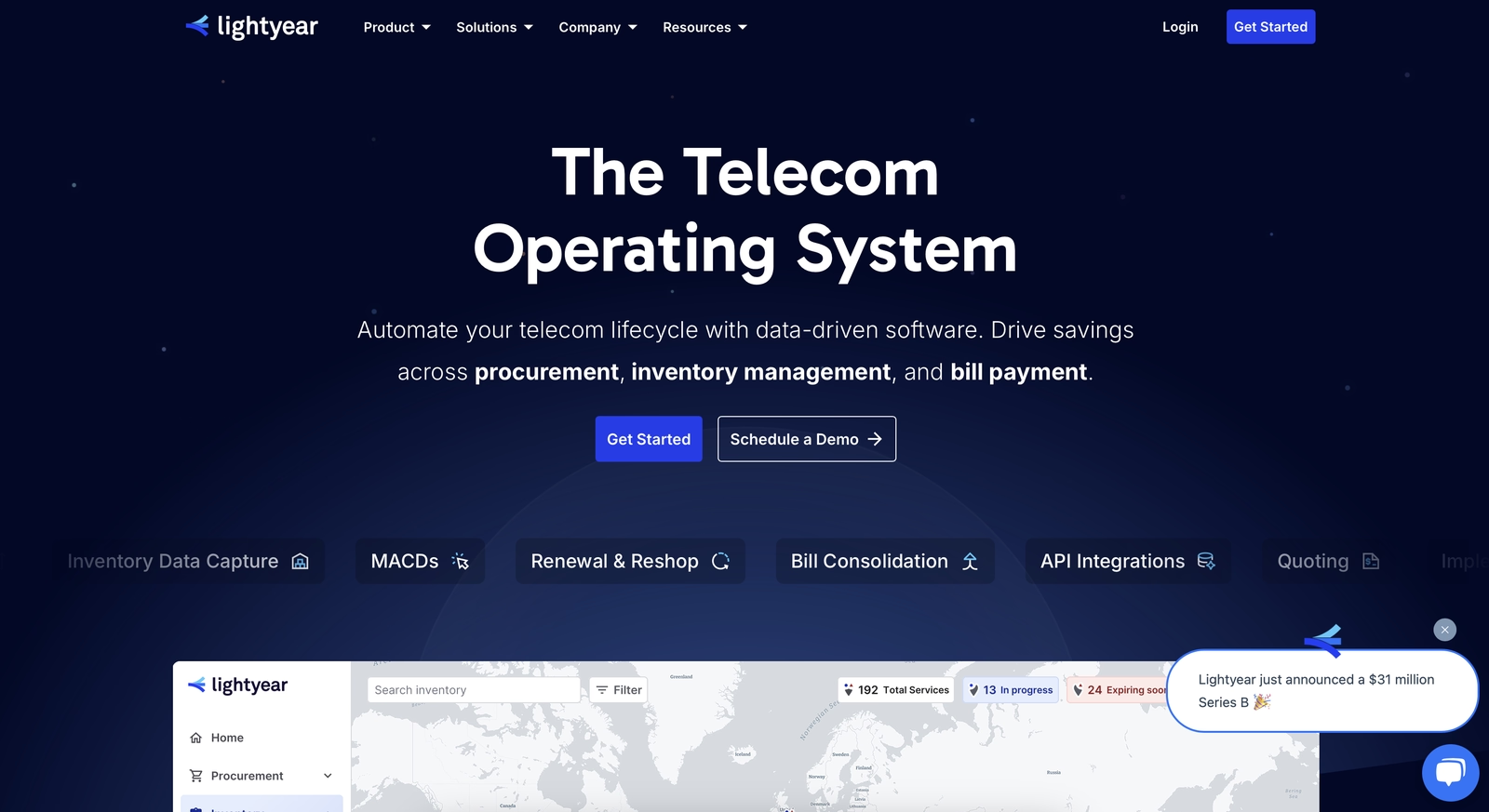
Choosing the right internet service—and the hardware that comes with it—is just the first step. Lightyear helps manage the entire telecom lifecycle, from procurement to inventory tracking for all your locations and devices.
By automating network service procurement and bill consolidation, Lightyear takes the pain out of telecom infrastructure management. Enterprises using our platform see over 70% time savings and 20% cost savings on their network services.
Schedule a demo or get started with our questionnaire today.
Frequently Asked Questions about Optical Network Terminal vs Modem
Do I still need a router if I have an ONT?
Yes. An ONT only translates the fiber signal into a usable internet connection. You still need a separate router to create your local network, manage traffic between devices, and provide Wi-Fi.
Is "fiber modem" the correct term for an ONT?
While some people use the term, it's technically incorrect. The proper device for a fiber connection is an ONT because it handles light signals. A modem is specifically for cable or DSL services that use electrical signals.
Can I buy my own ONT?
Generally, no. ONTs are considered provider-owned equipment specifically configured for their fiber network. Unlike modems, which you can often purchase yourself, the ONT is almost always supplied and managed by your ISP.
Why does my ONT have ports for phone and TV?
Many ONTs are designed to handle bundled services over a single fiber-optic line. They can deliver internet, VoIP phone service, and television signals, providing separate, dedicated ports for each service type.
Let us show you the product and discuss specifics on how it might be helpful.
Schedule a Demo





Revolutionize Your Telecom Experience
Learn how you can get one step closer to optimal business efficiency for all your telecom services.