Optical Network Terminal vs Router Explained
ONT vs. Router: Learn the difference. This guide explains how an ONT connects your fiber and a router builds your network for better IT decisions.


If you're managing a fiber-optic internet connection for your business, you'll work with two essential pieces of equipment: an Optical Network Terminal (ONT) and a router. Though often mistaken for one another, they perform distinct and separate jobs to get your network online.
The ONT connects directly to the fiber-optic line from your internet service provider, converting light signals into a usable internet connection. From there, the router takes over, distributing that connection to create your local area network (LAN) and manage traffic between all your devices.
What is an Optical Network Terminal (ONT)?
An Optical Network Terminal (ONT) is essentially a modem, but specifically for a fiber-optic internet connection. It’s a small hardware device that your internet service provider (ISP) installs at your location to serve as the endpoint for their fiber network. Its primary function is to act as a translator.
- Signal Conversion: The ONT’s main job is to convert the light signals from the ISP's fiber-optic line into electrical signals that can be used by an Ethernet cable.
- Network Demarcation: It establishes the demarcation point, which is the boundary where the ISP's network responsibility ends and your internal network begins.
- Essential for Fiber Service: An ONT is a required component for any Fiber-to-the-Premises (FTTP) connection. Without it, your network equipment can't communicate with the fiber line.
What is a Router?
A router is the device that takes the single internet connection from your ONT and shares it among multiple devices in your office. It creates your Local Area Network (LAN) and acts as a traffic director for all the data flowing to and from your computers, phones, and servers. Without a router, only one device could connect to the internet at a time.
- Local Network Creation: It establishes your internal network, allowing all your connected devices to communicate with each other and the internet.
- IP Address Assignment: Using DHCP (Dynamic Host Configuration Protocol), the router assigns a unique local IP address to every device on the network.
- Traffic Management: It directs incoming and outgoing internet traffic to the correct devices, ensuring data gets where it needs to go efficiently.
- Wireless Connectivity: Most modern routers also function as wireless access points, providing the Wi-Fi signal your devices use to connect wirelessly.
Key Differences Between ONT and Router
While both devices are critical for your network, they operate in fundamentally different ways. Here’s a breakdown of their distinct roles.
1. Core Purpose: Signal Conversion vs. Network Distribution
The ONT has one primary job: converting fiber optic light signals into electrical Ethernet signals. It acts as a specialized modem for the fiber connection.
A router’s purpose is much broader. It takes that single internet connection and distributes it, creating and managing your entire local network.
2. Network Layer: ISP Connection vs. Local Area Network
An ONT operates at the edge of the ISP's network, serving as the official handoff point to your premises. Its focus is on the external connection.
In contrast, a router operates entirely within your internal environment. It builds and governs your Local Area Network (LAN), managing how your devices talk to each other and the internet.
3. Physical Connections: Fiber vs. Ethernet and Wi-Fi
An ONT has a fiber optic port for the incoming line from the ISP and typically one or more Ethernet ports for output.
A router receives its internet connection via an Ethernet port (from the ONT) and provides connectivity through multiple Ethernet ports and Wi-Fi.
4. Device Management: ISP-Controlled vs. User-Controlled
Generally, the ONT is installed, owned, and managed by your ISP. You have little to no direct control over its configuration.
The router, however, is your domain. Your IT team configures its settings, from security protocols and firewalls to Wi-Fi passwords and IP address ranges.
How ONTs and Routers Work Together
An ONT and a router work in a specific sequence to bring a fiber internet connection to life for your business. Think of it as a linear handoff, where each device performs its task before passing the connection to the next. The process is straightforward and reliable.
- First, the fiber-optic cable from your ISP, carrying data as light signals, plugs directly into the ONT.
- The ONT converts these light signals into electrical signals and sends this connection out through an Ethernet port.
- Next, an Ethernet cable connects the ONT's output port to the router's WAN (Wide Area Network) or "Internet" port. This is the critical link between the two devices.
- Finally, the router takes that single connection and creates your local network, managing traffic and distributing internet access to all your wired and wireless devices.
Choosing the Right Device for Your Network Needs
When setting up a fiber network, the decision isn't about picking an ONT or a router—you need both to get online. The key is understanding which device you control and how to select the right one for your business needs.
1. The ONT: An ISP-Managed Device
Your internet service provider almost always supplies, installs, and manages the ONT. This device is specifically chosen to be compatible with their fiber infrastructure, so you typically don't have to select or purchase one yourself. It serves as the official handoff from their network to yours.
2. The Router: Your Network’s Command Center
This is where your team makes the important decisions. Choosing the right business-grade router is critical for performance, security, and reliability. Consider the number of users and devices your network must support and what security features, like a firewall or VPN capabilities, are necessary for your operations. A router that matches your company's scale ensures your network can handle high traffic volumes without creating bottlenecks.
Common Use Cases for ONTs and Routers
While both are necessary for a fiber connection, their practical applications in a business environment are distinct. Here’s where you’ll see each device in action.
ONT Use Cases
- Establishing the primary connection for any Fiber-to-the-Premises (FTTP) or Fiber-to-the-Building (FTTB) service.
- Serving as the official handoff point from your ISP, which helps isolate network issues during troubleshooting.
- Enabling services beyond internet, such as fiber-based VoIP phone systems or IPTV, by converting the necessary signals.
Router Use Cases
- Creating and managing the office Wi-Fi network, often with separate, secure access for employees and guests.
- Connecting essential wired equipment like servers, printers, and workstations into a cohesive local network.
- Implementing network security through a firewall and managing traffic to prioritize business-critical applications like video conferencing.
Final Thoughts on ONTs vs Routers
Ultimately, an ONT and a router are not interchangeable—they are two distinct but equally vital components of a fiber optic network. The ONT serves as the specialized modem, translating the ISP's fiber signal into a connection your business can use.
The router then takes that connection and builds your internal network, managing traffic and providing access to all your devices. Understanding this division of labor is key. While your ISP manages the ONT, your team is responsible for selecting a router that can support your company's specific performance and security requirements.
Need Help Managing Your Network? Lightyear Can Help
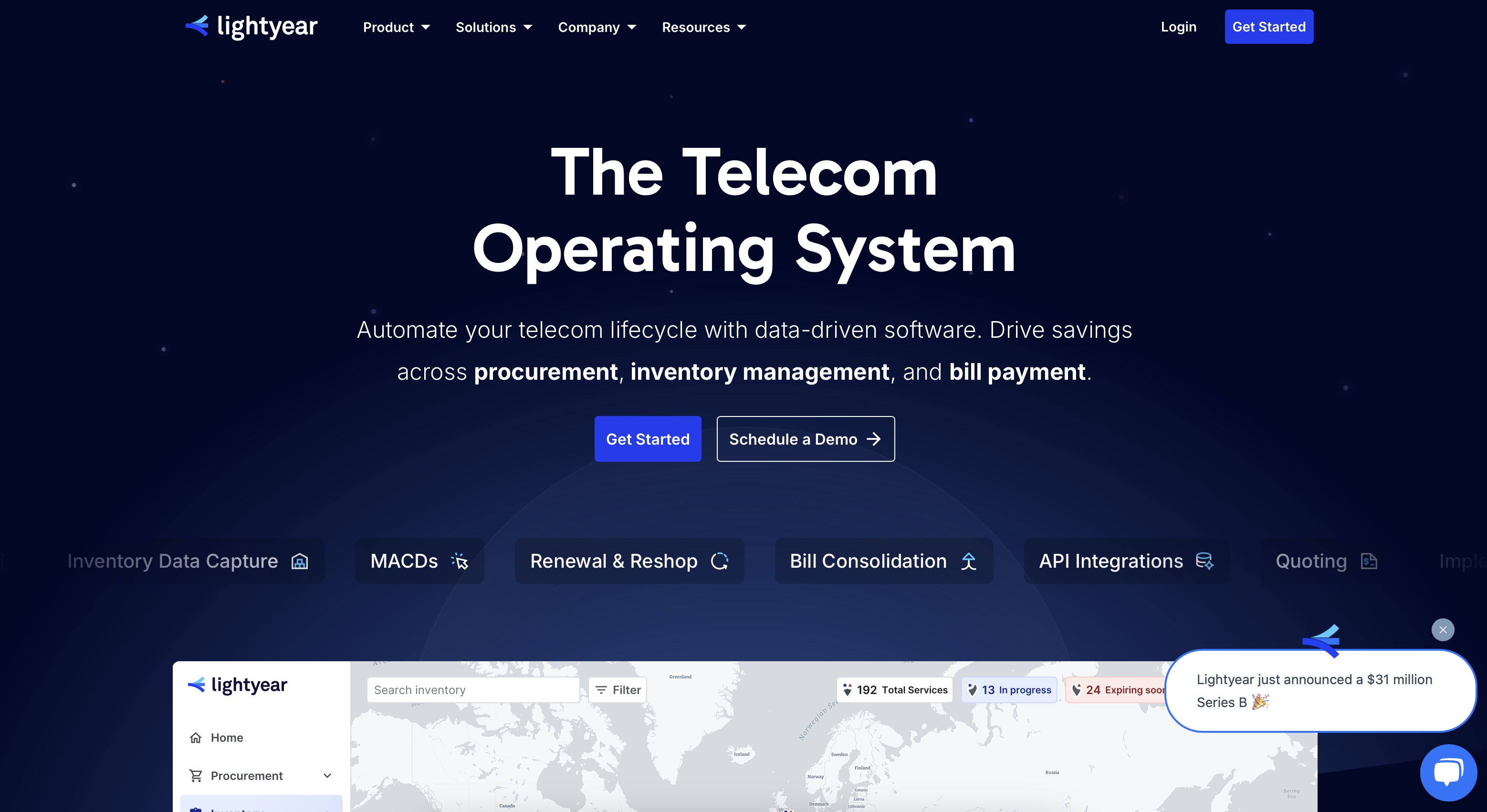
Knowing the difference between an ONT and a router is key, but managing all the services and hardware across your network is the real challenge. Lightyear provides a central platform to automate your telecom procurement and keep track of your entire network inventory.
By automating these workflows, Lightyear takes the pain out of infrastructure management. Enterprises using our platform save over 70% on time and 20% on costs for their network services.
Schedule a demo or get started with our questionnaire today.
Frequently Asked Questions about Optical Network Terminal vs Router
Can I use a single device that is both an ONT and a router?
Yes, some ISPs provide combination ONT/router gateway units. While convenient, these devices may offer less flexibility and fewer advanced features than using a separate, dedicated business-grade router that your team can fully control and configure for your specific security needs.
Do I need a special router for a fiber connection?
No, you don't need a "fiber-specific" router. Any modern router with an Ethernet WAN port will work with the ONT. The key is to choose a router that can handle the high speeds of your fiber plan and support your business's traffic demands.
Can I replace the ONT provided by my ISP?
Generally, no. The ONT is specifically configured to work with your ISP's network infrastructure and is considered their equipment. Attempting to replace it will likely result in a loss of service. All network management should happen on your side of the demarcation point, starting with your router.
Let us show you the product and discuss specifics on how it might be helpful.
Schedule a Demo





Revolutionize Your Telecom Experience
Learn how you can get one step closer to optimal business efficiency for all your telecom services.