Opus vs SONET: Comparing Network Technologies
Opus is an audio codec and SONET is a network protocol. Our guide explains the key differences and how each technology fits into your enterprise network.


When evaluating network technologies, you might encounter terms like SONET and Opus. While both are related to transmitting data, they operate in completely different parts of the technology stack and solve for different problems.
SONET (Synchronous Optical Networking) is a transport protocol for moving large amounts of data across physical fiber optic cables. In contrast, Opus is a modern audio codec designed for efficiently compressing and decompressing voice data for applications like VoIP. This article will compare the two, clarifying their distinct roles to help you make more informed technology decisions.
What is Opus?
Opus is a highly versatile audio codec designed specifically for interactive, real-time applications over the internet. Think of it as the technology that powers clear audio for VoIP, video conferencing, and in-game chat. Its primary job is to efficiently compress and decompress voice data, ensuring smooth, natural-sounding conversations with minimal delay.
- Dynamic Adaptation: Opus can adjust its audio quality on the fly, from narrow-band speech to full-band music, responding to changing network conditions to prevent stuttering or dropped audio.
- Low Latency: It is engineered for very low delay, which is essential for real-time communication to feel interactive and not disjointed.
- Bandwidth Efficiency: The codec delivers high-quality audio even at low bitrates, which helps conserve network bandwidth without a noticeable drop in clarity.
- Open Standard: As an open, royalty-free standard from the Internet Engineering Task Force (IETF), it has become a go-to codec for WebRTC and many modern communication platforms.
What is SONET?
SONET (Synchronous Optical Networking) is a communication protocol used to transmit large amounts of data over long distances using fiber optic cables. It functions at the physical layer, creating a reliable and standardized foundation for global and metropolitan networks. It was designed to handle voice, video, and data traffic from various sources in a single, manageable format.
Its architecture is built for consistency and resilience. Key features include:
- Synchronous Structure: All clocks in the network are synchronized, which simplifies the process of adding and removing individual data streams from a larger traffic flow without disrupting the entire signal.
- High Reliability: SONET networks are often built in a ring topology with built-in redundancy. If a fiber cable is cut, traffic can be automatically rerouted in milliseconds, ensuring high availability for critical services.
- Scalable Hierarchy: It uses a scalable structure of Optical Carrier (OC) levels, like OC-3 (155.52 Mbps) or OC-192 (9.95 Gbps), allowing carriers to offer a wide range of bandwidth speeds.
Key Differences Between Opus and SONET
The fundamental differences between Opus and SONET come down to their layer of operation, primary function, and overall scope. While both are critical for modern communications, they are not interchangeable and solve completely different problems.
1. Layer of Operation
SONET operates at the Physical Layer (Layer 1) of the OSI model. It is concerned with the physical transmission of data bits across fiber optic infrastructure.
Opus, on the other hand, functions at the Application Layer (Layer 7). It works within software applications to manage audio data before it is sent over the network.
2. Primary Function
The main job of SONET is to provide a standardized, reliable, and synchronous transport system for large volumes of traffic. It creates the digital highway for data to travel on.
Opus’s function is audio compression and decompression (a codec). Its goal is to make voice data small and efficient for real-time conversation with low latency.
3. Scope and Scale
SONET is a large-scale technology used by telecommunication carriers to build metropolitan and wide area networks (MANs and WANs).
Opus is implemented at the endpoint level, within individual applications like web browsers, VoIP phones, and video conferencing tools on a user's device.
Benefits of Using Opus
For businesses that rely on real-time voice and video, Opus provides several key advantages that directly impact both user experience and operational efficiency.
- Superior Audio Experience: The codec intelligently adapts to network fluctuations, significantly reducing jitter and packet loss. This results in consistently clear, natural-sounding audio for VoIP and video conferencing, even on less-than-perfect connections.
- Reduced Bandwidth Costs: Its high efficiency means it delivers excellent quality while consuming less data. For companies with significant call traffic, this can lead to direct cost savings on bandwidth. Furthermore, its royalty-free nature eliminates licensing fees.
- Seamless Integration: As the mandatory codec for WebRTC, Opus works out-of-the-box with modern browsers and a vast ecosystem of unified communication tools. This simplifies deployment and guarantees interoperability between different systems.
- Future-Proof Flexibility: Opus isn't just for voice. Its ability to scale from narrow-band speech to full-band stereo music makes it a versatile choice that can support a company's evolving communication needs.
Advantages of SONET
For organizations requiring dedicated, high-capacity network infrastructure, SONET remains a powerful choice due to its foundational strengths. Its architecture delivers distinct benefits for critical operations.
- Exceptional Uptime: SONET’s self-healing ring architecture provides automatic failover in under 50 milliseconds. This level of fault tolerance is essential for businesses that cannot afford any network downtime, ensuring business continuity.
- Guaranteed Bandwidth: Unlike shared networks where performance can fluctuate, SONET provides a dedicated, fixed amount of bandwidth. This guarantees consistent performance with minimal latency and jitter, ideal for sensitive data replication or high-volume transaction systems.
- Broad Interoperability: As a long-established global standard, SONET equipment from different manufacturers is designed to work together. This prevents vendor lock-in and gives enterprises more flexibility and control over their network hardware.
- Inherent Security: By operating on dedicated, private physical circuits, SONET offers a fundamentally secure transport layer. It is isolated from the public internet, reducing exposure to common cyber threats that target higher-level protocols.
Choosing Between Opus and SONET for Your Business
The choice between Opus and SONET is not a direct comparison, as they solve for different needs. Your decision-making process will depend entirely on whether you are addressing an application-level requirement or a physical infrastructure one.
1. When Your Focus is on Communication Software
You will encounter Opus when selecting or evaluating software for real-time communication. If your business is adopting a new VoIP system or a unified communications platform, Opus is the technology to look for.
The key consideration here is ensuring your chosen application provides high-quality, efficient audio for your end-users, especially over public internet connections.
2. When Your Focus is on Network Infrastructure
You will deal with SONET when procuring dedicated network circuits from a telecommunications provider. This is a decision for your core network strategy, not your software stack.
Consider a SONET circuit if your business requires guaranteed bandwidth and extreme reliability for a data center, headquarters, or another critical site.
Final Thoughts on Opus vs SONET
Ultimately, Opus and SONET are not competing technologies but rather complementary components in the communication stack.
Opus is an audio codec that ensures clear voice quality in your software applications, like VoIP or video conferencing. In contrast, SONET is a physical network protocol that provides a highly reliable, dedicated data highway for your critical infrastructure.
Your business may even use both simultaneously: Opus within its communication tools and SONET for foundational network connectivity. Understanding their distinct roles helps clarify technology roadmaps and procurement decisions.
Need Help Managing Your Network? Lightyear Can Help
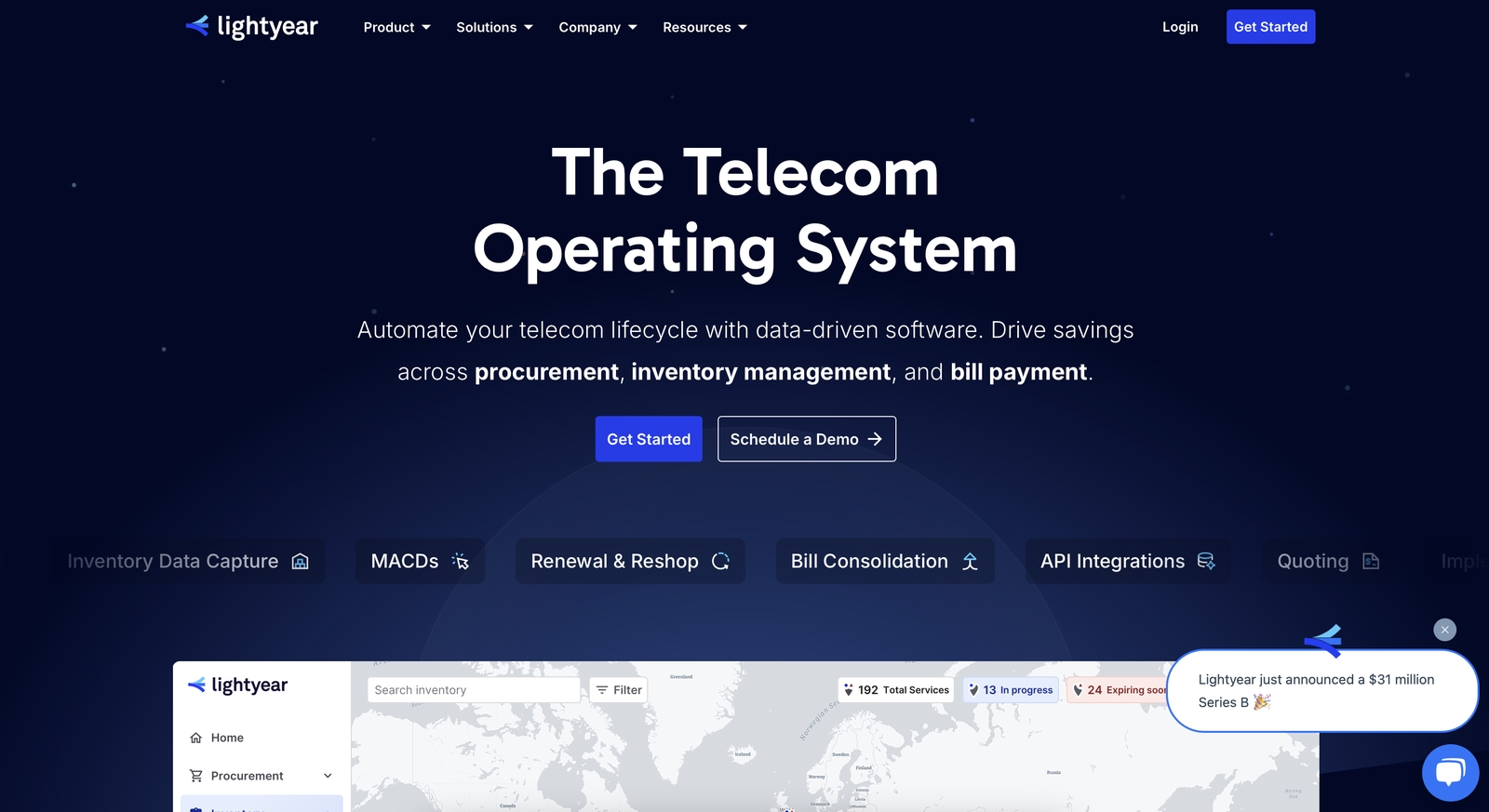
Whether you're procuring a SONET circuit or managing the services that run on top of it, Lightyear simplifies the entire lifecycle. By automating network service procurement, inventory management, and bill consolidation, Lightyear takes the pain out of telecom infrastructure management.
The hundreds of enterprises who trust Lightyear achieve 70%+ time savings and 20%+ cost savings on their network services. Schedule a demo or get started with our questionare today.
Frequently Asked Questions about Opus vs SONET
Can Opus run over a SONET network?
Yes, absolutely. SONET provides the physical network path (Layer 1), while Opus is an audio codec used by applications (Layer 7). Your VoIP traffic, encoded with Opus, can travel over any underlying network infrastructure, including a SONET circuit.
Is SONET technology becoming obsolete?
While newer technologies like DWDM and Ethernet exist, SONET is not obsolete. It remains a top choice for applications requiring extremely high reliability and guaranteed bandwidth, such as in finance, healthcare, and government sectors where uptime is critical.
Which one offers better security?
They address security at different layers. SONET provides inherent security at the physical level because it uses private, dedicated circuits. Opus operates within applications, where security depends on encryption protocols like SRTP to protect the audio data itself during transmission.
Do I need to choose between Opus and my current VoIP provider?
No, you don't. Opus is a codec, not a service. Your VoIP provider likely already uses Opus or a similar codec to power their platform. The choice is about the provider's service quality, which is partly determined by the codecs they implement.
Let us show you the product and discuss specifics on how it might be helpful.
Schedule a Demo





Revolutionize Your Telecom Experience
Learn how you can get one step closer to optimal business efficiency for all your telecom services.