Order Management vs Inventory Management Explained for IT Buyers
Confused about order vs. inventory management? Get a simple breakdown for managing your telecom services, from procurement to asset tracking.


For IT and telecom procurement teams, the terms "order management" and "inventory management" are often used interchangeably, but they represent distinct, critical functions. Understanding the difference is key to managing your technology services effectively.
This article will explain what each process involves and why both are important for your business. We'll clarify how they work together to support your technology infrastructure from procurement to renewal.
What is Order Management?
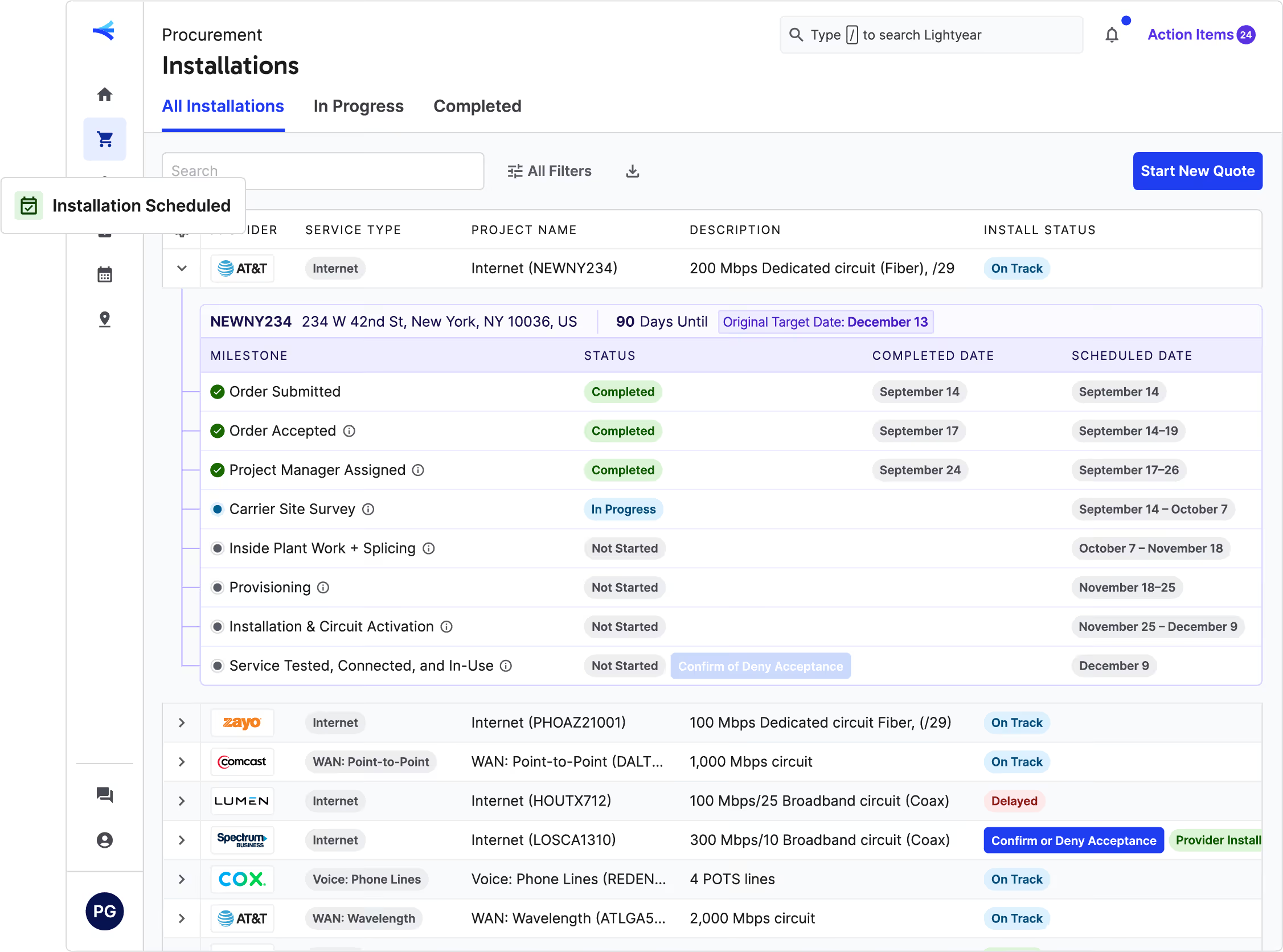
In the telecom world, Order Management refers to the entire lifecycle of a service request, from the moment you decide you need a new circuit until it's installed and operational. It’s the active process of tracking an order through every stage of procurement and implementation.
- Placing the order: This is the initial step where a formal request for a new service, like an internet circuit or a WAN connection, is submitted to a vendor.
- Tracking progress: It involves monitoring the order's status as it moves through the vendor's system, from initial acceptance to scheduling installation.
- Managing implementation: This includes coordinating with vendors for site surveys, managing installation appointments, and handling any issues that arise during setup.
- Confirming activation: The final step is verifying that the service has been successfully installed, tested, and is fully operational before the order is considered complete.
What is Inventory Management?
Inventory Management is the practice of creating and maintaining a comprehensive record of all your active telecom services. Think of it as your organization's central library for everything you own and operate, from circuits to contracts.
- Service and location data: This involves keeping track of what services—like internet, WAN, or voice—are active at which specific locations.
- Contract details: It means documenting key contract terms, including renewal dates, pricing, and service level agreements (SLAs).
- Technical information: This includes storing critical details such as circuit IDs, IP addresses, and vendor account information for easy access.
- Cost tracking: This is maintaining a clear view of monthly recurring costs for each service to manage budgets effectively.
Key Differences Between Order Management and Inventory Management
While both are essential, the simplest way to distinguish them is by thinking about action versus information. Their core functions and timelines are quite different.
1. Focus: Active Process vs. Static Record
Order management is an active, hands-on process. It's all about the tasks involved in bringing a new service online, from placing the order to confirming its activation.
In contrast, inventory management is about maintaining a static record. It’s your system of truth for what you already have, where it is, and how much it costs.
2. Timeline: Project-Based vs. Continuous
An order has a defined lifecycle with a clear beginning and end. The process is complete once a service is successfully installed and running.
Inventory management, however, is an ongoing function. It lasts for as long as you have active services and requires continuous updates to remain accurate.
3. Goal: Acquisition vs. Oversight
The main goal of order management is successful procurement and implementation. It answers the question, “Did we get the service we asked for?”
The goal of inventory management is to provide complete visibility and control over your technology assets. It helps answer strategic questions like, “What do we own, and are we paying the right price for it?”
Benefits of Order Management Systems
A dedicated order management system brings structure and efficiency to the procurement process. Instead of juggling spreadsheets and email chains, you get a centralized platform that offers several key advantages:
- Clearer visibility: You can see exactly where each circuit order is in the pipeline, from submission to installation, which helps prevent delays and keeps stakeholders informed.
- Reduced administrative work: Automating order tracking and communication frees up your team from tedious follow-ups, allowing them to focus on more strategic tasks.
- Faster service delivery: By standardizing the process and centralizing communication, these systems help accelerate installation timelines and get services operational sooner.
- Improved vendor accountability: A single platform for all order-related interactions creates a clear, time-stamped record, making it easier to manage vendor performance and resolve issues quickly.
Benefits of Inventory Management Systems
While order management focuses on getting services installed, a robust inventory management system helps you effectively control what you already own. Maintaining a central repository for all your telecom assets offers several powerful benefits for both your bottom line and your operational efficiency.
- Significant cost savings: A clear, up-to-date inventory makes it easy to identify and decommission redundant services or circuits that are no longer in use. It also helps you track contract renewal dates, giving you time to renegotiate terms and avoid costly auto-renewals.
- Faster troubleshooting: When an outage happens, having instant access to all relevant service information—like circuit IDs and vendor support contacts—in one place dramatically speeds up resolution time.
- Informed decision-making: With a complete picture of your existing network infrastructure, you can make smarter decisions about capacity planning, budgeting, and future technology needs.
- Improved compliance and auditing: A centralized system provides a reliable, auditable record of all your telecom assets and associated costs, simplifying financial reporting and compliance checks.
Choosing the Right System for Your Business
Deciding between an order management and an inventory management system isn't always an either/or choice. The right approach depends on where your team is facing the most friction.
1. If You're Focused on Growth and New Projects
If your primary challenge is managing new service installations across multiple sites, an order management system is your priority.
This is especially true for businesses in a growth phase, where tracking vendor progress and ensuring timely activations are critical to opening new locations on schedule.
2. If You Need Control Over Existing Assets
On the other hand, if your main goal is to get a handle on current spending and assets, an inventory management system should come first.
This helps you find and eliminate wasteful spending on unused circuits and gives you the data needed to negotiate better terms at renewal.
3. Why a Unified System is Often the Answer
For most organizations, these two functions are deeply connected. An order for a new circuit should automatically create a new entry in your inventory once it is activated.
A unified platform that handles both order and inventory management provides the most complete solution. It connects the procurement lifecycle directly to your long-term asset database, ensuring data is always accurate and up-to-date without manual entry.
Final Thoughts on Order and Inventory Management
In summary, order management and inventory management are distinct but complementary functions. Order management is the active process of acquiring new services, while inventory management is the continuous work of tracking what your organization owns.
Mastering both is fundamental to controlling telecom costs and operating efficiently. While separate systems can work, a platform that connects the procurement lifecycle directly to your long-term asset database offers a more cohesive and accurate approach to infrastructure management.
Need Help Managing Your Network? Lightyear Can Help
Instead of juggling separate systems for order and inventory management, Lightyear offers a single platform to automate the entire telecom lifecycle. By automating procurement, tracking inventory, and consolidating billing, our software helps hundreds of enterprises save over 70% in time and 20% in costs.
Schedule a demo or get started with our questionnaire today.
Frequently Asked Questions about Order Management vs Inventory Management
Can't I just use a spreadsheet for inventory management?
While possible for very small businesses, spreadsheets become risky as you grow. They are prone to human error, lack automation for updates, and don't provide the real-time visibility needed for effective cost control and troubleshooting.
How does order management impact billing?
Proper order management ensures billing starts only after a service is confirmed active, preventing you from paying for services that aren't operational yet. It provides a clear record to dispute incorrect invoices from vendors.
At what point do we need a dedicated system?
If your team spends hours tracking orders or can't quickly answer what services are active at a location, it's time. Managing more than 10-15 sites or services often makes a dedicated system a necessity for efficiency and accuracy.
Does a new order automatically become an inventory item?
In separate systems, this is a manual process. A unified platform automatically converts a completed order into an active inventory item, ensuring your records are always current without extra work and reducing the risk of data entry errors.
Let us show you the product and discuss specifics on how it might be helpful.
Schedule a Demo





Revolutionize Your Telecom Experience
Learn how you can get one step closer to optimal business efficiency for all your telecom services.