OSI Model vs Ethernet: Understanding Network Layers
Learn the difference between the OSI Model, a conceptual network framework, and Ethernet, a protocol that operates at Layers 1 and 2 of the model.

When building and managing enterprise networks, you'll often encounter the terms OSI Model and Ethernet. While they are frequently discussed together, they serve very different functions in the world of networking.
The OSI Model is a conceptual framework that standardizes how network communications work, while Ethernet is a technology that puts those concepts into practice. Understanding the distinction is key to making informed decisions about your network infrastructure.
What is the OSI Model?
Think of the OSI Model (Open Systems Interconnection) as a universal rulebook for networking. It’s a conceptual framework that breaks down the complex process of network communication into seven distinct, manageable layers. Each layer has a specific job, and they all work together to ensure data gets from point A to point B reliably.
This layered approach helps standardize network hardware and software, allowing products from different vendors to communicate with each other. It also makes troubleshooting much easier, as technicians can isolate problems to a specific layer.
The seven layers of the OSI model, from top to bottom, are:
- Layer 7: Application Layer - The layer closest to the end user, interacting directly with software applications.
- Layer 6: Presentation Layer - Translates, encrypts, and compresses data so the application layer can understand it.
- Layer 5: Session Layer - Manages and terminates connections between applications.
- Layer 4: Transport Layer - Handles data transfer between systems, ensuring complete and error-free delivery.
- Layer 3: Network Layer - Manages device addressing and determines the best path for data to travel.
- Layer 2: Data Link Layer - Establishes and terminates a connection between two physically-connected nodes on a network.
- Layer 1: Physical Layer - The physical hardware that carries the data signal, like cables and switches.
What is Ethernet?
If the OSI Model is the rulebook, then Ethernet is the most popular game played by those rules, specifically at the lower layers. It's the standard technology used to connect devices in a wired local area network (LAN) or wide area network (WAN).
Ethernet defines how devices format and transmit data packets so other devices on the same network can recognize, receive, and process them. It primarily operates at the first two layers of the OSI model: the Physical Layer (Layer 1) and the Data Link Layer (Layer 2).
The technology relies on a few core components to work:
- Ethernet Cables: These are the physical wires (like Cat5e or Cat6) that carry data signals between devices.
- Network Interface Cards (NICs): A piece of hardware inside each device, like a computer or printer, that provides a dedicated connection to the network.
- Hubs, Switches, and Routers: Networking devices that receive data packets and forward them to their intended destinations on the network.
OSI Model vs Ethernet: Key Differences
While they are closely related, the OSI Model and Ethernet serve distinct and separate purposes within a network's architecture. Here are the key ways they differ.
1. Conceptual Framework vs. Real-World Technology
The clearest distinction lies in their nature. The OSI Model is a theoretical framework—a set of guidelines that standardizes the functions of a telecommunication or computing system.
Ethernet is a practical technology that puts these guidelines into action. It is one of the most common methods for applying the principles of the OSI Model's lower layers in a physical network.
2. Comprehensive Scope vs. Focused Application
The OSI Model is all-encompassing, describing the entire communication process across seven distinct layers, from the physical hardware up to the end-user's software application.
Ethernet, however, has a much narrower focus. It operates specifically at Layer 1 (the Physical Layer) and Layer 2 (the Data Link Layer), dealing with how data is physically sent over cables and how devices on the same network segment are identified.
3. Standardization vs. Data Transmission
The core purpose of the OSI Model is to provide a universal standard for interoperability. It ensures that diverse network products can communicate with each other effectively.
Ethernet's function is the actual transmission of data. It defines the protocol for formatting data into packets (frames) and the rules for sending them across a local area network (LAN).
4. Abstract vs. Tangible
As a conceptual model, the OSI Model is entirely abstract. It's a reference for network architects and developers, not a piece of hardware or software you can install.
Conversely, Ethernet is tangible. It is composed of the physical components that form your network, including cables, network interface cards (NICs), and switches.
How the OSI Model Works in Networking
The OSI Model functions by guiding data through its seven layers in a specific sequence. When a device sends information, the process starts at the Application Layer and moves down to the Physical Layer.
At each step, a process called encapsulation occurs. The layer adds its own specific information, like a header or trailer, to the data packet. For instance, the Network Layer adds IP addresses for routing, while the Data Link Layer adds MAC addresses for local delivery.
Once transmitted, the receiving device reverses this process. Data moves up from Layer 1 to Layer 7, and each layer strips off its corresponding header, interpreting the information before passing the data up. This de-encapsulation ensures the data arrives intact and is delivered to the correct application.
How Ethernet Connects Devices
Ethernet connects devices by managing traffic at the Data Link Layer (Layer 2) and transmitting it over the Physical Layer (Layer 1). At its core, every network-enabled device has a unique Media Access Control (MAC) address assigned to its network interface card.
When one device needs to send information to another on the same local network, it packages the data into a structure called a frame. This frame contains the MAC addresses of both the sender and the intended recipient.
The data frame is then sent over the physical cables. A network switch receives the frame, reads the destination MAC address, and forwards it only to the port connected to the target device. This process ensures data is delivered efficiently to the correct machine on the local network.
Benefits of Understanding OSI Model and Ethernet
Grasping the relationship between this framework and technology offers tangible advantages for any organization managing a complex network. For IT and telecom buyers, this knowledge directly impacts operational efficiency and strategic planning.
- More Efficient Troubleshooting. When network issues arise, pinpointing the problem layer—whether it's a physical cable fault (Layer 1) or a routing error (Layer 3)—allows your team to resolve incidents faster. This directly translates to reduced downtime and lower operational costs.
- Informed Vendor and Technology Choices. Understanding where different technologies operate within the OSI framework helps you evaluate vendor solutions more effectively. You can better assess product compatibility and avoid getting locked into proprietary systems that don't play well with others.
- Strategic Network Design. A solid grasp of both concepts is fundamental for designing robust and scalable infrastructure. It allows you to map out how physical connections (Ethernet) support the logical functions required by your applications across all seven layers.
- Improved Team and Vendor Collaboration. The OSI model acts as a universal language for network professionals. This common vocabulary streamlines communication between your internal teams, hardware vendors, and internet service providers, leading to quicker resolutions and project completions.
Making the Right Choice for Your Network
When it comes to your network, the decision isn't about choosing the OSI Model or Ethernet. The two aren't competitors; they work together. The OSI Model is the conceptual map you use for planning and troubleshooting your entire network architecture, from applications to physical hardware.
Ethernet, on the other hand, is a specific technology you choose to build out the foundational layers of that map—your physical and data link connections. You'll select Ethernet standards and hardware, like Cat6 cabling and switches, to handle local data traffic efficiently.
Ultimately, a well-designed enterprise network relies on both. You use the OSI Model to understand the complete communication flow and ensure all parts are compatible, while you implement Ethernet as a critical technology for reliable, high-speed local connectivity.
Need Help Managing Your Network? Lightyear Can Help
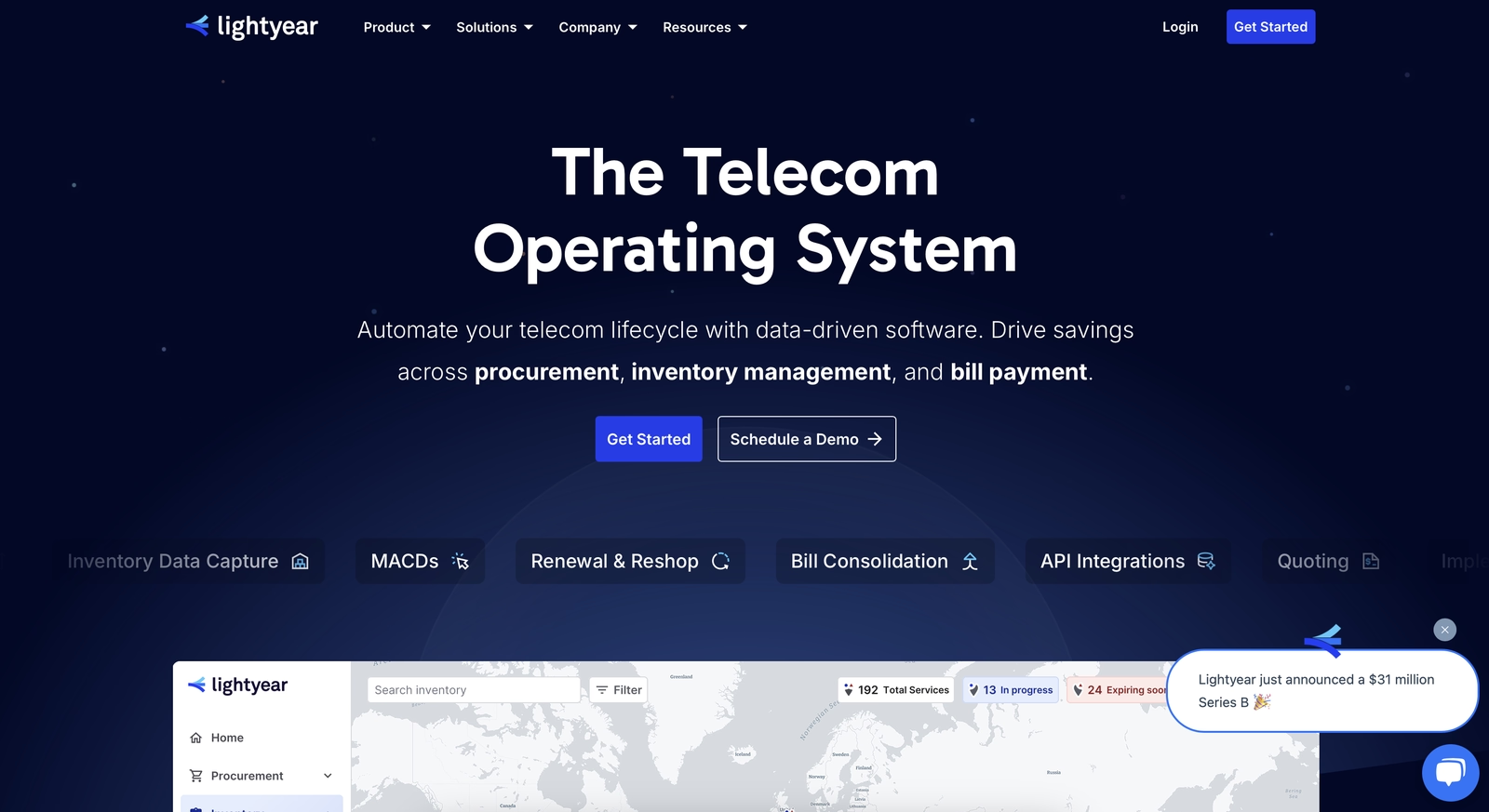
Understanding the OSI Model and Ethernet is foundational, but managing the actual network services is the next step. By automating network service procurement, inventory management, and bill consolidation, Lightyear takes the pain out of managing your telecom infrastructure.
The hundreds of enterprises who trust Lightyear achieve over 70% time savings and 20% cost savings. Schedule a demo or get started with our questionare today.
Frequently Asked Questions about OSI Model vs Ethernet
Is TCP/IP part of the OSI Model or Ethernet?
TCP/IP is a separate networking model, not a part of either. It's a more streamlined alternative to the OSI Model and works alongside Ethernet. Ethernet handles the physical connection (Layers 1-2), while TCP/IP manages data transmission and routing at higher layers.
Can you use technologies other than Ethernet at Layers 1 and 2?
Yes. While Ethernet is the standard for wired networks, other technologies like Wi-Fi fulfill the same role for wireless connections. The OSI Model is technology-agnostic, allowing different protocols to operate at each layer as long as they perform the required functions.
Why do I hear about the TCP/IP model more often than the OSI Model?
The TCP/IP model is more commonly used in practice because it is simpler and maps directly to the internet's protocol suite. The OSI Model is often used as a more comprehensive educational and diagnostic tool to understand all the functions involved in networking.
Let us show you the product and discuss specifics on how it might be helpful.
Schedule a Demo





Revolutionize Your Telecom Experience
Learn how you can get one step closer to optimal business efficiency for all your telecom services.