OSI Model vs TCP: Network Protocol Differences
Understand the OSI model vs. TCP/IP. This article explains the key differences between the conceptual OSI model and the practical TCP/IP protocol suite.

If you're involved in managing your company's IT or telecom services, you've likely come across the terms OSI and TCP/IP. These are not competing technologies, but rather conceptual models that describe how data moves across a network.
Both frameworks break down the complex process of network communication into a series of distinct layers. While they share similarities, the OSI model is a more theoretical, seven-layer reference, whereas the TCP/IP model is a more streamlined, practical framework that underpins the internet as we know it. This article will compare the two, clarifying their key differences and why understanding both is valuable for making informed network infrastructure decisions.
What is the OSI Model?
The OSI Model (Open Systems Interconnection Model) is a conceptual framework that standardizes the functions of a telecommunications or computing system. Developed by the International Organization for Standardization (ISO), it serves as a universal reference for network communication.
It breaks down the process of sending data over a network into seven distinct layers. Each layer is responsible for a specific set of tasks and interacts only with the layers directly above and below it. This layered approach helps in troubleshooting network issues and understanding how different hardware and software components work together.
- Layer 7: Application - The layer closest to the end user, facilitating communication with software applications.
- Layer 6: Presentation - Translates, encrypts, and compresses data so the application layer can understand it.
- Layer 5: Session - Manages connections, or sessions, between computers.
- Layer 4: Transport - Handles end-to-end communication, data flow, and error control.
- Layer 3: Network - Determines the physical path data will take to reach its destination.
- Layer 2: Data Link - Defines the format of data on the network and handles error detection from the physical layer.
- Layer 1: Physical - The actual hardware layer, including cables, switches, and network interface cards that transmit raw data.
What is TCP?
TCP, or Transmission Control Protocol, is a fundamental protocol that ensures the reliable delivery of data packets across a network. It establishes and maintains a connection between applications, making sure that data arrives intact and in the correct sequence.
TCP is a key component of the TCP/IP model, which is a more condensed, four-layer framework that serves as the practical foundation for the internet. While the OSI model is a theoretical reference, the TCP/IP model is the one actively in use for most network communications today. It groups the functions of the OSI model's seven layers into four broader categories.
- Application Layer: This top layer combines the functions of the OSI's Application, Presentation, and Session layers. It includes protocols users interact with, like HTTP and FTP.
- Transport Layer: Corresponding to the OSI Transport layer, this layer manages end-to-end communication and data flow using protocols like TCP and UDP.
- Internet Layer: Aligns with the OSI Network layer. It is responsible for logical addressing and routing data packets across networks using the Internet Protocol (IP).
- Network Access Layer: This layer merges the OSI's Data Link and Physical layers, handling the physical transmission of data over network hardware.
Key Differences Between OSI Model and TCP
While both models describe network communication, they differ in their philosophy, structure, and application. Understanding these distinctions is important for network management and procurement.
1. Theoretical Model vs. Practical Application
The primary difference lies in their purpose. The OSI model is a conceptual, protocol-agnostic framework designed as a universal standard for teaching and understanding network functions.
In contrast, the TCP/IP model is a functional model that was developed alongside the internet. It is less a theoretical guide and more a description of the specific protocols actively used for network communication today.
2. Layering Approach
The OSI model features seven distinct layers, providing a highly detailed breakdown of network processes. This granularity is useful for academic purposes and detailed troubleshooting.
The TCP/IP model condenses these functions into four broader layers. It combines the OSI's Application, Presentation, and Session layers into a single Application layer, and merges the Data Link and Physical layers into one Network Access layer, reflecting a more pragmatic implementation.
3. Protocol Dependence
The OSI model is generic and does not define specific protocols for each layer; it only describes the functions each layer should perform. This makes it a flexible reference.
Conversely, the TCP/IP model is built around its core protocols—Transmission Control Protocol (TCP) and Internet Protocol (IP). The model is essentially defined by these and other protocols in its suite, making it a protocol-dependent framework.
How the OSI Model Works in Networking
When data is sent from one device to another, it travels down the seven layers of the OSI model on the sender's side. At each layer, a process called encapsulation occurs, where control information is added to the data in the form of headers or trailers. This packages the data for the next layer down.
For example, the Transport layer adds a header with sequencing information, while the Network layer adds another header with source and destination IP addresses. By the time the data reaches the Physical layer, it is a stream of bits ready for transmission.
On the receiving end, the process is reversed. The data moves up the OSI stack, and each layer performs decapsulation, stripping off the corresponding header and processing the information. This systematic process ensures that data is correctly formatted, addressed, and reassembled for the receiving application.
How TCP Functions in Data Transmission
TCP puts the principles of reliable data transfer into practice through a specific, connection-oriented process. Before any data is exchanged, TCP establishes a connection using a three-way handshake (SYN, SYN-ACK, ACK) between the sending and receiving devices.
Once the connection is live, TCP breaks the data into smaller, numbered packets. This sequencing is crucial, as it allows the receiving device to reassemble the data in the correct order, even if packets arrive out of sync.
To guarantee delivery, the receiver sends an acknowledgment for packets it receives. If the sender doesn't get an acknowledgment, it re-transmits the missing packet. This error-checking and retransmission mechanism is what makes TCP a highly reliable protocol for data transmission.
Real-World Applications of OSI Model and TCP
While the OSI model is more of a reference guide and TCP/IP is the active framework, both have distinct, practical applications in the enterprise networking space. Understanding where each is used helps clarify their roles.
- OSI Model in Practice: Network engineers frequently use the OSI model as a diagnostic tool. When a network outage occurs, they can systematically check each layer to isolate the problem—for instance, determining if an issue is with a physical cable (Layer 1) or a routing configuration (Layer 3). It also serves as a common vocabulary for vendors and technicians when discussing network functions.
- TCP in Practice: TCP is the protocol that powers most of what we do online. It is actively used for any application that requires reliable data delivery. This includes web browsing (HTTP/HTTPS), sending and receiving emails (SMTP, POP3/IMAP), and transferring files (FTP). Its connection-oriented nature and error-checking make it essential for these everyday tasks.
Making the Right Choice for Your Enterprise Network
For your enterprise network, the decision isn't about choosing the OSI model over TCP/IP. The TCP/IP suite is the standard for modern networking; it’s what your systems already use for communication. The real value is in understanding how both frameworks apply to your operations.
The OSI model is an essential diagnostic tool. It gives your technical teams a structured way to troubleshoot problems, isolating issues layer by layer. This creates a common language for discussing network functions, whether internally or with vendors.
A firm grasp of TCP/IP is critical for making informed procurement and architecture decisions. It helps you ask specific questions about how a vendor's services handle routing and data integrity. Knowledge of both frameworks leads to a more resilient network and smarter purchasing.
Need Help Managing Your Network? Lightyear Can Help
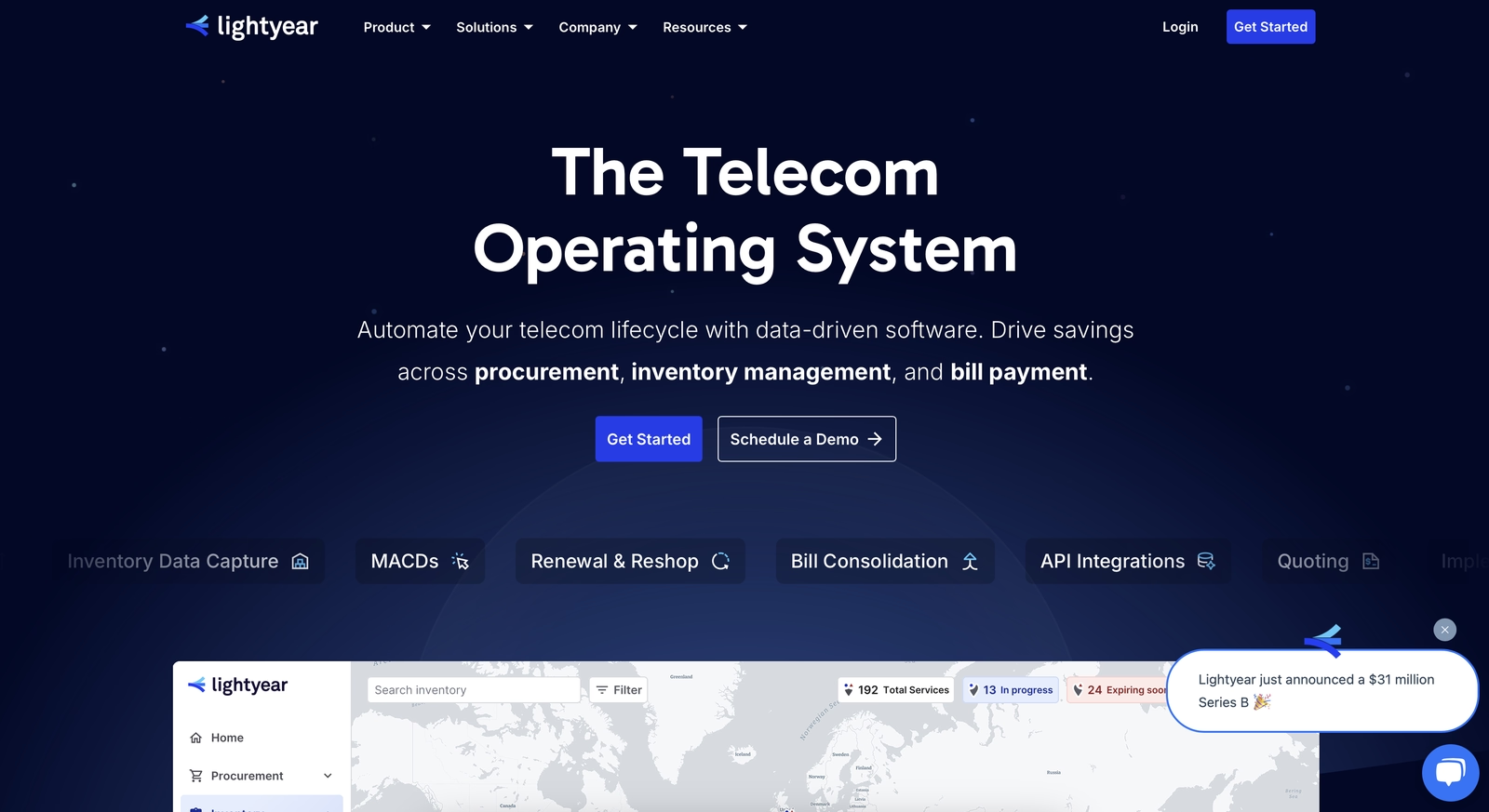
Understanding network models is one thing, but managing the services that run on them is another. By automating network service procurement, inventory management, and bill consolidation, Lightyear takes the pain out of telecom infrastructure management.
The hundreds of enterprises that trust Lightyear achieve over 70% in time savings and 20% in cost savings. Schedule a demo or get started with our questionnaire today.
Frequently Asked Questions about OSI Model vs TCP
Which model is better for my network?
This isn't an either/or choice. Your network already runs on the TCP/IP protocol suite. The OSI model is best viewed as a universal reference map for understanding and troubleshooting the functions that TCP/IP protocols carry out in a structured, layer-by-layer way.
Why should I learn the OSI model if TCP/IP is the standard?
Learning the OSI model provides a clear, vendor-neutral framework for troubleshooting. It helps you systematically isolate problems by layer, making it easier to identify whether an issue is physical, related to data links, or rooted in network configuration, improving diagnostic efficiency.
Where does UDP fit into these models?
UDP (User Datagram Protocol) is an alternative to TCP at the Transport Layer of the TCP/IP model. Unlike TCP, it is connectionless and does not guarantee delivery, making it faster and suitable for applications like video streaming or online gaming where speed is critical.
Do modern network devices follow the OSI model strictly?
No, modern devices don't strictly adhere to the seven-layer structure for implementation. The OSI model is a conceptual guide. Real-world hardware and software are built on the more practical TCP/IP model, though OSI layers are still used to describe their functions.
Let us show you the product and discuss specifics on how it might be helpful.
Schedule a Demo


Revolutionize Your Telecom Experience
Learn how you can get one step closer to optimal business efficiency for all your telecom services.