P Router vs PE Router: Differences Explained
P router vs. PE router: What's the difference? Learn the core functions of each and how they operate within an MPLS network to make informed choices.

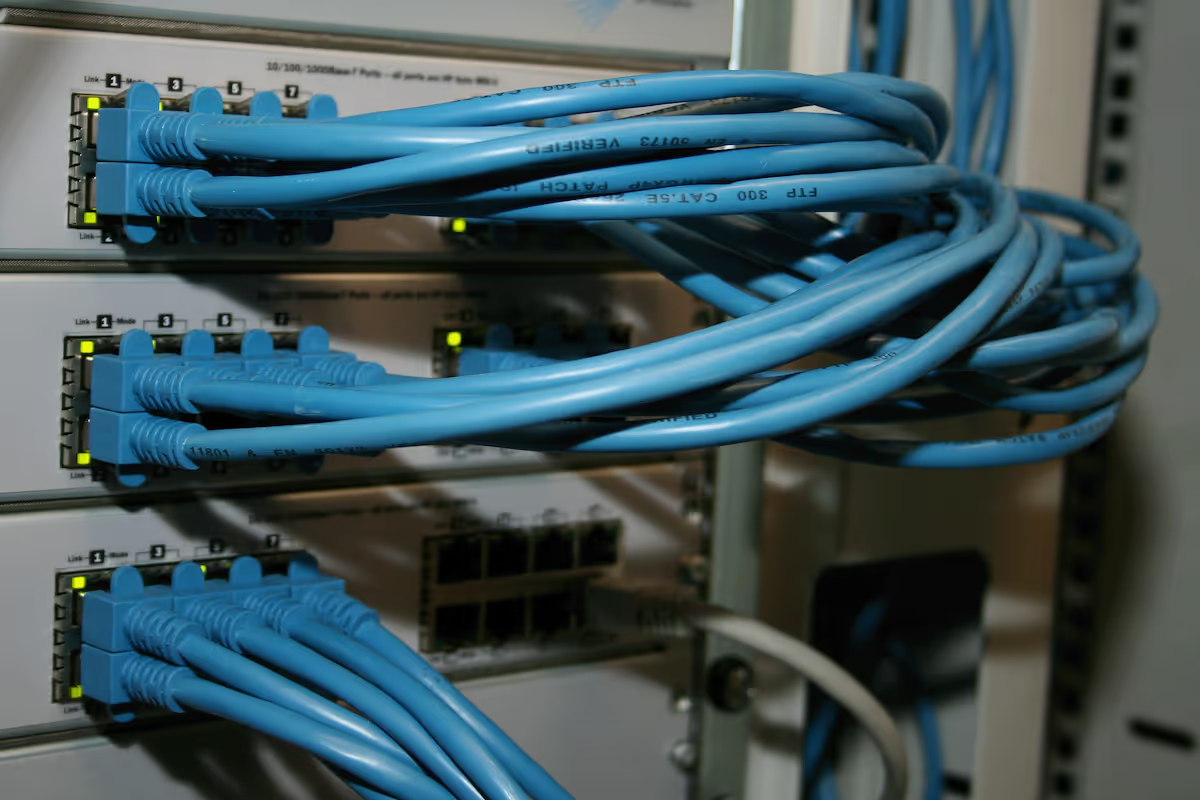
In any large service provider network, especially one using Multiprotocol Label Switching (MPLS), not all routers are created equal. Different routers have highly specialized jobs to keep data moving correctly and efficiently.
Two of the most critical types you'll encounter are Provider (P) routers and Provider Edge (PE) routers. Understanding the difference between them is key for any IT leader making decisions about their organization's connectivity and network services.
What is a P Router?
A P router, or Provider router, operates exclusively within the core of a service provider's network. Think of it as a high-speed traffic director on the main highway of the internet service provider's (ISP) infrastructure. Its sole purpose is to move data packets along the network backbone as quickly and efficiently as possible.
- Core Function: P routers are built for raw speed and high-performance packet switching. They connect other provider routers (both P and PE) within the same network.
- Limited Intelligence: They are not customer-aware. A P router doesn't know about specific customer policies, VPNs, or services. It simply reads the MPLS label on a packet and forwards it toward its destination.
- High Availability: These routers form the backbone of the provider's network, so they are engineered for maximum uptime and reliability to prevent widespread outages.
What is a PE Router?
A PE router, or Provider Edge router, is positioned at the boundary of the service provider's network. It acts as the gateway between a customer's network—specifically their Customer Edge (CE) router—and the provider's high-speed core. Unlike P routers, PE routers are intelligent and customer-aware, managing traffic based on specific customer agreements and policies.
- Customer Connection Point: The PE router is the direct point of contact for customer traffic entering or leaving the provider's network.
- Service and Policy Management: It handles customer-specific services, such as creating and maintaining Virtual Private Networks (VPNs) and enforcing Quality of Service (QoS) policies to prioritize certain types of traffic.
- MPLS Label Handling: It is responsible for adding MPLS labels to packets coming from the customer before sending them into the core network and removing them for traffic headed to the customer.
Key Differences Between P Router and PE Router
While both are essential for a provider's network, their roles diverge significantly based on where they sit and what they do.
Network Position and Connectivity
The most fundamental difference is their location. A PE router sits at the edge of the provider's network, acting as the direct interface to a customer's own equipment (the CE router).
In contrast, P routers are located exclusively within the network core. They only connect to other P and PE routers and have no direct link to any customer hardware.
Function and Intelligence
A PE router is intelligent and stateful. It must be aware of customer-specific services, managing complex tasks like VPN routing and enforcing Quality of Service (QoS) policies.
A P router is much simpler and is considered stateless. Its sole function is to switch labeled packets at maximum speed, without needing to know anything about the customers or services involved.
Traffic and Label Management
PE routers handle the full lifecycle of MPLS labels for customer traffic. They impose (add) labels onto incoming packets and dispose (remove) them from outgoing packets.
P routers, on the other hand, only swap labels. They read an incoming label, look up the destination, and swap the label for the next hop before forwarding the packet deeper into the core network.
Use Cases for P Routers
Because of their specialized, high-speed function, P routers are deployed for a few specific purposes within a service provider's internal network.
High-Speed Core Transport
The primary use case for a P router is to move massive volumes of aggregated traffic across the network backbone. They form the high-speed data plane, connecting major points of presence (PoPs) within the provider's infrastructure with maximum efficiency.
Network Scalability
When a service provider needs to expand its network capacity to handle more traffic, it adds P routers to the core. This allows the backbone to grow and support more data without adding customer-specific complexity or affecting the network edge.
Redundancy and Failover
P routers are critical for building resilient and highly available networks. Providers deploy them in redundant configurations to create multiple paths for data, so if one link or router fails, traffic can be instantly rerouted with minimal disruption.
Use Cases for PE Routers
Given their position at the network edge, PE routers handle all customer-facing tasks and services. Their intelligence allows them to manage specific connections and enforce business rules.
1. Customer VPN Services
PE routers are responsible for creating and managing MPLS VPNs. They maintain separate routing tables for each customer, ensuring that one company's private traffic is completely isolated from another's while traveling over the same shared provider network.
2. Quality of Service (QoS) Enforcement
When a business pays for prioritized traffic, the PE router is what enforces that agreement. It inspects incoming data, classifies it according to predefined policies, and ensures that critical applications like voice or video get the bandwidth they need.
3. Managed Internet Access
For businesses purchasing dedicated internet access, the PE router acts as the on-ramp to the public internet. It manages the customer's connection, applies any relevant security policies, and routes their traffic out to the global network.
Choosing the Right Router for Your Network
So, how does this distinction impact your procurement process? As an enterprise buyer, you won't be purchasing P routers directly; those are part of the service provider's internal infrastructure. Your decision-making will center on the provider's PE router, as it's the gateway for all the services you purchase.
When evaluating providers and their network services, keep these points in mind:
- Focus on PE Service Capabilities: Your primary concern is what the provider's PE router can do for you. Ask specific questions about its ability to support the number of VPNs you need, its QoS policy options, and how it will handle your traffic priorities. This is where the service is defined.
- Inquire About Core Network Health: While you don't interact with P routers, their performance is vital. A provider's core network determines overall speed and reliability. Ask about their network uptime guarantees, redundancy, and how they handle failover.
- Remember Your CE Router: Your own router, the Customer Edge (CE) device, connects directly to the provider's PE router. Ensure your hardware is compatible and capable of interfacing with the services you're buying from the provider.
Final Thoughts on P and PE Routers
Ultimately, the distinction between P and PE routers comes down to a simple concept: core versus edge. P routers are the workhorses deep inside the provider's network, built for raw speed and nothing more.
PE routers, on the other hand, are the intelligent gateways that connect your business to that network. They are responsible for delivering the specific services you pay for, from VPNs to prioritized traffic.
As a buyer, your focus will always be on the PE router's capabilities. Understanding this difference helps you ask smarter questions and procure network services that truly fit your operational needs.
Need Help Managing Your Network? Lightyear Can Help
Understanding the difference between P and PE routers is just the first step. The real challenge is managing the services that run on this complex infrastructure, from procurement to billing.
By automating network service procurement, inventory management, and bill consolidation, Lightyear takes the pain out of telecom management. The hundreds of enterprises who trust Lightyear achieve 70%+ time savings and 20%+ cost savings on their network services.
Schedule a demo or get started with our questionnaire today.
Frequently Asked Questions about P Router vs PE Router
Can a single router act as both a P and PE router?
In practice, no. Service providers keep these roles separate to optimize performance. P routers are dedicated to high-speed core switching, while PE routers manage complex customer services. Combining them would create a network bottleneck and add unnecessary complexity to the core.
What happens if a PE router fails?
If a PE router fails, the customer sites connected to it will lose connectivity. To prevent this, providers often use redundant PE routers, allowing traffic to automatically failover to a backup device and maintain service continuity for the customer.
Is a CE router the same as a PE router?
No, they are different. The CE (Customer Edge) router is your equipment located at your site. The PE (Provider Edge) router is the service provider's equipment that your CE router connects to. The PE router is the gateway to the provider's network.
Why don't P routers handle customer policies?
P routers are designed for one job: forwarding packets at maximum speed. Offloading customer-specific tasks like VPNs and QoS to PE routers keeps the network core lean and fast, preventing slowdowns and ensuring the entire network runs efficiently.
Let us show you the product and discuss specifics on how it might be helpful.
Schedule a Demo





Revolutionize Your Telecom Experience
Learn how you can get one step closer to optimal business efficiency for all your telecom services.