Packet Loss vs Latency: Impact on Network Performance
Packet loss vs. latency: which is hurting your network? Learn the key differences and how each impacts performance to make smarter IT decisions.


For IT and network teams, diagnosing poor network performance is a frequent challenge. Often, the culprits are two familiar terms: packet loss and latency. While both can slow your applications to a crawl, they are fundamentally different problems with unique causes and solutions.
Understanding the distinction is crucial for accurately troubleshooting issues and making informed decisions about your telecom infrastructure. This article will break down what each term means, how they impact your network, and what you can do about them.
What is Packet Loss?
When you send or receive information over the internet, that data is broken down into small units called packets. Packet loss occurs when one or more of these packets fail to reach their intended destination. This results in incomplete or corrupted data, which can disrupt application performance. Several factors can cause packets to go missing in transit.
- Network Congestion: When a network is overloaded with traffic, routers and switches may discard packets they cannot process in time.
- Faulty Hardware: Malfunctioning network equipment, such as old routers, switches, or even faulty cables, can be a common source of dropped packets.
- Software Issues: Bugs or glitches in the firmware or software of network devices can lead to improper packet handling.
- Wireless Interference: For wireless networks, physical obstacles, distance from the access point, or interference from other radio signals can disrupt transmission.
What is Latency?
Latency, often referred to as ping or delay, is the time it takes for a single data packet to travel from a source to a destination and back again. This round-trip time (RTT) is measured in milliseconds (ms). While packet loss means data never arrives, latency means the data does arrive, but it’s slow. A lower latency value is always better, indicating a more responsive connection. High latency is often the cause of lag in video calls or online gaming. The primary causes of latency include:
- Physical Distance: The geographical distance between the source and destination is a fundamental factor. Data takes time to travel, so a server across the country will inherently have higher latency than one in the same city.
- Transmission Medium: The infrastructure itself matters. Fiber optic connections generally have much lower latency than copper cables, coaxial, or satellite internet.
- Network Hops: Each router a packet passes through adds a small delay. The more network devices (or "hops") in the path, the higher the cumulative latency.
- Network Congestion: On a busy network, routers and switches can become overwhelmed, creating queues that delay packets before they are forwarded.
Packet Loss vs Latency: Key Differences
While both issues can stem from network congestion, they represent fundamentally different types of network failure. Here’s a direct comparison of their core distinctions.
1. Nature of the Problem: Data Loss vs. Data Delay
The most fundamental difference is what happens to your data. Packet loss is a question of reliability—some data packets never complete their journey, resulting in an incomplete transmission.
Latency, on the other hand, is a question of speed. The data arrives intact, but it takes longer than desired to make the round trip. This results in a delayed but complete transmission.
2. Measurement and Metrics
Because they are different problems, they are measured with different units. Packet loss is quantified as a percentage, representing the ratio of lost packets to sent packets. A healthy network aims for a packet loss rate as close to 0% as possible.
Latency is measured in time, typically milliseconds (ms). This metric reflects the round-trip time (RTT) for a packet, with lower numbers indicating a faster, more responsive connection.
3. Troubleshooting Approach
The diagnostic approach for each issue also differs. When investigating packet loss, IT teams often start by examining network hardware for faults or checking device dashboards for signs of congestion and dropped packets.
Diagnosing high latency typically involves analyzing the network path using tools like traceroute to identify which specific "hop" is causing the delay. The physical distance to the server is also a primary consideration.
How Packet Loss Affects Network Performance
The impact of packet loss is felt directly in application reliability. When data packets fail to arrive, the user experience degrades, though the specific symptoms depend on the type of traffic.
The consequences range from minor annoyances to complete service failure.
- Real-Time Applications: For services like VoIP and video conferencing, even minor packet loss causes jitter, garbled audio, or frozen video. These applications often prioritize speed, so lost packets are not resent, resulting in permanent gaps in the communication.
- Data Transfers and Web Browsing: When downloading files or loading a website, protocols detect the missing packets and request them again. This retransmission process ensures data integrity but introduces significant delays, making the connection feel sluggish even if latency is low.
How Latency Impacts User Experience
High latency directly affects the responsiveness of an application. While packet loss causes data to go missing, high latency makes every interaction feel sluggish, even if all the data arrives correctly.
This delay is especially noticeable in interactive applications. For employees using remote desktops or cloud-based software, high latency creates a frustrating lag between a keystroke or mouse click and the on-screen response, hurting productivity.
In transactional systems, such as processing a payment or querying a customer database, latency translates into longer wait times. These delays can lead to abandoned processes or application timeouts, directly impacting business operations and customer satisfaction.
Solutions to Reduce Packet Loss and Latency
Fortunately, both packet loss and high latency can be managed with the right strategies. Because their causes are different, the solutions are also distinct, requiring separate approaches to diagnosis and resolution.
1. Addressing Packet Loss
- Upgrade Physical Infrastructure: Regularly inspect and replace faulty or outdated hardware like routers, switches, and cabling. This is often the simplest fix for dropped packets.
- Manage Network Congestion: Increase bandwidth to handle traffic loads. You can also implement Quality of Service (QoS) policies to prioritize essential applications like VoIP over less sensitive traffic.
- Update Software and Firmware: Ensure all network devices are running the latest software versions. Patches often fix bugs that could be causing improper packet handling.
2. Mitigating High Latency
- Optimize the Network Path: Work with a provider that offers direct, well-peered network routes. For content-heavy applications, using a Content Delivery Network (CDN) can place data closer to your users.
- Choose a Faster Transmission Medium: Upgrading your circuit from copper or coaxial to fiber optic can significantly reduce latency, as data travels much faster over light-based infrastructure.
- Reduce Physical Distance: If you manage your own servers, consider colocation services that place your infrastructure in data centers geographically closer to your primary user base or offices.
Final Thoughts on Packet Loss and Latency
Ultimately, both packet loss and latency can degrade network performance, but they are not the same problem. Packet loss is a reliability issue where data disappears, while latency is a speed issue where data is delayed. A slow application could be suffering from one, the other, or a combination of both.
Because their root causes are distinct—from faulty hardware to physical distance—they require different troubleshooting methods and solutions. You cannot fix high latency by replacing a cable that is causing packet loss, and vice versa.
For any business, maintaining a productive network means actively monitoring and addressing both metrics. Choosing the right internet circuits and providers is the foundational step in building an infrastructure that is both fast and dependable, minimizing the impact of these common issues on your operations.
Need Help Managing Your Network? Lightyear Can Help
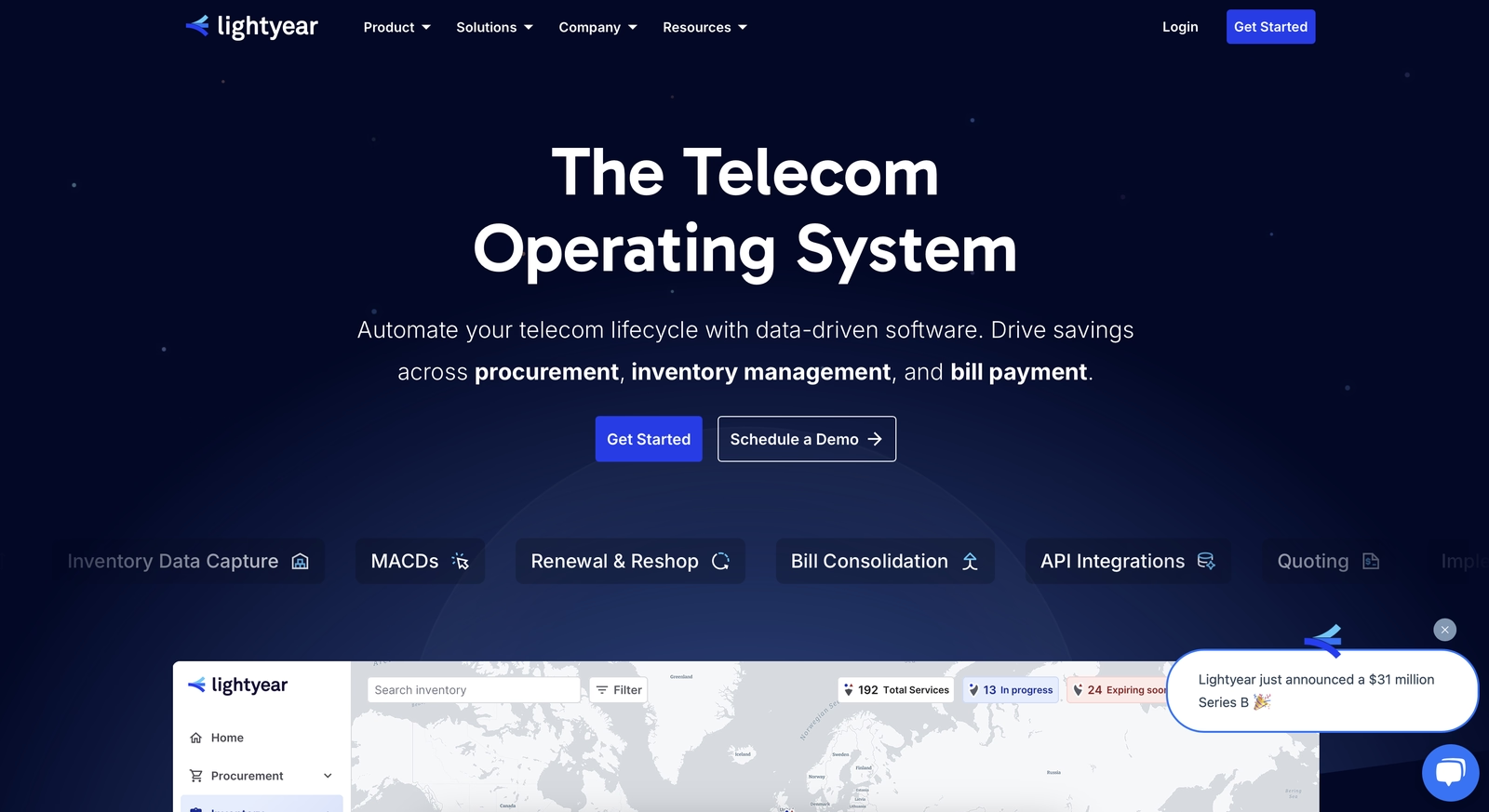
Effectively managing packet loss and latency requires total control over your network services. Lightyear automates telecom procurement and inventory management, giving you the data to choose better-performing circuits and manage the hardware causing issues.
By automating the entire telecom lifecycle, Lightyear helps enterprises save over 20% on costs and 70% on time. Schedule a demo or get started with our questionare today.
Frequently Asked Questions about Packet Loss vs Latency
Which is more damaging: packet loss or latency?
It depends on the application. Packet loss is worse for real-time services like VoIP, as it causes permanent gaps. High latency is more disruptive for interactive tasks like web browsing or using cloud software, where it creates frustrating delays.
Can you have high latency without packet loss?
Yes, absolutely. A connection can be perfectly reliable (0% packet loss) but slow due to factors like physical distance. In this case, all your data arrives intact, but the round-trip journey simply takes longer than desired.
Can high latency cause packet loss?
Not directly, but the root cause is often shared. Severe network congestion, a common cause of high latency, can overwhelm routers. When a router's buffer is full, it will start dropping packets, leading to packet loss.
What are acceptable levels for packet loss and latency?
For packet loss, you should aim for 0%; anything over 1% is considered poor for most applications. For latency, under 100ms is generally good for business use, while real-time applications like video conferencing perform best under 50ms.
Let us show you the product and discuss specifics on how it might be helpful.
Schedule a Demo





Revolutionize Your Telecom Experience
Learn how you can get one step closer to optimal business efficiency for all your telecom services.