Performance vs Fault Management in IT Networks
Performance vs. Fault Management: Learn the key differences. One optimizes your network for top speed, the other fixes problems when they happen.


In IT network operations, the terms 'performance management' and 'fault management' are frequently discussed. While they both contribute to a healthy network, they address different aspects of network oversight and have unique goals.
Performance management is the proactive work of optimizing network operations to ensure services run smoothly and efficiently. In contrast, fault management is reactive; its primary function is to detect, isolate, and resolve network failures or errors after they have happened.
For any IT leader responsible for procuring or managing telecom services, grasping this distinction is fundamental. It directly impacts how you allocate resources, select tools, and ensure your network supports business objectives without interruption.
What is Performance Management?
Performance management is a continuous, proactive process of monitoring, analyzing, and fine-tuning a network to maintain and improve service quality. It’s about keeping your infrastructure running at its best, rather than just fixing it when it breaks.
The primary goal is to identify potential bottlenecks or service degradation before they affect end-users. This is accomplished by collecting and evaluating data across the network.
- Data Collection: It involves gathering key performance indicators (KPIs) such as bandwidth utilization, latency, jitter, and packet loss to measure network health.
- Trend Analysis: By examining historical data, teams can forecast future capacity needs and identify patterns that might point to a developing problem.
- SLA Verification: Performance data provides the evidence needed to confirm that telecom vendors are meeting their service level agreements (SLAs).
- Network Optimization: Based on these insights, IT teams can make informed adjustments to reallocate resources, tune configurations, and improve overall efficiency.
What is Fault Management?
Fault management is the reactive process of identifying, isolating, and resolving network problems after they have occurred. Where performance management works to prevent issues, fault management is the immediate response system that activates when something breaks. Its primary objective is to restore normal network operations as quickly as possible to minimize downtime and business impact.
This process follows a structured lifecycle to ensure problems are handled systematically from detection to resolution.
- Fault Detection: The process starts when the system generates an alarm or alert, signaling that a network component has failed or is operating outside of normal parameters.
- Problem Isolation: Once a fault is detected, IT teams diagnose the issue to pinpoint the exact location and root cause of the failure.
- Corrective Action: This step involves implementing a solution, which could range from rebooting a device to replacing faulty hardware or dispatching a technician for on-site repair.
- Resolution and Logging: After the fault is resolved, the event is documented. This log helps identify recurring problems and informs future network improvements.
Key Differences Between Performance and Fault Management
While both are essential for network health, they operate on different principles. Here’s a breakdown of the core distinctions.
Focus: Proactive vs. Reactive
Performance management is fundamentally proactive. Its activities are geared toward preventing issues before they impact users by analyzing trends and optimizing resources.
Fault management is purely reactive. It is a response mechanism that activates only after a network component fails or an error occurs.
Objective: Optimization vs. Restoration
The goal of performance management is to optimize the network for efficiency and quality of service. It focuses on making a functional network run even better.
In contrast, the objective of fault management is restoration. Its success is measured by how quickly it can return the network to its normal operational state after a failure.
Data and Metrics
Performance management relies on collecting and analyzing historical data like latency, jitter, and bandwidth utilization to identify patterns and forecast future needs.
Fault management works with real-time alarms, error messages, and diagnostic data to isolate and resolve specific, immediate problems.
Benefits of Performance Management
A consistent focus on performance management offers significant business advantages that go beyond just keeping the network online. By taking a proactive stance, IT teams can move from a state of constant firefighting to one of strategic oversight.
- Improved service quality: By identifying potential issues like network congestion before they affect users, you deliver a more reliable and consistent experience for employees and customers.
- Lower operational costs: Proactive monitoring helps avoid expensive, reactive fixes. It also supports smarter capacity planning, preventing overspending on unnecessary bandwidth or hardware.
- Informed strategic decisions: The data gathered provides clear insights into network trends, making it easier to justify budgets and plan for future growth with confidence.
- Stronger vendor accountability: With detailed performance metrics, you can hold telecom providers to their service level agreements (SLAs), making sure you receive the service you pay for.
Benefits of Fault Management
Effective fault management delivers critical benefits by minimizing the damage when things go wrong. Its value lies in rapid response and restoration, which is essential for business continuity.
- Reduced business disruption: The primary advantage is minimizing downtime. A swift response to failures means less impact on employee productivity and customer-facing services, protecting your bottom line.
- Improved network stability: By resolving issues quickly and systematically, you prevent small problems from cascading into larger, more complex failures that could take far longer to fix.
- Stronger operational resilience: A well-defined fault management process ensures your team can handle unexpected outages confidently and efficiently, maintaining user trust in the network's reliability.
- Data for long-term fixes: Every resolved fault creates a log. This data is invaluable for identifying recurring problems with specific hardware or circuits, informing more permanent solutions.
Choosing the Right Management Strategy for Your Business
The conversation isn't about choosing one over the other; a complete network strategy requires both. Think of it as a partnership: fault management is your safety net, while performance management is your plan for continuous improvement. Finding the right balance depends on your organization's specific needs, resources, and priorities.
Here’s how to think about structuring your approach:
- Establish a strong foundation first. Every organization needs a solid fault management process. Before you can optimize performance, you must have a reliable system in place to detect, diagnose, and resolve failures quickly. This is non-negotiable for business continuity.
- Layer in performance management based on need. As your network grows or supports more critical applications, introduce performance management. For businesses with multiple locations or a heavy reliance on cloud services, proactive monitoring is key to preventing slowdowns that affect operations.
- Align with your business goals. Consider the cost of poor performance. If you run a customer-facing application where latency impacts revenue, investing heavily in performance management makes sense. For internal networks, a highly responsive fault management system might be the primary focus.
- Evaluate your team and tools. Be realistic about your capabilities. Do you have the systems to collect and analyze performance data? Is your team structured to handle proactive analysis, or is it built to react to alerts? Your strategy must be supported by your existing resources.
Final Thoughts on Performance and Fault Management
Performance management and fault management are distinct but complementary disciplines, both vital for a healthy network.
One is proactive, focused on optimizing service quality and preventing problems. The other is reactive, designed to restore operations quickly after a failure occurs.
A mature IT strategy doesn't choose between them but integrates both. This balanced approach creates a network that is not only stable and reliable but also continuously improving to meet business demands. It moves your team from simply fixing breaks to strategically managing network value.
Need Help Managing Your Network? Lightyear Can Help
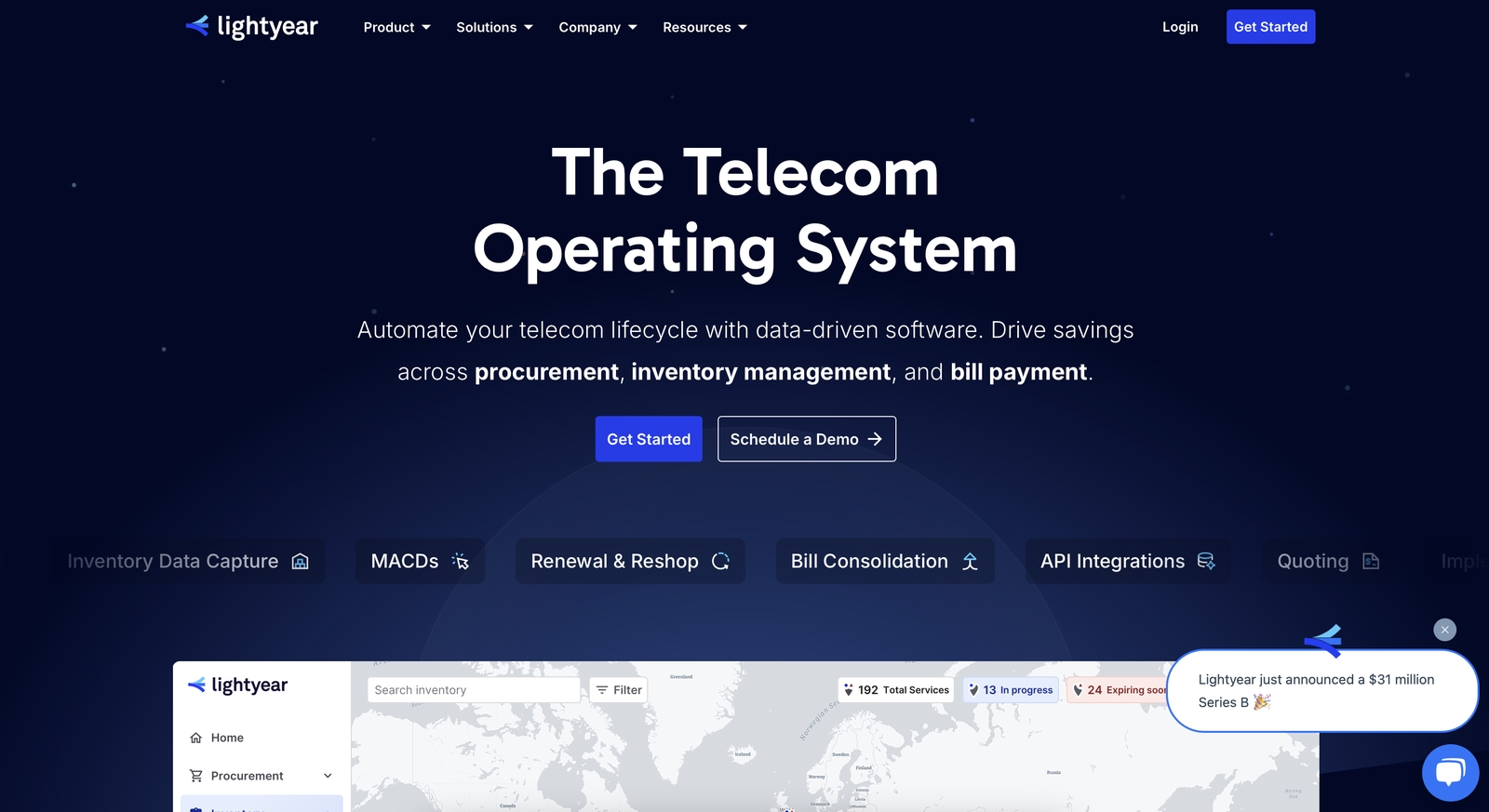
Whether your focus is proactive performance or reactive fault management, both require a solid data foundation. Lightyear automates network service procurement and inventory management, giving you the accurate system-of-record needed for either strategy.
By automating these core processes, Lightyear takes the pain out of telecom infrastructure management, helping enterprises achieve over 70% in time savings and 20% in cost savings. Schedule a demo or get started with our questionnaire today.
Frequently Asked Questions about Performance Management vs Fault Management
Can a single tool handle both performance and fault management?
Many modern network monitoring platforms combine both functions. However, they often use different modules, as the underlying data and goals are distinct. It's key to evaluate how well a tool handles both proactive analysis and real-time alerting before purchasing.
How does fault management data improve performance management?
Fault logs highlight recurring problems. Analyzing this data helps performance management teams identify chronic weak points in the network, allowing them to proactively upgrade hardware or reconfigure systems to prevent future failures and improve overall stability.
Do I need performance management if my network rarely has faults?
Yes. A lack of faults doesn't mean the network is optimized. Performance management can uncover hidden inefficiencies, like over-provisioned circuits or minor latency, that increase costs or degrade user experience without ever triggering a fault alarm.
Let us show you the product and discuss specifics on how it might be helpful.
Schedule a Demo





Revolutionize Your Telecom Experience
Learn how you can get one step closer to optimal business efficiency for all your telecom services.