Router vs Gateway: Differences for Enterprise Networks
Confused about routers vs. gateways? We break down how each device works in an enterprise network so you can make smarter infrastructure choices.

When building or managing an enterprise network, you'll often encounter the terms 'router' and 'gateway'. While they are sometimes used interchangeably, they serve distinct functions that are critical for making the right procurement decisions.
Put simply, a router directs traffic between devices on the same network. A gateway, however, is a broader concept, serving as the entry and exit point that connects one network to another, such as connecting your local network to the internet. This article will break down their specific roles and key differences to help you design a more efficient network architecture.
What is a Router?
Think of a router as the traffic controller for your internal network. Its main job is to connect all the devices within a specific location—like an office—and manage how they communicate with each other. It works by creating and maintaining a local area network (LAN).
- Directs Internal Traffic: A router forwards data packets between devices on the same LAN, such as computers, printers, and servers.
- Assigns IP Addresses: It assigns a unique local IP address to each device on the network, ensuring data is sent to the correct destination.
- Operates at the Network Layer: Routers function at Layer 3 of the OSI model, using logical addresses (IP addresses) to make forwarding decisions.
- Maintains Routing Tables: It keeps a record of the available routes to various network destinations to determine the most efficient path for data.
What is a Gateway?
A gateway serves as a bridge between two dissimilar networks, enabling them to communicate. Think of it as a protocol converter that translates data from one network's format to another's. This function is essential when connecting your local network to an external one, like the internet, or linking two corporate networks that use entirely different communication standards. A router can perform the function of a gateway, but the term 'gateway' itself refers to a broader capability.
- Connects Dissimilar Networks: Its primary job is to link networks that may operate on different protocols, acting as a translator between them.
- Performs Protocol Translation: It converts data packets from one protocol to another so they can be understood by the receiving network.
- Operates on Multiple OSI Layers: A gateway can function on any layer of the OSI model, up to the Application Layer (Layer 7), to handle complex data conversions.
- Single Point of Entry/Exit: It serves as the default exit point for all traffic leaving the local network for an external destination.
Router vs Gateway: Key Differences
While both manage network traffic, their core responsibilities and capabilities differ significantly. The main distinctions come down to their function, scope, and how they handle data protocols.
1. Core Function
A router's primary role is to create a network and manage the flow of data packets within it. In contrast, a gateway's main purpose is to serve as a single point of entry and exit, connecting that local network to a different one, like the internet.
2. Scope and Protocol Handling
Routers are designed to work within a single network protocol, forwarding data between devices that speak the same language. A gateway, however, is built to connect networks that may use entirely different protocols, acting as a translator to enable communication between them.
3. OSI Model Layer
This functional difference is reflected in where they operate on the OSI model. A router works strictly at the Network Layer (Layer 3), making decisions based on IP addresses. A gateway is more flexible and can operate on any layer, including the Application Layer (Layer 7), to perform complex protocol conversions.
When to Use a Router
A router is the correct tool whenever your primary objective is to establish and manage a local area network (LAN). This applies to any scenario where multiple devices in one location, such as a single office or building, need to communicate with each other.
For example, you would use a router to connect employee workstations, shared printers, and internal servers, allowing them to exchange data efficiently and securely within that private network.
Routers are also critical for network segmentation. By creating smaller subnets, you can isolate traffic for security purposes—like keeping the finance department's network separate from marketing—or to improve overall network performance by reducing unnecessary data broadcasts.
In short, if the task involves managing traffic strictly within your own network's boundaries, a router is what you need.
When to Use a Gateway
A gateway is required whenever your network needs to communicate with an external or dissimilar network. It acts as the designated exit and entry point for all data leaving your local area network (LAN).
The most common scenario is connecting your office network to the internet. In this case, the gateway translates requests from your LAN into a format the internet can understand, and vice versa, enabling access to outside resources.
You also need a gateway to connect two separate corporate networks that operate on different protocols, such as linking your infrastructure with a partner's or integrating systems after a company merger. It bridges the communication gap between these distinct environments.
Common Use Cases in Enterprise Networks
In practice, enterprise networks rely on both routers and gateways working together to function correctly. Here are some common, real-world applications that illustrate their distinct roles in a business environment.
- Internal Network Segmentation: Routers are used to divide a large corporate network into smaller subnets. For instance, you can create separate networks for guest Wi-Fi, internal operations, and sensitive data servers to improve security and manage traffic flow efficiently.
- Connecting to Cloud Services: When your company uses infrastructure from a public cloud provider like AWS or Azure, a gateway is required. It serves as the secure entry point, translating data between your private network and the cloud environment.
- Integrating VoIP Telephony: A specialized VoIP gateway connects your office phone system to the internet. It converts traditional voice signals into digital data packets that can be transmitted over an IP network, allowing for modern communication.
- Managing SD-WAN at Branch Offices: In a Software-Defined WAN (SD-WAN) architecture, the hardware at each branch often combines routing and gateway capabilities. It routes traffic between local devices while also acting as a gateway to securely connect to the central network and the internet.
Making the Right Choice for Your Network
Choosing between a router and a gateway comes down to a simple question: are you managing traffic inside your network or connecting to the outside world? A router is fundamental for directing data between devices on your local network, while a gateway is the door that lets that data travel to other networks, like the internet.
In most enterprise environments, the choice isn't one or the other—you need both to build a complete system. In fact, many modern network devices perform both routing and gateway functions, especially in SD-WAN deployments or all-in-one office hardware.
Ultimately, understanding the distinct role of each component is critical for designing an efficient network architecture. This clarity helps you procure the right equipment and ensure your internal traffic is managed properly while maintaining a secure connection to external services.
Need Help Managing Your Network? Lightyear Can Help
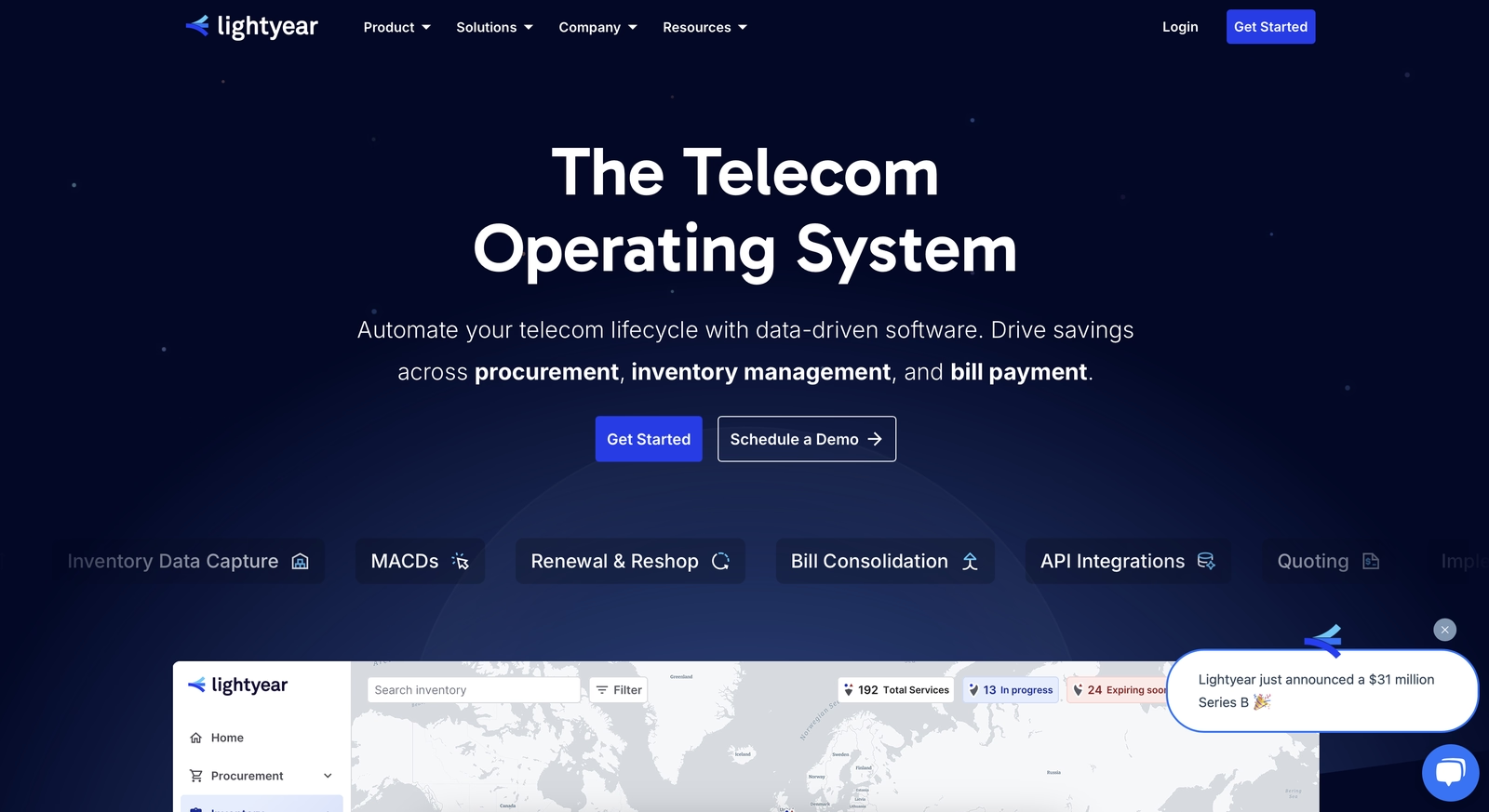
Managing the services that run on your routers and gateways is just as important as choosing the right hardware. By automating network service procurement, inventory management, and bill consolidation, Lightyear removes the complexity from telecom infrastructure management, helping enterprises save over 70% in time and 20% in costs.
Let us handle the backend so you can focus on building the best network architecture. Schedule a demo or get started with our questionnaire today.
Frequently Asked Questions about Router vs Gateway
Can a single device be both a router and a gateway?
Yes, absolutely. Many modern networking devices, especially in small offices or SD-WAN deployments, combine both functions. This single piece of hardware routes traffic internally while also acting as the gateway to connect to the internet or a central corporate network.
What is a "default gateway"?
The default gateway is the IP address of the network device that traffic is sent to when its destination is outside the local network. It's the designated exit point for all external communication, essentially telling data where to go first.
Is a modem the same as a gateway?
Not quite. A modem connects your physical line to your internet service provider (ISP). A gateway connects two different networks. Often, an ISP-provided device is a combination unit that includes a modem, router, and gateway all in one box.
Do I need a gateway for every subnet?
No, a single gateway can serve multiple subnets. A router can manage traffic between different internal subnets (e.g., Finance and HR) and then direct all outbound traffic from all of them toward one common gateway to reach the internet.
Let us show you the product and discuss specifics on how it might be helpful.
Schedule a Demo





Revolutionize Your Telecom Experience
Learn how you can get one step closer to optimal business efficiency for all your telecom services.