Router vs L3 Switch: Differences Explained
Router or L3 switch? Learn the key differences in how they handle network traffic and decide which is right for your enterprise infrastructure.

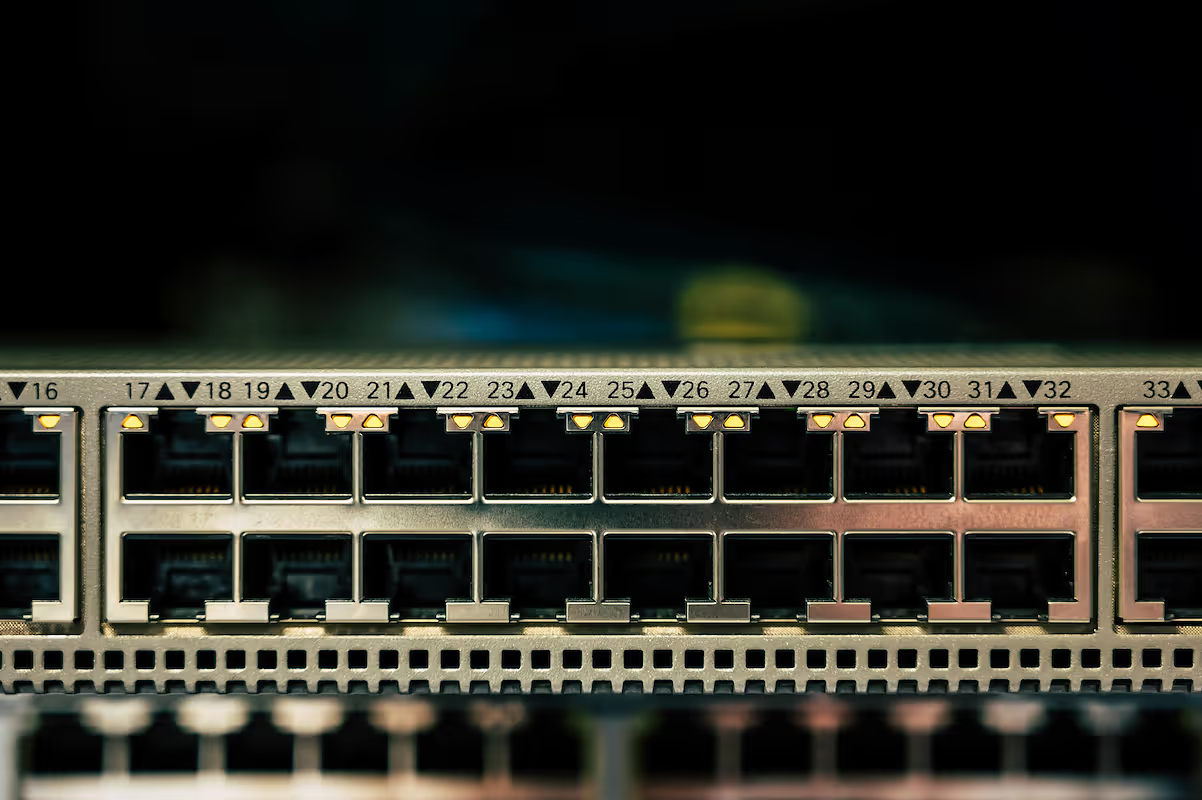
When building or upgrading a corporate network, IT teams often face a key decision: should they use a router or a Layer 3 switch?
At first glance, they seem similar. Both devices can direct traffic between different networks, which often makes the choice unclear.
This guide will explain the core differences between them, covering their primary functions and how they handle network traffic. Our goal is to provide clear guidance on when to use each one for optimal network performance.
What is a Router?
A router is a networking device that connects different networks, such as a local area network (LAN) to the internet (a WAN). It acts as a traffic director, operating at Layer 3 (the Network Layer) of the OSI model. Its primary job is to inspect the IP address of incoming data packets and determine the best path to forward them toward their final destination.
- Connects different networks: Its core function is to link distinct networks, enabling communication between your internal office network and the public internet.
- Uses IP addresses for routing: It examines the destination IP address of each packet and consults its routing table to find the most efficient path.
- Provides security features: Most modern routers include built-in firewalls and support for access control lists (ACLs) to protect the network from unauthorized traffic.
- Enables Network Address Translation (NAT): This allows multiple devices on a private network to share a single public IP address, a key function for conserving IP addresses and enhancing security.
What is a Layer 3 Switch?
A Layer 3 switch is a high-performance device that combines the functions of a switch and a router. Operating at Layer 3, it's essentially a switch with routing capabilities, designed to accelerate traffic flow within a large local area network (LAN).
- Handles inter-VLAN routing: Its primary strength is routing traffic between different virtual LANs (VLANs) without needing a dedicated router, which reduces latency.
- Built for speed: It uses specialized hardware (ASICs) to forward packets at wire speed, making it faster than a router for internal network traffic.
- Limited WAN functionality: While it can route, it generally lacks the advanced WAN features of a router, such as NAT or extensive security protocols.
- Maintains a routing table: Like a router, it uses a routing table to determine the best path for data packets based on their IP addresses.
Key Differences Between Routers and L3 Switches
While both devices manage traffic at Layer 3, their design philosophies and primary applications create some important distinctions.
1. Core Purpose: LAN vs. WAN
A router's main job is to connect separate networks, most commonly your internal LAN to the external WAN, like the internet. Think of it as the primary gateway between your private network and the outside world.
In contrast, a Layer 3 switch is optimized for internal traffic management. Its strength is routing data quickly between different sub-networks or VLANs within a single large corporate LAN, reducing bottlenecks.
2. Hardware and Forwarding Method
Layer 3 switches make routing decisions using specialized hardware (Application-Specific Integrated Circuits, or ASICs). This allows them to forward packets at very high, near-wire speeds, which is ideal for high-volume internal networks.
Routers typically rely more on software-based processing to inspect and forward packets. This approach is more flexible and supports advanced features but can introduce higher latency than an L3 switch.
3. Feature Support and Intelligence
Routers are built with a richer set of features for managing external connections. This includes essential WAN technologies like Network Address Translation (NAT), robust Quality of Service (QoS) policies, and advanced security protocols.
A Layer 3 switch has a more focused feature set. It generally lacks these extensive WAN capabilities, prioritizing high-speed IP routing inside the local network above all else.
Use Cases for Routers
Because of their robust WAN capabilities and advanced software features, routers are essential for several key networking scenarios. They are typically deployed at the edge of the network where internal traffic meets the outside world.
- Internet Access: The most common use case is providing internet connectivity for an entire office. The router acts as the main gateway, managing all traffic between the local network (LAN) and the internet.
- Connecting Multiple Locations: For businesses with branch offices, routers are used to create a wide area network (WAN), securely linking different sites over the internet using technologies like VPNs.
- WAN Redundancy: Routers can manage multiple internet connections from different providers to ensure uptime. If one connection fails, the router automatically redirects traffic through a backup link.
- Edge Security Enforcement: They serve as the first line of defense, using built-in firewalls and access control lists (ACLs) to inspect and filter incoming and outgoing traffic, protecting the internal network from external threats.
Use Cases for L3 Switches
Layer 3 switches are best suited for managing traffic within a large, complex internal network. Their speed and routing capabilities make them ideal for specific scenarios where performance is critical.
- Inter-VLAN Routing: In corporate networks, departments are often separated into different Virtual LANs (VLANs) for security. An L3 switch routes traffic between these VLANs efficiently without needing a separate router, which keeps internal communication fast.
- Network Aggregation: In a campus or data center environment, L3 switches are used at the distribution layer to connect multiple access switches. They aggregate traffic from different parts of the network and provide a high-speed backbone for internal data flow.
- Improving LAN Performance: By segmenting a large network into smaller subnets, an L3 switch reduces broadcast traffic and isolates data flows. This minimizes congestion and improves performance for all users on the network.
Cost Considerations for Routers and L3 Switches
When comparing costs, the initial price tag doesn't tell the whole story. The price of each device is closely tied to its intended function and feature set.
Generally, enterprise-grade routers carry a higher price tag. This is because you're paying for advanced software intelligence, including robust security features, WAN management capabilities, and complex routing protocols.
Layer 3 switches, on the other hand, often provide more performance for the price, but only for internal network routing. Their cost is primarily driven by the number of ports and the speed of their hardware-based switching.
For high-volume internal traffic, an L3 switch is typically a more cost-effective solution than using a router. It's also important to factor in potential software licensing fees, which can add to the total cost of ownership, particularly for routers with advanced features.
Making the Right Choice for Your Network
Choosing between a router and a Layer 3 switch comes down to a simple question: are you managing traffic inside your network or connecting to the outside world?
If your primary need is to connect your office to the internet, link multiple sites, or secure your network edge, a router is the right tool. Its strength lies in WAN connectivity and advanced security features.
If you need to improve performance within a large internal network by routing traffic between different VLANs, a Layer 3 switch is the ideal choice. It provides high-speed, hardware-based routing for your LAN.
In many enterprise networks, the answer isn't one or the other—it's both. A router typically serves as the gateway to the internet, while Layer 3 switches handle the heavy lifting of internal traffic flow. Understanding their distinct roles is key to building an efficient and scalable network.
Need Help Managing Your Network? Lightyear Can Help
Choosing the right hardware is just the first step. Lightyear helps you manage the entire telecom lifecycle, from procuring the services that run on your routers and switches to tracking them in a digital inventory.
By automating network service procurement and bill consolidation, enterprises that trust Lightyear achieve over 70% time savings and 20% cost savings. Schedule a demo or get started with our questionnaire today.
Frequently Asked Questions about Router vs L3 Switch
Can a Layer 3 switch completely replace a router?
Not usually. While an L3 switch excels at internal routing, it lacks the essential WAN features of a router, such as NAT and advanced security protocols needed for internet connectivity. Most networks require a router at the network edge.
Which is better for a small business network?
For most small businesses, a single, robust router is sufficient. It can handle internet access, basic security, and internal traffic needs. A Layer 3 switch is typically only necessary for larger, more complex internal networks with multiple VLANs.
Is a Layer 3 switch as secure as a router?
No. Routers are designed with more comprehensive security features like stateful firewalls and VPN capabilities. A Layer 3 switch offers basic access control lists (ACLs) but is not built to be a primary security device for external threats.
Let us show you the product and discuss specifics on how it might be helpful.
Schedule a Demo





Revolutionize Your Telecom Experience
Learn how you can get one step closer to optimal business efficiency for all your telecom services.