Router vs Access Point: Enterprise Network Differences
Routers direct traffic; access points provide Wi-Fi. Learn the key differences for your enterprise network and choose the right hardware for your needs.

In enterprise networking, the terms router and access point are fundamental, yet frequently misunderstood.
Both devices are critical for getting your teams online, but they handle different tasks. Mistaking one for the other can lead to inefficient networks and unnecessary costs, especially when managing multiple locations.
This article provides a clear comparison, outlining the specific roles of routers and access points to help IT and telecom buyers make informed decisions.
What is a Router?
A router is the traffic controller for your network. It connects your local network to the internet and directs data packets between them, making sure information gets to the right place efficiently.
Think of it as the central hub that manages all incoming and outgoing internet traffic for your business. Its primary functions include:
- Managing the Local Network: A router creates a local area network (LAN) and assigns a unique IP address to every device on it. This is how your computers, printers, and servers can find and communicate with one another.
- Providing Internet Access: It connects your entire LAN to the internet, acting as a gateway. This allows multiple devices within your office to share a single, managed internet connection provided by your ISP.
- Ensuring Security: Routers serve as a crucial first line of defense. They typically include a built-in firewall that inspects incoming data packets and blocks potential threats, helping to protect your internal network from unauthorized access.
- Handling Data Traffic: The router analyzes the destination address of each data packet and forwards it along the most efficient path, whether to another device on the LAN or out to the internet.
What is a Punto de Acceso (Access Point)?
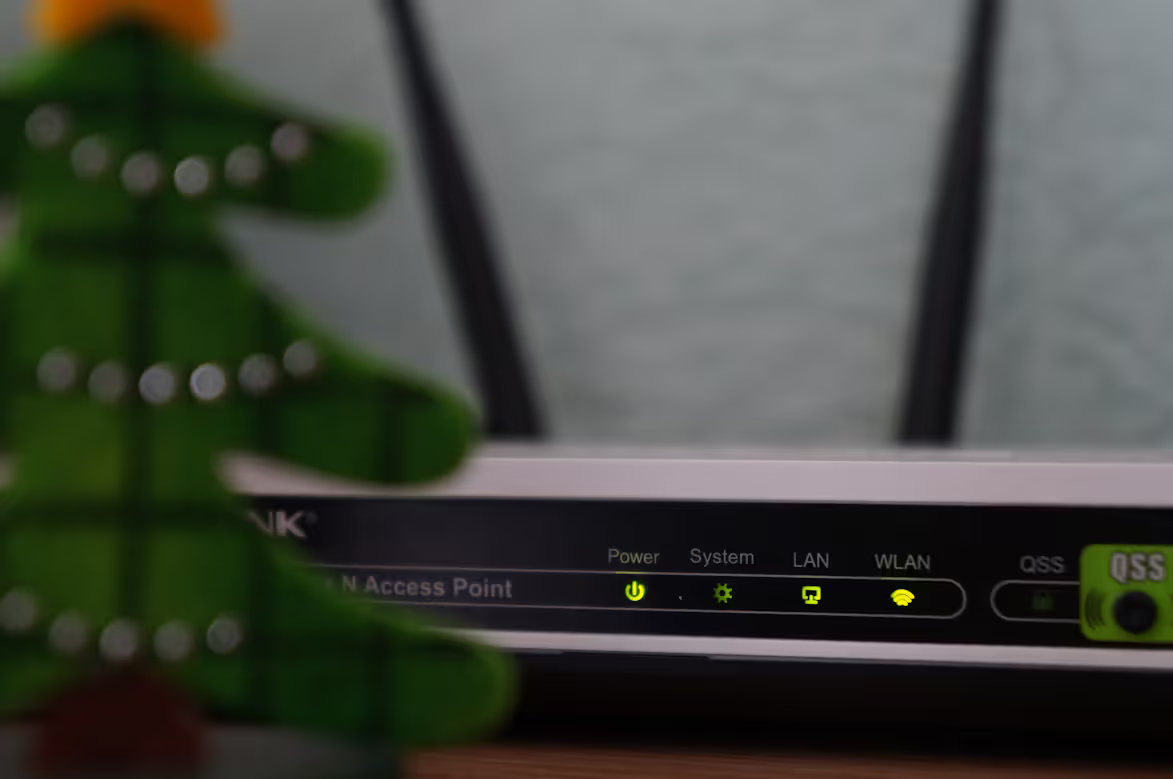
An access point, often called an AP, is a device that creates a wireless local area network (WLAN). Its primary job is to act as a bridge, taking the wired connection from your main network and converting it into a wireless signal that devices can connect to.
Think of it as an extension of your network, specifically for providing Wi-Fi. This is critical for larger offices or buildings where a single router’s signal isn’t strong enough to cover the entire area. Its main functions are focused on wireless connectivity:
- Extending Wireless Coverage: An AP’s core purpose is to broadcast a Wi-Fi signal, allowing you to eliminate dead zones and provide reliable wireless access throughout your facilities.
- Connecting Wireless Devices: It allows Wi-Fi-enabled devices, such as laptops, smartphones, and tablets, to connect to the wired network infrastructure. Enterprise-grade APs can handle dozens or even hundreds of users at once.
- Passing Off Data: A standard access point does not assign IP addresses or manage network traffic. It simply passes data from wireless clients to the router, which handles all the complex routing tasks.
Key Differences Between Routers and Access Points
While both devices are essential for connectivity, they operate at different levels of the network hierarchy. Understanding their specific jobs is key to building an efficient infrastructure. Here’s a breakdown of their distinct roles.
1. Functionality and Intelligence
A router is an intelligent device that acts as the brain of your network. It actively manages data, making decisions on the best path for information to travel between your local devices and the internet.
In contrast, an access point is more of a conduit. Its primary function is to take a wired connection from your router or switch and broadcast it as a wireless signal, passing all traffic management duties back to the router.
2. Network Role and IP Addresses
A router establishes and defines your local network. It serves as a DHCP server, which means it assigns a unique IP address to every device that connects, allowing them to communicate properly.
An access point simply extends an existing network. It does not assign IP addresses; instead, it acts as a bridge, allowing wireless devices to get an IP address from the main network router.
3. Security Focus
Routers provide the first line of defense for your entire network. They contain a built-in firewall that inspects and filters traffic from the internet, blocking malicious attempts before they can reach your internal devices.
An access point’s security is focused on controlling wireless access. It uses authentication protocols like WPA3 to ensure only authorized users can connect to the Wi-Fi, but it relies on the router for broader network protection.
4. Physical Ports and Connections
You can typically identify a router by its ports. It will have a specific WAN (Wide Area Network) port for the internet connection and several LAN (Local Area Network) ports for connecting wired devices like servers or switches.
An access point usually has just one Ethernet port. This port is used to receive data and power (via Power over Ethernet, or PoE) from the wired network, which it then broadcasts wirelessly.
When to Use a Router
A router is the essential starting point for any business network that requires an internet connection. You should use a router whenever you are establishing a new network at an office or site, as it creates the local area network (LAN) and serves as the gateway to your internet service provider.
It is the correct device for managing network operations. A router is required for the core functions of assigning IP addresses to devices via DHCP, directing data traffic between them, and ensuring information flows efficiently between your internal network and the wider internet.
Furthermore, a router is fundamental for security. It acts as the first line of defense by providing a built-in firewall, which is necessary to inspect incoming traffic and protect your business from unauthorized access and external threats.
When to Use an Access Point
An access point is the right choice when you need to expand the reach of your existing wired network to wireless devices. It works in tandem with your router, not as a replacement for it.
You should deploy an access point if your office has Wi-Fi dead zones or if you need to provide reliable coverage across a large floor plan, multiple stories, or outdoor areas. They are specifically designed to broadcast a strong wireless signal where a router’s signal cannot reach.
Access points are also necessary in environments with a high concentration of users, like conference rooms or open-plan offices. Enterprise-grade APs can handle many simultaneous connections without performance drops.
Essentially, if you already have a router managing your network but need better or broader Wi-Fi, an access point is the component you need to add.
Cost Considerations for Routers and Access Points
When budgeting for network hardware, the costs for routers and access points reflect their different roles and capabilities. A single enterprise-grade router typically represents a larger upfront investment than a single access point, but the total cost depends on your specific needs.
- Router Costs: The price of a business router is directly tied to its performance and features. Factors like processing power, advanced security protocols, VPN capacity, and the ability to handle high-volume traffic all drive up the cost. A reliable enterprise router can range from several hundred to many thousands of dollars.
- Access Point Costs: While an individual AP is more affordable, the total expense is a multiple of how many units you need for full coverage. The price per AP is influenced by its supported Wi-Fi standard (e.g., Wi-Fi 6E), its capacity for simultaneous users, and whether it is designed for indoor or outdoor use. Remember to also budget for Power over Ethernet (PoE) switches and potential software licensing fees for centralized management.
Making the Right Choice for Your Network Needs
Ultimately, choosing between a router and an access point comes down to understanding their distinct jobs. They are not interchangeable; they are partners in building a functional network.
Every business network begins with a router. It’s the non-negotiable foundation for creating your local network, managing traffic, and connecting to the internet securely.
Access points are then added to solve a different problem: expanding wireless coverage. If you need reliable Wi-Fi across a large office or for many devices, you will deploy APs connected to your router.
A well-designed network uses a single, powerful router as its brain and multiple access points to provide comprehensive wireless access. This setup ensures both performance and scalability.
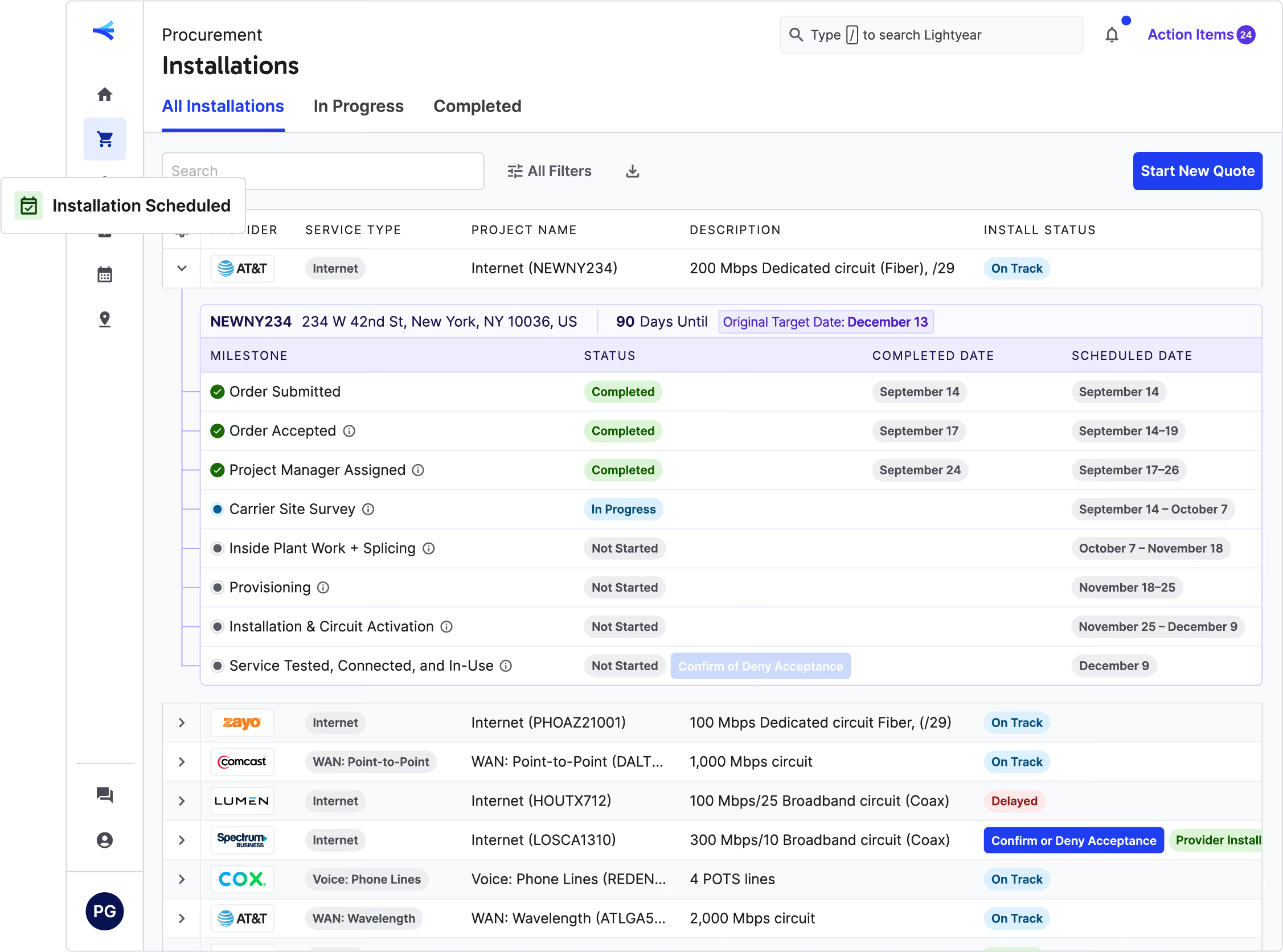
Getting this hardware strategy right is the first step. For IT teams managing telecom across multiple sites, Lightyear helps automate the procurement and management of the underlying connectivity services, ensuring your network infrastructure is as efficient as your hardware choices.
Need Help Managing Your Network? Lightyear Can Help
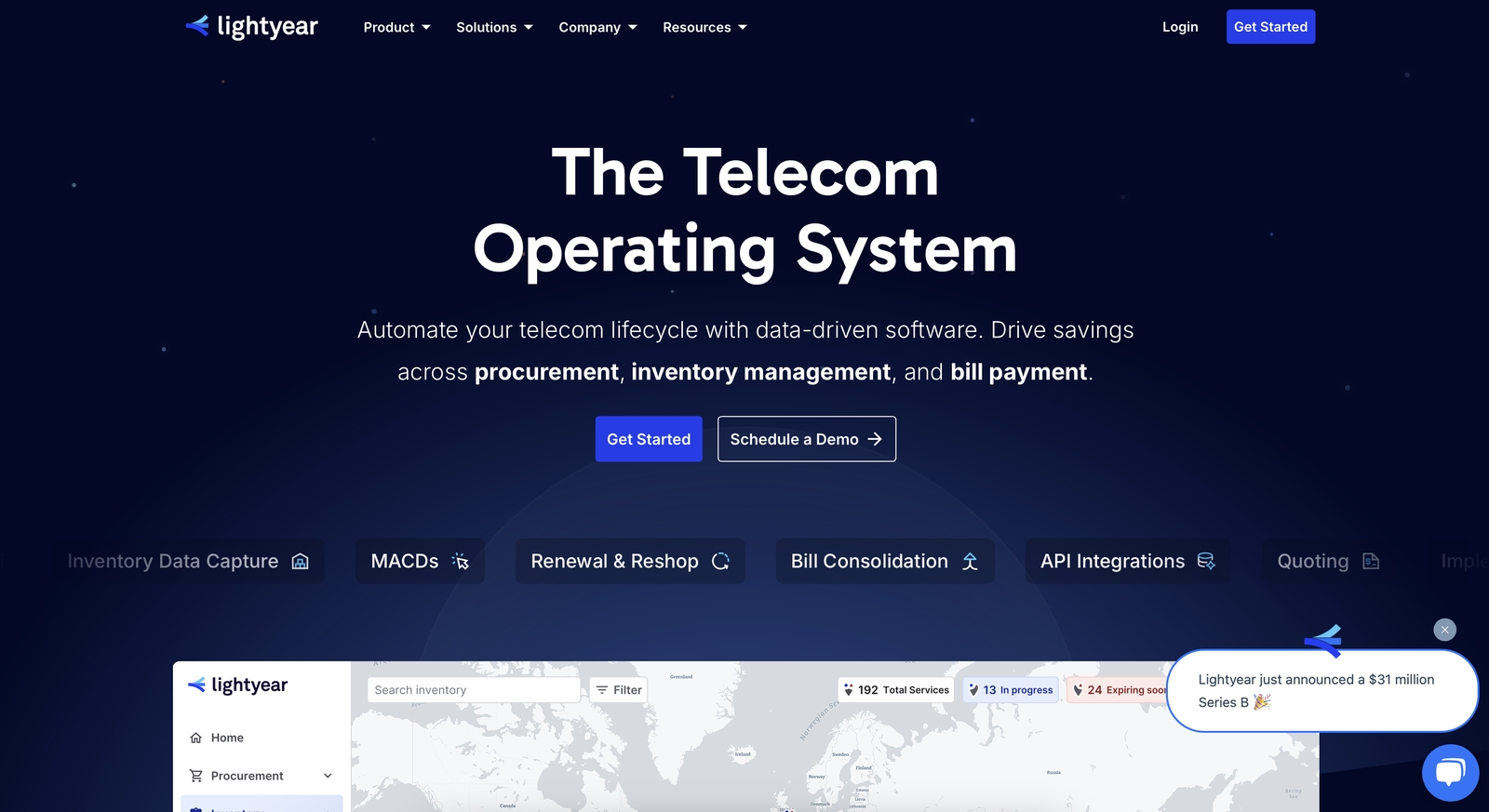
By automating network service procurement and inventory management, Lightyear simplifies managing the infrastructure that supports your routers and access points.
The hundreds of enterprises who trust Lightyear achieve over 70% time savings and 20% cost savings on their network services.
Schedule a demo or get started with our questionnaire today.
Frequently Asked Questions about Router vs Punto de Acceso
Can I use a router as an access point?
Yes, many business-grade routers can be set to "AP mode" or "bridge mode." This disables their routing functions, allowing them to act purely as an access point to extend your Wi-Fi coverage without creating a conflicting secondary network.
What is a wireless router?
A wireless router is a combination device that bundles a router and an access point into one unit. It manages your network traffic and also broadcasts a Wi-Fi signal. While common in small offices, larger enterprises often use separate, dedicated devices for better performance.
How many access points do I need for my office?
This depends on square footage, building materials, and user density. A general starting point is one AP per 2,000-3,000 square feet. For a precise plan, a professional wireless site survey is recommended to identify optimal placement and avoid coverage gaps.
Let us show you the product and discuss specifics on how it might be helpful.
Schedule a Demo





Revolutionize Your Telecom Experience
Learn how you can get one step closer to optimal business efficiency for all your telecom services.