Router vs Switch: Understanding Their Differences
Confused about routers vs. switches? Learn their distinct roles in a network, how they work, and which device you need for your IT infrastructure.

If you're building or managing a business network, you'll frequently encounter the terms 'router' and 'switch.' While they sound similar and are both critical components of your network infrastructure, they perform very different jobs.
Understanding the distinction is key to designing an efficient and reliable network. This guide will break down the specific functions of each device, their key differences, and how they work together to connect your business.
What is a Router?
A router is a networking device that connects two or more different networks together—most commonly, your local area network (LAN) to the wider internet (WAN). Think of it as the traffic director for your data, inspecting packets and forwarding them toward their final destination.
It operates at Layer 3 (the Network Layer) of the OSI model, making decisions based on IP addresses. Its core functions include:
- Packet Forwarding: It analyzes the destination IP address of each data packet and uses a routing table to determine the most efficient path to send it along.
- Network Address Translation (NAT): It allows multiple devices on a private local network to share a single public IP address, which is essential for both connectivity and security.
- DHCP Server: Most routers can act as a Dynamic Host Configuration Protocol (DHCP) server, automatically assigning IP addresses to devices as they join the network.
- Security: Routers often serve as the first line of defense, incorporating firewall features to block unwanted traffic and protect the internal network from external threats.
What is a Switch?
Where a router connects different networks, a switch is designed to connect multiple devices together within a single local area network (LAN). It acts as a central hub for your wired devices, like computers, printers, and servers, allowing them to communicate with each other efficiently.
A switch operates at Layer 2 (the Data Link Layer) of the OSI model. Instead of using IP addresses, it uses MAC (Media Access Control) addresses to forward data packets—called frames at this layer—to the correct device. This process is highly efficient and keeps local traffic from congesting the network.
Key functions of a switch include:
- Device Interconnection: It creates a network by connecting multiple devices, enabling them to share information and resources directly.
- Intelligent Data Forwarding: It learns the MAC address of each connected device and maintains a table. When a frame arrives, the switch sends it only to the port of the intended recipient, not to all ports.
- Performance Improvement: By creating dedicated communication paths and reducing unnecessary data broadcasts, switches minimize network congestion and improve overall speed and reliability within the LAN.
Key Differences Between Routers and Switches
While both devices manage data traffic, they do so in fundamentally different ways. Here’s a breakdown of the primary distinctions.
1. Scope and Purpose
A router’s primary job is to connect two or more different networks, most commonly linking a private local area network (LAN) to the public internet (WAN). It acts as a gateway between separate networks.
In contrast, a switch is used to create a single network. It connects multiple devices—like computers, printers, and servers—within the same physical location, enabling them to communicate directly.
2. Operational Layer and Address Handling
Routers operate at Layer 3 (the Network Layer) of the OSI model. They use logical IP addresses to direct data packets to their destination across these different networks.
Switches function at Layer 2 (the Data Link Layer). They rely on physical MAC addresses, which are unique hardware identifiers, to forward data frames to the specific device on the local network.
3. How They Make Decisions
When a data packet arrives, a router inspects its destination IP address and consults a routing table. It then calculates the most efficient path for the packet to travel across the internet or other interconnected networks.
A switch maintains a simpler table of MAC addresses and their corresponding physical ports. It just looks up the destination MAC address and forwards the data to the correct port, making it much faster for local traffic.
4. Traffic and Broadcast Domains
A key function of a router is to create boundaries between networks, effectively creating separate broadcast domains. It does not forward broadcast traffic from one network to another, which contains network chatter and improves security.
A standard switch, however, operates within a single broadcast domain. It forwards broadcast frames to every connected device, which is necessary for local device discovery but can create congestion on larger LANs.
When to Use a Router
A router is the right choice whenever you need to connect different networks. Its most fundamental use case is connecting your company's internal local area network (LAN) to the internet, acting as the primary gateway for all outbound and inbound traffic.
You also need a router to link separate physical locations, such as connecting your main office with a branch office over a WAN connection. Internally, routers are used to create subnets, which segment a larger network into smaller, isolated ones. For example, you can use a router to keep your guest Wi-Fi network completely separate from your secure corporate network.
Finally, a router is necessary for managing network access and security. It assigns IP addresses to devices and serves as the first line of defense, using firewall capabilities to filter traffic and protect your internal systems.
When to Use a Switch
A switch is the right tool whenever you need to connect multiple wired devices within the same local network. Its primary function is to build the network that allows your office computers, printers, servers, and VoIP phones to communicate directly and efficiently with one another.
Switches are also the standard solution for expanding your network's physical capacity. If your router runs out of available LAN ports, you simply connect a switch to add more connections for your growing team and hardware.
Using a switch for local device connections improves performance by keeping internal data traffic from unnecessarily passing through the router. Advanced managed switches also allow you to create Virtual LANs (VLANs), which can segment traffic for security and organizational purposes—for example, isolating the engineering department's traffic from the sales team's, all on the same physical network.
Common Misconceptions About Routers and Switches
The distinct roles of routers and switches can sometimes lead to confusion. Let's clear up a few common misunderstandings that often arise in network planning.
- A router is the same as a home Wi-Fi box. The all-in-one device in most homes is a combination unit: it's a router, a network switch, and a wireless access point. In a business environment, these three functions are typically handled by separate, dedicated hardware for greater performance, security, and control.
- Switches are simple, while routers do all the complex work. This isn't always true. While basic unmanaged switches are straightforward, managed switches offer advanced features like traffic prioritization and network segmentation. Furthermore, Layer 3 switches exist that can handle some routing tasks, blurring the lines by operating at both the Data Link and Network layers.
- You can use a router in place of a switch, or vice-versa. Because they solve different problems, these devices are not interchangeable. A router is essential for connecting to the internet and linking different networks, while a switch is necessary for building out your local network to connect a high density of devices. A typical business network requires both working together.
Making the Right Choice for Your Network
Ultimately, the decision isn't about choosing a router or a switch, but understanding how they work together. For almost any business network, the answer is that you need both. These devices perform distinct but highly complementary roles to ensure your data gets where it needs to go.
Your router acts as the primary gateway. It connects your entire local area network (LAN) to the internet (WAN) and directs traffic between these different networks, making it essential for external communication and security.
Switches then take over on the local level. They connect to your router and expand your network's capacity, creating the ports needed for all your office devices—like computers, printers, and servers—to communicate with each other efficiently.
The right hardware depends on your specific requirements. A small office might be fine with a simple setup, but a larger enterprise will need managed switches for traffic control and a more robust router to handle security and high data loads. Planning for scale is key.
By correctly deploying both routers and switches, you build a reliable and performant network foundation. This clarity is the first step in making informed decisions for your company's infrastructure.
Need Help Managing Your Network? Lightyear Can Help
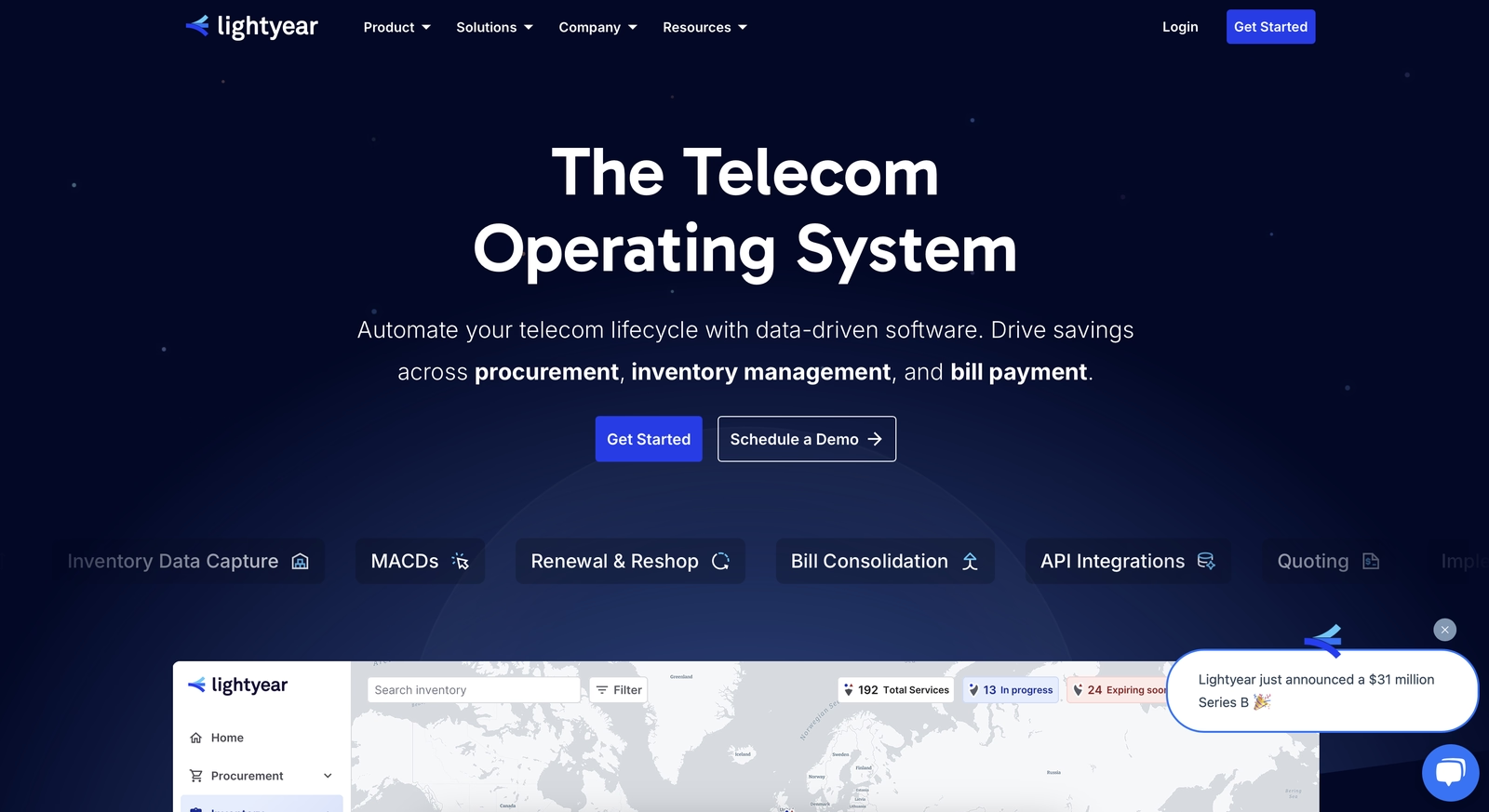
Choosing the right routers and switches is just the first step; managing them effectively is the next. By automating network service procurement, inventory management, and bill consolidation, Lightyear takes the pain out of managing your telecom infrastructure, helping enterprises save over 70% in time and 20% in costs.
Schedule a demo or get started with our questionnaire today.
Frequently Asked Questions about Router vs Switch Difference
Can a Layer 3 switch replace a router?
Sometimes, but not completely. A Layer 3 switch can handle routing between internal networks (VLANs) very quickly. However, it typically lacks the advanced security, WAN connectivity, and NAT features of a dedicated router, which is still needed to connect to the internet securely.
Do I need a switch if my router already has LAN ports?
For most businesses, yes. A router's built-in ports are often limited. A dedicated switch is the standard way to connect a large number of wired devices within your office, ensuring high-speed communication between them without burdening the router with local traffic.
How do VLANs on a switch compare to subnets on a router?
VLANs (Virtual LANs) let you group devices on the same physical switch into separate logical networks. Subnets divide a single large IP network into smaller ones. They often work together; a common practice is to assign a unique subnet to each VLAN for routing purposes.
Let us show you the product and discuss specifics on how it might be helpful.
Schedule a Demo





Revolutionize Your Telecom Experience
Learn how you can get one step closer to optimal business efficiency for all your telecom services.