Satellite vs Cable Internet: Enterprise Considerations
Satellite vs. Cable internet for your business? Learn the key differences in speed, availability, and cost to choose the right option for your sites.


When it comes to internet connectivity for your business, the choice often comes down to the infrastructure available at each location. Two common options you'll encounter are satellite and cable internet, each with distinct advantages and disadvantages for enterprise use.
This article will compare both options across key factors like speed, reliability, cost, and availability. Our goal is to provide the information you need to determine which solution is a better fit for your company's specific requirements.
What is Satellite Internet?
Satellite internet delivers connectivity by transmitting data between a dish at your location and a satellite orbiting the Earth. It functions as a three-part relay system that bypasses the need for ground-based infrastructure like cables or fiber lines, making it a viable option for remote or rural areas.
The process involves a constant back-and-forth communication loop between three key points:
- Your Location: A satellite dish, often called a VSAT (Very Small Aperture Terminal), is installed at your business to send and receive data signals.
- Space Satellite: A geostationary satellite orbiting approximately 22,000 miles above the Earth receives these signals and relays them back down.
- Ground Station: A Network Operations Center (NOC) on the ground receives the signal from the satellite, connects it to the global internet, and sends data back along the same path.
Because the signal must travel this vast distance to space and back, satellite internet inherently has higher latency (delay) compared to terrestrial connections.
What is Cable Internet?
Cable internet is a form of broadband that uses the same coaxial cable infrastructure as cable television to deliver high-speed data. Unlike satellite, which relies on signals from space, cable internet is a terrestrial service grounded in a physical network that is widely available in populated areas.
The data transmission process is much more direct than its satellite counterpart, involving a journey through a hybrid network of fiber and coaxial lines. Here’s how it typically works:
- The Headend: This is the cable provider's local facility, which acts as a control center. It receives data from the internet and routes it into the cable network.
- Hybrid Fiber-Coaxial (HFC) Network: Data travels from the headend over high-capacity fiber optic lines to nodes serving specific neighborhoods or business districts.
- The "Last Mile": From the neighborhood node, the signal is transferred to coaxial cables that run directly to your building.
- The Cable Modem: A modem at your premises receives the signal from the coaxial line and converts it into a usable internet connection for your local network.
Comparing Satellite and Cable Internet: Speed, Reliability, and Latency
When evaluating these two services, the differences in performance become clear. Let's break down how they stack up in these critical areas.
Speed
Cable internet generally offers higher speeds than satellite, with many providers offering gigabit download capabilities. Business cable plans often provide symmetrical or near-symmetrical speeds, meaning your upload and download performance are comparable.
Satellite internet speeds have improved but typically lag behind cable. More importantly, satellite connections are almost always asymmetrical, with much slower upload speeds than download speeds. This can be a bottleneck for businesses that need to send large files or back up data to the cloud.
Reliability
Because it relies on a physical, ground-based network, cable internet is generally more stable. Its performance is not affected by weather conditions, though it can be subject to localized outages from physical line damage or provider issues.
Satellite internet is more susceptible to service disruptions. Heavy rain, snow, or high winds can interfere with the signal, a phenomenon known as "rain fade." A clear, unobstructed line of sight to the satellite is also required, which can be a challenge in some locations.
Latency
Latency, or the delay in data transmission, is the most significant performance differentiator. Cable internet has low latency because the signal travels a relatively short distance through a physical network.
Satellite internet has inherently high latency due to the immense distance the signal must travel to space and back. This delay makes it unsuitable for real-time applications like VoIP, video conferencing, or remote desktop sessions, which require near-instantaneous data transfer.
Cost Considerations for Satellite vs Cable Internet
When budgeting for connectivity, the pricing structures for satellite and cable internet are quite different. Cable is often the more cost-effective choice in areas where it's available, while satellite pricing reflects its unique ability to serve any location. The total cost of ownership for each service depends on monthly fees, data usage, and contract terms.
- Cable Internet: Generally offers lower monthly costs due to widespread infrastructure and competition among providers. Business plans often feature unlimited data and predictable billing, making it easier to manage expenses without worrying about overage fees.
- Satellite Internet: Tends to have a higher price point for both the service and the required equipment. Plans frequently come with data caps, and exceeding these limits can result in significant charges or throttled speeds. Contract terms can also be more rigid, locking you into a longer commitment.
Ultimately, the higher cost of satellite is a trade-off for its universal availability. For businesses in remote locations without access to terrestrial networks, it provides an essential connection that justifies the premium price. In contrast, cable's value lies in its high performance-to-cost ratio in populated areas.
Installation and Equipment Requirements
Getting your internet service up and running involves different steps and hardware for satellite and cable. The setup process for each reflects the underlying technology and can impact how quickly you get connected.
- Satellite Internet: This service requires professional installation of a satellite dish, or VSAT, on your building's exterior, along with an indoor modem. The most critical factor is finding a location for the dish with a clear, direct line of sight to the provider's satellite in the sky. Any obstructions, such as nearby buildings or heavy foliage, can block the signal and prevent a successful installation.
- Cable Internet: The equipment is simpler, typically just a cable modem that connects to an existing coaxial wall outlet. Installation is far more straightforward, especially if the building is already wired for cable TV or internet service. A technician can often activate the service quickly, and many providers even offer self-installation kits for businesses, reducing setup time and complexity.
Security and Privacy Concerns
Both cable and satellite internet have unique security profiles, but the core principles of data protection remain the same for your business. While providers build in safeguards, your own security measures are what truly matter.
Cable internet operates on a shared network, where data from multiple customers travels over the same local lines. Providers use data encryption standards to protect this traffic, but the shared infrastructure means strong internal security, like a firewall, is essential.
Satellite internet involves transmitting data over the air, which is also encrypted by the provider. The security focus here shifts to the provider's ground station security and the physical protection of your on-site satellite dish from tampering.
Ultimately, neither connection type is inherently more or less secure for a business that follows best practices. The use of corporate VPNs, end-to-end encryption, and robust firewalls are the most critical factors in protecting your data, regardless of how it reaches the internet.
Making the Right Choice for Your Enterprise
Choosing between satellite and cable internet ultimately comes down to your specific business needs and, most importantly, your physical location. Each service excels in different scenarios.
Cable internet is the clear winner for businesses in urban and suburban areas. It delivers the high speeds, low latency, and reliability required for demanding applications like VoIP, cloud services, and video conferencing, often at a lower cost.
Satellite internet, on the other hand, is the essential solution for remote or rural sites without access to ground-based networks. While it has higher latency and is more susceptible to weather, it provides a crucial connection where no other options exist.
For most companies, geography will make the decision for you. If you have a choice, cable offers better performance for day-to-day operations. If you don't, satellite ensures your remote locations stay connected.
Need Help Managing Your Network? Lightyear Can Help
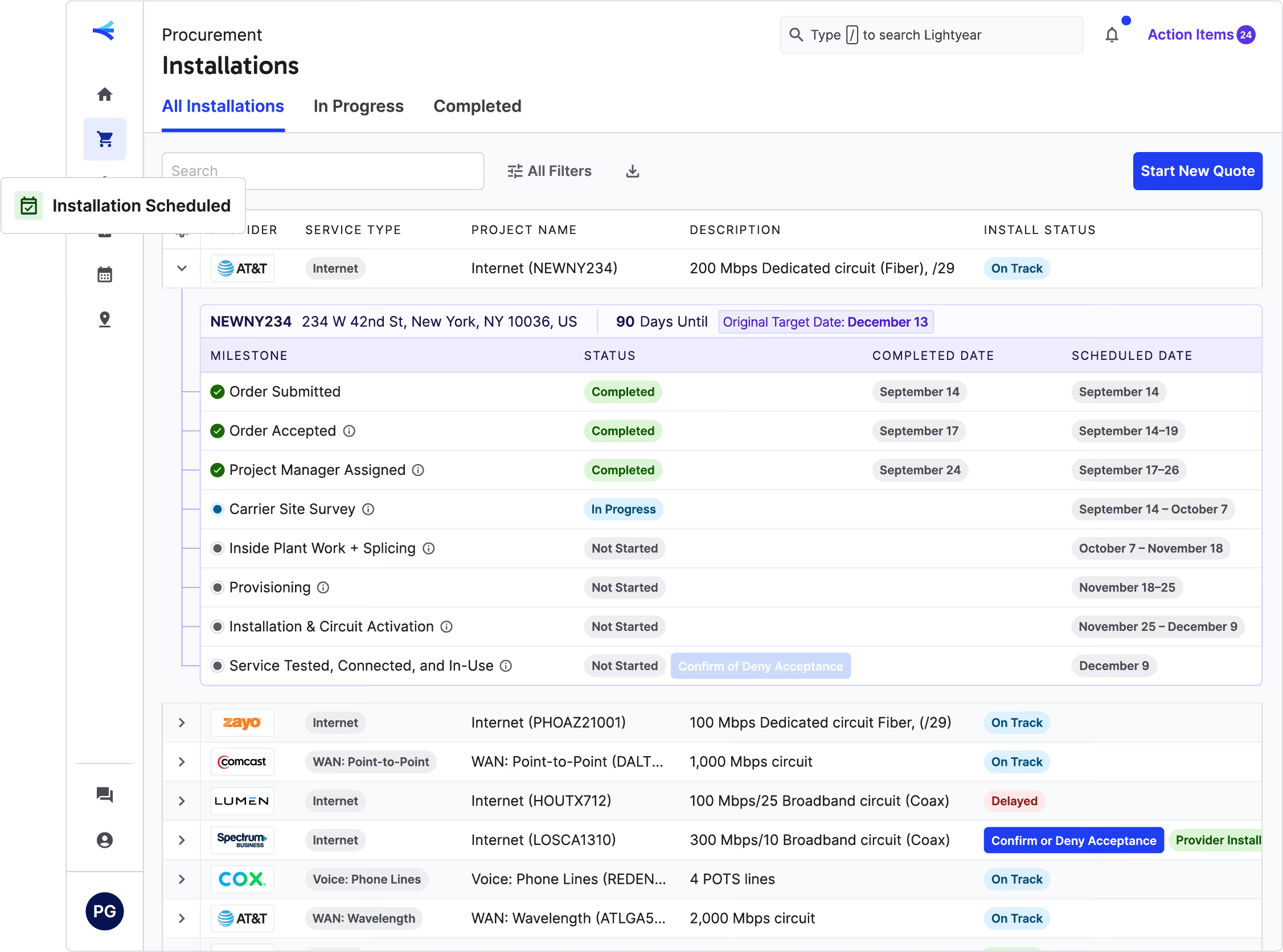
Whether you choose satellite, cable, or a mix of both for your sites, Lightyear helps you procure and manage all your network services in one place. We automate the entire process, from quoting and implementation to bill consolidation.
By taking the pain out of telecom infrastructure management, our platform helps enterprises achieve over 70% in time savings and 20% in cost savings. Schedule a demo or get started with our questionnaire today.
Frequently Asked Questions about Satellite Internet vs Cable Internet
Is satellite internet a good backup for a primary cable connection?
Yes, it can serve as a failover connection. However, due to its high latency, real-time applications like VoIP may not perform well. It is best used for basic connectivity and data access during an outage of your primary cable line.
Can you get a static IP address with satellite internet?
Many business-grade satellite providers offer static IP addresses, often as an add-on service. This is essential for hosting servers or specific VPNs but usually adds to the monthly cost. Always confirm this option when getting quotes for service.
How do data caps on satellite internet affect business operations?
Business satellite plans typically have larger data allowances than residential ones. Exceeding your cap can lead to throttled speeds or overage fees, so it's important to choose a plan that matches your expected data usage for critical operations.
Let us show you the product and discuss specifics on how it might be helpful.
Schedule a Demo





Revolutionize Your Telecom Experience
Learn how you can get one step closer to optimal business efficiency for all your telecom services.