Satellite Internet vs Ethernet: Enterprise Connectivity
Satellite vs. Ethernet for your business? Learn the key differences in speed, reliability, and cost to choose the right enterprise connectivity.

Choosing the right internet service is a critical decision for any business, directly impacting operations and productivity. For enterprise buyers, the choice often comes down to different technologies, each with its own set of benefits and drawbacks.
This article offers a straightforward comparison between satellite internet and Ethernet connectivity. We will examine the key differences in performance, cost, and ideal use cases to help you determine which solution is the right fit for your company's needs.
What is Satellite Internet?
Satellite internet delivers connectivity by transmitting data between a user's location and the internet via satellites orbiting the Earth. Think of it as a three-part relay system: your device, a satellite in space, and a ground station connected to the internet.
The process works like this:
- Your request for data travels from your computer to a satellite dish installed at your location.
- The dish sends the signal to a satellite in orbit.
- The satellite relays this signal to a network operations center (NOC) on the ground, which is connected to the terrestrial internet.
- The data is then sent back through the same path to your device.
This technology is particularly useful for providing internet access to remote or rural areas where traditional ground-based infrastructure is unavailable.
What is Ethernet?
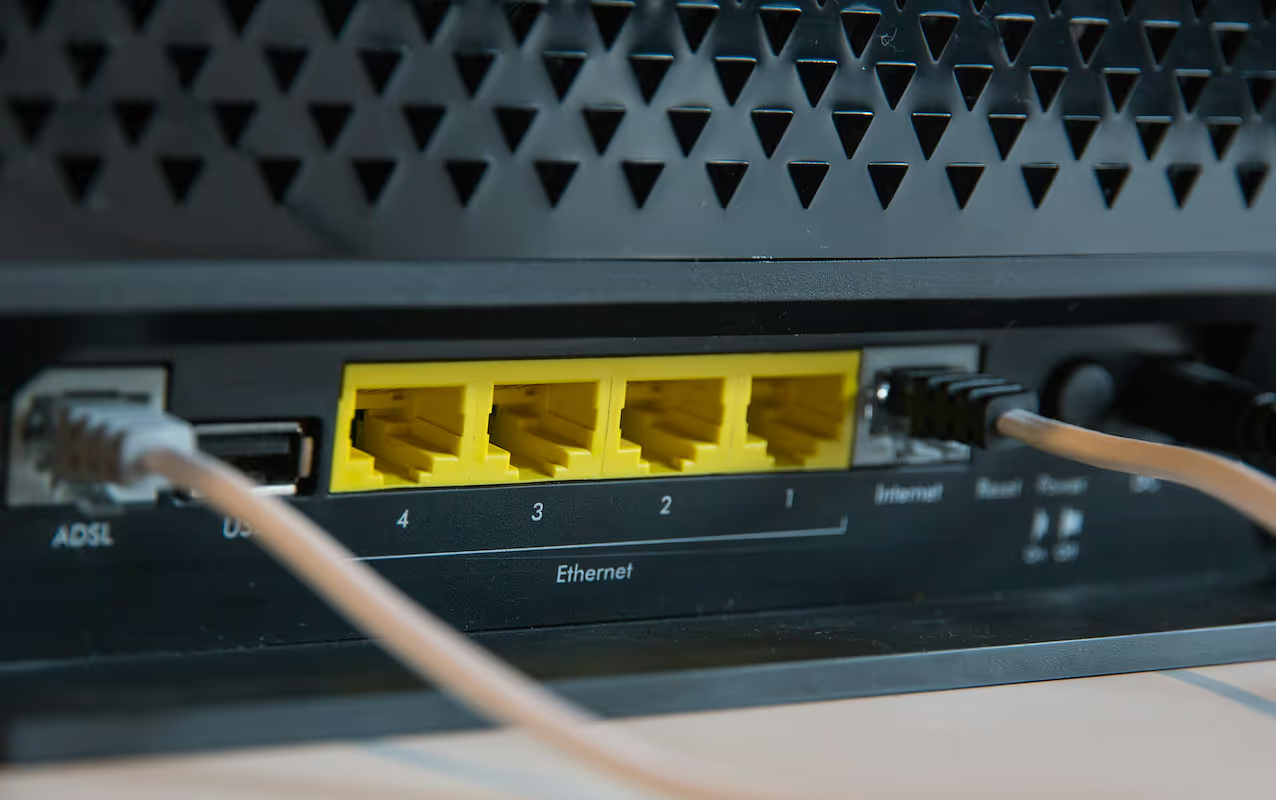
Unlike satellite, Ethernet is a wired technology that connects devices within a local network and to the internet. It's the backbone of most office and data center networks, relying on physical cables to transmit data.
Here’s a simple breakdown of how it functions:
- Ethernet uses physical cables, such as twisted-pair copper or fiber optic, to create a direct, stable connection.
- It governs how data is formatted and transmitted over a Local Area Network (LAN), ensuring devices like computers, printers, and servers can communicate effectively.
- This direct physical link generally results in high speeds and low latency, making it a reliable choice for business-critical operations that demand consistent performance.
Key Differences Between Satellite Internet and Ethernet
While both technologies connect you to the internet, they do so in fundamentally different ways, leading to major distinctions in performance, reliability, and availability.
Performance: Speed and Latency
Ethernet connections generally provide faster, more consistent speeds and significantly lower latency. Because data travels through a direct physical cable, the delay is minimal, which is ideal for demanding applications.
Satellite internet, in contrast, has much higher latency. This delay is caused by the immense distance signals must travel to an orbiting satellite and back. While speeds have improved, this inherent latency can affect real-time activities like video conferencing.
Reliability and Consistency
Wired Ethernet connections are known for their stability. The physical link is protected from most external interference, offering a highly dependable connection for business operations.
Satellite service can be susceptible to environmental factors. Severe weather, such as heavy rain or snow, can temporarily disrupt the signal, a condition known as “rain fade.”
Availability and Installation
Satellite internet’s primary strength is its broad availability. It can be deployed nearly anywhere with a clear view of the sky, serving locations beyond the reach of terrestrial networks.
Ethernet’s availability is entirely dependent on existing physical infrastructure. If a building is not already connected to a provider's network, installation can be a complex and time-consuming process.
Pros and Cons of Satellite Internet
When considering satellite internet, it’s helpful to weigh its specific strengths and weaknesses for a business environment.
Pros
- Unmatched Availability: Its greatest strength is reaching locations where wired infrastructure is unavailable. This makes it a viable option for remote industrial sites, rural offices, or as a backup connection.
- Faster Deployment: Installation can often be completed more quickly than waiting for new terrestrial lines to be laid, which can take months.
Cons
- Inherent Latency: The significant delay from the signal's travel distance can hinder real-time applications like VoIP and collaborative cloud platforms.
- Susceptibility to Weather: Heavy rain or snow can interfere with the signal, creating potential service interruptions.
- Data Caps: Many satellite plans come with data usage limits, which can be a major constraint for businesses with high data demands.
Pros and Cons of Ethernet
Ethernet also has its own distinct advantages and disadvantages, which are largely the inverse of satellite's.
Pros- Superior Performance: The direct physical connection delivers consistently high speeds and low latency, making it ideal for data-intensive tasks like large file transfers, high-quality video calls, and supporting cloud applications without interruption.
- Enhanced Security: Wired networks are inherently more secure than wireless ones. Data transmitted over physical cables is less vulnerable to interception or unauthorized access compared to signals broadcast through the air.
- Installation Hurdles: Availability is strictly limited by physical infrastructure. If your building isn't already connected to a provider's network, installation can be expensive and take a significant amount of time.
- Fixed Location: Ethernet is a stationary solution. It cannot be used for mobile operations or at temporary job sites where a connection is needed but physical cabling is not practical.
Choosing the Right Option for Your Business
Deciding between satellite and Ethernet comes down to evaluating your company’s specific operational requirements, budget, and geographic footprint. The best choice for one scenario may be unsuitable for another. Consider these common business use cases.
For Your Main Office
If you're outfitting a primary office in a location with existing infrastructure, Ethernet is almost always the superior choice for day-to-day operations.
Its reliability and high performance are essential for supporting the demands of a busy office, from large file transfers and video conferencing to constant team communication on cloud platforms.
For Remote or Hard-to-Reach Locations
Satellite internet becomes the clear frontrunner when your operations are in rural or remote areas where wired connections are simply not available.
This makes it a practical solution for industries like agriculture, mining, or construction that need dependable connectivity at job sites far from urban centers.
As a Failover or Backup Connection
Many businesses use both technologies strategically. An Ethernet connection can serve as the primary link, with a satellite system installed as a backup for network diversity.
This hybrid approach provides valuable redundancy, keeping your critical operations online if your main wired connection fails. It’s a common and effective strategy for maintaining business continuity.
Final Thoughts on Satellite Internet vs Ethernet
Ultimately, the choice between satellite and Ethernet isn't about which technology is universally better, but which is right for your specific business needs. Ethernet offers superior speed and reliability for primary offices where infrastructure exists.
In contrast, satellite provides essential connectivity for remote operations or as a failover to maintain business continuity. By evaluating your location, performance requirements, and redundancy strategy, you can make an informed decision that supports your company's goals.
Need Help Managing Your Network? Lightyear Can Help
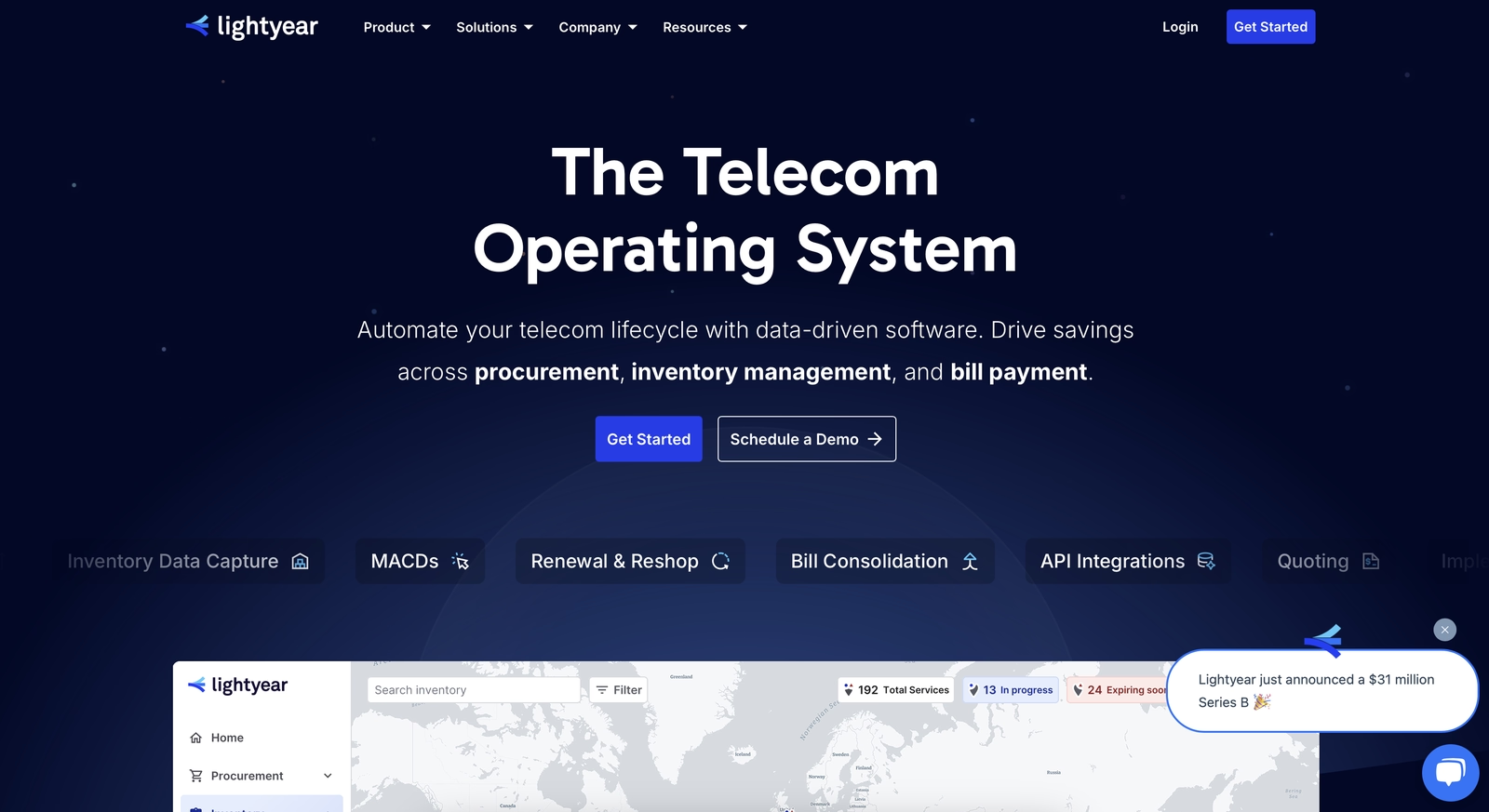
Whether you choose Ethernet, satellite, or a hybrid approach, managing your telecom services can be a major challenge. Lightyear simplifies the entire process, from procurement to payment, for any type of connection.
By automating network service procurement, inventory management, and bill consolidation, our platform helps enterprises save over 70% in time and 20% in costs.
Schedule a demo or get started with our questionnaire today.
Frequently Asked Questions about Satellite Internet vs Ethernet
How secure is satellite internet for business use?
Modern satellite services use strong encryption. However, the signal is broadcast, making it different from a private, wired line. For sensitive data, most businesses add a VPN layer for an extra measure of security, just as they would over any public internet connection.
Is satellite internet always more expensive than Ethernet?
Not always. While satellite's monthly costs can be higher, the one-time construction cost to bring new Ethernet fiber to a remote building can be extremely expensive. Your total cost of ownership depends heavily on your location and infrastructure availability.
How does scalability compare between satellite and Ethernet?
Ethernet generally offers easier scalability, as bandwidth can often be increased on an existing line. Upgrading satellite service may require new hardware or be limited by the provider's network capacity, making it a more complex process to scale up.
Let us show you the product and discuss specifics on how it might be helpful.
Schedule a Demo





Revolutionize Your Telecom Experience
Learn how you can get one step closer to optimal business efficiency for all your telecom services.