Satellite vs Fiber Optic Internet for Enterprises
Choosing between satellite and fiber internet for your enterprise? This guide breaks down the key differences in performance, cost, and availability.

Choosing the right internet service is a critical decision for any enterprise, directly impacting everything from daily operations to long-term growth. Two of the most prominent options available today are satellite and fiber optic internet, each offering a distinct set of advantages and disadvantages.
While both deliver connectivity, they operate on fundamentally different principles, which leads to significant variations in performance, reliability, and cost. This article will break down these differences to help you determine which solution is the right fit for your business's specific needs.
What is Satellite Internet?
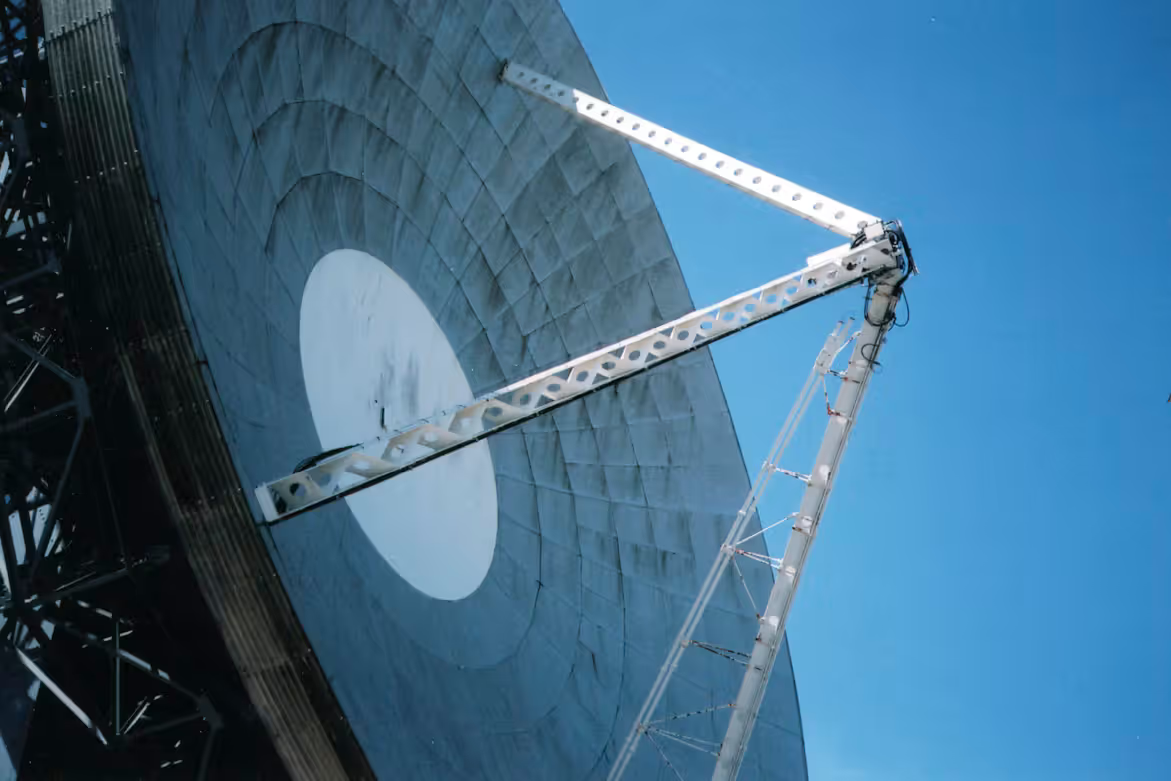
At its core, satellite internet is a wireless connection that transmits data via radio waves. It bypasses the need for ground-based infrastructure like cables, relying instead on a satellite dish at your location, a satellite in space, and a ground station from the provider. Instead of physical cables, it sends and receives data through the atmosphere.
The process involves a few key steps:
- Your internet service provider (ISP) sends the internet signal from a ground station up to a satellite orbiting the Earth.
- The satellite receives this signal and relays it back down to the satellite dish installed at your business.
- Your dish is connected to a modem, which decodes the signal and provides internet access to your network.
- For uploads, the process works in reverse, sending data from your dish back to the satellite and then to the ground station.
This setup makes it a viable option for providing connectivity in remote or rural locations where terrestrial networks are not available.
What is Fiber Optic Internet?
In contrast to satellite's wireless approach, fiber optic internet operates through a physical, ground-based network. This technology transmits data as pulses of light through cables made of extremely thin strands of glass.
This direct, light-based transmission is what sets fiber apart. The process is straightforward:
- Data is converted into light signals that travel through the fiber optic cables at nearly the speed of light.
- These cables run from the internet service provider's central office directly to your business location.
- An Optical Network Terminal (ONT) at your site receives the light signals.
- The ONT converts the light back into an electrical signal that your modem and router use to distribute internet access to your devices.
Comparing Satellite Internet and Fiber Optic Internet: Speed and Performance
When evaluating internet options, speed and performance are often the top considerations for any business. The physical differences in how each service delivers data lead to significant performance gaps, particularly in speed and latency.
Download and Upload Speeds
Fiber optic internet is the gold standard for speed, known for its symmetrical connections where upload and download speeds are identical. This is a crucial advantage for businesses that rely on cloud applications, video conferencing, or transferring large files.
Fiber plans regularly offer speeds of 1 Gbps, 10 Gbps, or even higher. In contrast, satellite internet provides asymmetrical speeds, meaning download speeds are significantly faster than upload speeds. While satellite download speeds are improving, the limited upload capacity can create a bottleneck for many business activities.
Latency
Latency refers to the delay it takes for data to travel from its source to its destination. Here, the difference is stark. Fiber offers extremely low latency because data travels as light through a direct, physical cable. This near-instantaneous connection is vital for real-time applications like VoIP calls and financial transactions.
Satellite internet, by its very nature, has high latency. The signal must travel a long distance from your dish to a satellite in orbit and back down to a ground station. This round trip introduces a noticeable delay that can disrupt time-sensitive operations and make video calls feel sluggish.
Satellite Internet vs Fiber Optic Internet: Cost Considerations
When it comes to budget, the financial breakdown for satellite and fiber internet is just as distinct as their technology. The total cost of ownership involves more than just the monthly bill, encompassing equipment, data usage, and the value derived from the service.
Here’s a look at how their costs typically compare:
- Fiber Optic Costs: In areas with established fiber networks, monthly subscription costs are often lower than satellite for significantly higher, symmetrical speeds. The primary cost driver is the bandwidth tier you select, making it a scalable expense that can grow with your business needs without requiring new hardware.
- Satellite Internet Costs: Satellite services generally carry a higher monthly price tag for the performance offered. Plans frequently include data caps, and exceeding them can lead to throttling or expensive overage charges. Businesses must also factor in the upfront capital expense for the specialized satellite dish and modem.
Reliability and Availability: Satellite vs Fiber Optic
Beyond speed and cost, how dependable each service is under different conditions is a major factor in your decision.
Fiber Optic Reliability
Fiber optic connections are known for their exceptional stability. Since data travels through protected underground or aerial cables, the connection is largely immune to atmospheric conditions like rain, wind, or storms.
The primary risk to fiber reliability is a physical cut to the cable line, which can be caused by nearby construction or other accidents.
Satellite Reliability
Satellite internet, being a wireless service, is more susceptible to environmental factors. Severe weather, including heavy rain or snow, can weaken or temporarily disrupt the signal, a phenomenon known as “rain fade.”
A clear line of sight between your dish and the orbiting satellite is also essential, so physical obstructions like tall buildings or dense tree cover can cause service interruptions.
Availability
This is where the two services diverge the most. Fiber optic internet's availability is entirely dependent on geography. It is only an option in areas where providers have invested in laying the physical cable infrastructure, which often excludes rural regions.
In contrast, satellite internet offers near-universal coverage. It is frequently the only viable high-speed option for businesses in remote or geographically challenging locations where terrestrial networks simply don't reach.
Installation and Maintenance: Satellite vs Fiber Optic
The process of getting your service installed and keeping it running also differs significantly between fiber and satellite.
- Fiber Optic Internet: Installation can be a lengthy and intensive process, especially if new cable needs to be laid to reach your facility. This can involve construction and coordination with local authorities. However, once it's operational, fiber requires very little maintenance beyond protecting the physical cable from damage.
- Satellite Internet: Installation is typically much faster since it doesn't depend on ground infrastructure. A technician simply needs to mount a dish with a clear line of sight to the sky. Ongoing maintenance is more hands-on, as the dish may need occasional realignment and must be kept clear of snow, ice, or other obstructions to function properly.
Making the Right Choice for Your Business
Choosing between satellite and fiber optic internet ultimately comes down to your business's specific location and performance requirements. The decision is often straightforward once you assess these two factors.
If your operations are located within a fiber-serviced area and demand high-speed, low-latency connectivity for applications like video conferencing or cloud computing, fiber is the superior option. It provides the speed and stability needed for most modern business activities.
However, for businesses in remote or rural locations where terrestrial infrastructure is unavailable, satellite internet provides essential connectivity. While it has higher latency and is more susceptible to weather, it is often the only viable solution for staying connected. Your choice depends entirely on what is available at your site and what your daily operations require.
Need Help Managing Your Network? Lightyear Can Help
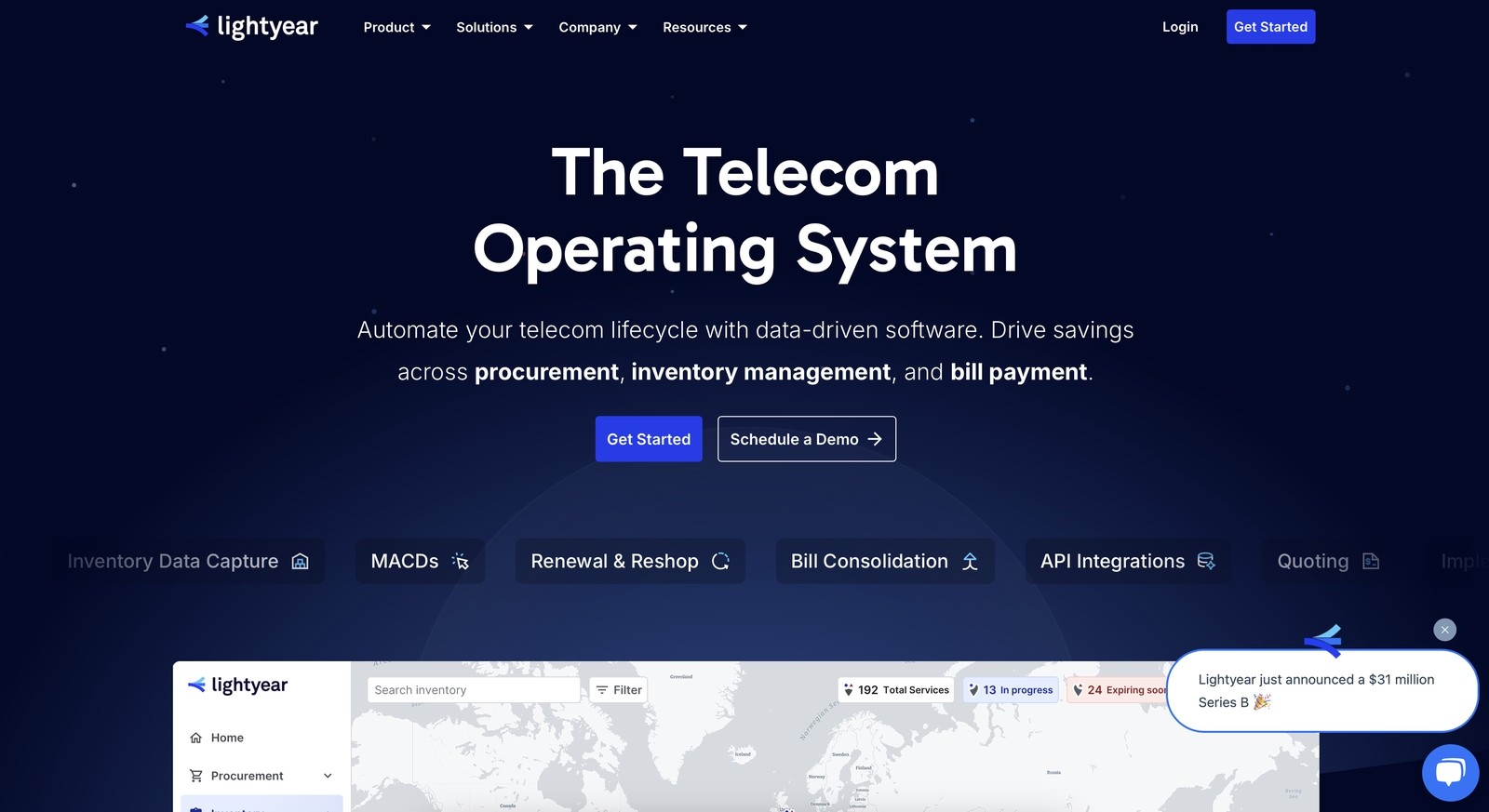
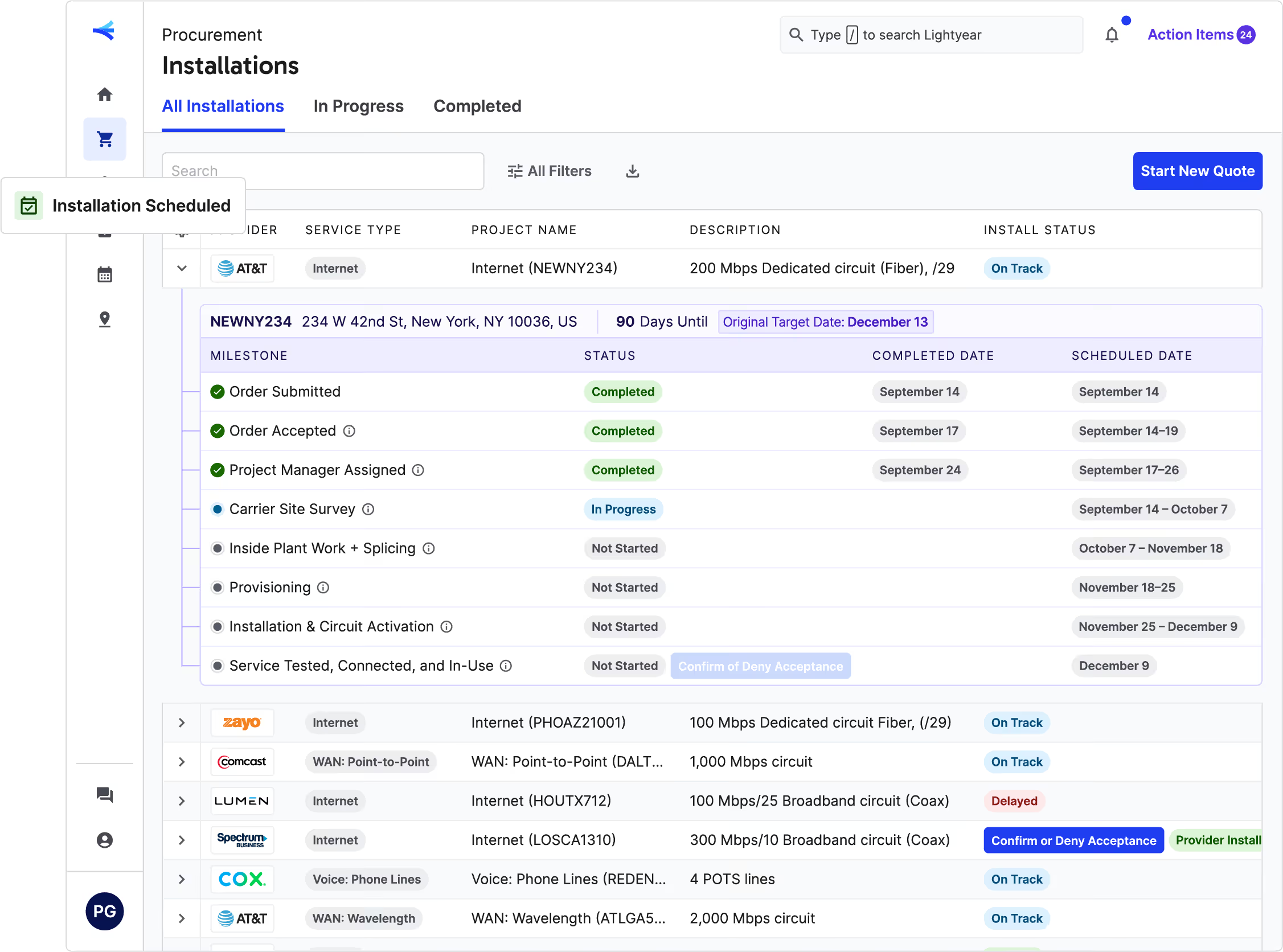
Whether you decide on fiber, satellite, or a combination of both across your sites, Lightyear helps you procure and manage your services without the hassle. We automate the entire lifecycle, from network service procurement and inventory management to bill consolidation.
Enterprises using Lightyear save over 70% in time and 20% in costs on their network services. Schedule a demo or get started with our questionnaire today.
Frequently Asked Questions about Satellite Internet vs Fiber Optic Internet
Can satellite internet be used as a backup for a fiber connection?
Yes, this is a common business continuity strategy. Using satellite as a failover ensures your operations stay online if your primary fiber connection is physically cut or experiences an outage. It provides valuable redundancy for critical systems.
How does data security compare between satellite and fiber?
Both services use encryption, but fiber is inherently more secure due to its physical nature, making it difficult to intercept. Satellite signals are transmitted over the air, which can present a larger attack surface if not properly secured by the provider.
Are new LEO satellites making satellite internet as good as fiber?
Low Earth Orbit (LEO) satellite services offer significant improvements in latency and speed over traditional satellite. However, fiber optic connections still provide superior speed, lower latency, and greater reliability, making them the preferred choice for demanding business applications when available.
Do business satellite plans have data caps?
Many business-grade satellite plans include data caps or fair use policies. Exceeding these limits can lead to throttled speeds or additional charges. It's important to clarify data allowances in your service agreement to avoid unexpected costs or performance issues.
Let us show you the product and discuss specifics on how it might be helpful.
Schedule a Demo





Revolutionize Your Telecom Experience
Learn how you can get one step closer to optimal business efficiency for all your telecom services.