SD-WAN vs Ethernet: Choosing the Right Solution
SD-WAN vs. Ethernet: Which is right for your business? Learn the key differences in cost, performance, and security to make an informed decision.


When it comes to enterprise connectivity, selecting the right network foundation is a critical decision. Two prominent options often at the center of this discussion are Ethernet and Software-Defined Wide Area Networking (SD-WAN).
While both technologies connect your business locations, they operate on fundamentally different principles and offer distinct advantages.
This article provides a straightforward comparison to help you understand the key differences and determine which solution best fits your organization's operational and financial goals.
What is SD-WAN?
Software-Defined Wide Area Networking, or SD-WAN, is a modern approach to network connectivity that uses software to make wide area networks more intelligent and flexible. It works by separating the network's control plane from its hardware, which allows for centralized management and dynamic, policy-based traffic routing across various types of connections.
- It combines multiple internet transport services, such as MPLS, broadband, and 4G/5G LTE, into a single, unified network.
- Traffic is automatically directed over the best available path based on application priority and real-time network performance.
- It provides centralized control through a single software dashboard, simplifying network management and deployment across many locations.
- It often includes built-in security features, like firewalls and encryption, to protect data as it travels to and from cloud applications.
What is Ethernet?
Ethernet is a foundational networking technology that defines how devices connect and transmit data over a wired network. While often associated with local office networks (LANs), it is also a primary method for building wide area networks (WANs). Unlike the software-centric model of SD-WAN, Ethernet is fundamentally tied to physical hardware and standardized protocols.
- It operates at the physical and data link layers of the network, managing the transmission of data packets through physical cables like fiber optics or copper.
- As a WAN service, it provides dedicated, private line connections between two or more locations, offering predictable bandwidth and low latency.
- The technology is governed by the IEEE 802.3 standards, which ensures that networking equipment from different vendors can work together reliably.
- It creates a stable and secure transport layer, but it does not inherently include the application-aware traffic steering or centralized management features found in SD-WAN.
Key Differences Between SD-WAN and Ethernet
The primary distinctions between the two technologies come down to how they handle traffic, management, and the underlying network transport.
1. Traffic Routing and Intelligence
SD-WAN uses software to intelligently steer traffic based on application priority and real-time network conditions. It can dynamically send video conferencing data over a high-performance line while routing less critical traffic over a standard broadband connection.
Ethernet provides a fixed, dedicated path for all data. The route is static and does not change based on application type or network congestion, offering predictable but less flexible performance.
2. Network Management and Control
With SD-WAN, the entire network is managed through a single, centralized software dashboard. This allows IT teams to apply policies, monitor performance, and deploy new sites across all locations from one interface.
Ethernet network management is typically decentralized. Making changes often requires configuring individual network devices at each site, which can be a more manual and time-consuming process.
3. Underlying Transport
SD-WAN is a technology overlay that works on top of one or more existing transport services, such as MPLS, broadband, and 4G/5G. It is transport-agnostic, meaning it can combine different connection types into a single logical network.
Ethernet, when used as a WAN service, is the transport technology itself. It provides the physical, private line connection between locations, most often over fiber optic cables.
Benefits of SD-WAN for Enterprises
For businesses managing multiple locations, SD-WAN offers several practical advantages that directly impact both performance and the bottom line.
- Improved Application Performance: SD-WAN intelligently identifies and prioritizes business-critical applications. It dynamically routes traffic for applications like VoIP, video conferencing, and cloud software over the most optimal path, ensuring a consistent and high-quality user experience.
- Lower Connectivity Costs: The technology allows businesses to use a mix of network connections, including less expensive broadband and 4G/5G, alongside or in place of costly private MPLS circuits. This transport independence can significantly reduce monthly telecom spending without compromising reliability.
- Simplified Branch Deployment: With centralized management and zero-touch provisioning, new branch offices can be brought online quickly. Equipment can often be shipped to a site and configured automatically, reducing the need for on-site IT staff and accelerating expansion.
- Greater Network Visibility: Centralized dashboards provide a complete view of network health and application performance across the entire WAN. This allows IT teams to proactively identify and resolve issues before they affect users.
- Enhanced Security for Cloud Access: SD-WAN solutions often integrate a full security stack, including features like next-generation firewalls and intrusion prevention. This provides secure direct internet access from branch locations to cloud applications, protecting the network from threats without routing all traffic through a central data center.
Advantages of Ethernet in Business Networks
While SD-WAN brings a software-driven approach, traditional Ethernet WAN services continue to hold significant value, especially for organizations with specific performance and security requirements.
- Unmatched Reliability and Predictability: Ethernet provides a dedicated, private connection with guaranteed bandwidth. Because your traffic doesn't travel over the public internet, performance is highly consistent and not subject to congestion. This results in extremely low latency and packet loss, which is ideal for sensitive, real-time applications where stability is paramount.
- Inherent Security: As a private line service, Ethernet creates a closed network between your locations. This isolation from the public internet provides a foundational layer of security by significantly reducing the external attack surface. Data is kept off shared networks, which can simplify compliance for industries handling sensitive information.
- High, Symmetrical Bandwidth: Ethernet services, particularly those delivered over fiber optics, can support very high, symmetrical speeds. This means upload and download speeds are identical, which is a major benefit for tasks like large data backups, file replication between data centers, or high-definition video transmissions.
- Simplified Point-to-Point Architecture: For straightforward connectivity needs, such as linking a headquarters directly to a primary data center or a disaster recovery site, an Ethernet circuit is a simple and robust solution. It avoids the added complexity of a software overlay, making it easier to troubleshoot and manage for basic network designs.
Choosing Between SD-WAN and Ethernet
The right choice depends entirely on your specific business needs, budget, and existing network architecture. Here’s how to think about the decision.
Consider SD-WAN If...
SD-WAN is the logical choice if your organization operates across numerous locations and relies heavily on cloud-based applications. It excels at managing complex network environments from a single point of control.
Choose SD-WAN if you want the flexibility to mix different connection types, like broadband and LTE, to balance performance with cost. It is built for agility and centralized management.
Stick with Ethernet When...
A dedicated Ethernet WAN service is often the better fit for simpler, high-stakes connectivity needs. Think of a critical link between your headquarters and a primary data center.
Opt for Ethernet when your highest priority is guaranteed bandwidth and ultra-low latency for a specific connection. Its strength lies in its stability and predictable performance for a fixed path.
It's Not Always an 'Either/Or' Decision
It’s important to remember that these technologies are not mutually exclusive. SD-WAN is a software overlay that requires an underlying physical connection to function.
Many businesses build a powerful hybrid network by using a reliable Ethernet circuit as the primary transport for an SD-WAN deployment. This approach combines the raw performance of Ethernet with the intelligent traffic management of SD-WAN, giving you the best of both worlds.
Final Thoughts on SD-WAN vs Ethernet
Ultimately, the decision between SD-WAN and Ethernet isn't about which technology is superior, but which is the right tool for the job.
SD-WAN provides intelligent, centralized control for organizations with multiple locations and heavy cloud application use. It excels at optimizing performance across different types of internet connections.
Ethernet, on the other hand, delivers unwavering reliability and guaranteed bandwidth for critical point-to-point connections, like linking a headquarters to a data center.
Remember, they can work together. A hybrid approach, using Ethernet as the underlay for an SD-WAN overlay, often provides the ideal balance of performance and flexibility.
Need Help Managing Your Network? Lightyear Can Help
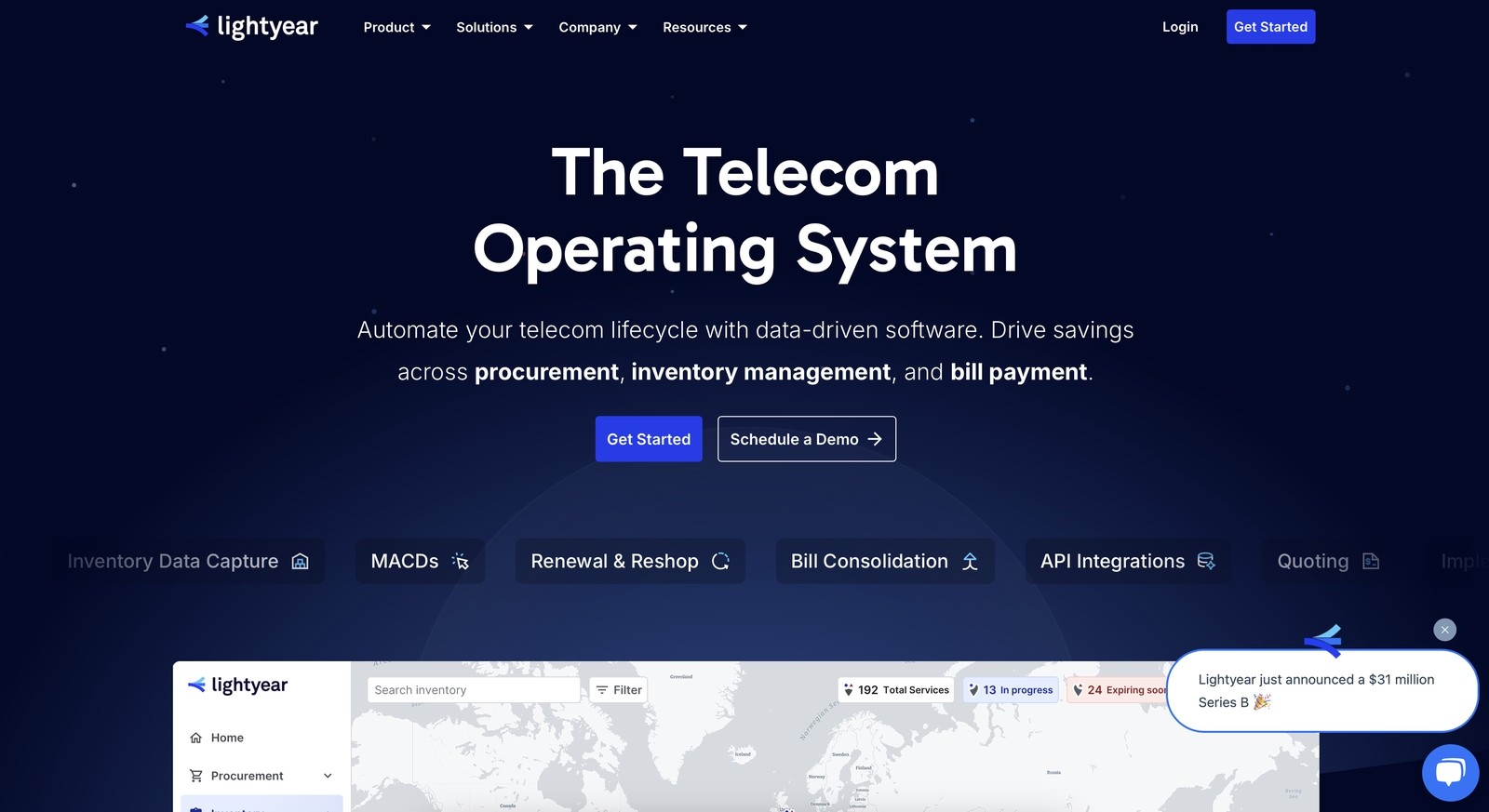
Whether you decide on SD-WAN, Ethernet, or a hybrid approach, Lightyear’s platform helps you procure and manage the right solution with data-driven software.
By automating network service procurement, inventory management, and bill consolidation, we help enterprises save over 70% of their time and cut telecom costs by up to 20%.
Schedule a demo or get started with our questionare today.
Frequently Asked Questions about SD-WAN vs Ethernet
Is SD-WAN always cheaper than a dedicated Ethernet circuit?
Not necessarily. While SD-WAN can lower costs by using affordable broadband, the total cost includes software licenses and hardware. A simple point-to-point Ethernet circuit can be more cost-effective for connecting just two sites with high bandwidth needs.
Can I use SD-WAN without an Ethernet connection?
Yes. SD-WAN is an overlay technology that can run on any internet transport, including broadband, cable, and 4G/5G LTE. It doesn't require Ethernet, but using a reliable underlay like fiber Ethernet often provides the best performance.
Which is better for connecting to the cloud?
SD-WAN is generally better for cloud connectivity. It can create direct, secure paths from branch offices to cloud applications, improving performance. Ethernet provides a stable pipe, but SD-WAN adds the intelligence to optimize traffic routing to multiple cloud services.
Is a private Ethernet line inherently more secure than SD-WAN?
Ethernet's security comes from being a private, isolated network. SD-WAN secures traffic over public connections using strong encryption and integrated security features. Both are secure, but they achieve it differently, depending on your compliance and security model.
Let us show you the product and discuss specifics on how it might be helpful.
Schedule a Demo





Revolutionize Your Telecom Experience
Learn how you can get one step closer to optimal business efficiency for all your telecom services.