SFTP vs API Integration: Enterprise IT Guide
SFTP vs. API Integration: A clear guide for IT pros. Learn when to use secure file transfers versus real-time data exchange for your systems.


When it comes to exchanging data between business systems, two common methods are Secure File Transfer Protocol (SFTP) and Application Programming Interface (API) integration.
While both can move information from point A to point B, they operate very differently and are suited for distinct business needs. This guide will break down the key differences between SFTP and API integration to help you decide which is the right fit for your IT environment.
What is SFTP?
SFTP is a network protocol used to securely transfer files between systems over an encrypted connection. It’s an extension of the Secure Shell (SSH) protocol, which means both the commands and the data itself are protected during transit, preventing unauthorized access.
At its core, SFTP is all about moving files from one place to another. Here’s how it generally works:
- File-Based Transfers: It is designed to move entire files or batches of files. This makes it well-suited for tasks like sending daily reports, logs, or large data exports.
- Client-Server Operation: A user on a client machine initiates a connection to a remote server to upload or download files.
- Asynchronous Communication: Data is typically sent in batches on a schedule (e.g., once a day) and processed later. It is not a real-time data exchange.
What is API Integration?
Where SFTP is built for moving files, API integration allows different software applications to communicate directly with each other. It acts as a messenger that lets systems request specific data or trigger actions, creating a connected ecosystem where software can work together seamlessly.
Instead of scheduled file drops, APIs operate on a request-and-response model:
- Real-Time Interaction: APIs facilitate immediate, on-demand data exchange. When one system needs information, it makes a request and gets a response instantly, enabling dynamic workflows.
- Function-Oriented Communication: Rather than transferring entire files, APIs work with specific functions. An application can use an API to request a single piece of data, update a record, or trigger a process in another system.
- Two-Way Dialogue: APIs support a dynamic, back-and-forth conversation between applications. This allows them to not only pull data but also push updates and command actions in other connected software.
SFTP vs API Integration: Key Differences
While both methods move data securely, their operational differences are significant. Here’s a closer look at what sets them apart.
1. Data Format and Structure
SFTP is data-agnostic; it simply transfers files. The responsibility for interpreting the file’s contents, whether it's a CSV or a proprietary format, falls on the receiving system.
In contrast, APIs communicate using structured data, most commonly JSON or XML. This standardized format allows applications to understand and use the data immediately without extra parsing steps.
2. Implementation and Maintenance
Setting up a basic SFTP transfer is relatively simple, often just requiring server configuration and user credentials. Maintenance is focused on the server and file directories.
API integration demands more initial development effort. It involves defining endpoints, writing documentation, and managing versions, making it a more complex system to build and maintain.
3. Security Model
SFTP’s security focuses on the transport layer, encrypting the entire connection to protect files in transit. Access is typically controlled at the user level.
API security is more granular. It uses methods like authentication tokens to grant specific permissions, controlling which actions a user or application can perform.
4. Error Handling and Resilience
With SFTP, a failed transfer might not be noticed until a scheduled job fails or a user reports a missing file. Correction is often a manual process.
APIs provide instant feedback. If a request fails, the API immediately returns a specific error code, allowing applications to retry the request or trigger an alert automatically.
Benefits of Using SFTP
While it may seem like a traditional method, SFTP remains a go-to for many organizations. It offers clear advantages in several key areas:
- Simplicity and Reliability: SFTP is a mature, well-understood protocol. Its file-based approach is straightforward to implement for scheduled data transfers, often requiring less development overhead than an API.
- Efficient Bulk Data Transfer: The protocol is built to move large files or batches of data efficiently. It's perfect for tasks like nightly data warehousing, sending large reports, or archiving logs where real-time updates are not required.
- Broad Compatibility: As a long-standing standard, SFTP works with a vast range of platforms, including legacy systems that lack modern API support. This makes it a dependable bridge between old and new technologies.
- Secure by Design: Built on the SSH protocol, SFTP encrypts both credentials and data in transit. This provides strong, out-of-the-box security for sensitive file transfers without complex configuration.
Advantages of API Integration
On the other hand, API integration offers a more dynamic approach to connecting systems, providing several distinct benefits for modern IT operations.
- Real-Time Automation: APIs enable event-driven workflows where an action in one system can instantly trigger a process in another. This eliminates the delays inherent in batch processing and automates tasks that would otherwise require manual intervention.
- Greater Flexibility: Unlike the all-or-nothing nature of file transfers, APIs provide granular control. You can request a specific piece of information, update a single record, or trigger a precise function without handling large, unnecessary data files.
- Improved Scalability: API-based systems are built to handle a high volume of small, frequent transactions. This architecture scales more effectively than batch processing, ensuring performance remains consistent as your data exchange needs grow.
- Building Connected Ecosystems: APIs are the glue for modern software stacks. They allow you to connect disparate applications—from your CRM to your telecom procurement platform—into a unified system, creating more powerful and efficient business tools.
Choosing Between SFTP and API for Your Business
The right choice depends entirely on your specific use case and technical environment. Your decision should be guided by what you need to accomplish with your data.
Opt for SFTP for Scheduled Bulk Transfers
SFTP is your best bet when your primary goal is to move entire files from one system to another on a set schedule. It excels in situations where data doesn't need to be processed instantly.
Consider SFTP if you are sending daily transaction logs to an analytics platform, archiving large data sets, or exchanging reports with a partner who requires file-based delivery.
Select API Integration for Dynamic, Real-Time Needs
API integration is the clear choice when you need different software systems to communicate and act in real time. It's built for dynamic, interactive workflows.
Choose an API if you need to connect your CRM to your marketing automation tool for instant lead syncing, or if you want your procurement platform to pull live pricing data from vendors.
Final Thoughts on SFTP and API Integration
Ultimately, the choice between SFTP and API integration isn’t about which technology is superior, but which one aligns with your specific operational needs.
SFTP remains a reliable workhorse for scheduled, large-scale file movements, particularly when interacting with systems that require file-based data exchange.
In contrast, API integration is the foundation for building a responsive, interconnected software environment where systems communicate instantly.
By understanding their core functions, you can make an informed decision that supports your organization’s data strategy and business goals.
Need Help Managing Your Network? Lightyear Can Help
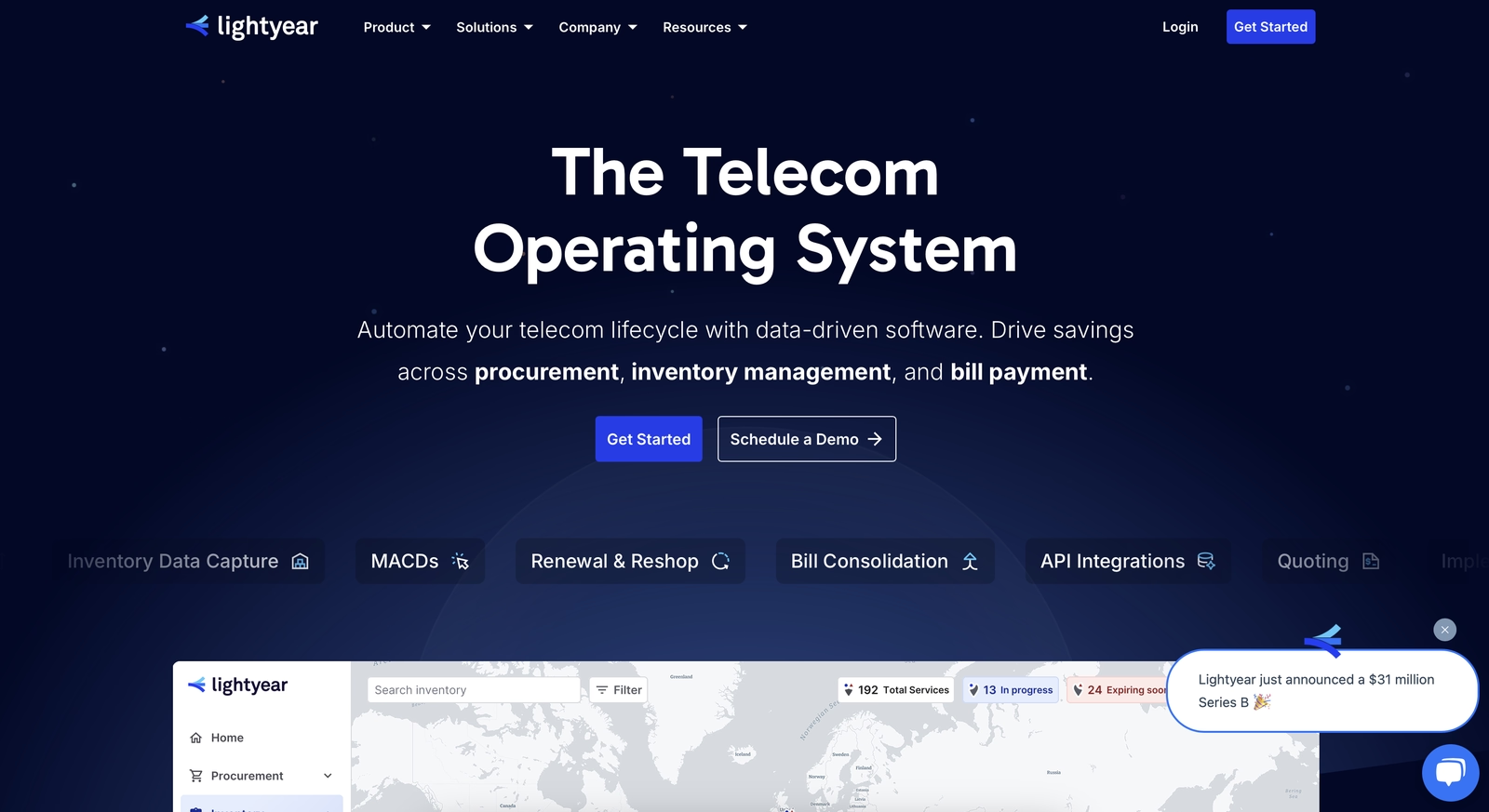
If you're looking to build a more connected IT environment, Lightyear uses API integrations to automate the entire telecom lifecycle, from procurement to payments.
By automating network service procurement, inventory management, and bill consolidation, we help enterprises achieve over 70% in time savings and 20% in cost savings.
Schedule a demo or get started with our questionnaire today.
Frequently Asked Questions about SFTP vs API Integration
Can SFTP and API integration be used together?
Yes, they often complement each other. A system might use an API to trigger a process that generates a large report, which is then delivered via SFTP. This combines real-time control with efficient bulk file transfer, using each for its strengths.
Which method is more expensive to implement?
API integration typically has a higher initial development cost due to its complexity. SFTP is often cheaper to set up for simple file transfers, but API automation can lead to greater long-term cost savings by reducing manual work and operational delays.
Is one inherently more secure than the other?
Not necessarily, as both can be highly secure if implemented correctly. SFTP secures the entire transfer channel, while API security is more granular, controlling specific actions. The better choice depends on your specific security requirements and compliance needs.
How does data transfer speed compare?
APIs are designed for speed in small, frequent transactions, providing near-instant data exchange. SFTP is optimized for the throughput of large files, so while the transfer itself is fast, it is not intended for the immediate, on-demand access that APIs provide.
Let us show you the product and discuss specifics on how it might be helpful.
Schedule a Demo





Revolutionize Your Telecom Experience
Learn how you can get one step closer to optimal business efficiency for all your telecom services.