SSL/TLS vs IPsec: Choosing Secure Protocols
SSL/TLS vs. IPsec? Learn the key differences between application-layer and network-layer security to help you choose the right protocol for your needs.

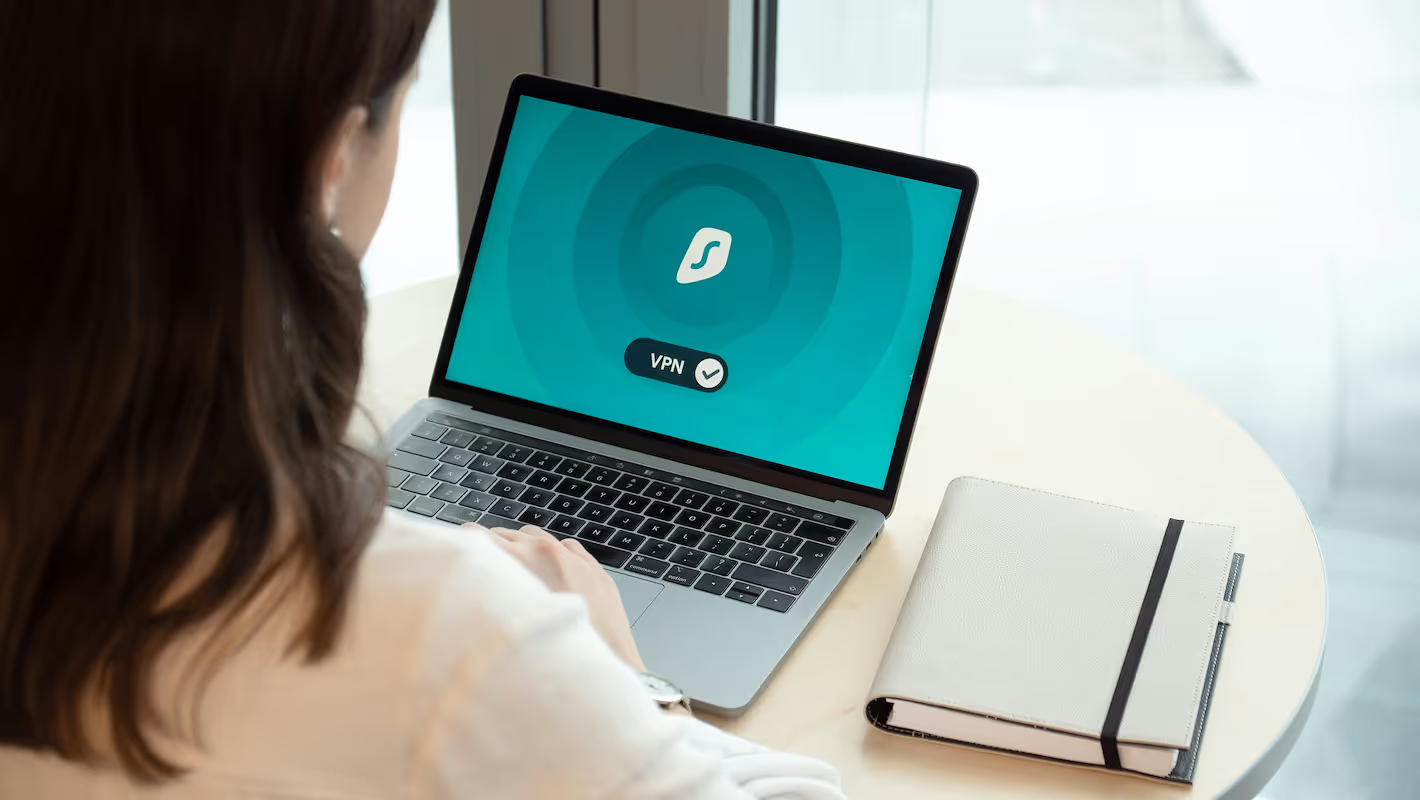
Protecting data in transit is a fundamental part of network security. Two of the most common protocols for this job are SSL/TLS and IPsec.
While both protocols create secure, encrypted connections, they operate at different layers of the network model and have distinct use cases.
This guide breaks down how each one works, where they excel, and how to choose the right protocol for your organization's specific infrastructure needs.
What is SSL/TLS?
SSL (Secure Sockets Layer) and its more modern successor, TLS (Transport Layer Security), are cryptographic protocols that secure data exchanged between two applications over a network. Think of it as the standard for keeping an internet connection private and checking that the data sent between a web browser and a server remains unreadable to outsiders.
You can typically identify a site using TLS by the padlock icon and “https://” in the browser's address bar. The protocol operates at the application layer, focusing on securing application-specific traffic like web browsing, email, and file transfers.
Here’s a quick rundown of how it works:
- Authentication: The process starts with a "TLS handshake," where the server presents a digital certificate to the client (your browser) to prove its identity.
- Encryption: Once authenticated, the client and server agree on encryption keys that will be used to scramble all data transmitted between them for the rest of the session.
- Integrity: TLS also includes a message authentication code (MAC) to verify that the data has not been altered in transit, ensuring its integrity.
While the term SSL is still widely used, modern systems use the much more secure TLS protocol, as older SSL versions are now considered insecure.
What is IPsec?
IPsec (Internet Protocol Security) is a suite of protocols that secures network communications at the IP layer. Unlike SSL/TLS, which protects traffic for specific applications, IPsec secures all IP packets flowing between two endpoints, such as two routers or a server and a client.
This means it can protect traffic from all applications without requiring any changes to the applications themselves. It is a foundational technology for creating Virtual Private Networks (VPNs).
IPsec provides security through two primary protocols:
- Authentication Header (AH): This protocol provides data integrity and anti-replay protection. It confirms that packets came from the trusted source and were not modified in transit, but it does not provide encryption.
- Encapsulating Security Payload (ESP): ESP offers encryption to keep the data confidential. It can also provide authentication and integrity services, making it a more comprehensive option than AH alone.
Together, these components work to create a secure tunnel for all data traveling between the designated network points.
SSL/TLS vs IPsec: Key Differences
While both protocols are designed to encrypt data, their approach and scope differ significantly. Understanding these distinctions is key to choosing the right tool for the job.
1. Operating Layer
The most fundamental difference is the network layer where each protocol operates. SSL/TLS works at the application layer, securing traffic for specific applications like web browsers, email clients, and FTP services.
IPsec, however, functions at the network layer. This allows it to secure all IP traffic flowing between two endpoints, regardless of the application generating it.
2. Scope of Protection
Because of where they operate, their scope of protection varies. SSL/TLS secures the connection for a single application session between a client and a server.
In contrast, IPsec secures the entire communication channel between two networks or devices. This means it protects data from all applications running on those devices without needing individual configuration for each one.
3. Implementation and Transparency
SSL/TLS is typically integrated directly into applications, making it visible to end-users (like the padlock in a browser). Its implementation is often handled by the application developer.
IPsec is implemented at the operating system or network hardware level, making it transparent to both applications and end-users. Configuration is a task for network administrators and is generally more complex than setting up a simple SSL certificate.
Use Cases for SSL/TLS
Because it operates at the application layer, SSL/TLS is ideal for securing traffic for specific services. Its most common application is securing web traffic between a user's browser and a website's server.
Anytime you see "https://," TLS is working to protect sensitive data like login credentials, payment card information, and personal details from being intercepted.
Beyond web browsing, TLS is also used to secure other application-level communications. This includes encrypting email traffic (using protocols like IMAP, POP3, and SMTP) and protecting data exchanged between applications via APIs.
It is also the protocol behind FTPS (File Transfer Protocol Secure), which adds a layer of security to file transfers.
Use Cases for IPsec
IPsec's strength lies in its ability to secure entire networks, making it the standard for building Virtual Private Networks (VPNs). Its most common application is creating secure site-to-site VPNs, which link two or more office networks over the public internet as if they were a single private network.
This allows for secure communication between branch offices and a central headquarters. IPsec is also frequently used for remote access VPNs, giving individual employees a secure connection to the corporate network from anywhere.
Because it operates at the network layer, IPsec protects all data traffic—from internal applications to voice calls—without needing to configure each service separately. This makes it ideal for securing complex, multi-application environments between fixed endpoints.
Security Considerations for Enterprises
When evaluating these protocols for your enterprise, security goes beyond encryption strength. It's also important to consider performance impact, ease of management, and compatibility with your existing network.
- Performance Overhead: With SSL/TLS, encryption is handled by the application, which can increase server CPU load. In contrast, IPsec operates at the OS level and can be more efficient, especially with hardware acceleration, but it must process every single packet flowing through the secure tunnel.
- Configuration Complexity: An SSL/TLS setup is generally straightforward, centered on managing digital certificates. IPsec is known for its complex configuration involving multiple security policies and key exchanges, which raises the risk of human error that could compromise security or cause outages.
- Firewall and NAT Traversal: SSL/TLS traffic uses standard web ports (like 443) and passes through most firewalls without issue. IPsec can be blocked by strict firewall rules or complicated by Network Address Translation (NAT), often requiring extra configuration like NAT-T to function properly.
Making the Right Choice for Your Business
Choosing between SSL/TLS and IPsec isn't about picking a winner. The two protocols are designed for different jobs, and many organizations use both to build a layered security strategy.
The right choice depends entirely on what you need to protect.
If your goal is to secure traffic for a specific application—like protecting customer data on your website, securing email communications, or encrypting API calls—SSL/TLS is the correct tool. It works at the application level and is relatively simple to implement for these specific services.
On the other hand, if you need to secure all traffic between two entire networks, such as connecting a branch office to your headquarters, IPsec is the standard. It creates a secure tunnel at the network level, protecting data from every application without needing individual configuration.
Ultimately, your network security plan will likely involve both. You might use an IPsec VPN for secure remote access, while also using SSL/TLS to protect the web applications your team accesses over that connection. By understanding their distinct roles, you can apply each protocol where it offers the most value.
Need Help Managing Your Network? Lightyear Can Help
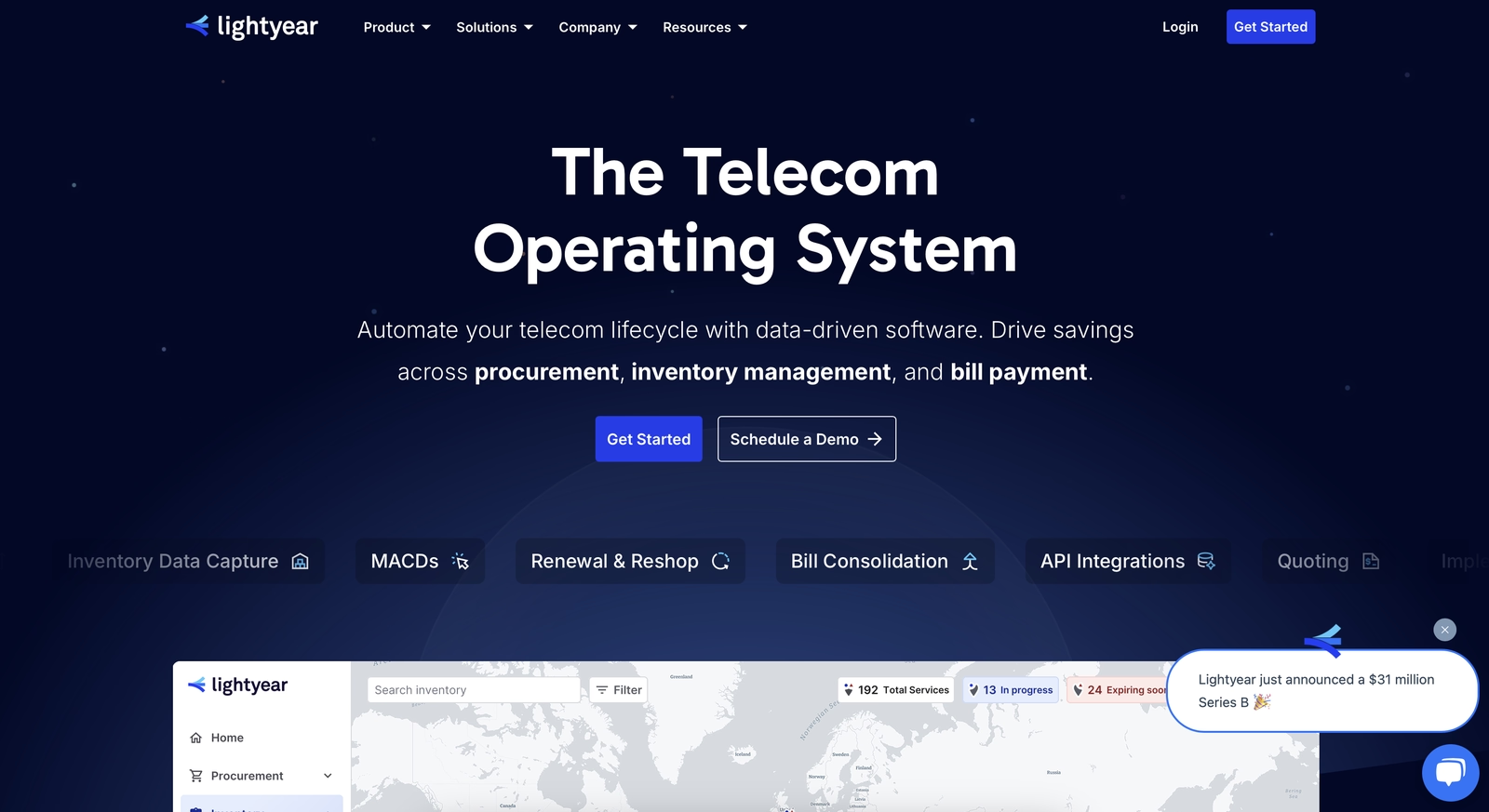
Choosing the right security protocols is a critical step, but managing the underlying network services that carry your encrypted traffic is just as important.
By automating network service procurement, inventory management, and bill consolidation, Lightyear removes the complexity from telecom infrastructure management. Enterprises that trust Lightyear achieve over 70% time savings and reduce costs by up to 20%.
Schedule a demo or get started with our questionare today.
Frequently Asked Questions about SSL/TLS vs IPsec
Can SSL/TLS and IPsec be used at the same time?
Yes, and they often are. For instance, you might use an IPsec VPN for a secure network connection, and then access an internal web application that is itself protected by SSL/TLS. They operate on different network layers and complement each other.
Is one protocol inherently more secure than the other?
Not necessarily. The security of both protocols depends heavily on proper configuration, using up-to-date versions, and strong encryption ciphers. A poorly configured IPsec connection can be less secure than a well-implemented TLS connection, and vice versa.
Why would I use an SSL VPN instead of an IPsec VPN?
SSL VPNs are typically easier for remote users because they work through a web browser and are less likely to be blocked by firewalls. They are great for providing secure access to specific web applications, rather than the entire network.
Which protocol has a greater impact on network performance?
It varies. IPsec can be very efficient with dedicated hardware but must process every packet. SSL/TLS overhead is tied to the application and can strain server CPUs. The actual impact depends on your specific hardware, traffic patterns, and configuration.
Let us show you the product and discuss specifics on how it might be helpful.
Schedule a Demo





Revolutionize Your Telecom Experience
Learn how you can get one step closer to optimal business efficiency for all your telecom services.