Star Network vs Ring Network: Comparison Guide
Star vs. Ring Network: A clear comparison of network topologies. Understand the differences in setup, scalability, and fault tolerance for your IT needs.


Choosing the right network topology is a foundational decision for any enterprise IT infrastructure, dictating how devices are interconnected and how data flows between them.
Two of the most common designs are the star network and the ring network. They operate on different principles, which creates important trade-offs in performance, scalability, and fault tolerance.
This guide offers a straightforward comparison to help you understand the specific strengths and weaknesses of each, so you can make a more informed decision for your organization's needs.
What is a Star Network?
In a star network, every device connects directly to a central hub, such as a switch or router. This central component manages and relays all data transmissions across the network. If one computer needs to send information to another, the data first travels to the central hub, which then forwards it to the correct destination device. This model is one of the most common network topologies for local area networks (LANs).
- Centralized Connection: All nodes (e.g., computers, servers, printers) have a dedicated point-to-point connection to the central hub.
- Data Flow: Communication between any two devices must pass through the central hub. The hub acts as the traffic controller for the entire network.
- Node Isolation: Because each device is connected independently to the hub, a failure in one connecting cable or non-central device will not affect the rest of the network.
What is a Ring Network?
A ring network arranges devices in a circular layout, where each node connects to exactly two others, forming a single, continuous pathway for data. In this setup, information travels from one device to the next, typically in one direction, until it arrives at its intended destination. This sequential transmission model is fundamentally different from the centralized approach of a star network.
- Circular Data Path: All data flows in a loop. When a device receives data, it checks the destination address. If the data is not for that device, it passes it along to the next node in the ring.
- Token-Based Transmission: To prevent data collisions, many ring networks use a control method called token passing. A small data frame, or "token," circulates the ring, and a device must wait for the token before it can transmit information.
- Node Interdependence: Because data passes through every node to travel the network, a single device failure can disrupt the entire ring unless a redundant path is in place.
Star Network vs Ring Network: Key Differences
While both topologies connect devices, they handle key operational aspects like performance, expansion, and troubleshooting in fundamentally different ways.
1. Performance and Traffic Management
In a star network, performance hinges on the central hub's processing power. While multiple devices can communicate simultaneously, all traffic must pass through this central point, which can become a bottleneck under heavy load.
A ring network's performance is influenced by the total number of nodes. Because data packets and the transmission token must travel sequentially through each device, adding more nodes increases latency across the entire network.
2. Scalability and Expansion
Star networks are highly scalable. Adding a new computer or device is as simple as connecting it to an open port on the central hub, a process that doesn't disrupt existing network operations.
Conversely, expanding a ring network is more disruptive. To add or remove a node, the network path must be physically broken and then re-established, causing downtime for all users.
3. Troubleshooting and Reliability
Diagnosing issues in a star network is relatively straightforward. Since each connection is isolated, a faulty cable or device can be identified and disconnected without impacting the rest of the network.
In a ring network, a single failure can be harder to pinpoint. A break in the cable or a malfunctioning node stops traffic for everyone, and administrators may need to inspect the entire loop to locate the problem.
4. Cabling and Installation
The physical implementation of a star network requires a significant amount of cabling, as each node needs a dedicated line to the central location. This can increase initial installation costs.
A ring network is generally more cable-efficient. It only requires a short cable run between adjacent nodes, potentially lowering material costs in a widespread physical layout.
Advantages of Star Network
The centralized design of a star network offers several distinct operational advantages, making it a popular choice for businesses that prioritize uptime and straightforward management.
- High Reliability: Because each device is independently connected to the central hub, a single cable or node failure won't bring down the entire network. This isolation is critical for maintaining business continuity.
- Simplified Troubleshooting: Identifying and isolating network issues is much faster. Since problems are contained to a single link, administrators can quickly pinpoint the source without disrupting other users.
- Easy Scalability: Adding new computers or peripherals is a simple plug-and-play process, as long as the central hub has open ports. This can be done without causing any network downtime.
Advantages of Ring Network
Despite its potential drawbacks, a ring network offers unique benefits, particularly in environments where predictable data flow and cost-efficiency are key priorities.
- Orderly Traffic Flow: Since data travels in a set path and is managed by a token, data collisions are eliminated. This creates a highly predictable network where performance doesn't degrade from packet collisions, even under heavy use.
- No Central Point of Failure: The network does not depend on a central hub. While a node failure can cause an outage, you avoid the risk of a single, expensive piece of hardware failing and bringing down the entire network.
- Cost-Effective Cabling: Ring networks generally require less cable than star topologies. This can significantly reduce material and installation costs, especially when connecting devices spread across a large physical area.
Choosing the Right Network for Your Business
The right choice depends on your organization's specific priorities, from daily operational needs to long-term growth plans.
When to Choose a Star Network
A star network is the standard for most modern enterprise LANs for good reason. If your business requires high uptime and plans to grow, this topology is almost always the better option.
Its design isolates failures, meaning one faulty device won't cause a company-wide outage. Adding new employees or equipment is also straightforward and doesn't require network downtime, supporting smooth business expansion.
When to Choose a Ring Network
A ring network can be a practical choice in specific situations, particularly when the network layout is static and cabling costs are a primary concern.
Because it uses less cable and offers predictable performance without data collisions, it can work well in some industrial or telecommunications settings. However, the risk is significant: a single node failure can halt all network traffic, a factor that must be carefully weighed against its benefits.
Final Thoughts on Network Topologies
Ultimately, the choice between a star and a ring network comes down to balancing reliability against installation costs. Star networks have become the standard for most business environments because they are resilient and easy to expand, which supports company growth.
While ring networks can be more cable-efficient, the risk of a single point of failure causing a total network outage is too high for most modern operations. For today's enterprise IT, the stability and straightforward management of a star topology generally provide a much stronger foundation for business activities.
Need Help Managing Your Network? Lightyear Can Help
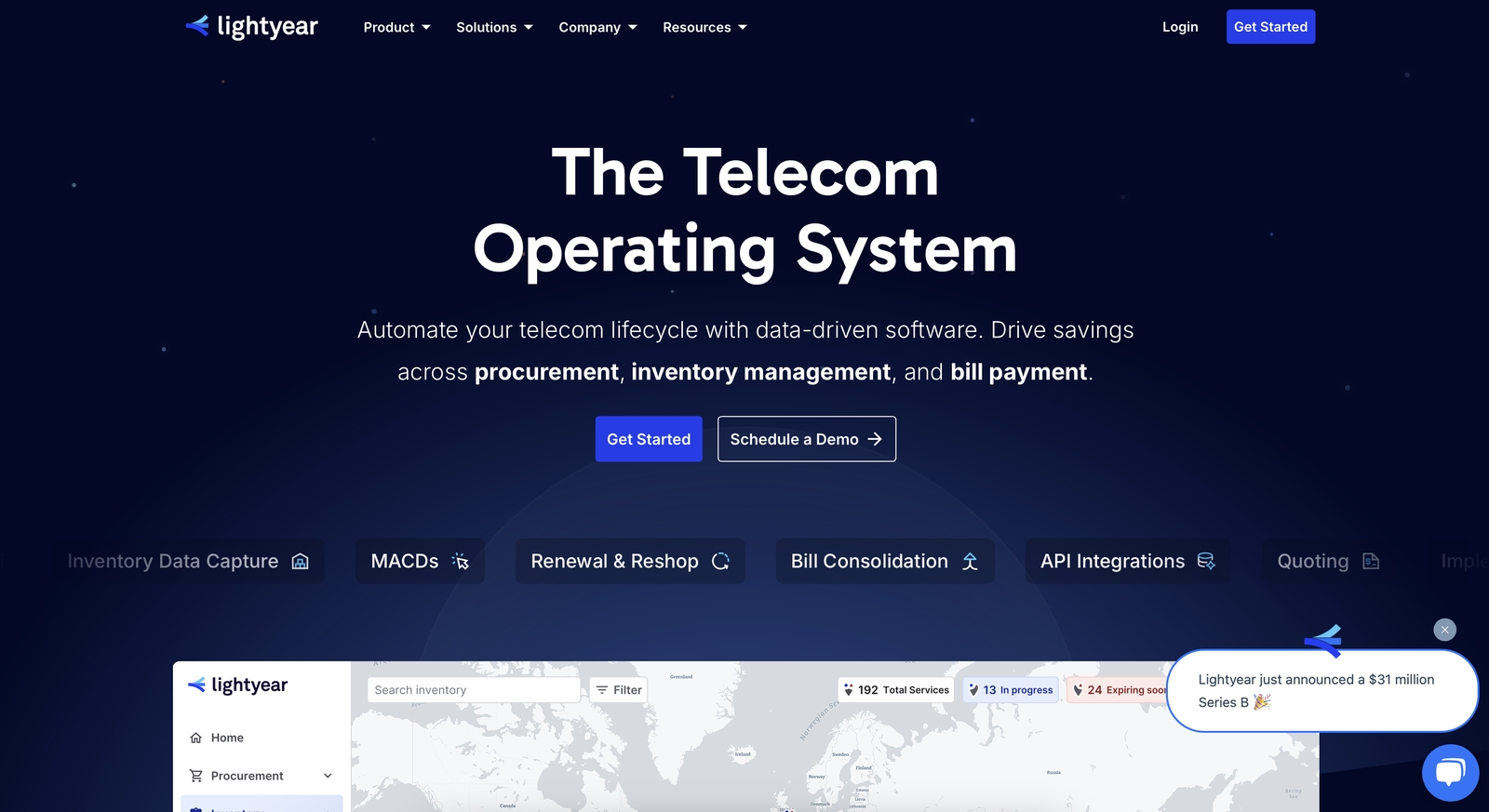
Whether you're designing a star network or managing a complex hybrid topology, Lightyear helps you procure and manage the underlying circuits with ease. Our platform automates network service procurement and provides a central system of record for your entire telecom inventory.
By automating the full telecom lifecycle, from quoting to bill consolidation, Lightyear helps hundreds of enterprises achieve over 70% in time savings and 20% in cost savings. Schedule a demo or get started with our questionare today.
Frequently Asked Questions about Star Network vs Ring Network
Which topology is more secure?
A star network generally offers better security. Since data passes only through the central hub, it's easier to monitor traffic and isolate threats. In a ring network, data passes through multiple nodes, creating more potential points for interception if not properly secured.
Which network has a lower total cost of ownership (TCO)?
A star network often has a lower TCO despite higher initial cabling costs. Its reliability reduces downtime-related expenses, and easier troubleshooting lowers maintenance labor costs. The scalability also makes expansion more affordable over time compared to a ring network.
Are modern technologies like Ethernet used with both?
While both can technically use Ethernet, star topologies are the standard for modern Ethernet LANs. Ring topologies are more associated with legacy technologies like Token Ring or FDDI, which are less common in today's enterprise environments due to their limitations.
Let us show you the product and discuss specifics on how it might be helpful.
Schedule a Demo





Revolutionize Your Telecom Experience
Learn how you can get one step closer to optimal business efficiency for all your telecom services.