Subnetting vs IPv6: Differences for Enterprise Networks
Subnetting divides existing networks while IPv6 offers a new, larger address space. Learn the key differences and what they mean for your enterprise network.


Effectively managing IP addresses is a fundamental task for any enterprise network. You have likely encountered the terms subnetting and IPv6, and it is common to wonder how they compare or if you need to choose between them.
While both are related to network addressing, they are not interchangeable concepts. Subnetting is a technique for dividing an existing network into smaller segments, while IPv6 is an IP address protocol itself. This article will compare the two to clarify their distinct roles in your network strategy.
What is Subnetting?
Subnetting is a logical way to partition a single physical network into multiple, smaller logical networks. Think of it as creating mini-networks within your main network. This practice is primarily used with IPv4 addresses to overcome their limitations and improve network organization.
By dividing a large network, you can achieve several key objectives:
- Improved Performance: Subnetting reduces overall network traffic by containing broadcast traffic within each subnet. This means fewer interruptions for devices, leading to a faster, more efficient network.
- Enhanced Security: It allows you to implement more granular security policies. You can isolate network segments from one another, controlling traffic flow and limiting the impact of a security breach to a single subnet.
- Simplified Management: Breaking down a complex network into smaller, logical parts makes it much easier to manage and troubleshoot. IT teams can quickly identify and resolve issues within a specific subnet without affecting the entire network.
What is IPv6?
IPv6 (Internet Protocol version 6) is the most recent version of the Internet Protocol, developed by the Internet Engineering Task Force (IETF) to replace its predecessor, IPv4. The primary driver for its creation was the impending exhaustion of available IPv4 addresses due to the explosive growth of internet-connected devices.
Unlike IPv4's 32-bit addresses, IPv6 uses 128-bit addresses written in hexadecimal. This new protocol was also designed to be more efficient and secure from the ground up.
- Massive Address Space: The 128-bit structure provides a practically inexhaustible number of unique IP addresses, eliminating the need for complex conservation techniques like Network Address Translation (NAT).
- Simplified Configuration: IPv6 supports Stateless Address Autoconfiguration (SLAAC), which allows devices to automatically assign themselves an IP address without needing a DHCP server.
- Integrated Security: IPv6 was designed with security in mind, with mandatory support for IPsec to encrypt traffic and verify authenticity between hosts.
Subnetting vs IPv6: Key Differences
While they both deal with IP addresses, their roles in your network are fundamentally different. Let's break down the main distinctions.
1. Function vs. Protocol
The most important distinction is what they are. Subnetting is a technique used to divide a larger network into smaller, more manageable segments.
In contrast, IPv6 is an addressing protocol. It is the underlying system that defines the format and rules for IP addresses on a network, designed to replace the older IPv4 protocol.
2. Address Management
Subnetting is primarily a strategy for managing a finite number of addresses, especially within the limited IPv4 space. It focuses on efficiently allocating the addresses you already have.
IPv6, with its 128-bit address space, eliminates the scarcity problem. Its focus is not on conserving addresses but on providing a unique address for every device and simplifying network configuration.
3. Primary Use Case
Subnetting is most often applied to IPv4 networks to improve internal organization, boost performance, and enhance security by creating isolated segments.
IPv6, on the other hand, is designed to replace IPv4 entirely. Its primary use case is to provide a long-term solution to address exhaustion and build in modern features for a growing internet.
Benefits of Subnetting for Enterprises
For large organizations, the practical benefits of subnetting go beyond basic network hygiene and directly support key operational goals. It provides a structured approach to managing a complex network environment.
- Improved Network Organization: You can align your network structure with your company's departmental layout, creating separate subnets for Finance, Engineering, and guest access. This simplifies policy application and resource allocation across the business.
- Better Access Control: Subnetting allows you to define clear boundaries. You can restrict access to sensitive data by placing critical servers on an isolated subnet, making sure only authorized users or departments can reach them.
- Problem Containment: Network issues, like a broadcast storm or a malware infection, can be confined to a single subnet. This prevents a localized problem from disrupting the entire enterprise network, protecting overall business operations.
Advantages of IPv6 for Modern Networks
Adopting IPv6 offers significant operational advantages that directly address the limitations of IPv4 and support the needs of growing enterprise networks.
- Elimination of NAT: With its vast address space, IPv6 removes the need for Network Address Translation (NAT). This simplifies network architecture, reduces latency, and enables true end-to-end connectivity, which is critical for many modern applications and IoT devices.
- More Efficient Routing: IPv6 features a simplified packet header. Routers can process IPv6 packets more quickly than IPv4 packets, leading to improved routing efficiency and better overall network performance, especially at scale.
- Improved Traffic Management: The protocol includes native support for multicast, which efficiently sends a single data stream to multiple recipients. It also introduces anycast routing, which can be used for load balancing and improving the resilience of network services.
Challenges and Considerations
While both approaches offer benefits, implementing them comes with its own set of hurdles. It's important to understand these potential obstacles before committing to a network strategy.
1. Subnetting Implementation
Subnetting, especially in a large IPv4 network, requires meticulous planning. Incorrect calculations can lead to wasted addresses or routing problems that are difficult to fix later.
The structure can also be rigid. If your organization grows or changes in unexpected ways, re-addressing your network can be a significant and disruptive project.
2. IPv6 Adoption
The primary challenge with IPv6 is the transition itself. Most organizations must run both IPv4 and IPv6 simultaneously in a "dual-stack" environment, which adds complexity to network management.
Furthermore, not all legacy hardware or software supports IPv6, which can necessitate costly equipment upgrades. There is also a learning curve, as your IT team will need to become proficient with a new addressing scheme and its tools.
Making the Right Choice for Your Business
Ultimately, the choice isn't between subnetting and IPv6. The two are not mutually exclusive; they are different tools for different jobs. Subnetting is a technique for network organization, while IPv6 is a protocol for addressing. For your business, the path forward involves using both.
- Continue Subnetting: Subnetting remains a vital practice for organizing your IPv4 network to improve performance and security. You will also apply subnetting principles to your future IPv6 network.
- Plan for IPv6: The real decision is when to begin your transition to IPv6. Start planning for a dual-stack environment to prepare your network for the future and accommodate the growing number of connected devices.
- Focus on Strategy: Your network strategy should incorporate subnetting as a foundational management practice while creating a roadmap for IPv6 adoption to address long-term growth and technological needs.
Need Help Managing Your Network? Lightyear Can Help
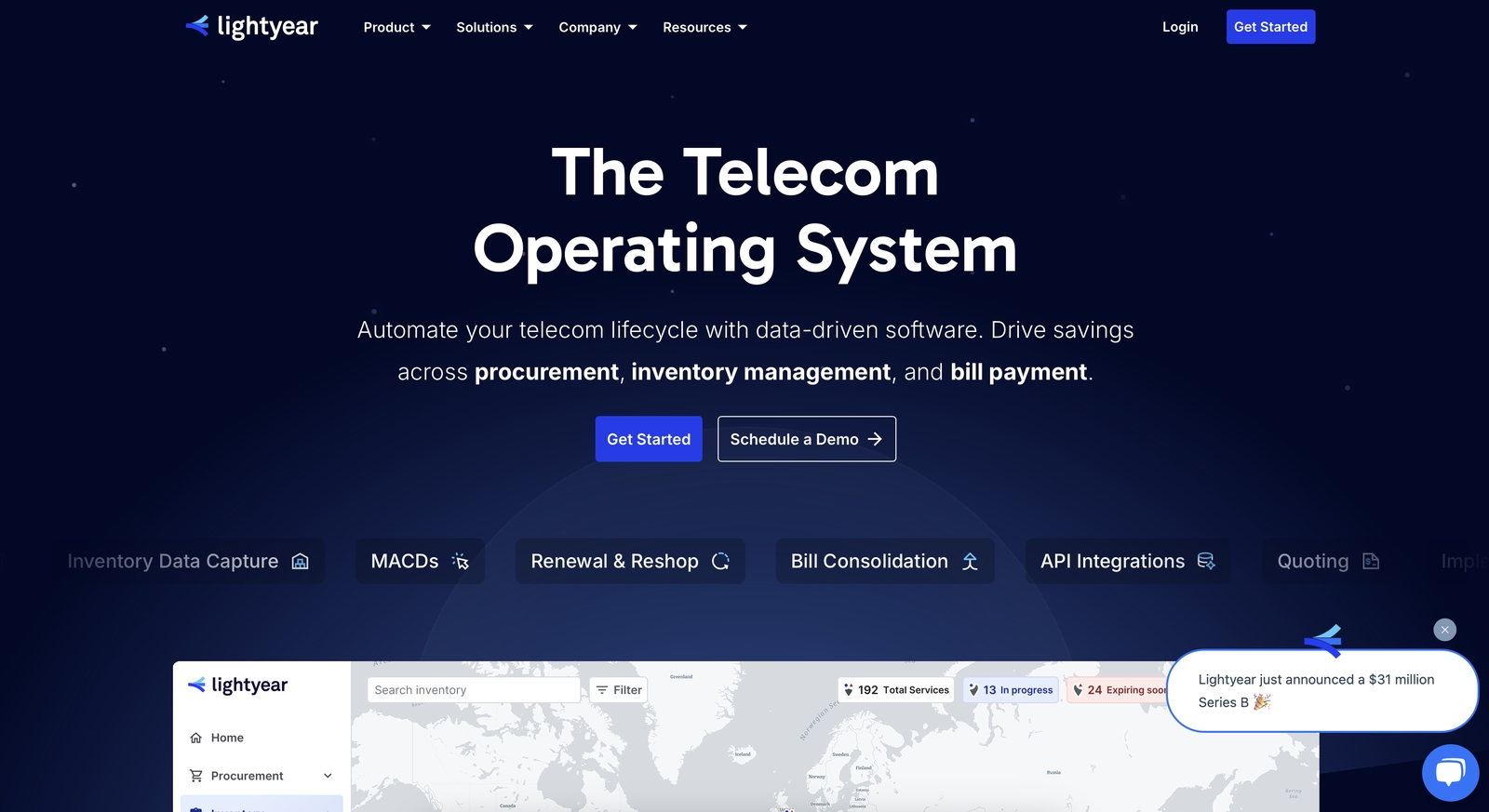
Whether you're subnetting an existing IPv4 network or planning a migration to IPv6, managing your network's addressing and inventory is critical. Lightyear automates telecom procurement and creates a digital system-of-record for your entire infrastructure.
By consolidating telecom data and workflows, enterprises using Lightyear save over 70% in time and 20% in costs.
Schedule a demo or get started with our questionnaire today.
Frequently Asked Questions about Subnetting vs IPv6
Do I still need to subnet with IPv6?
Yes, absolutely. While IPv6 eliminates address scarcity, subnetting is still essential for network organization, security, and traffic management. You'll use it to segment your network logically, just as you do with IPv4, but with much more addressing flexibility.
What is a "dual-stack" environment?
A dual-stack network is one where devices run both IPv4 and IPv6 protocols simultaneously. This approach allows for a gradual transition, maintaining compatibility with older systems and services while preparing your infrastructure for the future of the internet.
Is IPv6 inherently faster than IPv4?
Not necessarily, but it can be more efficient. IPv6's simplified packet header and elimination of NAT can reduce processing time for routers. However, real-world speed depends more on your network's overall configuration and the specific path traffic takes.
Let us show you the product and discuss specifics on how it might be helpful.
Schedule a Demo





Revolutionize Your Telecom Experience
Learn how you can get one step closer to optimal business efficiency for all your telecom services.