Switched vs Shared Ethernet: Enterprise Networking Guide
Switched vs. Shared Ethernet: Learn the key differences in performance, security, and cost to make the right choice for your enterprise network.

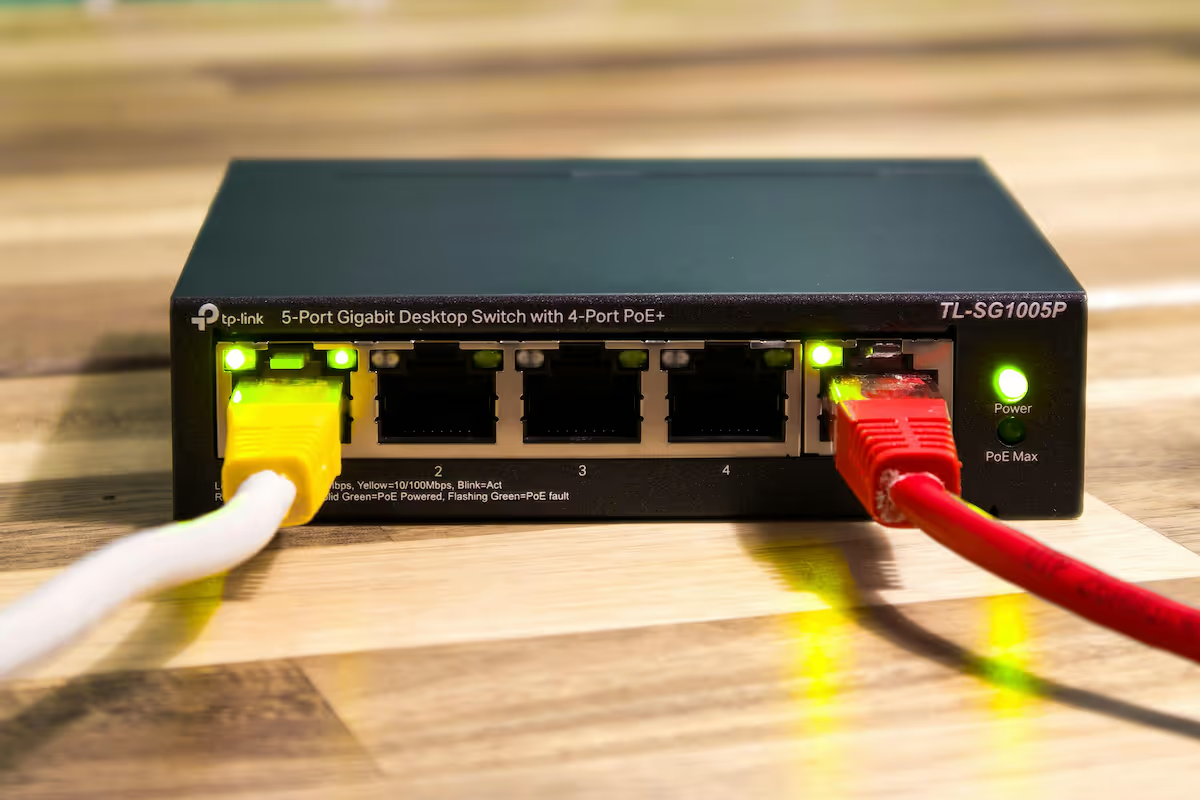
Ethernet is a foundational technology for connecting business locations, but not all Ethernet services are created equal. For IT and network leaders, understanding the underlying architecture of a connection is crucial for managing performance and costs.
Two common terms you'll encounter are Switched Ethernet and Shared Ethernet. While they both use the same underlying technology, they differ significantly in how they allocate bandwidth and handle data traffic. This guide will clarify the distinction to help you make a more informed procurement decision for your enterprise network.
What is Switched Ethernet?
Think of Switched Ethernet as a private, dedicated lane on a highway built just for your company's data. It establishes a point-to-point connection between two locations, ensuring that the bandwidth you purchase is exclusively yours and isn't shared with other businesses. This service uses network switches to create a direct virtual circuit for your data, bypassing the congestion of the public internet. It’s a go-to solution for enterprises needing reliable, high-performance connectivity for critical operations.
- Dedicated Bandwidth: The connection provides a fixed amount of bandwidth that is not shared with any other customers, leading to consistent performance.
- Point-to-Point Connection: It directly links two specific locations, such as a corporate headquarters to a branch office or a data center.
- Enhanced Security: Because the circuit is private, it offers a more secure environment for transmitting sensitive data.
What is Shared Ethernet?
Shared Ethernet, on the other hand, operates more like a public road where multiple businesses share the same network infrastructure and bandwidth from a service provider. Your company's data travels alongside traffic from other customers, making it a "best-effort" service.
Because the connection is shared, performance can fluctuate depending on how much bandwidth other users on the network are consuming at any given time. It's a common choice for general internet access where cost is a primary consideration.
- Shared Bandwidth: The connection speed is not guaranteed and can vary as it is distributed among all users on the network.
- Cost-Effective: Sharing the infrastructure makes this a more economical choice, particularly for businesses with less demanding connectivity needs.
- Point-to-Multipoint Access: It typically provides a connection from one location to the broader internet, rather than a direct link between two specific enterprise sites.
Key Differences Between Switched and Shared Ethernet
While both services deliver connectivity, they diverge on several critical factors that impact your network's performance, budget, and security.
Performance and Reliability
Switched Ethernet provides guaranteed, symmetrical bandwidth backed by a strong Service Level Agreement (SLA) that defines uptime and performance. This means your connection speed remains consistent, even during peak traffic hours.
In contrast, Shared Ethernet is a "best-effort" service. Since bandwidth is distributed among multiple users, performance can fluctuate, and SLAs are generally less stringent.
Cost Structure
The exclusive, dedicated nature of Switched Ethernet makes it a more premium, and therefore more expensive, option. You are paying for a private, uncontended connection.
Shared Ethernet is more budget-friendly because the provider's infrastructure and bandwidth costs are spread across all the customers using the connection.
Security
Because Switched Ethernet creates a private data path between two points, it is inherently more secure and isolated from the public internet. This minimizes exposure to external threats.
Shared Ethernet traffic travels alongside data from other businesses, which can present a larger attack surface, though providers implement safeguards to keep data separate.
Primary Use Case
Switched Ethernet is built for connecting critical sites, such as a headquarters to a data center or a key branch office. It's the choice for applications that cannot tolerate performance degradation.
Shared Ethernet is designed for general internet access at a single location, supporting everyday activities like web browsing, email, and accessing cloud applications.
Advantages of Switched Ethernet
For businesses that depend on consistent network performance, Switched Ethernet offers several distinct benefits beyond its private nature. These advantages are particularly important for supporting applications where reliability is non-negotiable.
- Predictable Performance: The dedicated circuit minimizes latency and jitter, which is essential for real-time applications like VoIP, video conferencing, and financial transactions that are sensitive to delays.
- Flexible Scalability: Bandwidth can be easily adjusted to meet changing business needs. You can often increase your capacity without requiring a new physical installation, making it a flexible solution for growth.
- Quality of Service (QoS): Switched Ethernet allows for traffic prioritization. This means you can configure the network to give preference to critical data, ensuring your most important applications always have the resources they need.
Advantages of Shared Ethernet
While Switched Ethernet excels in performance, Shared Ethernet brings its own set of practical benefits to the table, especially when budget and accessibility are key drivers for a location.
- Lower Cost of Entry: The most significant advantage is its affordability. By sharing network resources, businesses can get reliable internet access without the premium price tag of a dedicated line, making it ideal for locations with standard connectivity needs.
- Wider Availability: Shared Ethernet services are generally offered by a broader range of internet service providers and are more accessible in various geographic locations, giving you more vendor options to choose from.
- Simplified Deployment: Getting a Shared Ethernet connection up and running is typically a faster and less complex process compared to provisioning a private circuit, reducing lead times for new site turn-ups.
Choosing the Right Ethernet for Your Business
The right choice depends on the specific needs of each business location. By evaluating a few key factors, you can confidently select the service that aligns with your operational requirements and budget.
Assess Your Application Needs
Start by analyzing the primary activities at the location. If the site relies on real-time applications like VoIP or video conferencing, the consistent performance and low latency of Switched Ethernet are essential.
For locations where the main activities are general web browsing, email, and standard cloud software access, the "best-effort" nature of Shared Ethernet is often sufficient.
Consider Site Criticality and Budget
The importance of a site should guide your investment. A headquarters, data center, or major production facility warrants the reliability and guaranteed uptime of a Switched Ethernet connection.
Conversely, for a small branch office or a retail location with less intensive network demands, the cost savings of Shared Ethernet make it a practical and logical choice.
Evaluate Security Requirements
Finally, consider the type of data being transmitted. If a site handles sensitive customer information, financial records, or other confidential data, the private, isolated nature of Switched Ethernet provides a necessary layer of security.
Final Thoughts on Ethernet Options
Making the right choice between Switched and Shared Ethernet comes down to matching the service to the specific role of each location. For most enterprises, the answer isn't one or the other, but a strategic mix of both.
Deploying dedicated Switched Ethernet for critical sites secures performance where it matters most, while using Shared Ethernet for less demanding locations keeps costs in check. This balanced approach allows you to build a network that is both high-performing and budget-conscious, without overspending on connections that don't require dedicated resources.
Need Help Managing Your Network? Lightyear Can Help
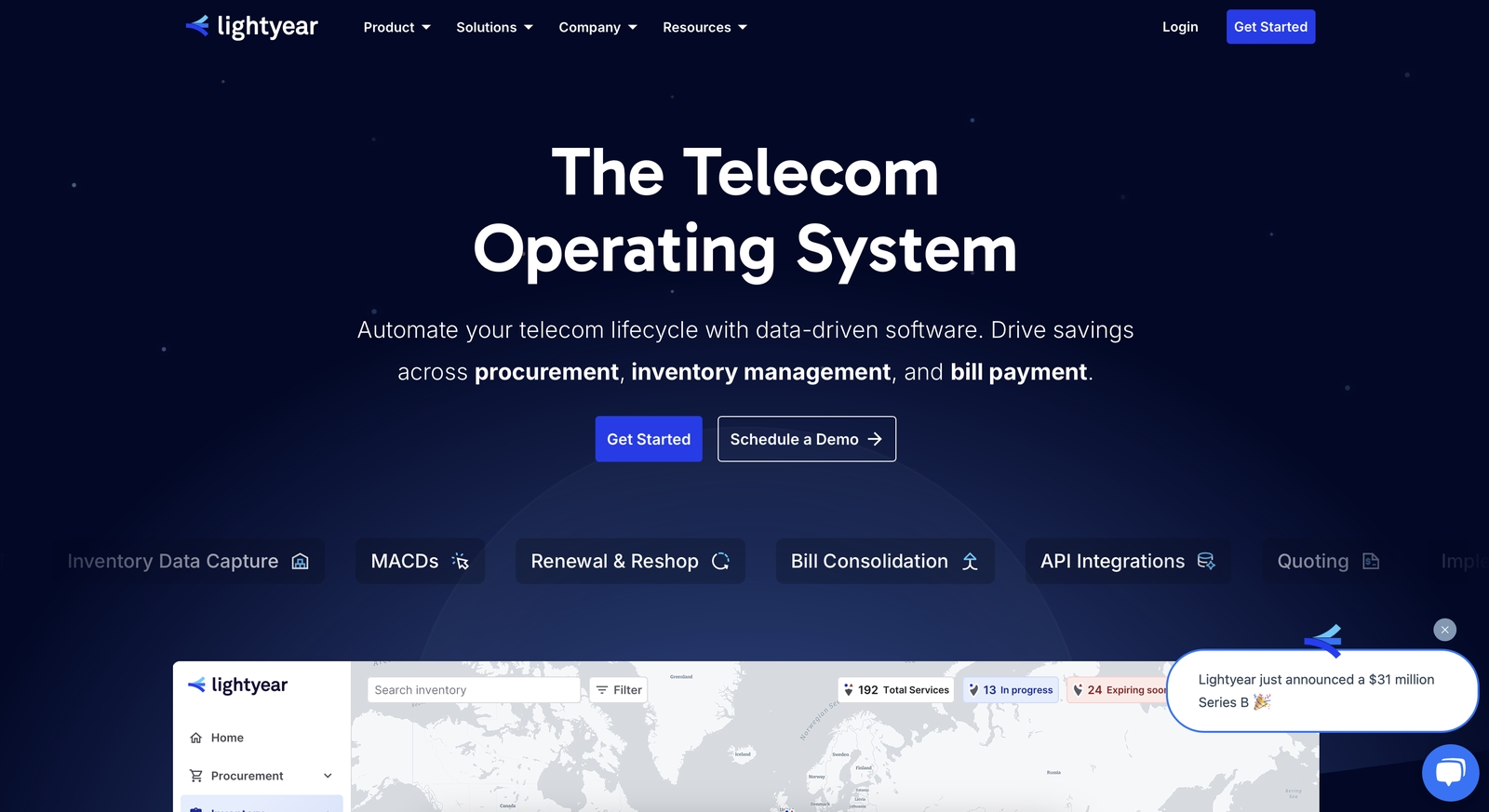
Whether you need dedicated Switched Ethernet for a critical site or cost-effective Shared Ethernet for a small office, Lightyear makes procurement simple. Our platform automates the entire process, from quoting to inventory management and billing.
By automating the telecom lifecycle, Lightyear helps enterprises save over 70% in time and 20% in costs on their network services. Schedule a demo or get started with our questionnaire today.
Frequently Asked Questions about Switched Ethernet vs Shared Ethernet
Can Switched Ethernet be used for internet access?
Yes, it can. While often used for private point-to-point connections, providers can configure a Switched Ethernet circuit for dedicated internet access (DIA). This gives you a private, uncontended on-ramp to the public internet, offering superior performance over shared connections.
Is Shared Ethernet the same as a typical business broadband connection?
Essentially, yes. Shared Ethernet is the technical term for what is commonly sold as business broadband or fiber internet. Both refer to a connection where bandwidth is shared among multiple customers, making it a cost-effective option for general internet use.
Does Shared Ethernet mean my data is less private?
Not necessarily. While the infrastructure is shared, providers use technologies like VLANs to logically separate customer traffic. However, a dedicated Switched Ethernet circuit is inherently more secure as it provides a completely private and isolated data path for your business.
Let us show you the product and discuss specifics on how it might be helpful.
Schedule a Demo





Revolutionize Your Telecom Experience
Learn how you can get one step closer to optimal business efficiency for all your telecom services.