What Is a Telecom Broker? The Smarter Way to Buy Telecom
Telecom brokers source and manage internet, voice, and cloud services. Now with Lightyear, the first virtual broker, it’s faster and fully transparent.


Telecom brokers, explained
A telecom broker, closely related to terms like telecom agent or technology advisor, functions as an independent consultant who manages the entire telecommunications procurement process on your behalf. Think of them as the equivalent of a real estate agent, but for connectivity, voice services, and cloud-based solutions (i.e. lots of research to do).
A telecom broker’s core responsibilities typically include:
- Conducting comprehensive vendor searches based on your specific requirements
- Negotiating favorable pricing across multiple service providers
- Managing project timelines and implementation coordination
- Providing post-installation support and troubleshooting
- Handling contract renewals and service modifications
The broker model differs significantly from working directly with telecommunications companies, where sales representatives naturally focus on their own products and pricing structures. Brokers offer market-wide visibility and vendor-neutral recommendations.
Why businesses turn to telecom brokers
The telecommunications industry has become increasingly complex. There’s hundreds of service providers offering overlapping solutions at vastly different price points. This complexity creates several pain points that drive organizations toward broker relationships.
Juggling multiple telecom vendors can quickly turn into a full-time headache. Whether you're a healthcare org opening new sites, a retail brand rolling out upgrades, or a tech team spread across cities—chances are, you're wasting too much time chasing quotes, updates, and support.
- Limited internal bandwidth for vendor management
- Difficulty comparing pricing across providers
- Lack of visibility into market rates
- Slow procurement cycles that delay critical projects
The procurement cycle is also a headache. Instead of a quick decision, you get weeks (or months) of back-and-forth: sales pitches, confusing quotes, and contracts that feel like they need a law degree to decode.
Finally, telecom pricing can feel like a black box. Without insider knowledge, it’s easy to overpay—or miss out on better bundled deals—simply because you don’t have the full picture.
What to expect (and not expect) from a telecom broker
A comprehensive telecom broker serves as your single point of contact throughout the entire procurement lifecycle. They begin by conducting detailed needs assessments, analyzing your current services, bandwidth requirements, and growth projections. From there, they canvas their network of providers to identify the best technical and financial fit for your specific situation.
What good telecom brokers do:
- Conduct thorough needs assessments
- Canvas the market for qualified vendors
- Negotiate pricing and contract terms
- Manage implementation timelines
- Escalate service issues when needed
- Handle contract renewals and service changes
What telecom brokers don't always handle:
- Day-to-day technical support
- Billing management and invoice processing
- Internal network configuration
- Hardware procurement and installation
- Staff training on new systems
It's important to understand that not all brokers offer complete market coverage. Some specialize in specific technologies or geographic regions. The level of transparency varies significantly among brokers. While the best brokers provide detailed market insights and pricing justification, others may be less forthcoming about their vendor relationships or commission structures.
The benefits of working with a telecom broker
Working with a skilled telecom broker can transform your procurement experience while delivering measurable business value.
Time savings
You work with a single contact who handles the entire process rather than managing relationships with dozens of potential vendors. This consolidation eliminates countless hours of vendor meetings, quote reviews, and follow-up communications.
Cost reduction
Experienced brokers understand market pricing dynamics and can negotiate better rates than most organizations achieve independently. They know which providers offer the most competitive pricing for specific service types and can identify promotional opportunities that aren't widely advertised.
Technology expertise
Brokers stay current on emerging solutions like cloud-based communications platforms, VoIP implementations, and advanced cybersecurity services. This knowledge helps ensure your technology investments align with industry trends and best practices.
Unbiased perspective
You receive a comprehensive market analysis that includes strengths and weaknesses across multiple providers rather than hearing only about one carrier's solutions. This broader view helps you make more informed decisions about long-term service commitments.
Simplified management
When service issues arise, billing questions emerge, or you need to modify services, your broker serves as an advocate who can escalate problems and coordinate solutions across your various providers.
Red flags in the traditional telecom broker model to know
Despite the benefits, the broker model does come with potential pitfalls that savvy buyers need to recognize and address.
Commission bias is a big issue. Some brokers receive higher commissions from certain providers, creating incentives to recommend those services even when better alternatives exist. Ask direct questions about how your broker gets compensated and whether commission rates vary across their vendor partners.
Limited vendor relationships means less options for you. Brokers who maintain relationships with only a handful of major carriers essentially function as glorified sales representatives rather than true market intermediaries. The best brokers work with hundreds of providers and can access specialized solutions for unique requirements.
Not all brokers are transparent. Be wary of brokers who won't clearly explain their vendor relationships, commission structures, or pricing methodologies. You should expect full disclosure about how your broker gets paid and which relationships might influence their recommendations.
Expect resale arrangements or a service markup. Some telecommunications companies operating through managed service provider models will purchase services directly from carriers, then mark them up significantly before reselling to end customers. This practice can inflate costs by 25% or more. Plus, it may limit your direct access to the underlying carrier for support issues. Always clarify whether you'll be contracting directly with service providers or through the broker.
Enter the “virtual” telecom broker
Traditional telecom brokers can help negotiate deals and manage vendors—but the model has real problems. Many rely on commissions that bias their advice. Pricing is often unclear. And most of the process is still done manually.
Lightyear is different—and it goes far beyond what a traditional broker can do.
We built the first—and only—virtual telecom broker: a software platform that gives you direct access to providers, real-time market pricing with no markups, and automated workflows that replace the manual back-and-forth.
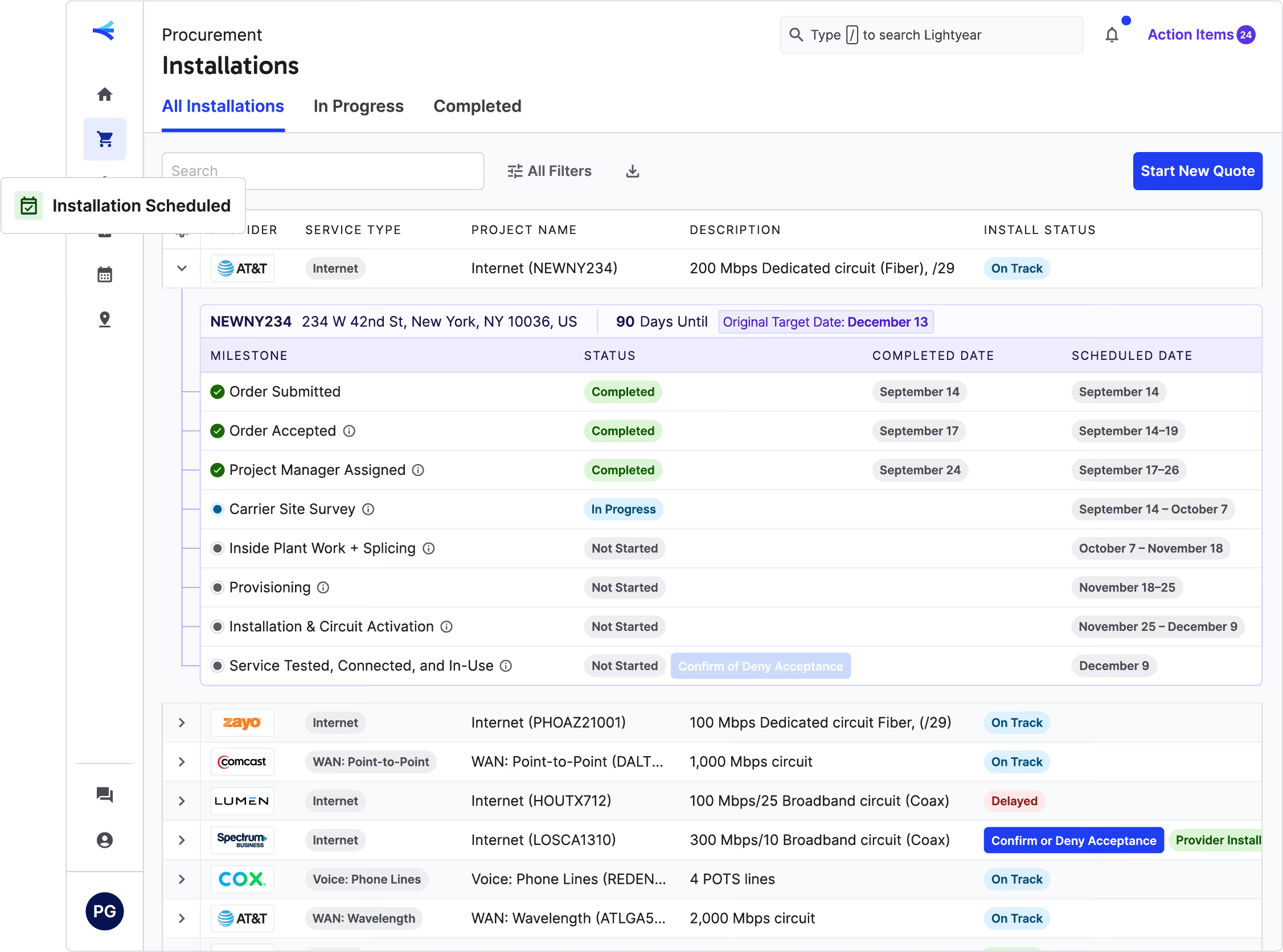
But we also do what traditional brokers can’t: we help you manage your entire telecom stack—including inventory tracking, billing oversight, and support escalations—all in one place.
Lightyear vs. traditional telecom brokerage models
Lightyear represents a software-first approach to telecom procurement that addresses many traditional broker limitations. Rather than relying on manual processes and individual relationships, Lightyear leverages automation and comprehensive market data to deliver transparent, unbiased recommendations.
Traditional broker model:
- Manual quote collection and comparison
- Relationship-based vendor access
- Variable pricing transparency
- Potential commission bias
- Inconsistent market coverage
Lightyear approach:
- API-powered pricing automation
- Direct carrier connections
- Complete pricing transparency
- No commission-based recommendations
- Consistent process regardless of location or service type
The Lightyear platform provides direct access to service providers without markup or commission bias. You receive actual carrier pricing through API-powered connections, ensuring price accuracy and eliminating the guesswork that often accompanies traditional broker relationships. This transparency extends to implementation management, where automated workflows track progress and escalate issues systematically.
The data-driven approach means every procurement request receives consistent treatment regardless of the specific service type or geographic location. Whether you're purchasing connectivity for a data center in New York City or voice services for a remote office, the same rigorous analysis and vendor comparison process applies.
When should you use a telecom broker?
Telecom brokers provide the most value during specific business scenarios that involve significant procurement complexity or timing constraints.
Business needs that call for using a telecom broker
- M&A events: Merger and acquisition activities typically trigger major telecom consolidation projects where broker expertise can accelerate timelines while ensuring optimal vendor selection.
- Office relocations: Moving offices involves tight deadlines, multiple service types, and coordination challenges that benefit from professional project management.
- Multi-site deployments: Managing consistent service delivery across multiple locations requires extensive vendor coordination and standardized implementation processes.
- IT stack consolidation: When organizations decide to standardize on specific platforms or reduce vendor complexity, brokers can identify providers who offer comprehensive solutions while ensuring competitive pricing.
- Limited internal expertise: Organizations without dedicated telecom resources can leverage broker relationships to access specialized knowledge without internal hiring or training investments.
The common thread across these scenarios is complexity. When your procurement needs involve multiple locations, diverse service types, or significant time constraints, broker expertise becomes particularly valuable.
Ready to streamline your telecom procurement?
The telecom broker model can significantly simplify your procurement process while delivering better outcomes, but choosing the right partner is critical. Look for brokers who offer:
✓ Transparent pricing methodologies
✓ Comprehensive vendor coverage
✓ Direct carrier relationships
✓ Clear compensation disclosure
✓ Proven implementation expertise
Lightyear's software-driven approach eliminates many traditional broker limitations while preserving the core benefits of professional procurement management. Our platform ensures you receive the best available pricing across the entire market without commission bias or hidden markups.
See how Lightyear can transform your telecom procurement process. Request a demo to explore how our automation and data transparency can save time, reduce costs, and eliminate the complexity that makes telecom buying such a challenge.
Let us show you the product and discuss specifics on how it might be helpful.
Schedule a Demo





Revolutionize Your Telecom Experience
Learn how you can get one step closer to optimal business efficiency for all your telecom services.