Telecom Vendor Management: Why It’s Broken, and How to Fix It
From missed SLAs to auto-renew traps, telecom vendor management can drain budgets. Here’s how Lightyear brings order, savings, and control.


Most IT and ops teams are juggling dozens of vendors, outdated contracts, and SLA commitments that no one’s tracking.
Here’s how vendor management should work in the telecom world, why it doesn’t today, and what it looks like when you finally take control.
What does telecom vendor management mean
Telecom vendor management is the process of overseeing the full lifecycle of your telecommunications vendor relationships: contracts, pricing, support, SLAs, renewals, and performance.
It’s about building a system that keeps all your service providers accountable, transparent, and optimized over time.
A strong vendor management program typically includes:
- Strategic sourcing and vendor selection
- Lifecycle oversight (from install to decommission)
- Service level enforcement
- Contract tracking and renegotiation
- Escalation and support workflows
- Renewal and re-shopping strategies
The goal is simple: avoid getting locked into bad contracts, overpaying for services, or suffering disruptions because nobody followed up on a missed SLA.
Why vendor management matters (especially in telecom)
Telecom is uniquely painful to manage. Why? Because the vendor landscape is fragmented, pricing is opaque, and contract terms are designed to trip you up.
Vendor management failures aren’t unique to telecom, but they’re often more expensive here. If you’ve got more than a handful of locations, here’s what you’re probably dealing with:
- Regional contracts signed by local teams
- Install timelines that drag on for months
- SLA credits that no one remembers to claim
- Renewal deadlines that come and go (hello, auto-renewals)
- Pricing that hasn’t been benchmarked in years
Add in UCaaS, SD-WAN, MPLS, DIA, voice, and wireless, and suddenly you're managing a Frankenstein telecom stack across dozens of providers.
This is exactly why most organizations start by trying to get a handle on telecom procurement and end up realizing they need full-blown vendor management. Without it, your network spend spirals and your ops team ends up in permanent firefighting mode.
The hidden costs of unmanaged telecom vendors
Here’s where things start to break:
Delayed installs = delayed revenue
You signed a lease on a new warehouse or retail location. Your ISP promised a 30-day install. It turns into 90 days. Meanwhile, you’re paying rent and losing business on a dark site. No install SLAs enforced. No penalties triggered.
Pricing decay adds up
That 100 Mbps circuit you bought in 2021? Still billing at $800/month. The current market rate is $400. Without regular rate checks and re-shopping, your pricing gets stale fast. And it happens across every line item, every site.
SLA breaches go uncredited
Most service level agreements (SLAs) include credits for downtime. But claiming them means tracking outages, submitting the right documentation, and chasing the provider. So no one does. You eat the cost.
Auto-renewal traps lock you in
Miss the 90-day notice window, and you’re locked into another 3-year term. Sometimes at an even higher rate. These clauses are buried deep in vendor contracts and are rarely tracked consistently.
All of this leads to waste. Real, line-item waste that compounds over time. And it’s exactly the kind of waste TEM tools can’t catch after the fact, because the problem isn’t billing errors. It’s process gaps.
What effective vendor management looks like
Let’s get practical. Here’s what strong telecom vendor management should look like, day to day:
1. Strategic sourcing, not just price shopping
You don’t need 15 quotes for broadband. You need the right vendors, competitive pricing, and service terms that reflect your actual business needs. Good vendor sourcing includes:
- Running consistent, automated RFPs
- Benchmarking pricing across markets
- Prioritizing vendors with proven performance
- Standardizing contract terms across your portfolio
The key here is picking the right vendor and locking in terms that protect your bottom line.
2. Real-time performance tracking
Once your vendors are in place, the real work begins. You need to track:
- Install intervals (from order to delivery)
- Uptime and availability vs. SLA
- Response times on support tickets
- Invoiced rates vs. contracted rates
This isn’t a “check once a year” thing. It’s ongoing, with the help of automation.
3. Proactive contract management
Every vendor contract has an expiration date, a renewal clause, and a price adjustment buried somewhere in the fine print.
You need a system that can:
- Alert you to renewal deadlines
- Flag contracts eligible for renegotiation
- Benchmark current rates before renewing
- Launch a new RFP automatically if needed
Without it, you’ll keep paying yesterday’s rates for services that may no longer even serve your business.
4. Defined escalation and support paths
When service breaks, you can’t afford to be stuck in support queue purgatory. You need:
- Escalation paths and SLAs documented up front
- Executive-level contacts at critical vendors
- Ticket workflows that track ownership and resolution
This is core to Lightyear’s model. We’re not a reseller, but we do escalate issues during implementation and help make sure your providers stay accountable.
The role of automation in vendor management
You can’t manage dozens (or hundreds) of telecom vendors in spreadsheets, not with the pace of technological advancements in automation, quoting, and vendor performance tracking. You need automation. Specifically, automation that handles the repetitive stuff and flags the important stuff.
Lightyear’s platform does exactly that. Here's how:
Centralized procurement workflows
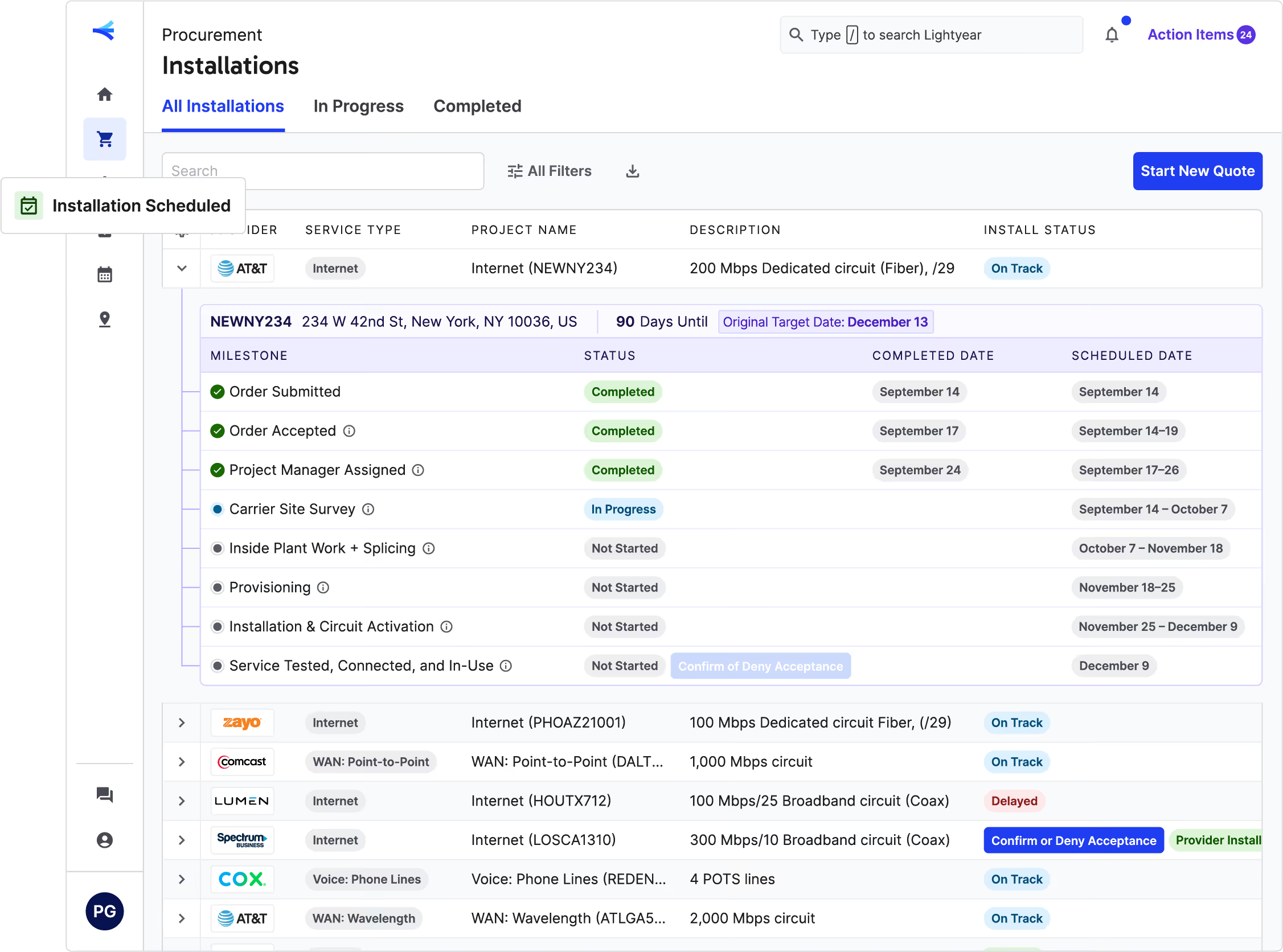
Our Procurement software automates RFP creation, quoting, and installation tracking. You define your requirements once, and we take it from there: engaging vendors, benchmarking pricing, and driving timelines forward.
Intelligent contract optimization
Our system monitors contract terms, expiration dates, and pricing benchmarks across your network. When something’s out of line, you’ll know. And we’ll help you take action.
Live network visibility
Network Inventory Manager gives you a searchable system of record for every service, contract, and vendor relationship. Need to check static IPs, circuit IDs, or who owns a renewal? It’s all there.
Vendor management vs. telecom expense management (TEM)
Let’s clear this up. Telecom expense management (TEM) and telecom vendor management aren’t the same thing, though many teams still treat them like interchangeable functions.
TEM is reactive. It focuses on invoice auditing, catching billing errors, and recovering overcharges after they happen. It’s a valuable discipline, especially when you’re dealing with legacy vendors or opaque pricing.
Vendor management, on the other hand, is proactive. It starts earlier in the lifecycle and follows the relationship through to performance tracking, escalation support, and contract renegotiation. It’s about preventing mistakes, not just cleaning them up.
The best-run teams use both. But if you're only investing in one today, start with vendor management. Here’s why.
Who benefits most from telecom vendor management?
Honestly? Any company with multiple locations or more than a few providers. But it’s especially important for:
- Multi-site enterprises juggling regional ISPs, inconsistent pricing, and fragmented support
- Fast-growing teams that need to scale procurement fast without scaling headcount
- M&A-heavy organizations are inheriting a mess of contracts, providers, and platforms
- IT and ops leaders who’ve had it with vendor chaos and want a smarter system
If that sounds familiar, we built Lightyear for you.
Take control of your vendor stack with Lightyear
We’re not just a vendor database or a quoting tool. Lightyear is the Telecom Operating System.
That means:
- We automate procurement, quoting, and installation tracking
- We track contract terms, renewal windows, and pricing benchmarks
- We give you a searchable system of record for your entire network
- We help you optimize, escalate, and streamline across the full telecom lifecycle
Whether you need help sourcing services, re-shopping contracts, or driving long-term cost savings across your network, we’ve got you.
Want to see how it works? Schedule a demo today or get started with our questionnaire to get tailored vendor management recommendations.
Let us show you the product and discuss specifics on how it might be helpful.
Schedule a Demo





Revolutionize Your Telecom Experience
Learn how you can get one step closer to optimal business efficiency for all your telecom services.