Traffic Shaping vs Policing: Network Management Explained
Traffic shaping delays excess packets, while policing drops them. Learn the key differences and how each method helps you manage your network bandwidth.


Managing network traffic effectively is a constant priority for any business. Two common Quality of Service (QoS) techniques used to achieve this are traffic shaping and traffic policing.
Though often mentioned together, these two methods have distinct functions and outcomes for your network's performance. Understanding the difference is key to choosing the right strategy for your specific needs.
What is Traffic Shaping?
Traffic shaping, also known as packet shaping, is a bandwidth management technique that regulates network data transfer to ensure a certain level of performance and quality of service (QoS). It works by delaying packets that exceed a configured rate, placing them in a queue or buffer to be sent later. This process smooths out traffic bursts and prevents congestion by controlling the flow of data.
- It prioritizes time-sensitive data, such as VoIP or video conferencing, over less critical traffic.
- Instead of dropping excess packets, it buffers them in a queue to be transmitted later.
- The primary goal is to control the traffic flow to match a desired, pre-configured rate.
- This results in more consistent network performance, though the buffering can introduce minor latency.
What is Traffic Policing?
In contrast, traffic policing takes a more direct approach to managing network traffic. It monitors the data flow against a pre-configured rate, and when traffic exceeds this limit, it takes immediate action. Instead of queuing excess packets, traffic policing either drops them entirely or marks them down to a lower priority level. This method is less about smoothing out traffic and more about enforcing strict bandwidth boundaries.
- It measures traffic against a set limit and discards or re-marks any packets that go over.
- Because it doesn't use a buffer, traffic policing avoids introducing the latency that can occur with shaping.
- The main objective is to enforce bandwidth rules by dropping non-compliant packets.
- This can result in packet loss, which may require retransmission and can affect certain applications.
Traffic Shaping vs Traffic Policing: Key Differences
While both techniques manage bandwidth, their approaches lead to very different outcomes for your network. Here’s a direct comparison of where they diverge.
1. Handling of Excess Traffic
The most fundamental difference lies in how they treat packets that exceed the configured rate. Traffic shaping delays excess packets by placing them in a buffer to be sent later. In contrast, traffic policing drops excess packets or re-marks them with a lower priority, enforcing a hard limit.
2. Latency vs. Packet Loss
Because traffic shaping uses a buffer, it can introduce a small amount of latency as packets wait in the queue. Traffic policing avoids this buffering delay but can cause packet loss, which may trigger retransmissions and impact application performance, especially for TCP-based traffic.
3. Resource Consumption
Traffic shaping is more resource-intensive, as it requires memory to store the buffered packets. Traffic policing is generally lighter on system resources because its primary action is to simply drop non-compliant packets, requiring less memory and processing power.
4. Primary Objective
Think of their goals as smoothing versus enforcing. Traffic shaping aims to smooth out traffic bursts to create a more consistent, predictable data flow. Traffic policing is designed to enforce strict bandwidth limits, ensuring that traffic does not exceed its allocated rate under any circumstances.
Benefits of Traffic Shaping
By smoothing out data flow instead of simply dropping packets, traffic shaping provides several key advantages for maintaining a stable and efficient network. This approach is particularly useful when the goal is to regulate, rather than restrict, network activity.
- Improved Application Performance: It ensures that critical, real-time applications like VoIP and video conferencing receive consistent bandwidth. This prioritization prevents jitter and lag, leading to a better user experience.
- Optimized Bandwidth Use: By regulating traffic flow, shaping prevents sudden bursts from overwhelming the network. This leads to more predictable performance and efficient use of your total available bandwidth.
- Meeting Service Level Agreements (SLAs): For businesses that need to guarantee certain performance levels for specific services or clients, shaping is an effective tool for enforcing those policies and meeting contractual obligations.
Benefits of Traffic Policing
While traffic shaping is about smoothing out data flow, traffic policing provides distinct advantages by enforcing firm boundaries. It's a powerful tool when your primary goal is control rather than accommodation.
- Strong Security Posture: By immediately dropping traffic that exceeds set limits, policing can help protect the network from certain denial-of-service (DoS) attacks that attempt to flood the system with excessive packets.
- Guaranteed Resource Allocation: It ensures that specific applications or users cannot consume more than their allotted bandwidth. This is critical in multi-tenant environments or for managing costs where strict usage caps are necessary.
- Lower Resource Overhead: Because it doesn't need to buffer packets, policing is less demanding on a router's memory and CPU. This makes it a practical choice for network hardware with limited capacity.
Choosing the Right Solution for Your Network
Deciding between shaping and policing comes down to your network's specific goals and priorities. The right choice depends on what you are trying to achieve with your traffic management policy.
1. When to Use Traffic Shaping
Opt for traffic shaping when your main goal is to guarantee performance for critical, delay-sensitive applications. It is the ideal choice for managing real-time services like VoIP and video conferencing, where a smooth, consistent data flow is more important than enforcing a rigid bandwidth cap. Shaping helps you meet application-specific service level agreements (SLAs) by prioritizing traffic without dropping packets.
2. When to Use Traffic Policing
Traffic policing is the better fit when you need to enforce strict bandwidth limits and control consumption. Use it to cap bandwidth for certain users or applications, protect your network from denial-of-service attacks, or ensure you stay within the limits of your internet service provider's contract. It's particularly effective in environments where resource allocation must be strictly managed.
3. Can They Be Used Together?
Yes, traffic shaping and policing are not mutually exclusive and can be used together to create a comprehensive QoS strategy. A common approach is to apply policing at the network edge to enforce the overall rate provided by your ISP. Then, you can use shaping on your internal network to prioritize different types of traffic within that policed limit, ensuring critical applications get the bandwidth they need.
Final Thoughts on Traffic Management
Ultimately, both traffic shaping and policing are essential tools in a network manager's toolkit. The key is to align your choice with your primary objective.
If your goal is to maintain smooth performance for critical applications, traffic shaping's buffering approach is your best bet. Conversely, if you need to enforce strict bandwidth rules and control costs, traffic policing provides the necessary hard limits.
By understanding this fundamental difference, you can build a QoS policy that directly supports your business's operational and financial goals.
Need Help Managing Your Network? Lightyear Can Help
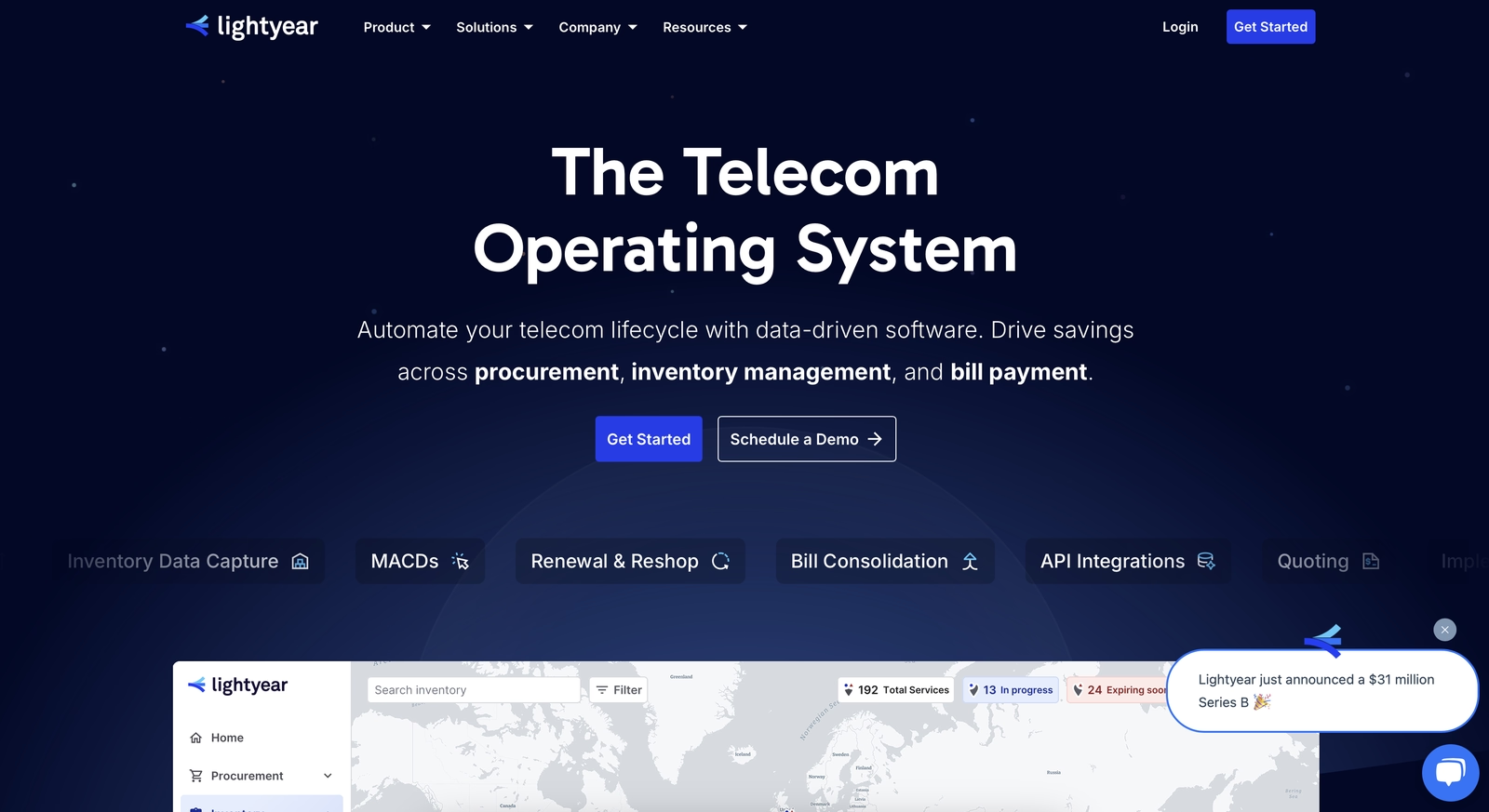
Implementing effective traffic shaping or policing requires total control over your network services. Lightyear helps you build that foundation by automating telecom procurement, inventory management, and bill consolidation.
Hundreds of enterprises trust our platform to save over 70% in time and 20% in costs on their network services.
Schedule a demo or get started with our questionnaire today.
Frequently Asked Questions about Traffic Shaping vs Traffic Policing
Does traffic shaping always cause noticeable delay?
Not usually. While shaping introduces minor latency by design, it's often measured in milliseconds and is typically imperceptible. The goal is to smooth traffic, which improves performance for sensitive applications more than the tiny delay hurts it.
Can traffic policing negatively affect certain applications?
Yes, it can. Because policing drops excess packets, applications that rely on TCP for reliable data transfer may experience retransmissions. This can slow down file transfers or other services that are sensitive to packet loss.
Is one technique more common at the ISP level?
Yes, traffic policing is more commonly used by Internet Service Providers. They use it to enforce the bandwidth limits specified in your service contract, ensuring that your connection does not exceed its purchased rate.
Let us show you the product and discuss specifics on how it might be helpful.
Schedule a Demo




Revolutionize Your Telecom Experience
Learn how you can get one step closer to optimal business efficiency for all your telecom services.