UDP vs Multicast: Differences for Enterprise Networks
UDP vs. Multicast: Learn the key differences for your enterprise network. We explain how each works and when to use them for efficient data delivery.

For IT and network managers, choosing the right data transmission method is a critical part of building an efficient enterprise network. Two concepts that frequently appear in these discussions are User Datagram Protocol (UDP) and Multicast.
Though they are related to how information is sent and received, they operate differently and solve distinct problems. This guide breaks down the specific functions of UDP and Multicast, providing a clear comparison to help you make informed decisions for your infrastructure.
What is UDP?
User Datagram Protocol (UDP) is a core communication protocol of the Internet Protocol (IP) suite. It offers a straightforward way to send short messages, known as datagrams, from one computer to another across a network.
Its design prioritizes speed and low-latency communication over guaranteed delivery. Here are its defining characteristics:
- Connectionless: UDP does not establish a formal connection before sending data. It simply transmits packets to the destination, operating on a "fire-and-forget" model without confirming if the recipient is ready.
- Speed Over Reliability: The protocol is optimized for fast data transfer. This means packets can be lost, duplicated, or arrive out of order, as UDP has no built-in mechanism for retransmission or sequencing.
- Low Overhead: By forgoing the handshakes and error-checking of other protocols, UDP requires minimal processing power and bandwidth, making it very lightweight and efficient.
What is Multicast?
Multicast is a network communication method for sending information from one or more points to a set of other points. Think of it as a targeted broadcast; it allows a single data stream to be sent to multiple specific recipients simultaneously without flooding the entire network.
It works by creating multicast groups that devices can join. When a source sends data to the group, the network intelligently replicates the packets only along the paths that lead to subscribed members. Here are its core attributes:
- Efficient Delivery: Multicast conserves bandwidth by sending a single stream of data across the network, which is then duplicated by routers only when paths to recipients diverge.
- Group Communication: It is designed for one-to-many or many-to-many communication. Devices must explicitly join a multicast group to receive information, ensuring data is only sent to interested parties.
- Reduces Server and Network Load: The source sends the data only once, and the network handles the replication. This reduces the burden on the source server and minimizes unnecessary traffic.
UDP vs Multicast: Key Differences
While both concepts relate to data transmission, they operate at different levels and serve distinct functions. The primary confusion arises because they are not mutually exclusive; in fact, they often work together.
1. Protocol vs. Method
The most fundamental difference is their role. UDP is a transport protocol—a set of rules for packaging and sending data between two points. In contrast, Multicast is a network delivery method—a strategy for routing a single data stream to multiple, specific recipients efficiently.
2. Scope of Communication
UDP itself does not dictate the number of recipients; it can be used for one-to-one (unicast), one-to-all (broadcast), or one-to-many (multicast) communication. Multicast, by its very definition, is exclusively a one-to-many or many-to-many communication model.
3. How They Interact
Instead of being alternatives, Multicast often uses UDP as its transport protocol. Applications like live video streaming or online gaming send multicast traffic using UDP packets. This pairing combines Multicast’s bandwidth efficiency with UDP’s low-latency, high-speed data transmission.
Benefits of Using UDP
UDP's design offers distinct advantages for specific network tasks, especially when speed is the top priority. Its lightweight nature translates into several key benefits for enterprise infrastructure:
- Ideal for Real-Time Applications: Its speed makes it perfect for services where delays are more disruptive than minor data loss. Think of live video conferencing, online gaming, and VoIP calls, where receiving data quickly is critical for a smooth user experience.
- Reduced Network Congestion: By skipping the acknowledgments and retransmission requests of other protocols, UDP sends less data overall. This reduces traffic on the network, freeing up bandwidth for other critical operations.
- Lower Resource Consumption: The protocol's simple, connectionless nature requires less memory and processing power from both the sender and the receiver. This makes it a great fit for systems where computational resources are limited, such as with many IoT devices.
Benefits of Using Multicast
Multicast offers powerful advantages for one-to-many data distribution, making it a strategic choice for specific enterprise use cases. Its architecture is designed to optimize resources and improve performance across the network.
- Significant Bandwidth Savings: By sending a single data stream that only gets duplicated when necessary, multicast drastically cuts down on network traffic. This is especially valuable for high-bandwidth applications like corporate webcasts or IPTV, preventing network congestion and reducing costs.
- Improved Source Performance: The source server sends each packet only once, which minimizes its processing load. This allows a single server to deliver content to a large number of recipients without performance degradation, improving application scalability.
- Optimized for Group Communication: It is ideal for applications that distribute information to multiple locations at once, such as pushing software updates or streaming live financial data. This ensures all interested parties receive the information simultaneously.
Choosing Between UDP and Multicast for Your Network
The decision isn't about picking one over the other, but about understanding when each is appropriate for your network's needs. The right choice depends entirely on the application's communication requirements.
1. When to Use UDP
Select UDP when your primary need is fast, low-overhead communication and you can tolerate minor packet loss. It is the correct transport protocol for simple, time-sensitive transactions like DNS queries or network monitoring where establishing a formal connection would introduce unnecessary delay.
2. When to Use Multicast
Implement Multicast when you need to distribute the same data stream to multiple, specific recipients while conserving bandwidth. This delivery method is ideal for applications like streaming corporate town halls or distributing financial data feeds to multiple trading desks simultaneously.
3. When to Use Them Together
For many real-time, one-to-many applications, you will use both. Multicast is the delivery method, and UDP is the transport protocol carrying the data. This combination is the standard for IPTV and large-scale video conferencing, where you need Multicast’s bandwidth efficiency and UDP’s speed.
Final Thoughts on UDP and Multicast
Ultimately, understanding the distinction between UDP and Multicast is fundamental for effective network architecture. They are not competing technologies but rather tools that serve different, often complementary, roles in data transmission.
UDP is a transport protocol prized for its speed, while Multicast is a delivery method designed for bandwidth efficiency. For many real-time, one-to-many applications, they work in tandem. Your decision should always be guided by the specific communication requirements of your network services, ensuring you select the right tool for the job.
Need Help Managing Your Network? Lightyear Can Help
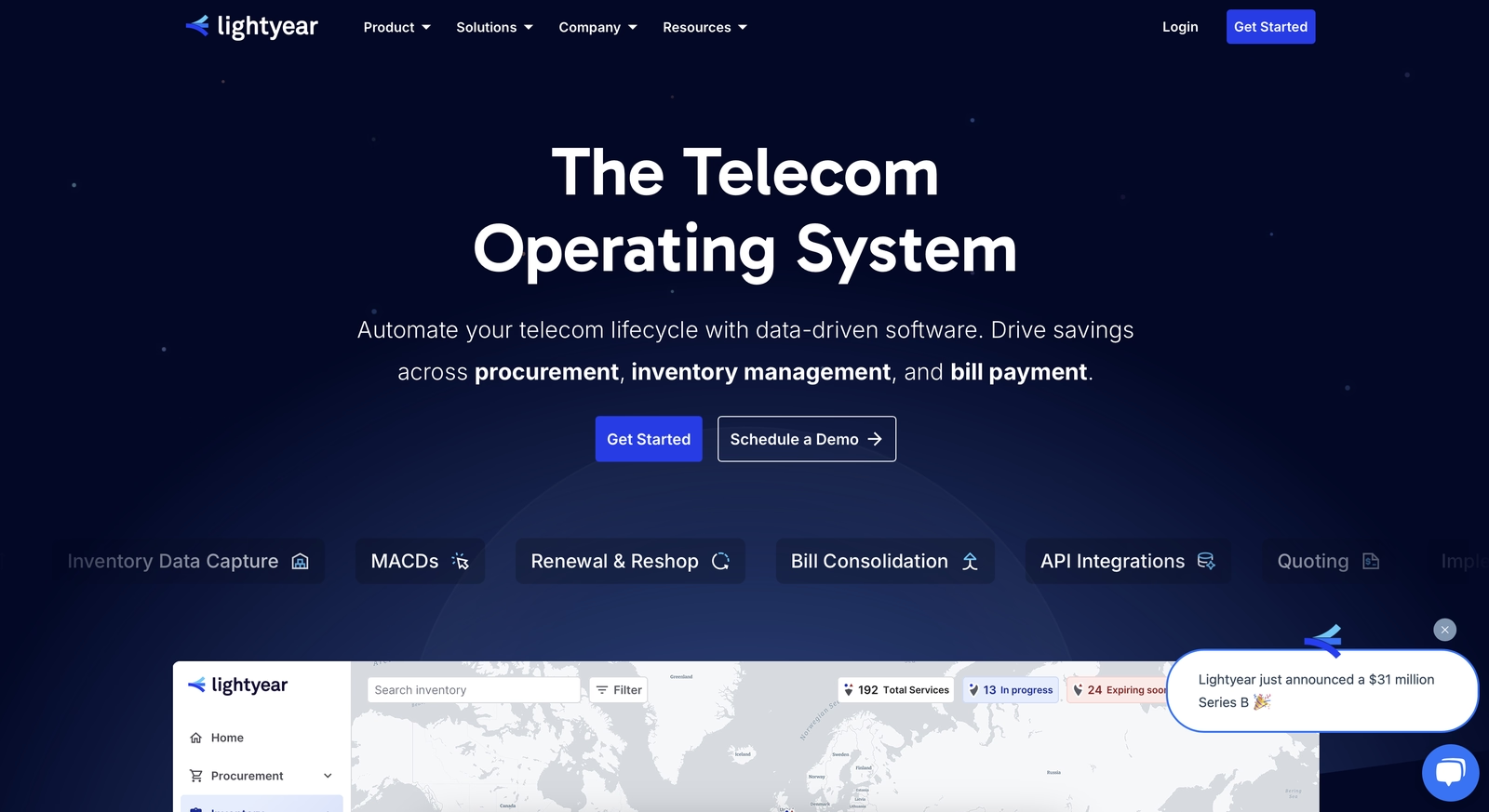
Managing the network services that run protocols like UDP and Multicast can be complex. By automating procurement, inventory management, and bill consolidation, Lightyear takes the pain out of telecom infrastructure management.
Enterprises using the platform achieve over 70% time savings and 20% cost savings on their network services. Schedule a demo or get started with our questionnaire today.
Frequently Asked Questions about UDP vs Multicast
Can Multicast use TCP instead of UDP?
Generally, no. TCP is designed for one-to-one connections and its handshake process is incompatible with Multicast’s one-to-many model. Applications needing reliable multicast typically add error-correction features on top of UDP rather than using TCP.
How is Multicast different from a Broadcast?
A broadcast sends data to every single device on a local network, creating unnecessary traffic. Multicast is more targeted, delivering a single stream only to devices that have explicitly joined a multicast group, which saves significant bandwidth.
Does Multicast guarantee packet delivery?
Not on its own. Since Multicast is a delivery method that often uses UDP, it shares UDP’s “best-effort” delivery characteristic. Any required reliability, like retransmitting lost packets, must be handled by the application layer itself.
Let us show you the product and discuss specifics on how it might be helpful.
Schedule a Demo





Revolutionize Your Telecom Experience
Learn how you can get one step closer to optimal business efficiency for all your telecom services.