Comparing UISP Router and EdgeRouter for Enterprises
UISP Router vs. EdgeRouter: We compare the key differences in management, performance, and features to help you choose the right one for your enterprise.

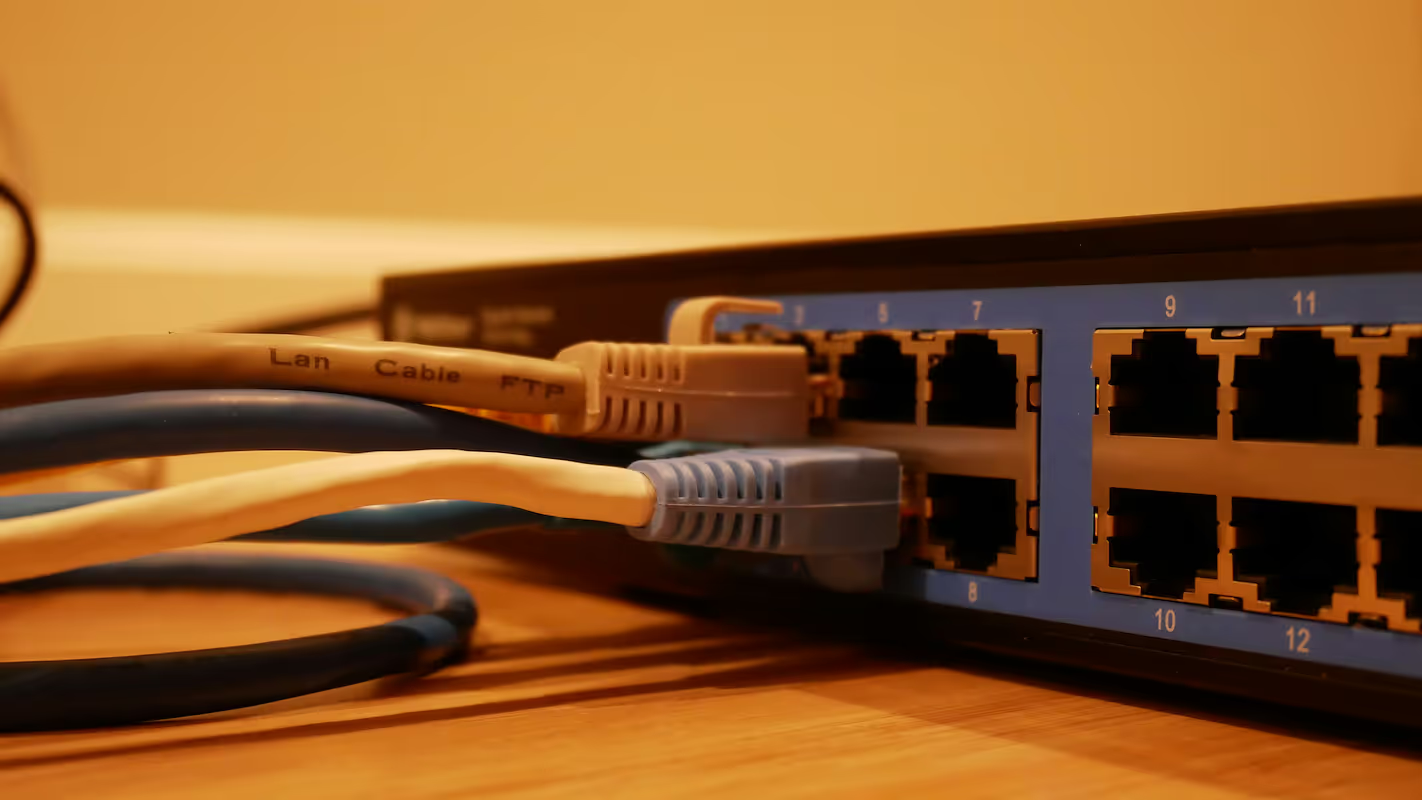
Ubiquiti offers two popular and powerful router lines, the UISP Router and the EdgeRouter, each built for specific networking environments.
While both product families come from the same company, they have different intended use cases, feature sets, and management platforms. This guide breaks down the key differences between them to help you decide which is the right choice for your enterprise network.
What is a UISP Router?
The UISP Router is a line of networking hardware specifically engineered for Internet Service Providers (ISPs) and Wireless Internet Service Providers (WISPs). It serves as a core component of Ubiquiti’s comprehensive UISP ecosystem, which is designed to help providers build, manage, and scale their networks efficiently. Think of it as the central nervous system for an ISP's operation, integrating routing with a full suite of management tools.
- Centralized Management: All UISP devices, including routers, are managed through a single, unified software platform called the UISP Application. This controller can be hosted locally or in the cloud, offering a complete overview of the entire network from one dashboard.
- ISP-Centric Features: The platform goes beyond basic routing. It includes features tailored for service providers, such as subscriber management, billing and invoicing integration, network topology mapping, and detailed performance analytics.
- Integrated Ecosystem: UISP Routers work seamlessly with other Ubiquiti hardware like airMAX, airFiber, and UFiber products. This integration allows for end-to-end network deployment and management, from the data center to the customer premises.
- Scalability: The system is built to scale, supporting networks from a few dozen clients to many thousands, making it a viable solution for both small, growing ISPs and larger, established providers.
What is an EdgeRouter?
The EdgeRouter line, on the other hand, is designed for a broader audience of network administrators, IT professionals, and advanced users who require powerful, standalone routing performance. While UISP Routers are built for a specific service provider ecosystem, EdgeRouters are versatile tools for creating sophisticated and secure networks in enterprise, business, and even complex home environments.
- Standalone Configuration: Each EdgeRouter is typically managed individually through its own web-based graphical user interface, EdgeOS. This provides direct, granular control over the device’s configuration and performance without requiring a centralized controller.
- Advanced Routing Protocols: They offer a robust set of routing capabilities, including support for OSPF, BGP, and RIP, along with advanced DHCP, DNS, and sophisticated firewall and VPN features.
- Command-Line Interface (CLI): For network professionals who prefer text-based management, EdgeRouters provide full access to a powerful command-line interface, allowing for scripting and deep customization.
- Broad Applicability: Because they are not tied to an ISP management platform, EdgeRouters are a popular choice for enterprise branch offices, small-to-medium businesses, and anyone needing high-performance routing with detailed control.
Key Differences Between UISP Router and EdgeRouter
While both router families are powerful, their differences become clear when you look at their hardware, software approach, and how they fit into a broader network.
1. Hardware Design and Port Configuration
UISP Routers are often built with ISP needs in mind, frequently including high-capacity SFP/SFP+ ports for fiber backhaul connections. The hardware is designed to be a durable part of an outdoor or tower deployment, working alongside other UISP gear.
EdgeRouters, in contrast, offer a more diverse range of hardware. You can find everything from small, fanless models for a branch office to powerful, multi-port rackmount units for a data center, with port configurations suited to various business scenarios.
2. Software Philosophy and Customization
The software for UISP Routers is part of a comprehensive management system. The focus is less on tweaking individual router settings and more on managing the entire service delivery lifecycle, like setting up client data plans.
EdgeRouters, running EdgeOS, are all about granular control. With a full command-line interface (CLI), network professionals can write scripts and automate complex configurations, offering a level of customization the UISP platform doesn't target.
3. Interoperability in a Network
EdgeRouters are designed to be good citizens in a multi-vendor environment. They use standard routing protocols like OSPF and BGP, allowing them to integrate with equipment from other manufacturers.
UISP Routers deliver their full value when used within the Ubiquiti ecosystem. While they use standard protocols, their primary design is for communication with other UISP and airMAX products, creating a single-vendor solution.
Performance and Reliability
When it comes to raw performance, both the UISP and EdgeRouter lines are engineered to handle significant network loads, but they achieve this with different goals in mind.
EdgeRouters are celebrated for their impressive packet processing capabilities, often utilizing hardware offloading. This allows them to achieve high throughput and low latency, making them ideal for demanding enterprise environments with heavy internal traffic.
UISP Routers, on the other hand, are built for carrier-grade performance. Their architecture is optimized to manage the aggregated bandwidth of numerous subscribers, ensuring consistent service delivery across an entire ISP network.
In terms of reliability, both product families are solid choices. An EdgeRouter’s reliability comes from its mature EdgeOS and its function as a self-contained unit; a problem with one router won't affect the others in your network. The UISP Router's reliability is enhanced by its deep integration into the UISP ecosystem, which provides constant monitoring and alerts to help maintain high uptime.
Security Features
Both router families provide strong security, but they implement it differently based on their intended roles. The key distinction lies in whether security is managed on a per-device basis or as part of a larger, integrated system.
- EdgeRouter: Security is granular and device-centric. Administrators get a powerful stateful firewall with support for custom rulesets, zone-based policies, and detailed NAT configuration. EdgeRouters also offer robust VPN support (IPsec, OpenVPN, L2TP) for secure remote access and site-to-site connections, along with Deep Packet Inspection (DPI) for traffic analysis.
- UISP Router: Security is integrated into the broader service provider framework and managed centrally via the UISP controller. It includes an effective firewall focused on protecting the core network and managing subscriber traffic. The system is designed to apply broad security policies and access controls across the entire network, which is essential for an ISP environment.
Ease of Use and Management
When considering how these routers will fit into your daily operations, their management approach is a major factor. The primary difference in usability comes down to single-device control versus system-wide administration.
EdgeRouters offer a direct and familiar management experience. Each device is configured through its own web interface or command-line, which is ideal for administrators who need precise control over individual network components. This approach is straightforward for anyone accustomed to managing routers one by one.
In contrast, the UISP Router is managed as part of a larger system through the UISP controller. While setting up the controller requires an initial investment of time, it simplifies the management of many devices at once. This centralized model makes it easier to apply network-wide policies and monitor the health of the entire infrastructure from a single dashboard, a significant advantage for large-scale deployments.
Making the Right Choice for Your Enterprise
Ultimately, your choice between a UISP Router and an EdgeRouter comes down to your network architecture and management philosophy.
An EdgeRouter is the ideal choice for enterprises that need a powerful, standalone device. If your network integrates equipment from multiple vendors or your team requires granular, device-level control through a web interface or CLI, the EdgeRouter offers the necessary flexibility and performance.
A UISP Router, however, is built for those committed to the Ubiquiti ecosystem. If you are managing a large-scale network and prefer a single dashboard to oversee all devices, apply policies, and monitor performance, the centralized UISP platform provides a more cohesive solution.
Need Help Managing Your Network? Lightyear Can Help
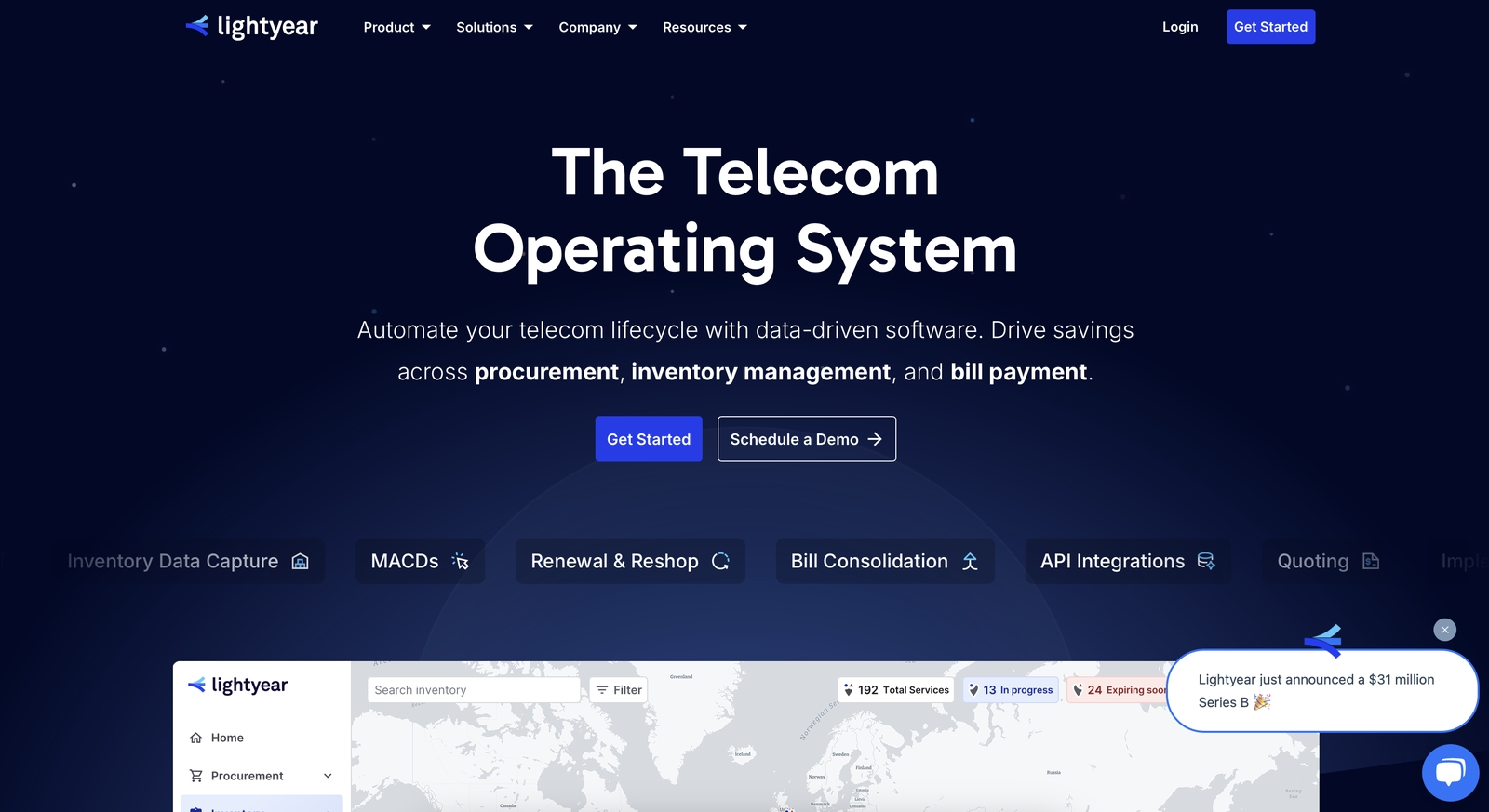
Choosing the right router is a key step, but managing the network services that run on it is the next challenge. Whether you select a UISP Router or an EdgeRouter, Lightyear automates the procurement, inventory, and billing for your underlying connectivity.
By taking the pain out of telecom infrastructure management, enterprises that use Lightyear achieve over 70% time savings and 20% cost savings on their network services.
Schedule a demo or get started with our questionnaire today.
Frequently Asked Questions about UISP Router vs EdgeRouter
Can I manage an EdgeRouter with the UISP controller?
No, EdgeRouters are managed individually through their own EdgeOS interface or CLI. The UISP controller is built exclusively for the UISP product line, so the two systems are intentionally kept separate for their different use cases.
Can a UISP Router be used in a standard enterprise network?
While technically possible, it's not their intended use. UISP Routers are optimized for ISP features like subscriber management. An EdgeRouter is almost always the better and more flexible choice for a typical enterprise or business network.
Is there a major price difference between comparable models?
Pricing varies by model, but generally, EdgeRouters offer a wider range of price points, from affordable small office models to powerful enterprise units. UISP hardware is priced for carrier deployments, which can influence its cost structure.
How do their software update cycles compare?
Both EdgeOS (for EdgeRouter) and the UISP platform receive regular firmware and software updates from Ubiquiti. This provides both lines with ongoing security patches, bug fixes, and feature improvements to maintain network integrity and performance.
Let us show you the product and discuss specifics on how it might be helpful.
Schedule a Demo





Revolutionize Your Telecom Experience
Learn how you can get one step closer to optimal business efficiency for all your telecom services.