Ultra Ethernet vs Infiniband: Enterprise Network Comparison
Choosing between Ultra Ethernet and Infiniband? Learn the key differences in performance and cost to find the right fit for your enterprise network.

The growing demands of artificial intelligence and high-performance computing are pushing enterprise networks to their limits. For a long time, InfiniBand has been a primary choice for these intensive workloads. However, a new competitor, Ultra Ethernet, has arrived with a different vision for high-speed data communication. This article breaks down the key differences between these two networking fabrics to help you determine which technology is the right choice for your organization's needs.
What is Ultra Ethernet?
Think of Ultra Ethernet as a modern, open-standard approach to networking designed for the massive demands of AI and high-performance computing. It's a collaborative effort from the Ultra Ethernet Consortium, which includes industry heavyweights like Intel, AMD, and Microsoft. Their goal is to create a unified communication stack that can handle the data-intensive workloads of today and tomorrow.
What makes Ultra Ethernet particularly interesting for IT decision-makers is that it builds upon the widely adopted Ethernet standard, extending its capabilities rather than replacing it. The specification focuses on optimizing data transmission, reducing network latency, and introducing new congestion control mechanisms. This approach provides a more efficient and stable network fabric for connecting thousands of GPUs or accelerators in a large-scale cluster, directly addressing the bottlenecks that can slow down AI training and inference tasks.
What is Infiniband?
On the other hand, InfiniBand is a mature and proven networking technology that has long been the standard for high-performance computing environments. It was created from the ground up to deliver extremely high throughput and very low latency for demanding applications. Unlike general-purpose Ethernet, InfiniBand operates as a switched fabric interconnect, designed to link processors and I/O devices directly, which is why it has been a staple in supercomputing and financial services for years.
Its architecture is built around a key feature called Remote Direct Memory Access (RDMA), which allows devices to exchange data directly from their memory without involving the main processor. This direct path significantly reduces processing overhead and speeds up communication between nodes in a cluster. For IT teams managing large-scale data clusters, this translates to faster computation and more efficient data movement, making it a powerful choice for complex, data-heavy tasks.
Speed and Performance Comparison
When you get down to the nuts and bolts, the performance differences between Ultra Ethernet and InfiniBand are more nuanced than just looking at raw speed. Here’s how they stack up:
- Bandwidth Race: Both technologies are in a race to the top. InfiniBand currently offers speeds up to 400 Gb/s per port with its NDR generation and has a clear roadmap to 800 Gb/s and beyond. Ultra Ethernet is designed to match these speeds from the outset, ensuring that it can handle the massive data pipelines required for next-generation AI models.
- Latency and Jitter: For now, InfiniBand holds a slight edge in providing consistently low latency, a direct result of its mature architecture built around RDMA. However, Ultra Ethernet aims to close this gap by optimizing the Ethernet stack to minimize communication delays and network jitter, making performance more predictable across large clusters.
- Congestion Control: This is a key area of innovation for Ultra Ethernet. It introduces a new transport layer specifically designed to prevent network congestion in sprawling AI systems. While InfiniBand has effective congestion management, Ultra Ethernet’s approach is tailored to the unique, bursty traffic patterns of AI workloads, helping to maintain high performance even when the network is under heavy load.
Cost and Scalability
When it comes to cost, the conversation extends beyond the initial price tag. InfiniBand has traditionally been a premium solution, requiring specialized switches and network cards that can lead to a higher upfront investment. Because it operates in a more controlled ecosystem with fewer vendors, organizations may find they have less negotiating power and face higher long-term ownership costs.
In contrast, Ultra Ethernet is designed to be a more cost-effective option by building on the widely used Ethernet standard. This approach opens the door to a competitive marketplace with numerous hardware vendors, which naturally helps drive down prices. Furthermore, since most IT teams are already proficient with Ethernet, the need for specialized training is reduced, lowering operational expenses.
On the topic of scalability, both technologies are engineered for massive deployments, but their philosophies differ. InfiniBand has a long, proven history of scaling effectively in demanding supercomputing environments. Ultra Ethernet, however, is being developed specifically to address the unique scaling challenges of modern AI clusters, which can connect tens of thousands of accelerators. Its open, multi-vendor framework is intended to make expanding the network more straightforward and economical, freeing organizations from reliance on a single supplier's technology and pricing structure.
Compatibility and Integration
When considering how these technologies fit into your existing infrastructure, the differences become quite clear. InfiniBand operates as a self-contained fabric, which means it doesn't natively connect with the standard Ethernet networks that run most business operations. To bridge this gap, organizations often need to deploy special gateways, which can add another layer of complexity and cost to the network architecture. Managing an InfiniBand environment also requires a distinct skill set, separate from the expertise your team already has for your primary Ethernet network.
Ultra Ethernet, by design, takes a different path. Since it is an extension of the familiar Ethernet standard, it is built for much simpler integration with existing network infrastructure. The goal is to create a single, unified network that can handle both general-purpose traffic and high-performance workloads without needing complex bridges. This approach means IT teams can apply their current knowledge and use many of the same tools for management and monitoring, which can significantly reduce the operational learning curve and simplify day-to-day administration.
Use Cases and Applications
Where InfiniBand Shines
Given its history, InfiniBand remains a dominant force in environments where performance is the top priority and cost is a secondary concern. It is deeply rooted in traditional high-performance computing, powering supercomputers at research institutions and national labs. The financial services industry also depends on it for high-frequency trading platforms, where its extremely low latency provides a critical competitive advantage. For organizations with established, specialized workloads that demand the absolute fastest interconnect, InfiniBand is a proven and reliable choice.
The Niche for Ultra Ethernet
In contrast, Ultra Ethernet is aimed squarely at the future of large-scale data centers, particularly those built for artificial intelligence. Its primary use case is in connecting massive clusters of GPUs for training complex AI models, where its congestion control mechanisms are designed to prevent performance bottlenecks. It’s an attractive option for companies building new AI infrastructure from the ground up or for cloud providers who want to offer high-performance services on a network that integrates easily with their existing Ethernet-based systems. This focus on operational simplicity makes it a strong contender for any business looking to support intensive computing without managing a separate, specialized network fabric.
Final Thoughts on Ultra Ethernet vs Infiniband
Choosing between Ultra Ethernet and InfiniBand comes down to your organization's specific goals. InfiniBand is the mature, high-performance workhorse, proven for years in demanding computing environments. It offers top-tier speed and low latency, but this performance often comes with higher costs and requires specialized management.
In contrast, Ultra Ethernet represents a more open and integrated future. By building on the familiar Ethernet standard, it promises simpler integration with your current network, a wider choice of vendors, and potentially lower ownership costs. This makes it a compelling option for businesses building new AI infrastructure or looking to simplify data center operations.
Ultimately, your decision depends on your application needs. For established HPC workloads where every microsecond counts, InfiniBand remains a strong contender. However, for large-scale AI deployments where operational simplicity and cost-efficiency are key, Ultra Ethernet presents an attractive path forward. The right choice balances immediate performance needs with your long-term technology and budget strategy.
Need Help Managing Your Network? Lightyear Can Help
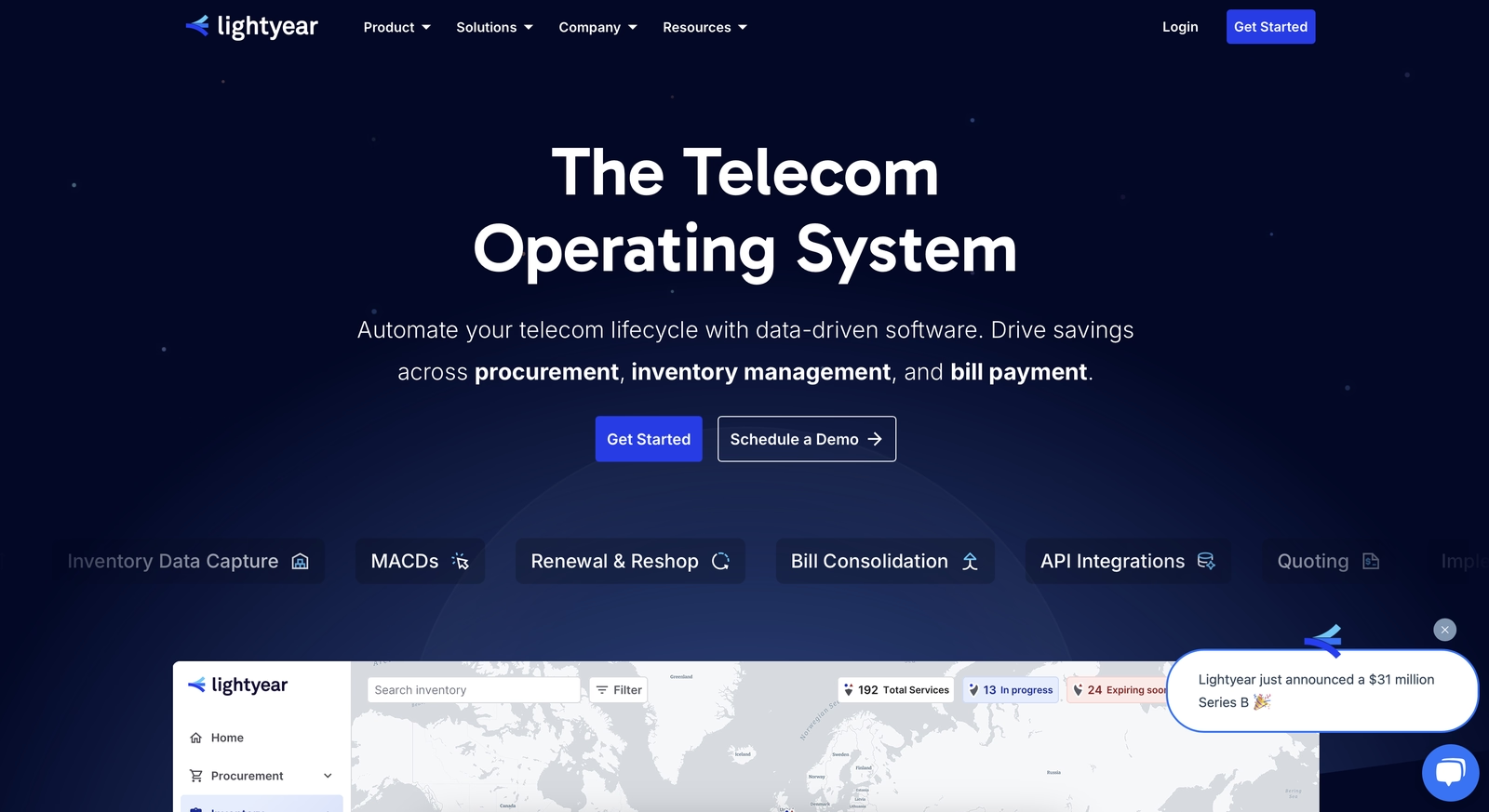
Deciding between Ultra Ethernet and InfiniBand is just the first step; the next is procuring and managing the services. Lightyear simplifies this by automating the entire telecom lifecycle, from sourcing circuits to consolidating bills.
By taking the manual work out of network procurement and inventory management, Lightyear helps enterprises achieve over 70% in time savings and 20% in cost savings. Sign up for a free account to get started.
Frequently Asked Questions about Ultra Ethernet vs Infiniband
Will Ultra Ethernet make InfiniBand obsolete?
Not necessarily. InfiniBand has a strong foothold in specialized high-performance computing where its mature ecosystem is a major advantage. Ultra Ethernet is positioned more for large-scale AI and cloud environments, so both will likely coexist, serving different market needs for the foreseeable future.
Can I use both technologies in the same data center?
Yes, it's common to run both. InfiniBand can handle specific high-performance clusters, while your broader data center network runs on Ethernet. Gateways are needed to connect them, which is a consideration for your network design and budget.
What about the software and management tools for each?
InfiniBand has a well-established set of management tools, though they are specific to its architecture. Ultra Ethernet aims to use existing Ethernet software and tools, which simplifies management for teams already familiar with standard networking, potentially lowering the operational learning curve.
Is one technology more secure than the other?
Both are designed for secure, isolated data center environments. Security is less about the fabric itself and more about your overall network architecture and security policies. Neither has an inherent security advantage over the other; proper configuration is what matters most.
Let us show you the product and discuss specifics on how it might be helpful.
Schedule a Demo





Revolutionize Your Telecom Experience
Learn how you can get one step closer to optimal business efficiency for all your telecom services.