Verizon Business vs Cox Communications: Which ISP Is Better?
Choosing an ISP? We compare Verizon's fiber network and SLAs against Cox's widespread cable coverage to help you decide.


When sourcing business internet, Verizon Business and Cox Communications are two of the most common providers you'll encounter. Both offer a wide range of connectivity services, but they have key differences in their offerings and network footprints.
To help you determine which provider is a better fit for your business needs, we're breaking down how they stack up against one another. Our comparison is informed by Lightyear's proprietary data, which includes aggregated benchmarks from over 70,000 real ISP quotes on factors like pricing and installation timelines.
Keep reading for our detailed comparison of Verizon Business and Cox. If you're ready to explore provider options now, you can begin our questionnaire to receive real-time quotes.
Overview of Verizon Business
Founded in 2000, Verizon Business is a major player in the telecommunications industry. Headquartered in New York, New York, the company employs over 105,000 people and ranks 31st on the Fortune 500 list.
Operating in 39 countries, Verizon serves a wide range of customers from small businesses to large enterprises. The company is known for its focus on network innovation, including advancements in 5G technology and private network solutions for businesses.
Overview of Cox Communications
Cox Communications was founded in 1962 and has since grown into a major telecommunications provider. The company is headquartered in Atlanta, Georgia, and concentrates its services within the United States.
With a workforce of approximately 20,000 employees, Cox is a significant player in the market. This is reflected in its ranking as 14th on the Fortune 500 list.
ISP Products
Dedicated Internet (DIA)
Verizon and Cox both deliver fiber-based Dedicated Internet Access, with available speeds scaling from 10 Mbps all the way up to 100 Gbps. A key distinction is in their reliability guarantees and network scale; Verizon offers a 99.99% uptime SLA backed by a massive 900,000-mile fiber network, while Cox provides a 99.9% uptime SLA over its 44,000-mile network.
When it comes to pricing and installation, our data at Lightyear shows some clear differences. Cox typically installs DIA circuits faster, averaging 66 days compared to the market average of 77 days and Verizon's 80 days. On the pricing front, Cox tends to be more aggressive, with costs for 100 Mbps and 1 Gbps circuits often falling 9-10% below the market average. While Verizon's 100 Mbps pricing is slightly above average, their 1 Gbps circuits are competitively priced at 7% below the average.
It's important to remember that these are aggregate figures. Real-world installation times and pricing can change based on your region and the specific DIA setup you need.
To get an exact comparison for your business locations—pitting Verizon, Cox, and other top ISPs against each other—we invite you to fill out our questionnaire. It draws on the industry's most comprehensive dataset to give you real, actionable quotes.
DIA Pricing, Delivery and Install Days Compared
| Metric | Verizon Business | Cox Communications |
|---|---|---|
| 100Mb DIA Price vs Avg | +3% | -9% |
| 1Gb DIA Price vs Avg | -7% | -10% |
| Point of Delivery | MPOE | Suite |
| DIA Install Days | 80 | 66 |
The data in this table comes from Lightyear’s aggregated ISP quotes collected in 2024 and 2025 YTD.
- Install Days: how long it typically takes to deliver service.
- 100Mb Price vs Avg / 1Gb Price vs Avg: shows whether this ISP is cheaper or more expensive than the market average.
- Delivery Point: “Suite” means the ISP delivers service all the way to the company’s server room; “MPOE” means the circuit stops at the building’s minimum point of entry (typically the building's utility basement) and the tenant must handle the inside wiring.
Wireless
Verizon Business provides comprehensive wireless solutions, offering both 5G and LTE Business Internet. These services are versatile, functioning as primary or backup internet for fixed locations, as well as supporting phones and other mobile devices.
In a direct comparison, Cox Communications does not have a wireless offering. For businesses that need wireless connectivity, whether for mobility or as a failover option, Verizon is the only choice between the two.
Verizon's wireless network is extensive, covering the United States with additional service in parts of Canada and Mexico. The company is concentrating its efforts on 5G Business Internet, phasing out older fixed wireless technologies to focus on the newer standard.
Security
Verizon Business offers a broad portfolio of security services that cater to businesses of all sizes, covering everything from network protection to advanced threat intelligence. Their offerings include specialized services like DDoS Shield for attack mitigation and Managed Detection and Response for 24/7 monitoring.
In contrast, Cox Communications provides a more targeted solution called Cox Business Essential Security. This product is specifically designed for small businesses, focusing on three core functions: defending against cyberattacks, providing automatic cloud backup, and enabling quick file restoration.
The primary difference lies in scope and audience. Verizon provides a comprehensive menu of individual security services suitable for complex enterprise needs, while Cox offers a straightforward, bundled package for the fundamental security needs of small businesses.
Broadband
Verizon's broadband service, Fios Internet, is delivered over a full fiber network, providing symmetrical speeds where upload and download rates are identical. This is a key advantage for businesses that frequently upload large files. Their plans range from 200 Mbps to 2 Gbps, all backed by a 99.99% uptime guarantee.
Cox Business Internet, on the other hand, uses a Hybrid Fiber Coax (HFC) network. This results in asymmetrical speeds, with download speeds being significantly higher than upload speeds. For instance, their 1 Gbps plan offers an upload speed of up to 100 Mbps, and their uptime guarantee is 99.50%.
Based on Lightyear's proprietary data, Verizon's broadband pricing is typically more competitive, sitting about 5% below the market average, while Cox's is about 5% above. Verizon also tends to install service faster, averaging 24 days compared to the market average of 28 days and Cox's 29 days.
Broadband Pricing, Delivery and Install Days Compared
| Metric | Verizon Business | Cox Communications |
|---|---|---|
| Broadband Install Days | 24 | 29 |
| 500Mb Broadband Price | $151.00 | $166.40 |
| 500Mb Broadband Price vs Avg | -5% | +5% |
| Point of Delivery | MPOE | Suite |
The data in this table comes from Lightyear’s aggregated ISP quotes collected in 2024 and 2025 YTD.
- Install Days: how long it typically takes to deliver service.
- 500mb Price vs Avg: shows whether this ISP is more expensive than the market average.
- Delivery Point: “Suite” means the ISP delivers service all the way to the company’s server room; “MPOE” means the circuit stops at the building’s minimum point of entry (typically the building's utility basement) and the tenant must handle the inside wiring.
Ethernet
Cox Communications offers a dedicated product called Metro Ethernet Services, which is designed for creating private networks that connect multiple locations. It supports various configurations like point-to-point and hub-and-spoke, making it a strong option for organizations with several offices that need secure, site-to-site connections.
Verizon Business approaches this need through its extensive fiber network, primarily offering Dedicated Internet Access (DIA). While not branded as a separate "Ethernet" product, their DIA provides the high-speed, dedicated fiber connections that serve similar enterprise functions, scaling up to 100 Gbps.
POTS Replacement
Neither Verizon Business nor Cox Communications offers a direct, in-house product for replacing Plain Old Telephone Service (POTS) lines. This is an important consideration for businesses needing to modernize legacy systems for critical functions like alarms, elevators, and fax lines.
Verizon addresses this need by directing customers to specialized partners. They offer resources, such as a guide to upgrading POTS, and will refer businesses to providers that can manage the transition for life and safety lines.
Cox, on the other hand, does not publicly advertise a specific POTS replacement service. This means businesses using Cox will likely need to independently find a third-party provider to migrate their traditional copper phone lines.
Other Key Features Compared
Geographic Coverage
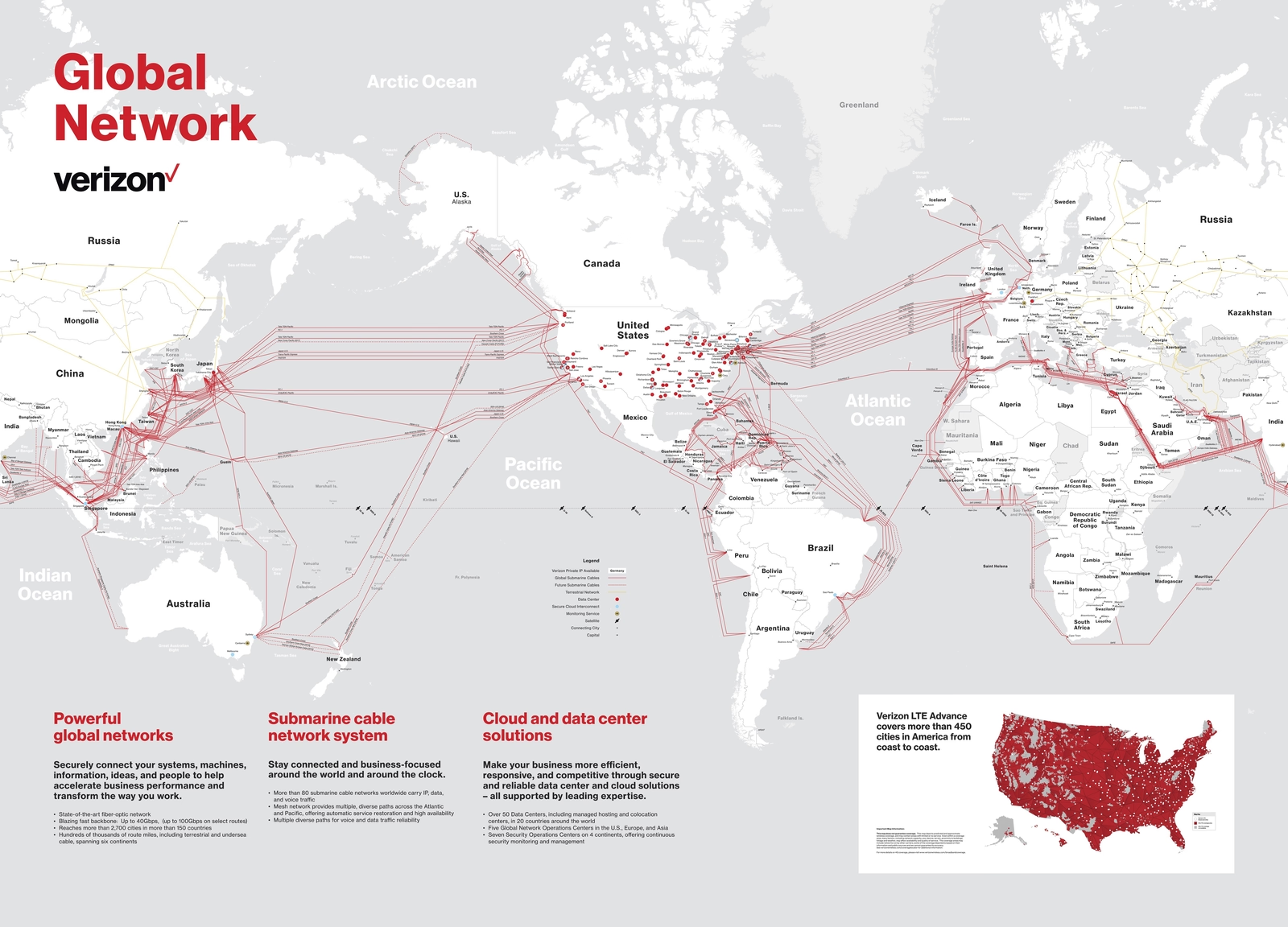
Verizon Business operates on a global scale, with a network that spans 39 countries. This broad coverage makes them a go-to provider for international businesses needing consistent connectivity.
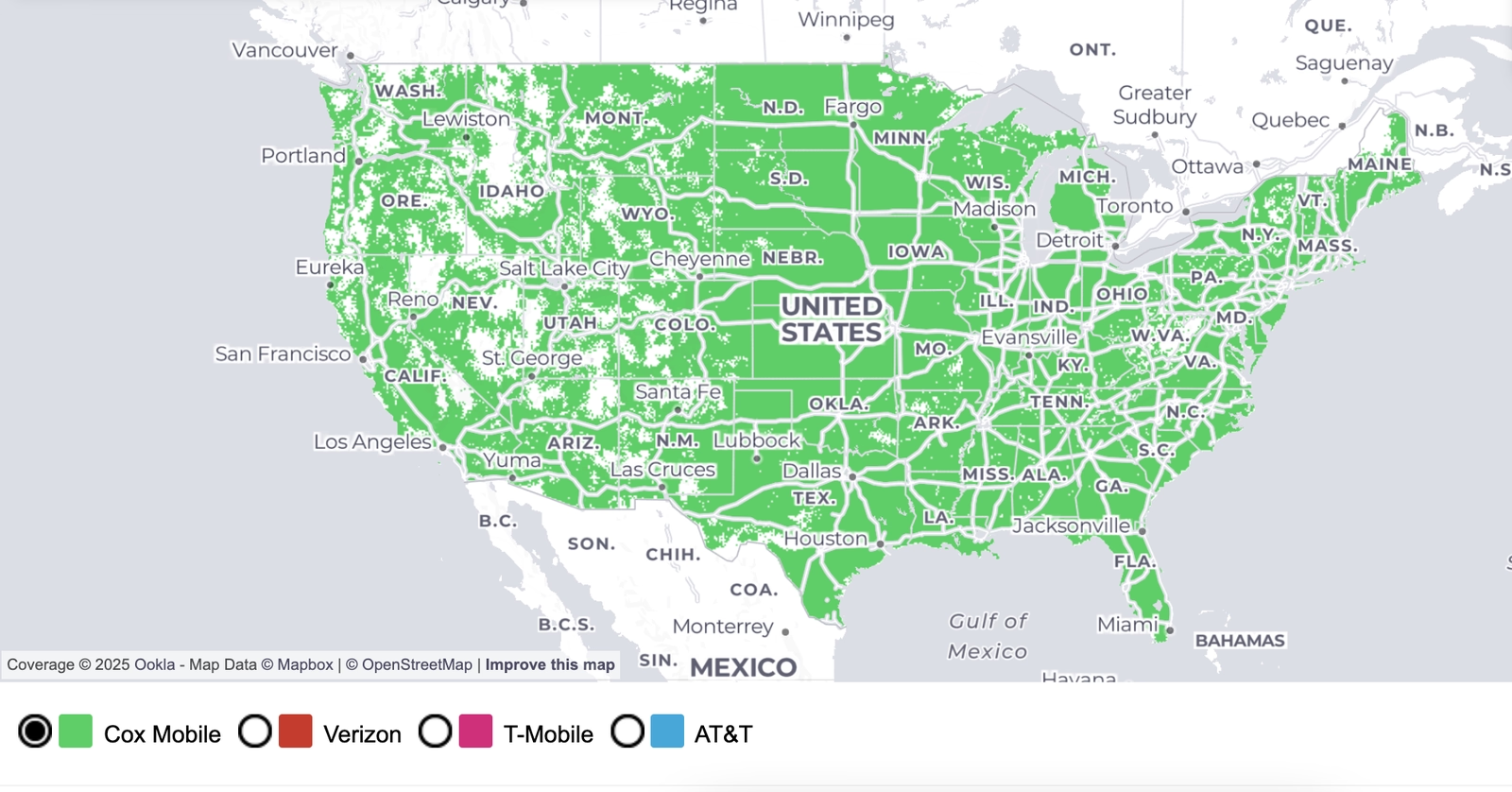
In contrast, Cox Communications focuses its services entirely within the United States. This makes them a solid option for businesses operating domestically, but they aren't a fit for companies needing international sites.
SLA
Verizon Business offers a strong 99.99% uptime Service Level Agreement (SLA) on its fiber products. This translates to a promise of no more than about 52 minutes of potential downtime in a year.
Cox Communications provides SLAs that vary by product, with its fiber-based Dedicated Internet offering a 99.9% uptime guarantee. This means your service could be down for up to 8.77 hours annually.
For a business, this difference in reliability can be crucial. Verizon's higher SLA provides a stronger assurance of consistent connectivity, which is vital for companies that can't afford service interruptions.
Transport Types Available
Verizon Business uses a full fiber network, which spans an impressive 900,000 miles. This allows them to offer symmetrical speeds, meaning your upload and download speeds are the same, which is perfect for data-heavy business tasks.
Cox Communications operates a Hybrid Fiber Coax (HFC) network covering 44,000 miles. This setup typically provides asymmetrical speeds, where downloads are much faster than uploads.
This makes Cox a good fit for general business use like streaming and browsing. However, for activities requiring fast uploads, like large file transfers or video conferencing, Verizon's symmetrical fiber has a clear advantage.
Customer Support
Verizon Business provides customer support that is structured for different business sizes. They have dedicated teams for small, medium, and large enterprise customers, so you get help that fits your needs.
Cox Communications also offers support for its business clients. Their support is focused on their US-based customers and is known for being accessible for their range of products.
The main difference is scale. Verizon's support is built for a global customer base with complex needs, while Cox provides solid support for businesses operating within the United States.
Final Verdict: Verizon Business or Cox Communications?
Choosing between Verizon and Cox really comes down to your specific business needs. Verizon offers a global, all-fiber network with top-tier reliability, while Cox provides a strong, US-focused service that is often more competitive on price and installation speed.
If your company operates internationally, requires symmetrical upload and download speeds, or needs the highest possible uptime guarantee, Verizon is likely the better fit. Their extensive security options and wireless services also cater to complex enterprise requirements.
For US-based businesses, particularly those where budget is a key factor, Cox is an excellent choice. Their aggressive pricing on DIA and faster installation times can be a significant advantage, as long as an HFC network meets your performance needs.
The best way to know for sure is to compare real quotes for your locations. Our team at Lightyear can help you gather that data to make the right decision for your business.
To help you see the differences at a glance, here’s a quick summary of how Verizon Business and Cox Communications compare on the most important features for business customers.
| Feature | Verizon Business | Cox Communications |
|---|---|---|
| Geographic Coverage | Global network in 39 countries | United States only |
| Network Type | Full Fiber (symmetrical speeds) | Hybrid Fiber Coax (asymmetrical speeds) |
| Uptime SLA (Fiber) | 99.99% | 99.9% |
| Wireless Services | Offers 5G and LTE Business Internet | No wireless offering |
| Security Focus | Comprehensive suite for all business sizes | Bundled package for small businesses |
| DIA Pricing | Competitive, but can be slightly above average | Aggressive, often below market average |
| DIA Installation | Averages 80 days | Averages 66 days (faster than market average) |
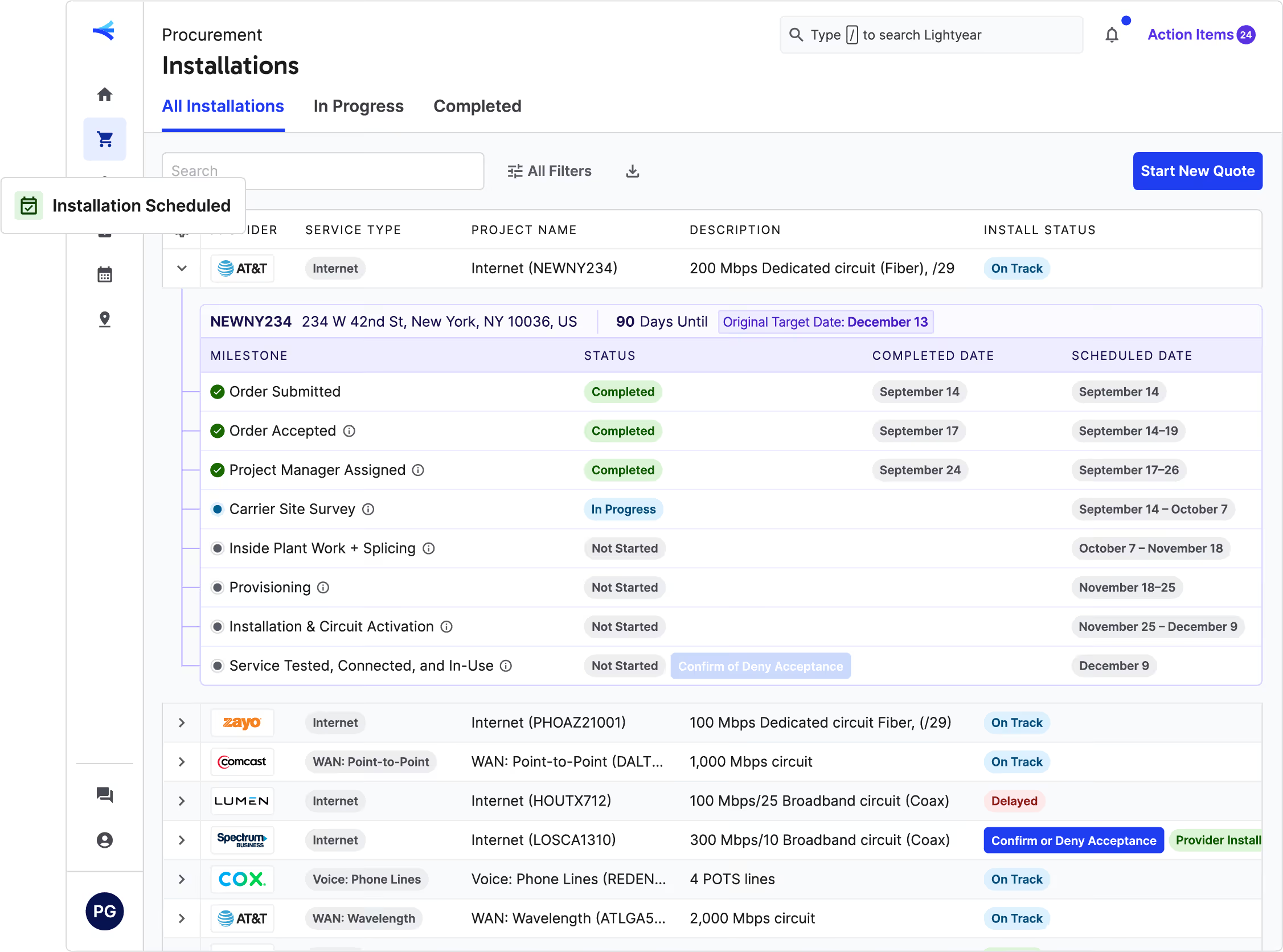
Choose the Right ISP Today With Lightyear
Making the final call between providers like Verizon and Cox requires a clear picture of your specific needs, from geographic footprint to budget. Instead of spending weeks gathering quotes and comparing spreadsheets, our software makes the process straightforward and data-driven. We help you find the right fit with features like:
- Automated ISP Procurement: We digitize the RFP process, showing you quotes from best-fit providers side-by-side against our proprietary pricing data.
- Transparent Pricing & Negotiation: Our platform automatically negotiates quotes down if they don't align with market benchmarks, so you know you're getting a fair price.
If you're ready to make your next telecom procurement decision with confidence, we're here to help. Sign up for a demo and let us show you how Lightyear simplifies the entire process.
Let us show you the product and discuss specifics on how it might be helpful.
Schedule a Demo





Revolutionize Your Telecom Experience
Learn how you can get one step closer to optimal business efficiency for all your telecom services.