Virtualization vs Load Balancing: Enterprise IT Guide
Virtualization creates virtual IT resources, while load balancing distributes traffic. Learn the key differences to make smarter network decisions.


In enterprise IT, building a resilient and efficient infrastructure is a top priority. Two terms that frequently come up in these discussions are virtualization and load balancing.
While both are used to optimize how resources are used, they address fundamentally different challenges within your network and server environments.
This guide will clarify the distinct roles of each technology. We'll break down what virtualization and load balancing do, how they differ, and how they can work together to support your business operations.
What is Virtualization?
At its core, virtualization is the process of creating a software-based, or virtual, representation of a physical asset. This is accomplished with a hypervisor, which is software that sits on top of physical hardware and allows you to run multiple, isolated virtual machines (VMs) on a single physical machine.
Think of it as partitioning one physical server into several smaller, independent virtual servers. Each VM can run its own operating system and applications, all while sharing the resources of that single host machine. The main goal is to improve resource efficiency and flexibility. Common types of virtualization include:
- Server Virtualization: Consolidating multiple virtual servers onto a single physical server to maximize hardware utilization.
- Storage Virtualization: Pooling physical storage from multiple network storage devices into what appears to be a single storage unit.
- Network Virtualization: Creating virtual networks that are completely independent of the underlying physical network infrastructure.
- Desktop Virtualization (VDI): Running multiple virtual desktops on a central server, which users can then access remotely from any device.
What is Load Balancing?
Where virtualization optimizes individual servers, load balancing focuses on distributing incoming network traffic across a group of servers, often called a server farm or pool. Its primary purpose is to prevent any single server from becoming overwhelmed, which improves application availability and responsiveness for users. A load balancer acts as a "traffic cop" for your server infrastructure, directing requests to the most suitable server based on a specific algorithm. This distribution helps maintain performance and reliability, especially during periods of high traffic.
Common load balancing methods include:
- Round Robin: Requests are distributed to servers in a sequential, rotating order.
- Least Connections: Traffic is sent to the server with the fewest active connections at the time of the request.
- IP Hash: The client's IP address is used to calculate a hash, which determines which server receives the request. This keeps a user connected to the same server.
Key Differences Between Virtualization and Load Balancing
While both technologies optimize IT resources, they tackle different problems at different layers of your infrastructure. Here’s a breakdown of the main distinctions.
1. Core Function: Efficiency vs. Availability
The primary driver for virtualization is efficiency. It allows you to consolidate multiple applications and operating systems onto a single physical server, maximizing hardware utilization and reducing costs.
Load balancing, on the other hand, is all about availability and performance. Its job is to ensure that applications remain responsive by preventing any single server from being overloaded with traffic.
2. Scope of Operation: Hardware vs. Traffic
Virtualization operates directly on the physical hardware. It creates a layer of abstraction that allows for the creation of multiple, isolated virtual machines on one physical box.
Load balancing works with network traffic. It doesn't create new resources; instead, it intelligently directs incoming requests to the best-suited server in a pool.
3. Focus: Resource Management vs. Request Management
Think of virtualization as a tool for managing and partitioning server resources like CPU, memory, and storage.
In contrast, load balancing is a tool for managing the flow of application requests, ensuring they are handled quickly and reliably by the available servers.
Benefits of Virtualization for Enterprises
For enterprises, adopting virtualization brings several practical advantages that go beyond just efficient hardware use. It directly impacts operational agility and the bottom line.
- Reduced Costs: By consolidating servers, you significantly cut down on hardware, power, and cooling expenses. Fewer physical machines also mean a smaller data center footprint and lower maintenance overhead.
- Faster Deployment: New virtual servers can be created in minutes from a template, compared to the days or weeks it takes to procure and install physical hardware. This accelerates project timelines and testing cycles.
- Improved Disaster Recovery: Virtual machines are self-contained files, making them easy to back up, replicate, and migrate to another location. This simplifies business continuity planning and reduces recovery times.
- Centralized Management: Administrators can manage, monitor, and migrate multiple virtual machines from a single interface, simplifying complex tasks and improving overall IT productivity.
Advantages of Load Balancing in IT Infrastructure
Just as virtualization optimizes hardware, load balancing optimizes traffic flow to keep your applications running smoothly. This brings several key advantages to your IT infrastructure, directly impacting reliability and user experience.
- Greater Scalability: Load balancing allows you to easily add or remove servers from your resource pool without service interruptions. This makes it simple to adjust capacity in response to fluctuating traffic demands.
- High Availability and Reliability: By automatically redirecting traffic away from failed or overloaded servers, load balancers prevent downtime. If one server goes offline, users are seamlessly routed to healthy servers, ensuring the application remains accessible.
- Improved Performance: Distributing requests prevents any single server from becoming a bottleneck. This results in faster response times and a smoother, more reliable experience for end-users.
- Simplified Maintenance: You can take individual servers offline for updates or repairs without impacting the live application. The load balancer simply directs traffic to other active servers until the maintenance is complete.
Choosing Between Virtualization and Load Balancing
Deciding between virtualization and load balancing isn't an either/or scenario. The two technologies solve different problems, and the right choice depends entirely on your specific goals. In most cases, they work best together.
1. When to Use Virtualization
Focus on virtualization when your main goal is to improve hardware efficiency and operational agility. It's the right tool if you need to consolidate servers to reduce your physical footprint and cut costs. It is also ideal for quickly setting up isolated environments for development and testing.
2. When to Use Load Balancing
Turn to load balancing when your priority is application availability and performance. If you need to manage high volumes of user traffic and prevent service interruptions, a load balancer is essential. It ensures your applications remain responsive and reliable for all users.
3. Combining Both for Maximum Impact
For most modern enterprises, the best approach is to use both technologies. You can run your applications on virtual machines to gain efficiency and then use a load balancer to distribute traffic across those VMs. This combination creates a highly scalable, resilient, and cost-effective infrastructure.
Final Thoughts on Virtualization and Load Balancing
Ultimately, virtualization and load balancing are not competing technologies but complementary partners in building a robust IT infrastructure. Virtualization focuses on maximizing hardware efficiency by creating multiple virtual servers from a single physical machine.
Load balancing, in contrast, ensures application availability by distributing incoming traffic across those servers. By using them together, you create a system that is both cost-effective and highly reliable, capable of handling fluctuating user demands without compromising performance.
Need Help Managing Your Network? Lightyear Can Help
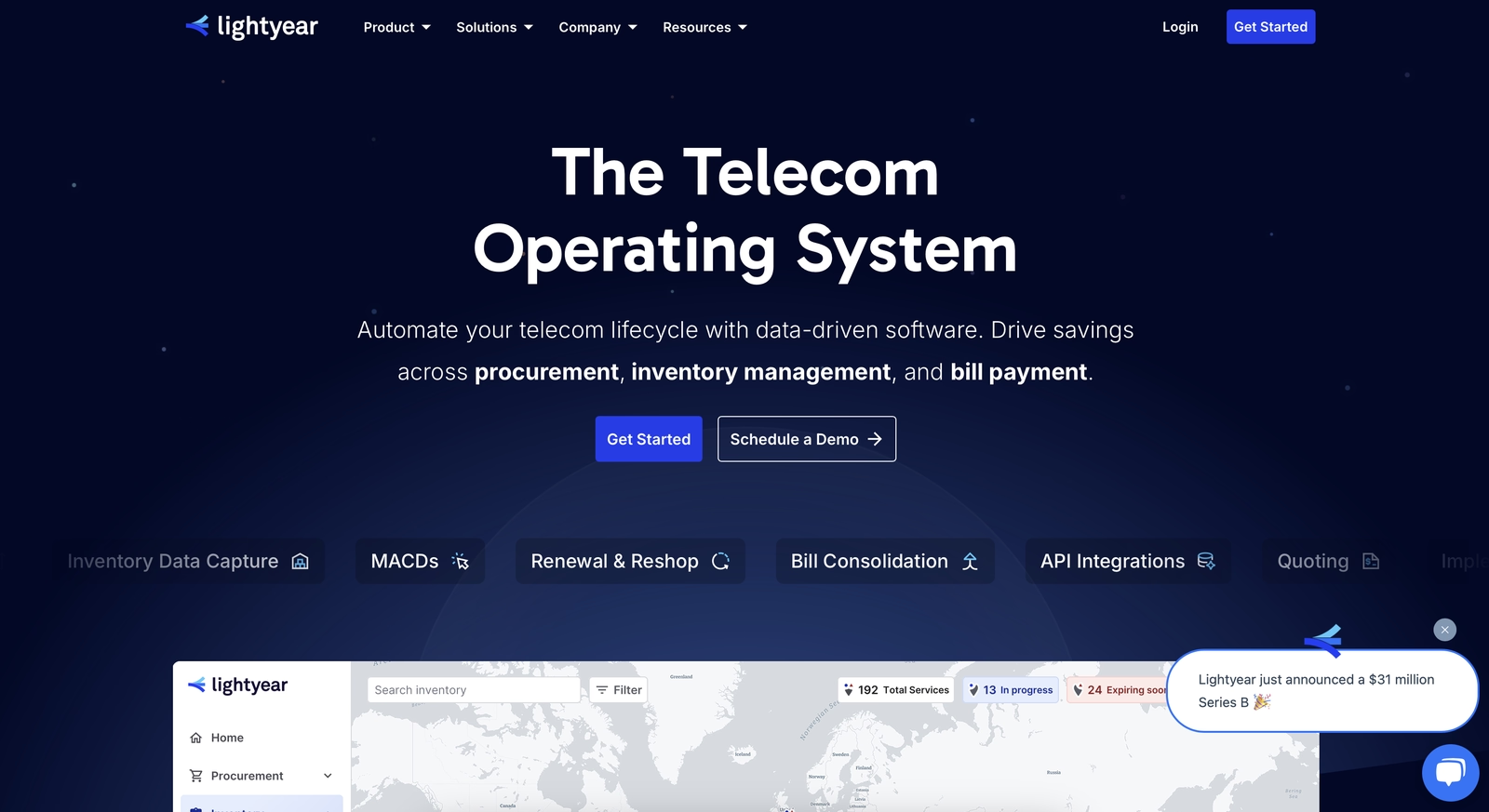
Whether you're using virtualization, load balancing, or both, managing the underlying network services is critical. By automating network service procurement, inventory management, and bill consolidation, Lightyear takes the pain out of telecom infrastructure management.
The hundreds of enterprises who trust Lightyear achieve 70%+ time savings and 20%+ cost savings on their network services.
Schedule a demo or get started with our questionnaire today.
Frequently Asked Questions about Virtualization vs Load Balancing
Do I need a physical appliance for load balancing?
Not necessarily. While hardware load balancers are common, you can also use software-based load balancers that run on standard servers or as virtual appliances. Cloud providers also offer load balancing as a managed service, giving you plenty of flexible options.
How do virtualization and load balancing affect network security?
Virtualization can isolate workloads, containing potential breaches within a single VM. Load balancing can help mitigate DDoS attacks by distributing malicious traffic. However, both introduce new management points that must be properly secured to prevent vulnerabilities in your infrastructure.
Can virtualization replace the need for load balancing?
No, they serve different functions. Virtualization helps you run multiple applications efficiently on one server, but it doesn't manage traffic between servers. You still need load balancing to distribute requests and provide high availability for those applications.
Which one should my business implement first?
It depends on your immediate problem. If you're running out of server capacity and want to reduce hardware costs, start with virtualization. If your applications are slow or crashing due to high traffic, prioritize load balancing to improve reliability.
Let us show you the product and discuss specifics on how it might be helpful.
Schedule a Demo





Revolutionize Your Telecom Experience
Learn how you can get one step closer to optimal business efficiency for all your telecom services.